Axios House: Chip factories recycle tiny fraction of water, Ecolab CEO says

Add Axios as your preferred source to
see more of our stories on Google.
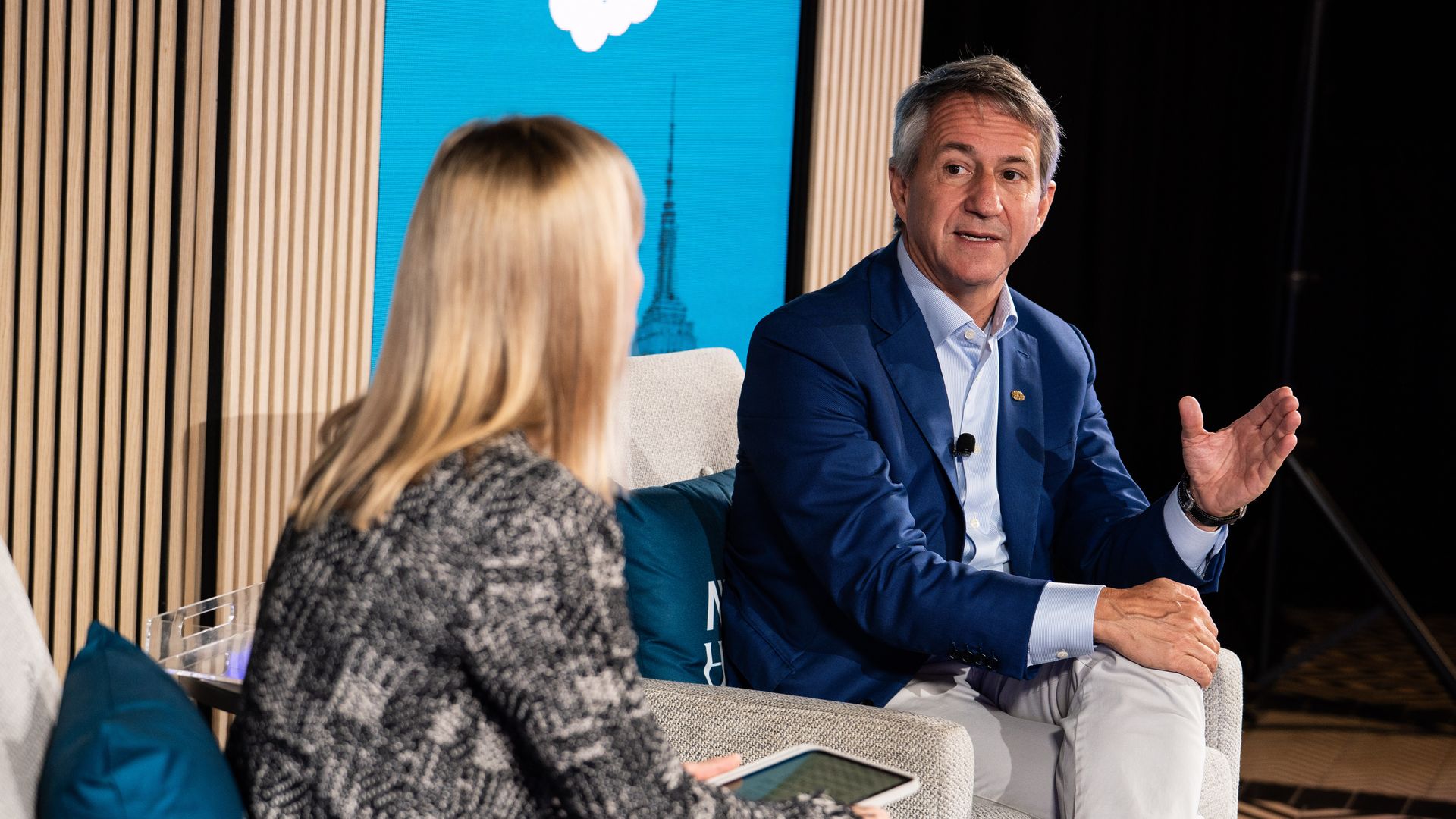
Ecolab chair & CEO Christophe Beck at Axios House at Climate Week and UNGA in New York City. Photo credits: Sam Popp on behalf of Axios
NEW YORK – Less than 5% of water used in chip manufacturing is recycled, Ecolab chair and CEO Christophe Beck said Tuesday at Axios House at Climate Week and the UN General Assembly.
Why it matters: Water is used throughout chip production at manufacturing plants that can span a mile or more, so innovations in reducing the amount needed and recycling wastewater are highly sought.
- Axios' Amy Harder and Ben Geman hosted conversations with Beck and Amazon chief sustainability officer Kara Hurst at the Sept. 23 event. The event was sponsored by Salesforce.
What they're saying: "What we've done as a company is to invent technologies where you can reuse water at every step of that process," Beck said.
- The water has to be "1,000 times more pure than the water you use for drugs that you inject in your blood."
Separately, Hurst shared how she thinks emissions cuts enabled by AI can surpass emissions growth from the increase in data centers' energy demand.
- "Right now, people are talking about it as if it won't happen, and I do think it will happen," Hurst said.
- "If we really take the opportunity to think about AI as a tool we can use for good, and we think about all of the use cases for AI – it will increase energy demand," Hurst said. "However, we have to use it as a tool for our benefit and think about all of the possibilities that we can apply it to sustainability use cases."
- "There's a huge possibility when you think about the implications for what we will yet invent, and I'm actually really optimistic about it."
AI has already helped Amazon streamline packaging decisions and create tools like its "customer fit" to help consumers choose clothing sizes, Hurst said.
- "That means less product returned to us, less reverse logistics and of course less environmental" impact, she said. "So it doesn't have to be sustainability out in front to the customer. We know it is, but for the customer, a better experience."
Sponsored content:
In a View From the Top conversation, Salesforce's Sunya Norman, SVP of impact, and Margaret Taylor, VP and head of public affairs and strategic relations, discussed how the future of AI depends on sustainability.
- AI "requires energy and water and natural resources," Norman said. "So, really, the future of AI is sustainable AI. That's how we're going to figure out how to scale AI responsibly." Norman added that the tech sector needs to lead this change, but that it's "a full value chain challenge."
