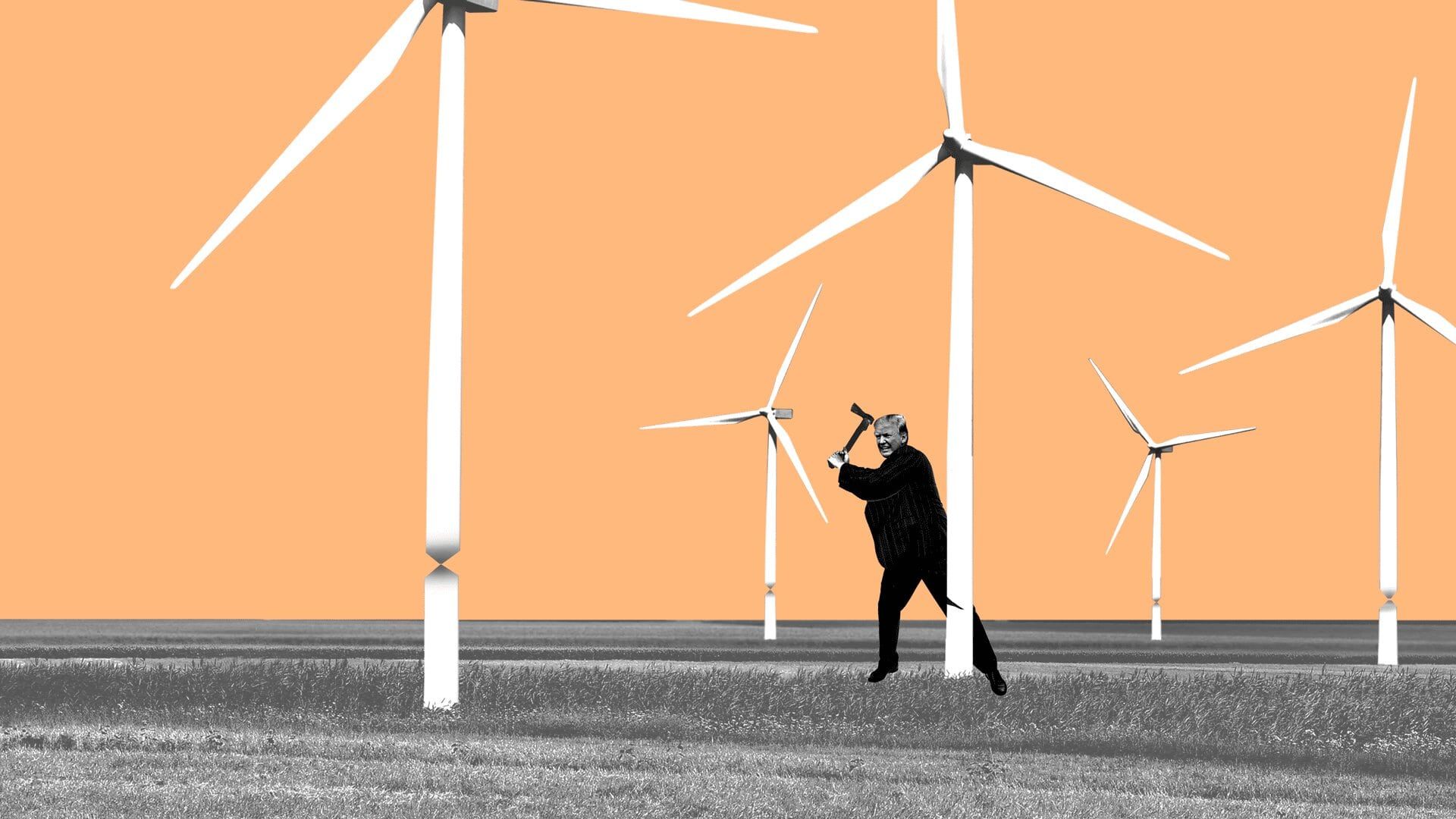
President Trump's Interior Department intends to yank late Biden-era permits for a large planned project off Maryland's coast, new court filingsshow.
Why it matters: The motions on US Wind's Maryland Offshore Wind Project are the latest sign of Trump 2.0's escalating efforts to thwart coastal turbine plans.
Extreme weather is driving sky-high home insurance prices in some especially storm-prone parts of the country, a new analysis finds.
Why it matters: Climate change is supercharging extreme weather events like hurricanes, increasing the odds of losses and claims and driving up insurance premiums.
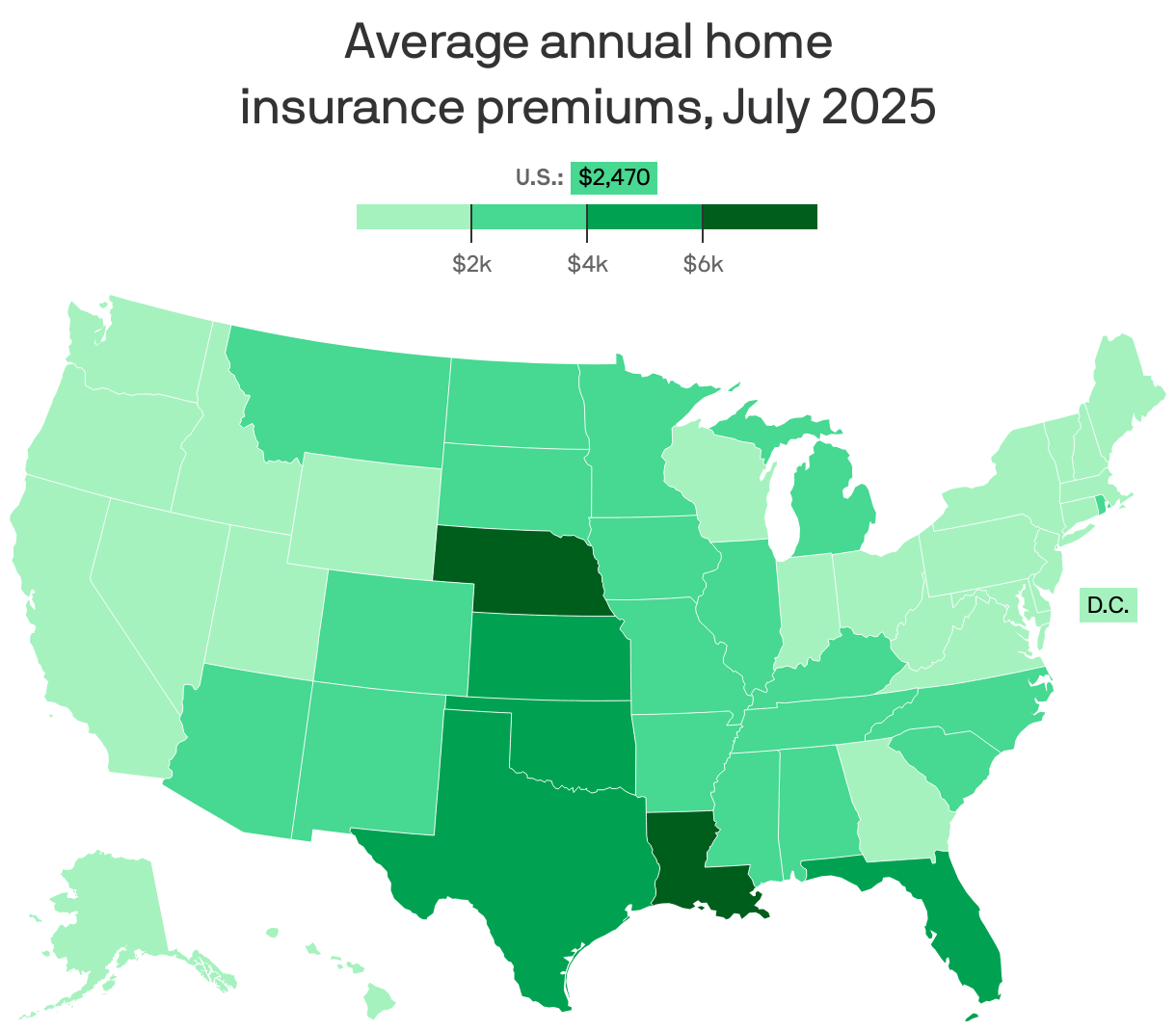
Driving the news: The national average for annual home insurance premiums is up 9% since 2023, per a new Bankrate breakdown, hitting $2,470 as of July.
That's based on quotes for married male-female homeowners with an eight-year-old $300,000 home, a clean claim history, and good credit.
Zoom in: Nebraska ($6,425), Louisiana ($6,274) and Florida ($5,735) are just some of the states with shockingly higher-than-average premiums, Bankrate found.
All three are vulnerable to extreme weather, including hurricanes, tornadoes, wind, hail and more.
Caveat: These figures don't include flood insurance.
Stunning stats: Homeowners in the New Orleans metro spend nearly 17.5% of the area's median annual income on home coverage, Bankrate found.
Those in the Miami metro spend nearly 13.4%.
Yes, but: Some places with relatively high average homeowner premiums also have higher median incomes.
In the Denver metro, for example, "the average $300,000 home insurance policy costs $3,644 per year ... but homeowners there earn a median annual income of $103,055, resulting in just 3.54% of their pay going toward premiums," Bankrate says.
"From 2023 to 2025, home insurance costs in Florida decreased by an average of $579, representing a 9% drop," per the analysis.
Between the lines: Climate change is driving non-renewals in some areas, a Dec. 2024 Senate Budget Committee report found.
Non-renewals are correlated with higher premiums and are "often an early warning sign of market destabilization," per the report.
"Premiums are skyrocketing, insurers are non-renewing customers or pulling out of risky markets altogether. As climate change gets worse, insurance availability and affordability will also get worse."
Reality check: The amount you'll actually pay for home insurance depends on many factors — not least of which is your credit score, but also the cost of your home, its materials, and other variables.
Go deeper: Soaring home insurance rates are acting as a "stealth inflation driver," Axios' Emily Peck reports.
President Trump's budget cuts to disaster preparedness are a departure from response improvements made in the wake of Hurricane Katrina, FEMA employees warn.
The big picture: President Trump's plan to scale down the Federal Emergency Management Agency and shift more responsibility to the states — combined with eliminating climate change research, unsteady leadership and other reductions — put people and property at risk, employees warned.
The fallout from Trump 2.0's stop-work order on Ørsted's nearly finished offshore wind project in New England extends beyond the development itself.
Catch up quick: The Interior Department demanded Friday that construction halt on Revolution Wind, a 65-turbine project off Rhode Island and Connecticut.