Trump's counter-"Revolution" on wind offers multiple takeaways

Add Axios as your preferred source to
see more of our stories on Google.
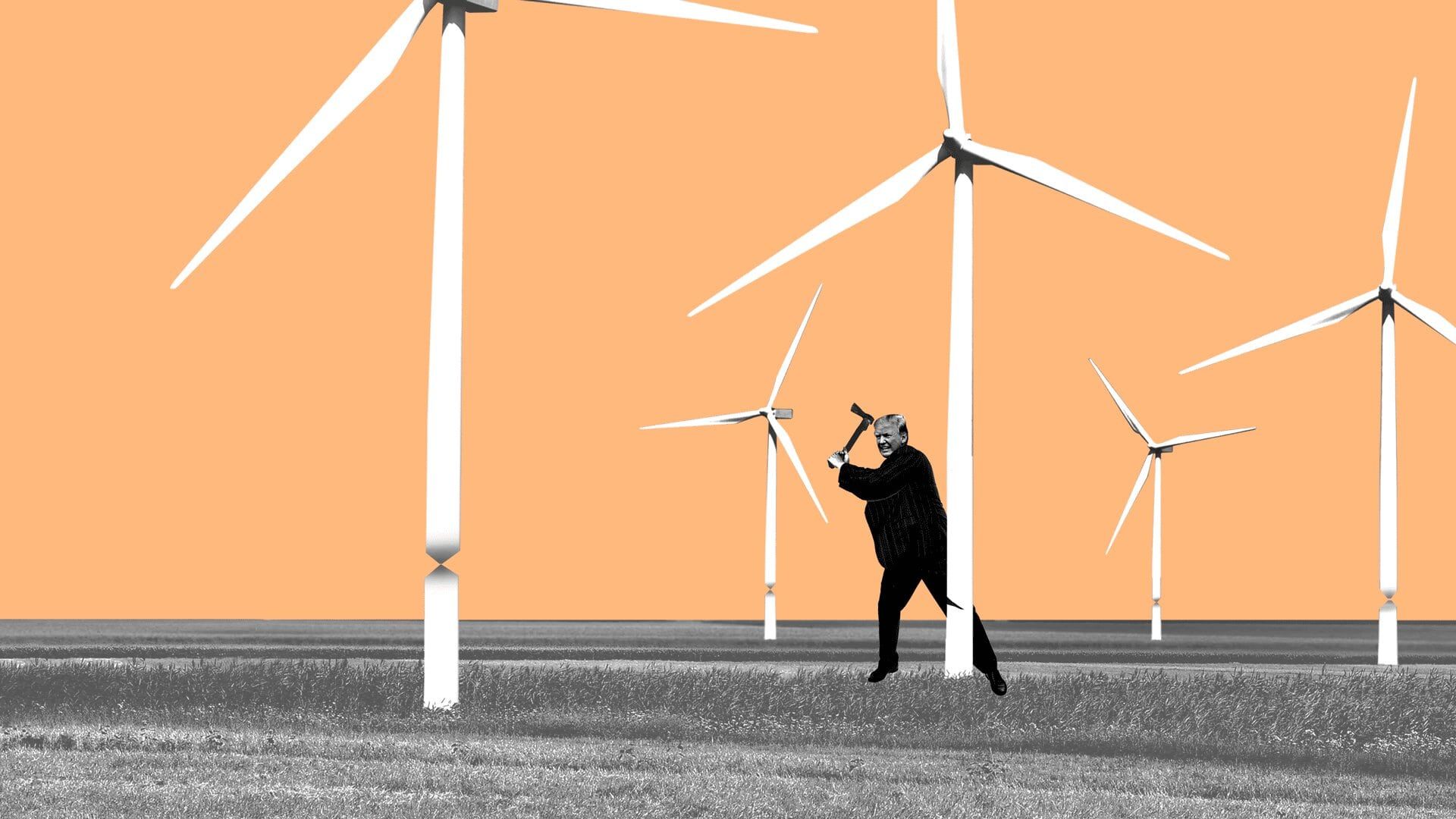
Illustration: Lazaro Gamio/Axios
The fallout from Trump 2.0's stop-work order on Ørsted's nearly finished offshore wind project in New England extends beyond the development itself.
Catch up quick: The Interior Department demanded Friday that construction halt on Revolution Wind, a 65-turbine project off Rhode Island and Connecticut.
- Ørsted said Revolution — approved in the Biden era with plans to power around 350,000 homes — is 80% finished. It's a joint development with BlackRock's Global Infrastructure Partners.
Here are six takeaways...
1. Specifics are lacking. The letter to Ørsted from Interior's offshore energy branch broadly cites national security interests and protection of other marine uses, but omits details.
2. This could soon be in court. Ørsted said it's "considering a range of scenarios, including legal proceedings."
- "We are working with our partners in Connecticut to pursue every avenue to reverse this decision," Rhode Island Gov. Dan McKee (D) said in a joint statement with Connecticut Gov. Ned Lamont (D).
3. It's already a very public fight. The governors will hold separate news conferences Monday flanked by members of Congress, union workers and others.
- Look for this to become part of wider political messaging over electricity prices, with the state officials claiming that halting renewables puts even more upward pressure on bills.
4. Ørsted's rough patch just got worse. The Danish renewables giant was struggling before Friday's stunning news, and its stock is down another 16% Monday morning.
- Even pre-Trump, U.S. offshore wind developers faced hurdles from interest rates, supply chain woes and more. Trump policies have compounded the problems.
- Earlier this month, Ørsted announced plans for a roughly $9.4 billion share sale to aid its finances, sending its stock price plummeting.
5. It's a stark new example of Trump's wider war on wind, which the president and his lieutenants call unreliable and overly subsidized.
- The Interior Department has made a series of moves, such as new layers of political review for procedural steps and giving added priority to other uses of lands and waters.
- Last week, the Commerce Department announced a new probe into the national security effects of imported turbines and components, which could bring new tariffs.
6. Keep an eye out for dealmaking. Earlier this year, Interior temporarily halted Equinor's Empire Wind project off New York's coast, which had recently begun construction.
- The resolution remains hazy, but Interior Secretary Doug Burgum claimed that New York Gov. Kathy Hochul signaled "willingness to move forward on critical [gas] pipeline capacity."
What we're watching: Whether halting a multibillion-dollar project that's so far along sends a chill beyond investments in wind.
- "The unfortunate message to investors is clear: the U.S. is no longer a reliable place for long-term energy investments," the American Clean Power Association said in a statement.
The bottom line: No matter how this project ultimately shakes out, new U.S. investment in offshore wind looks stymied for a long time — especially if a MAGA candidate wins in 2028.
