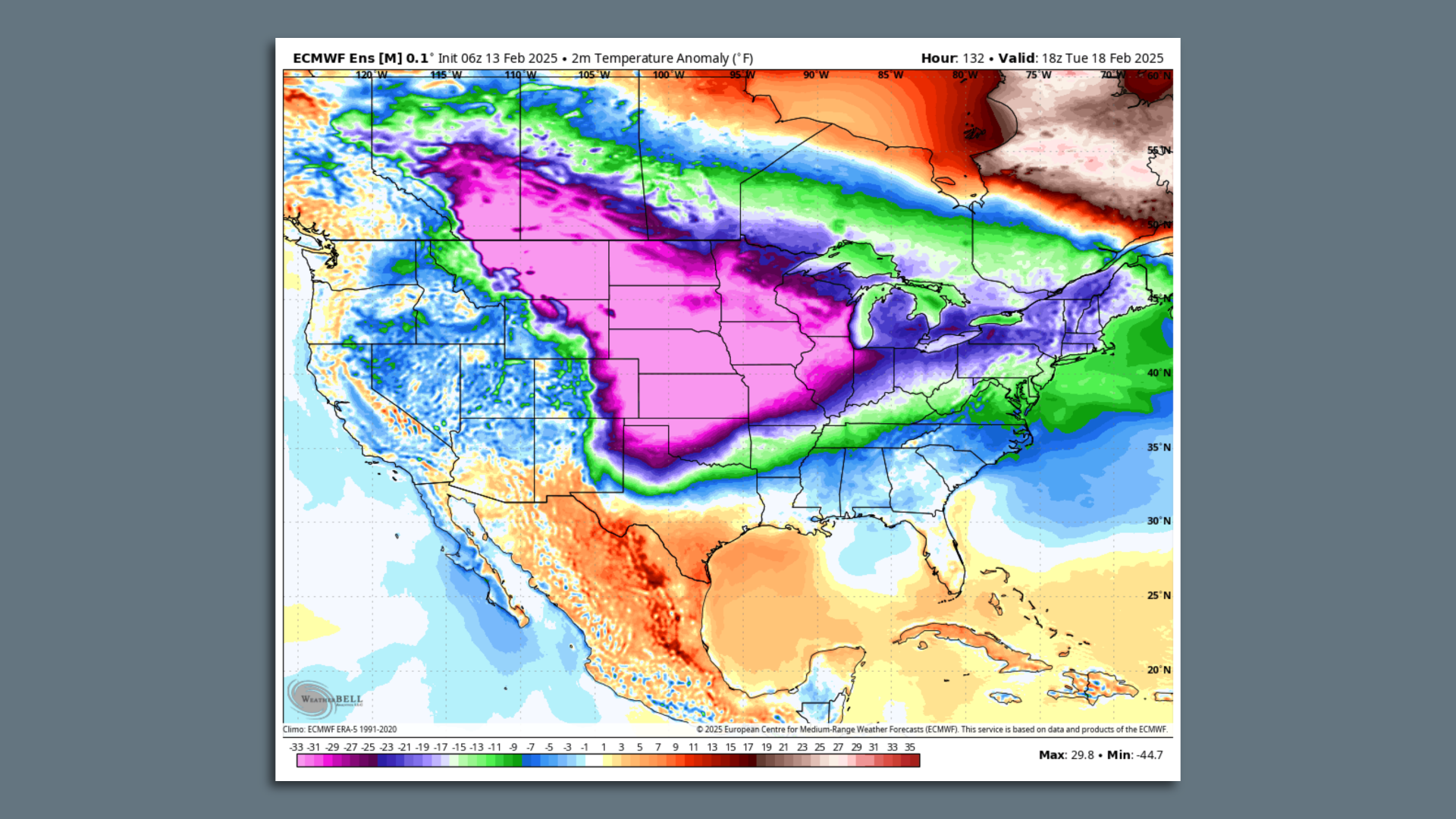
A weeklong, polar vortex-related Arctic outbreak rivaling any seen so far this winter is slated to bring frigid conditions to much of the U.S. east of the Rockies next week.
Threat level: The Arctic air is likely to send temperatures plunging to at least 30 degrees below average for mid-February across the Midwest and Plains states, with the cold moderating some as it barrels east through late week.
Is Elon Musk's political profile and BFF status with President Trump hurting Tesla sales? Maybe — but it's complicated, analysts say.
Why it matters: Tesla is by far the U.S. EV sales leader and long the world's top seller (though it has recently been trading the lead with China's BYD).
Stratospheric balloon company Sceye recently completed a feat that heralds the increased use of a new layer of the atmosphere for human exploration, the company told Axios exclusively.
Why it matters: The company's helium-filled balloons can serve as an observation platform that occupies a niche between drones flying at lower altitudes and satellites orbiting above the planet.
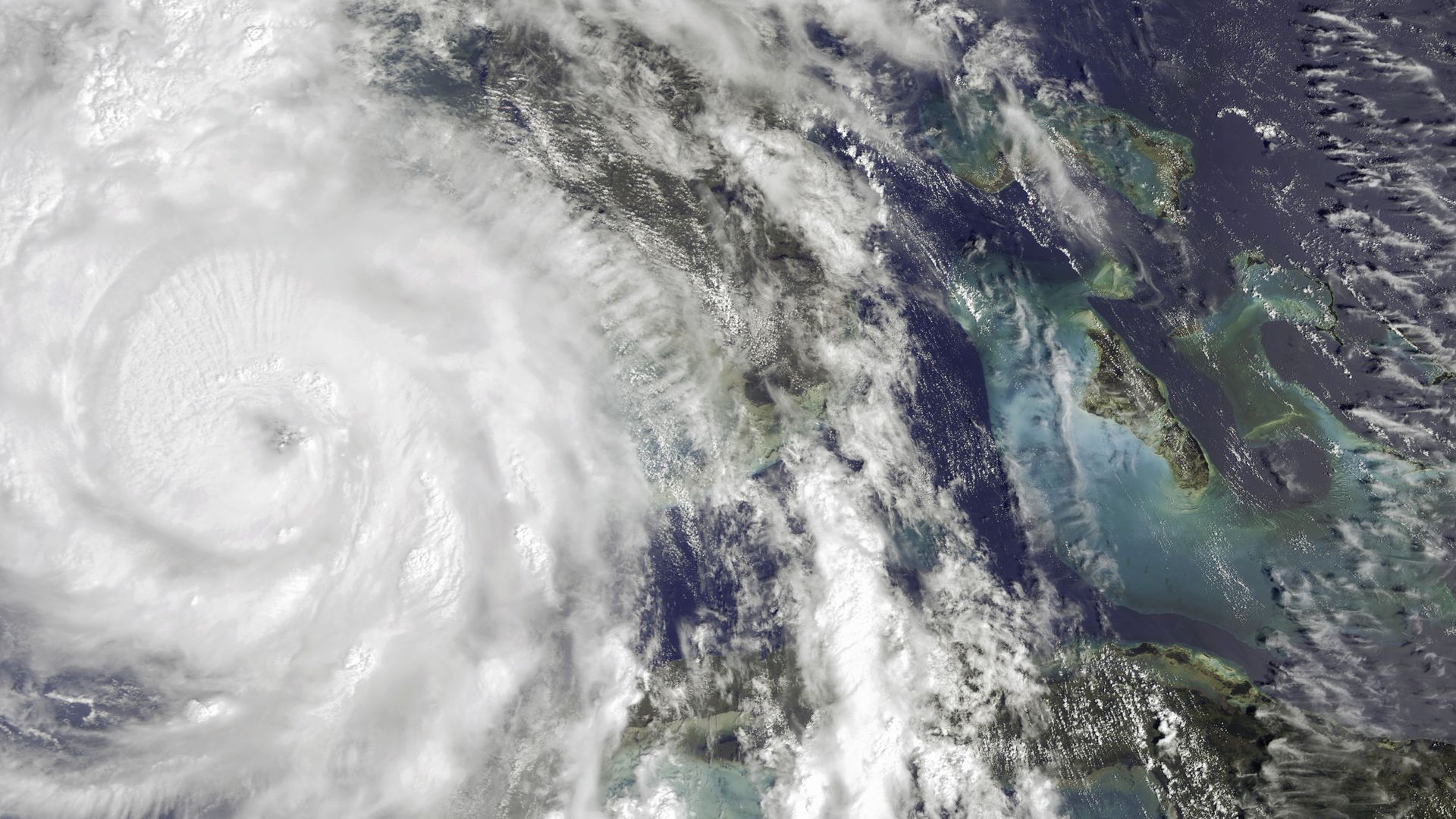
Why it matters: The move could complicate forecasts NOAA provides for hurricanes that affect Mexico and other countries outside U.S. territory that don't recognize the new name.
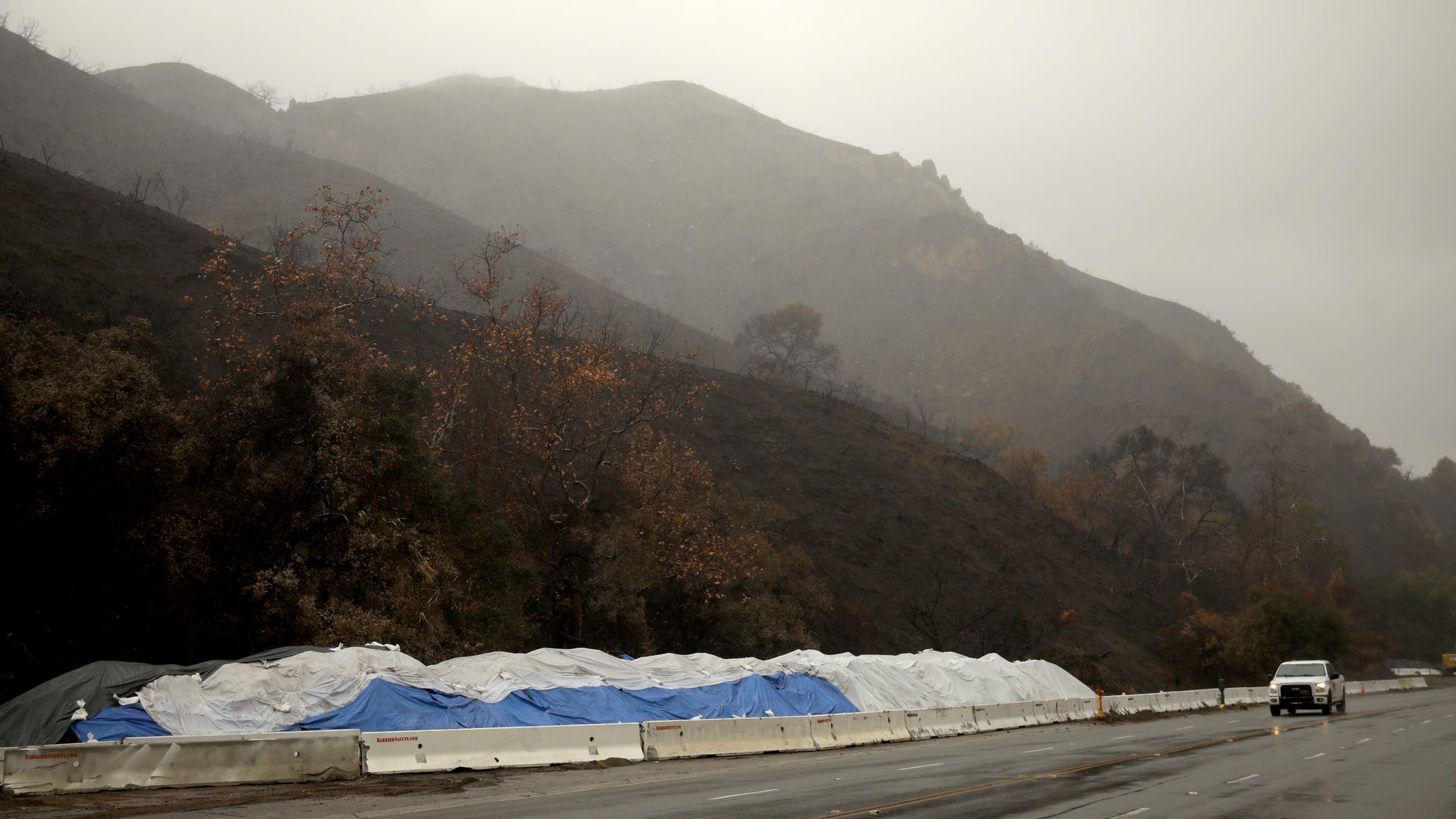
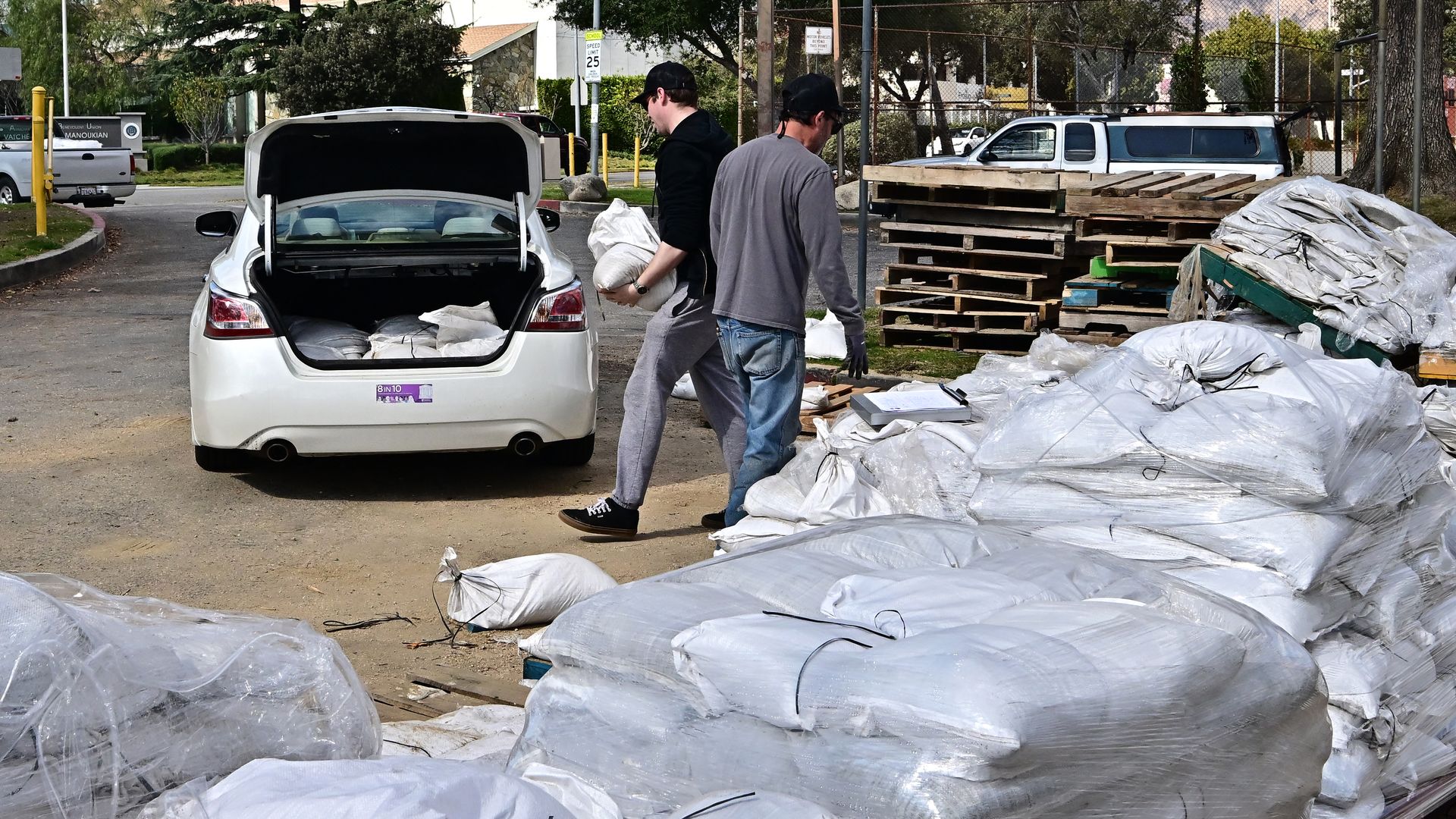
A powerful atmospheric river-linked storm that began slamming Southern California on Wednesday prompted evacuation orders in Los Angeles County amid flood threats to burn scars from wildfires that erupted in January.
Threat level: Flood and flash flood watches and high-wind advisories have been issued across Southern California.
Chevron plans to cutits global workforce by 15% to 20%, with most reductions before the end of 2026, the U.S.-based multinational giant said Wednesday.
Why it matters: It's the second-largest U.S. oil and gas company behind ExxonMobil.
Amid a coast-to-coast barrage of winter storms, a firehose of moisture is poised Thursday to bring heavy rains and high winds to Southern California.
Threat level: The heavy rains will bring a "high likelihood" of flooding, the National Weather Service warns. The greatest risk is for mudslides and debris flows in Southern California's large, recent burn scars.
The nonprofit World Resources Institute has landed $75 million to launch an energy transition center that aims to speed deployment of "pragmatic, scalable solutions."
Why it matters: It's designed to convene expertise in finance, tech deployment, policy and other fields that together can overcome barriers, with initial focus on the U.S. and India.
Elon Musk's budgetary chainsaw is looming over U.S. disaster prediction and response agencies — just as climate change is making certain types of extreme weather events more common and intense.
Why it matters: Cutting the Federal Emergency Management Agency — possibly entirely — and slashing the National Oceanic and Atmospheric Administration (NOAA)'s budget and mission amid a parade of climate disasters could have disastrous consequences.