Exclusive: Stratospheric balloon company bets big on standing still

Add Axios as your preferred source to
see more of our stories on Google.
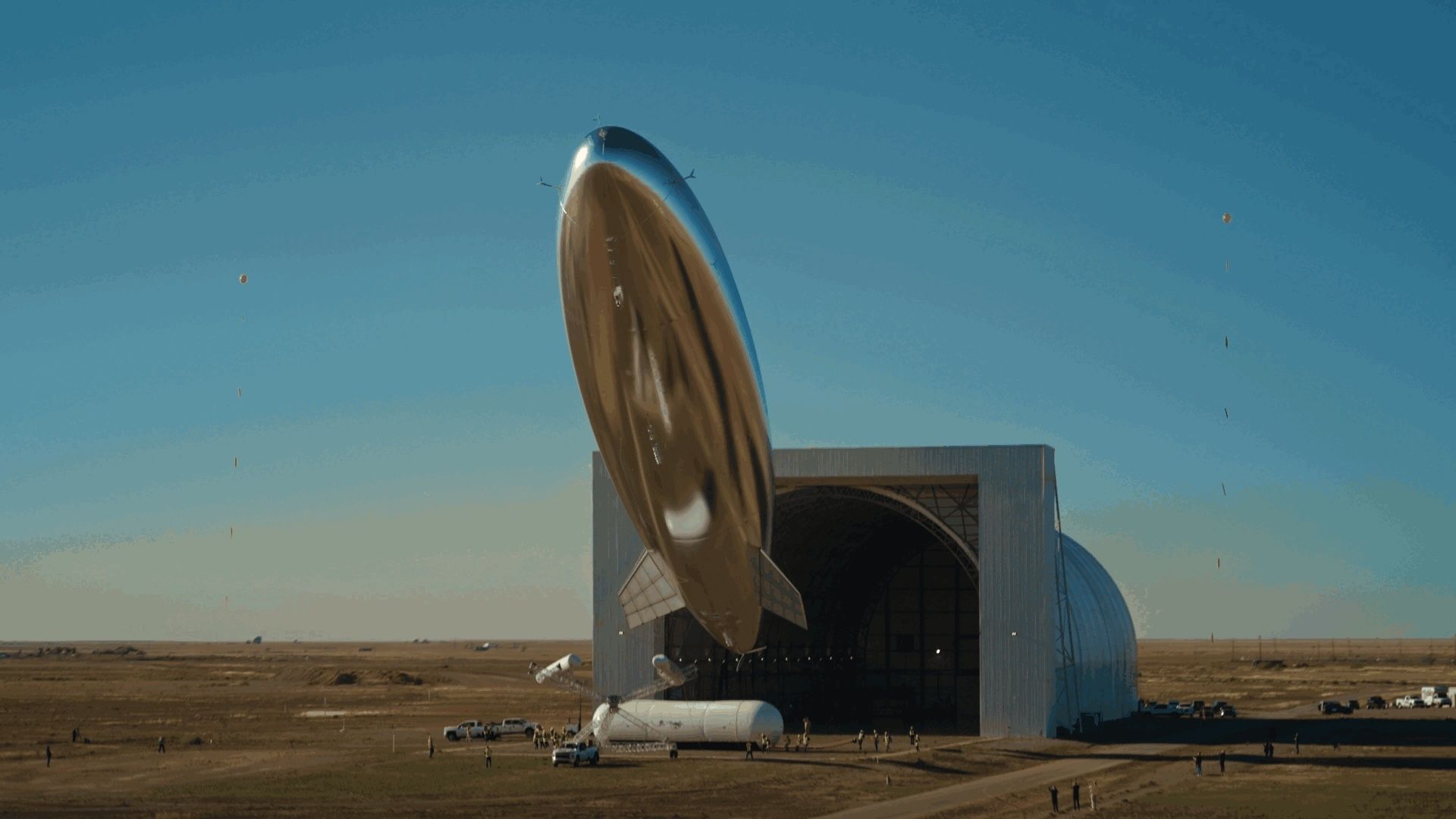
A Sceye balllon emerges from a hangar. Photo: Courtesy of Sceye
Stratospheric balloon company Sceye recently completed a feat that heralds the increased use of a new layer of the atmosphere for human exploration, the company told Axios exclusively.
Why it matters: The company's helium-filled balloons can serve as an observation platform that occupies a niche between drones flying at lower altitudes and satellites orbiting above the planet.
- This makes them attractive for Earth-observing applications, including climate-related monitoring and research.
Zoom in: One of its balloon platforms flew the Explorer's Club flag into the stratosphere, keeping it aloft over the same location for more than 24 hours, thanks to the balloon's combination of solar panels, electric motors and battery storage units.
- These flags, marking field research expeditions, have been carried to the bottom of the Marianas Trench, the South Pole and even the wreckage of the Titanic.
The big picture: The company says the balloons have advantages over satellites.
- They can take higher-resolution images more cheaply from comparatively lower altitudes, company founder and CEO Mikkel Vestergaard Frandsen said in an interview.
- They can also stay in position, or maneuver as needed, for months or even years.
Sceye, which has raised funds from the Saudi Mawarid Holding Company and Mexico's América Móvil, is currently conducting demonstration projects.
- Applications include detecting methane leaks from oil and gas facilities, down to the individual well or pipe level, and observing extreme weather and climate disasters such as wildfires.
- "The possibilities when we're in the atmosphere are endless," Frandsen said.
Reality check: While Sceye operates a unique suborbital platform, it faces competition from companies such as Nearmap operating balloons at lower altitudes as well as numerous Earth-observing satellite ventures that have a stable customer base.
What's next: Other potential uses for the balloons include providing internet access in remote areas, disaster response, advanced imaging and atmospheric research.
- The company has partnerships with NASA and USGS.
