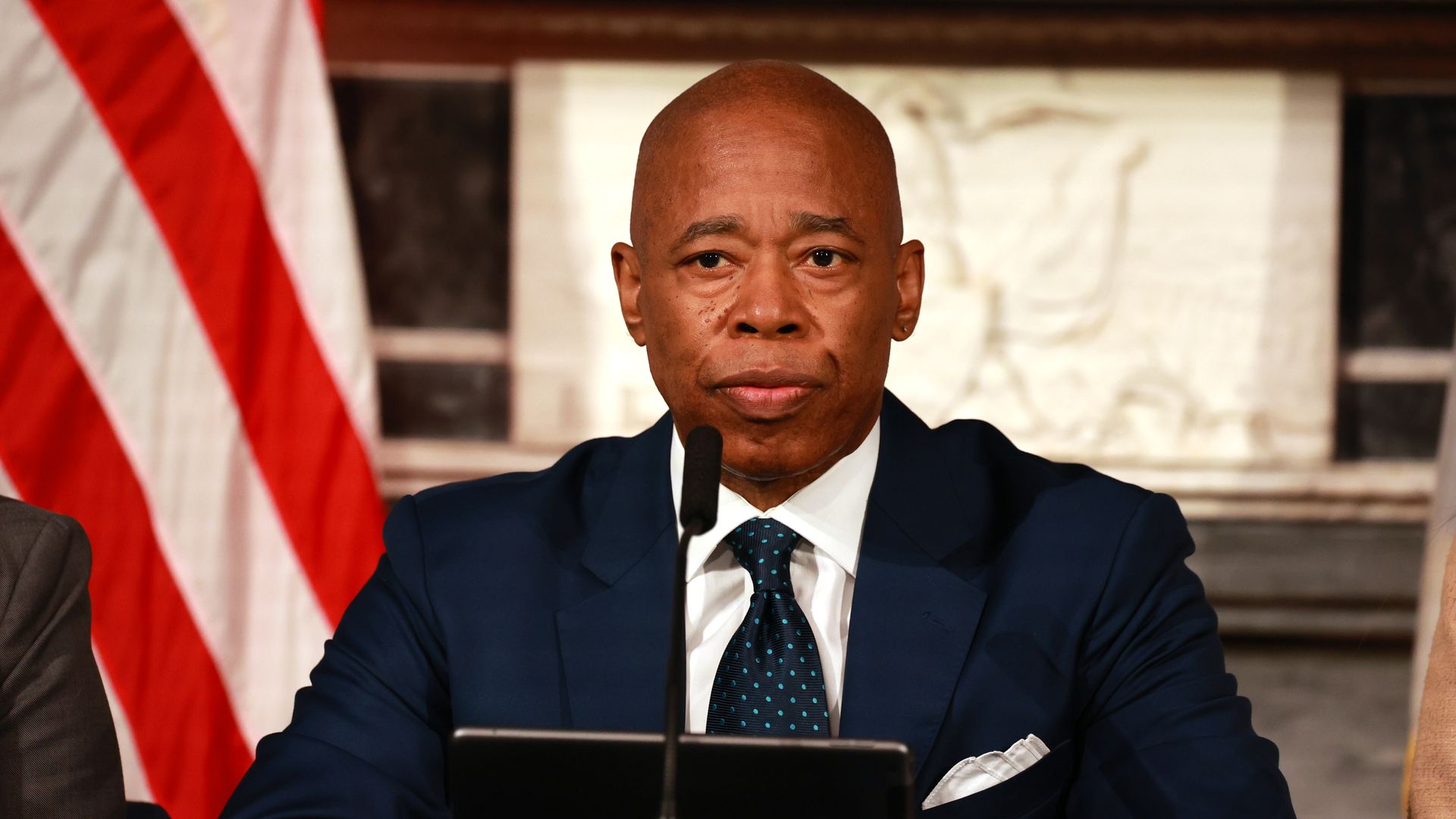
New York City declared Wednesday that it's the first city to issue an advisory officially designating social media as an environmental toxin.
Driving the news: In response to the danger social media poses to the mental health of young people, the city's Department of Health and Mental Hygiene issued an advisory identifying unrestricted access to and use of social media as a public health hazard.
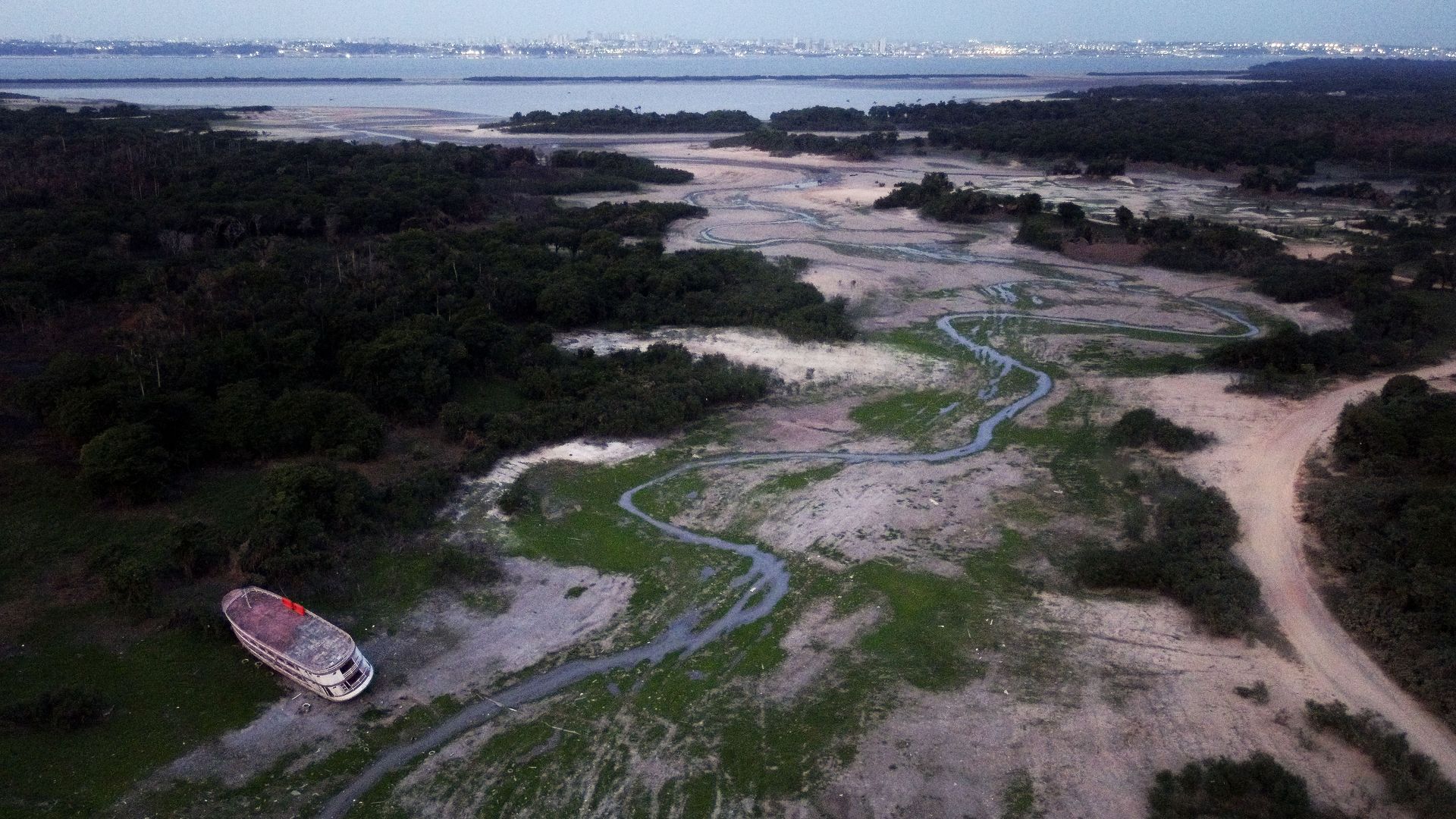
Why it matters: The Amazon is the world's largest rainforest, and it absorbs vast amounts of carbon. It is already teetering on the edge of instability due to deforestation.
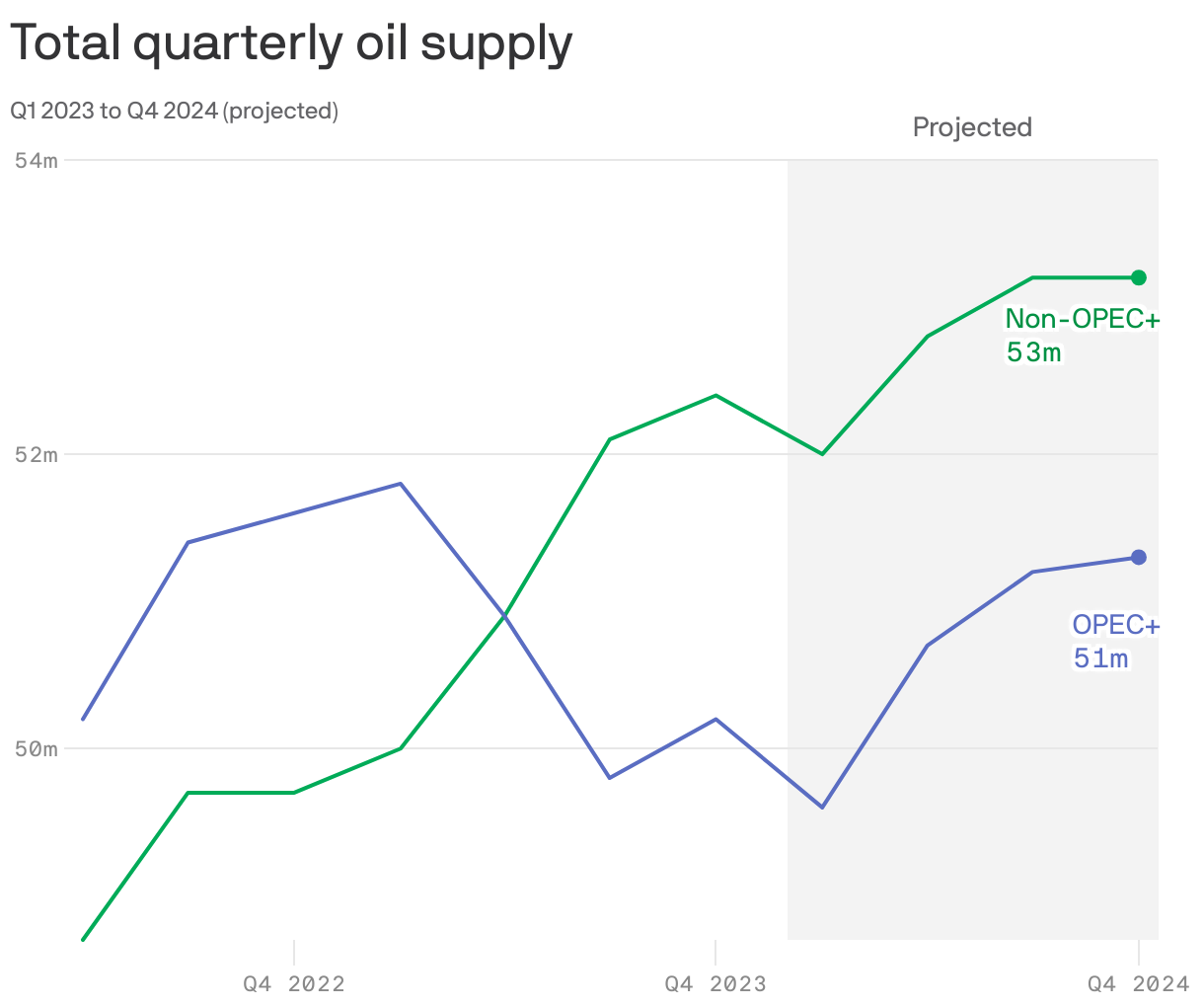
Source:International Energy Agency; Chart: Deena Zaidi/Axios Visuals
Record-setting oil production in non-OPEC nations like Brazil and the U.S. should help make up for production cuts and supply disruptions coming out of the Middle East, the International Energy Agency suggests.
Why it matters: Recent supply disruptions and decreases in production from OPEC+ members, which includes OPEC members and countries including Russia and Kazakhstan, have generated concerns about supply interruptions, and the potential for higher oil prices.
Yes, but: According to monthly IEA data, non-OPEC+ countries will be driving the oil supply wave in 2024. The report tracks global energy supply and security.
By the numbers: Fueled by record-setting output by non-OPEC+ economies like Brazil, Canada, and Guyana, global supply is forecasted to rise by 1.5 million barrels per day, setting a new high of 103.5 million barrels per day by the second quarter of 2024.
With global demand projected to grow at a slightly slower rate — due in part to sluggish economic conditions in China, the world's second-largest crude oil consumer — inventories are projected to rise next year. It potentially puts downward pressure on prices.
What they're saying: "A 2024 market where oil supply growth is sufficient to cover growth in demand is one of the reasons why investors today perceive oil to be an unattractive investment opportunity," J.P. Morgan analysts wrote in a recent research note.
"This perception is a marked turnaround from even a year ago when the consensus view was that … OPEC and its allies had a firm grip on the market."
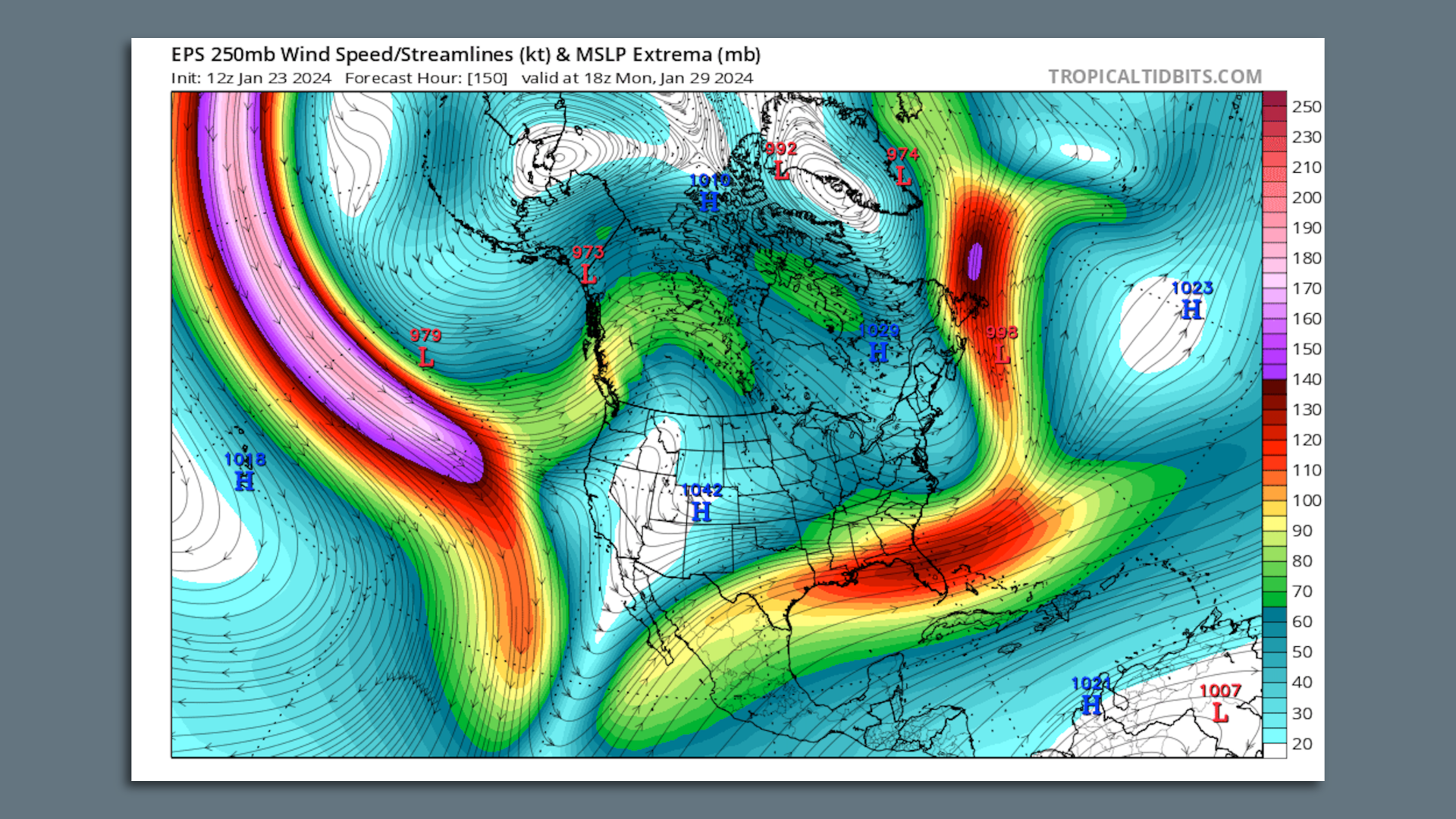
San Diego's dangerous flash flood on Monday may not be the state's last such event of the next couple of weeks, as a weather pattern favorable to atmospheric rivers takes shape across the Pacific Ocean.
Why it matters: Atmospheric rivers are responsible for the majority of the Golden State's precipitation, and are associated with some of its worst floods on record.
The big picture: The impact on trade highlights what experts have long warned about, with compounding events amplifying the growing economic toll of climate change.
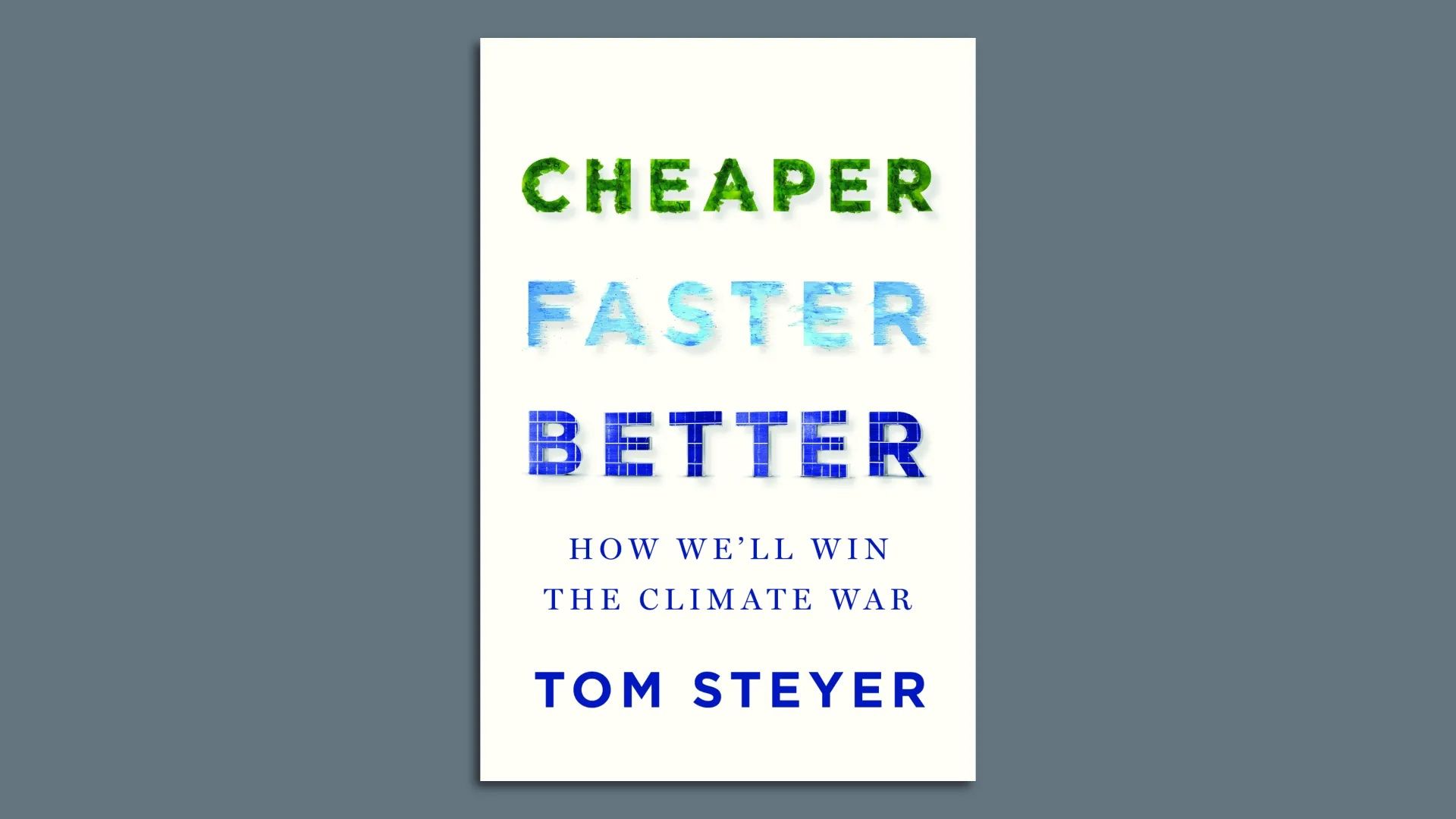
Tom Steyer — the hedge fund billionaire and former presidential candidate — will be out May 28 with a new book that's part business book, part climate manifesto and part memoir.
Why it matters: Steyer argues that our "surest path to winning the climate war is developing and investing in cleaner tech" that's "Cheaper, Faster, Better" — the book's title.
Alaska Airlines chief Ben Minicucci told NBC that the company had found loose bolts in "many" of its Boeing 737 Max 9s during inspections, as both he and United Airlines' CEO raised concerns about the aircraft maker on Tuesday.
Why it matters: The findings come after one of Alaska Airlines' Boeing 737 Max 9 planes lost its exit door plug during a flight earlier this month — prompting grounded aircrafts, a multi-passenger lawsuit and further questions about the aircraft's safety.
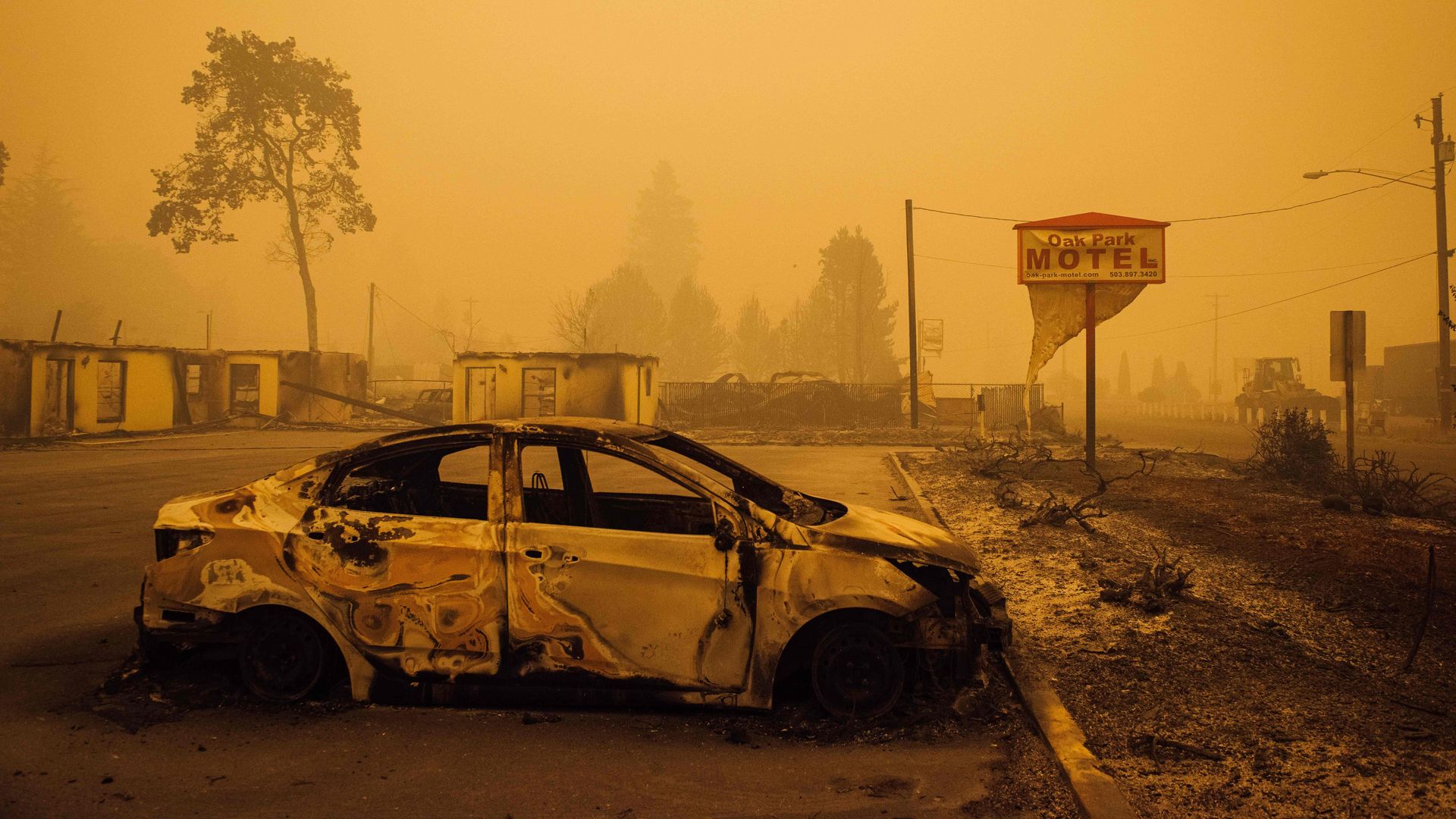
A jury in Portland, Oregon, determined Tuesday that PacifiCorp, an electric utility owned by billionaire Warren Buffett's Berkshire Hathaway, should pay $62 million plus other costs to nine survivors of the Labor Day 2020 wildfires that swept the state.
The big picture: A PacifiCorp spokesperson said the utility intended to appeal the decision in the first trial that counsel for the plaintiffs noted in an email was "exclusively on individuals' damages" after a historic class action verdict last year that established the utility was liable over the deadly fires.
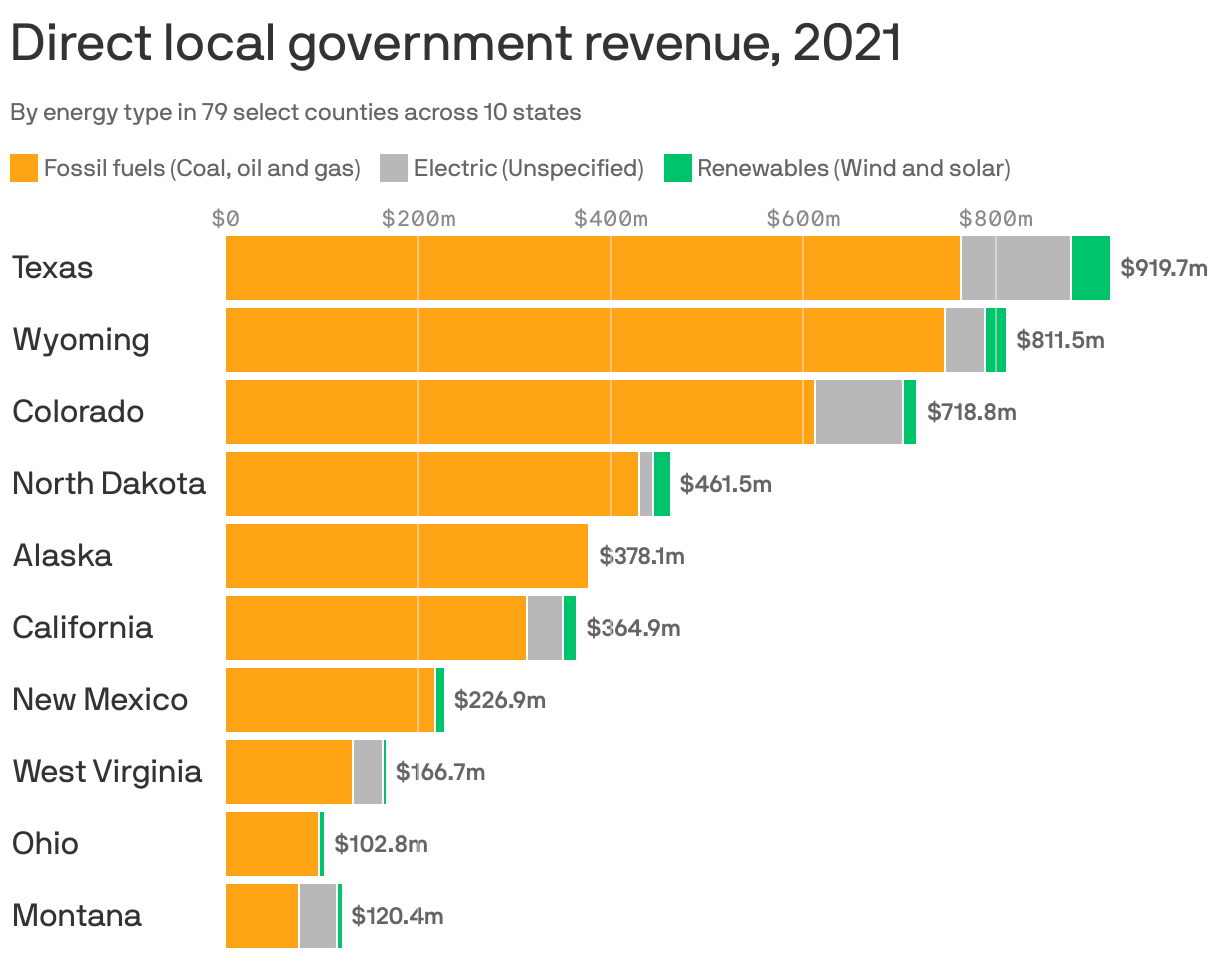
It will take far more than renewables growth to sustain communities facing local revenue loss if strong climate policies curtail fossil fuel production and use.
Driving the news:New research from Resources For the Future and the University of Michigan explores how different forms of energy provide revenues in 79 counties across 10 states.