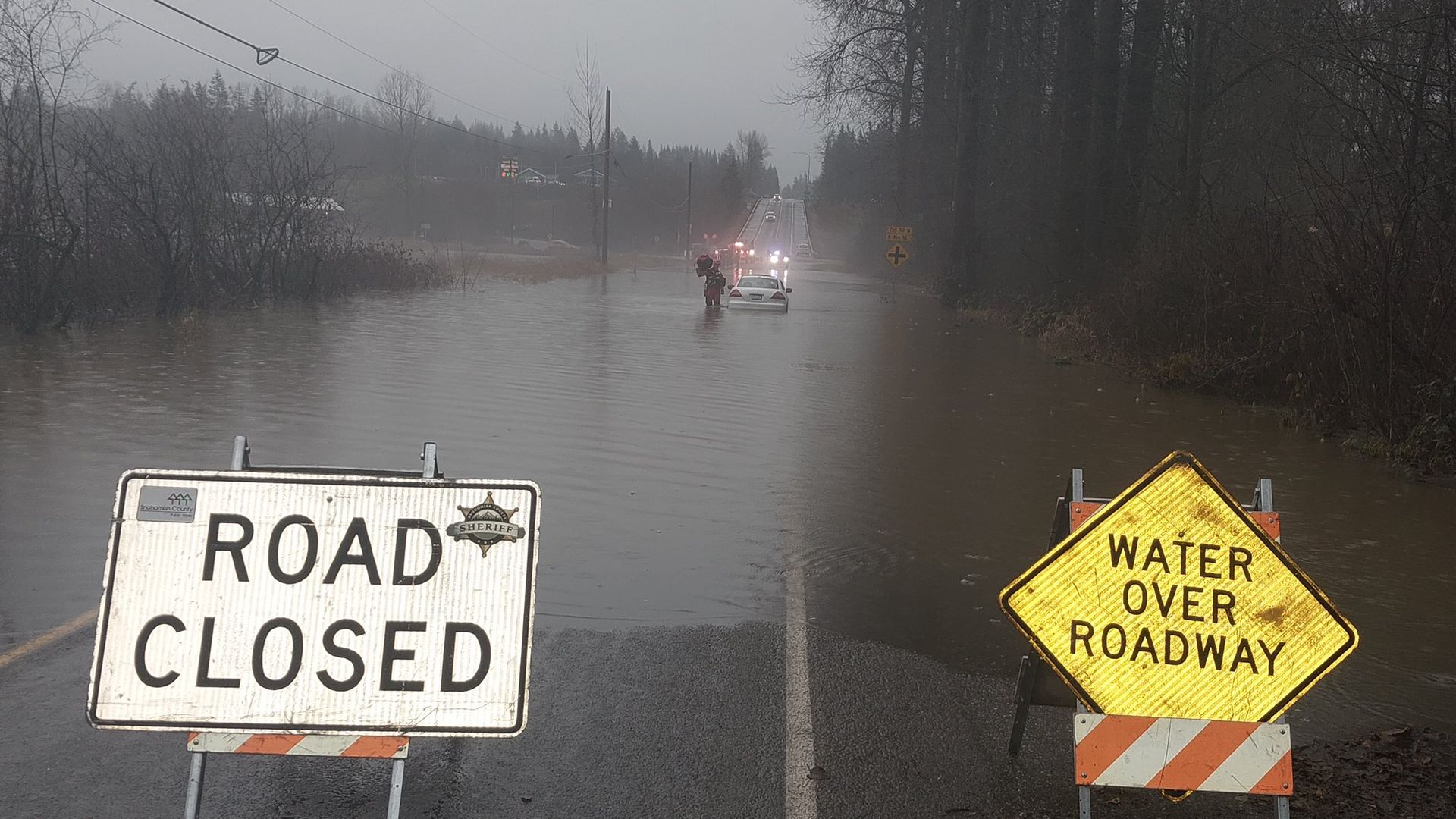
A potent atmospheric river storm system that's flooding the Pacific Northwest with heavy rains this week was disrupting travel and left over 17 million people under flood alerts Tuesday night.
The big picture: At least two people have died in the parade of storms that have prompted water rescues, road and school closures, and forced Amtrak to cancel the train service between Seattle and Portland through Thursday because of a landslide.
DUBAI, United Arab Emirates — Former Vice President Al Gore railed against COP28 President Sultan al-Jaber on Tuesday after a leaked video showed the UAE climate envoy telling former Republic of Ireland President Mary Robinson there's "no science" behind the push to phase out fossil fuels.
What he's saying: "Do not ever try to mansplain to Mary Robinson — it doesn't work," Gore said at an Axios event on the sidelines of COP28 in Dubai.
Deputy Energy Secretary David Turktold Axios the Biden administration takes industry feedback "incredibly seriously" after a reported leak of draft rules for hydrogen tax credits.
Why it matters: The highly anticipated guidance is the subject of an intense lobbying fight between industry and environmental groups.
Shareholders in Origin Energy, one of Australia's largest power producers, have rejected a A$15 billion takeover offer from Canadian investment giant Brookfield.
Why it matters: This is the second major energy deal loss in Australia for Brookfield, which just announced participation in a $30 billion climate fund launched by United Arab Emirates.
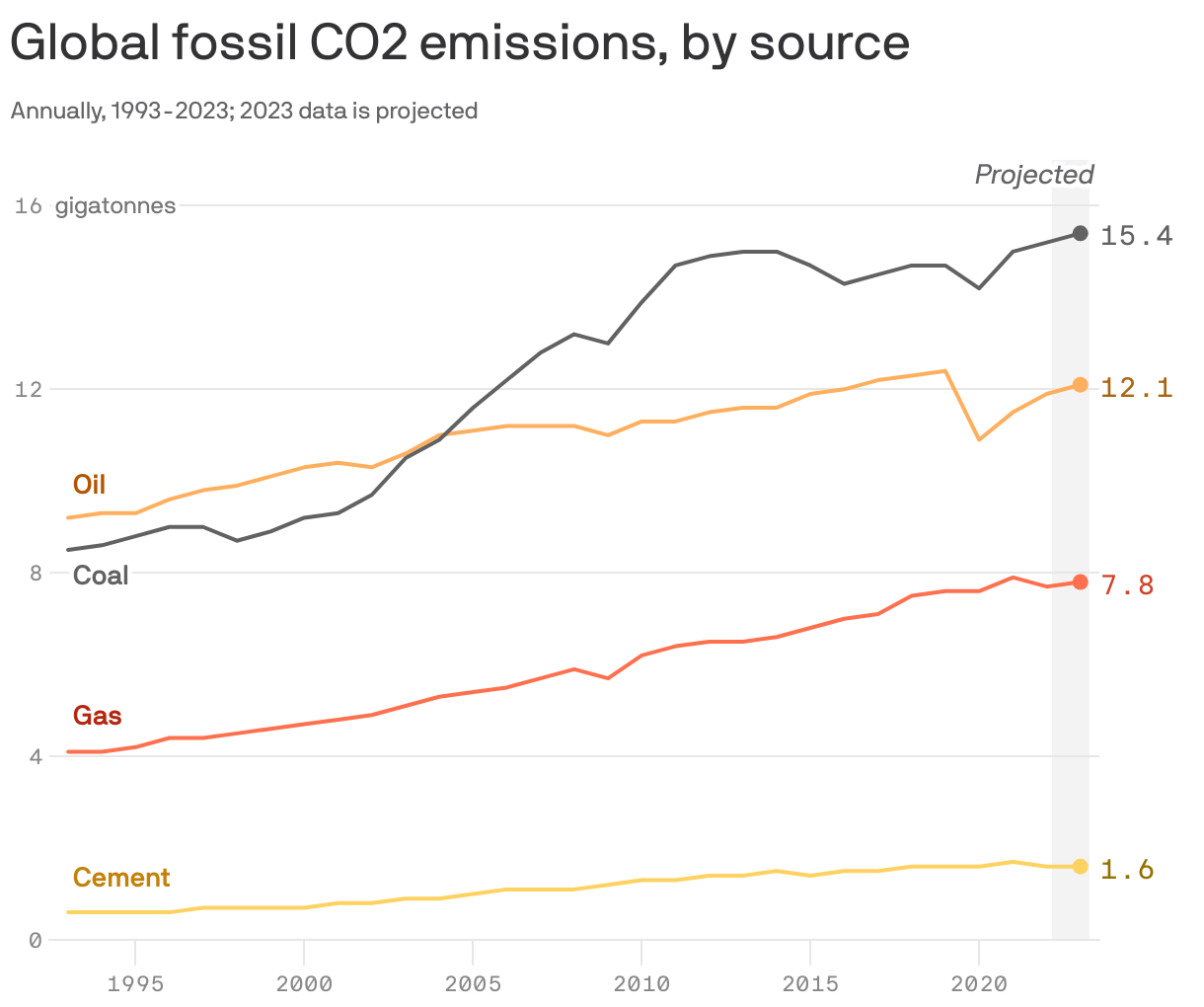
Data: Global Carbon Project; Chart: Simran Parwani/Axios
Taken together, three new analyses highlight the relentless march of climate change — and what's in store without much stronger policies.
Driving the news: TheGlobal Carbon Project (GCP) estimates fossil-related carbon dioxide emissions rose another 1.1% to a new record.
That's despite surging renewables, and falling emissions in developed economies like the U.S. and EU, the researchers found. Axios' Rebecca Falconer has more.
And a World Meteorological Organization report concludes the rate of climate change "surged alarmingly" from 2011-2020.
What they found: Not only was it the warmest decade on record, but glacier and sea ice loss were "unprecedented," the UN weather agency said.
Glaciers thinned by roughly 1 meter per year, while more countries reported record high temperatures than in any other decade.
Zoom in: "The Antarctic continental ice sheet lost nearly 75% more ice between 2011-2020 than it did in 2001-2010," a WMO summary notes, calling this "ominous" for sea-level rise.
What's next: Climate Action Tracker projects warming sailing dangerously past Paris targets, even if nations implement their current pledges.
Their latest estimate ticked up slightly, to 2.5°C above preindustrial levels by 2100, thanks to increasing emissions in countries with "weak" targets.
It's worse when you look at real-world actions based on current policies, which bring an estimate of 2.7°C — no improvement from their 2021 estimate.
Yes, but: Researchers see some bright spots.
GCP sees China's emissions rising 4% this year (not good!), but strong renewables deployment is preventing even higher growth.
U.S. coal emissions are falling sharply, while EU fossil emissions are down 7.4% this year.
What we're watching: Who knows whether this grim choose-your-own-adventure of threat metrics will influence COP28 negotiations.
These reports certainly underscore the urgency of the need for very steep emissions cuts, which are nowhere in evidence yet.
But government policies and investments are motivated by all kinds of considerations and national interests. And scary data is nothing new.
The bottom line: The window to meet Paris goals is shutting fast.
The University of Exeter'sPierre Friedlingstein, a GCP co-author, said in a statement that "it now looks inevitable we will overshoot the 1.5°C target."
"Leaders meeting at COP28 will have to agree [to] rapid cuts in fossil fuel emissions even to keep the 2°C target alive."
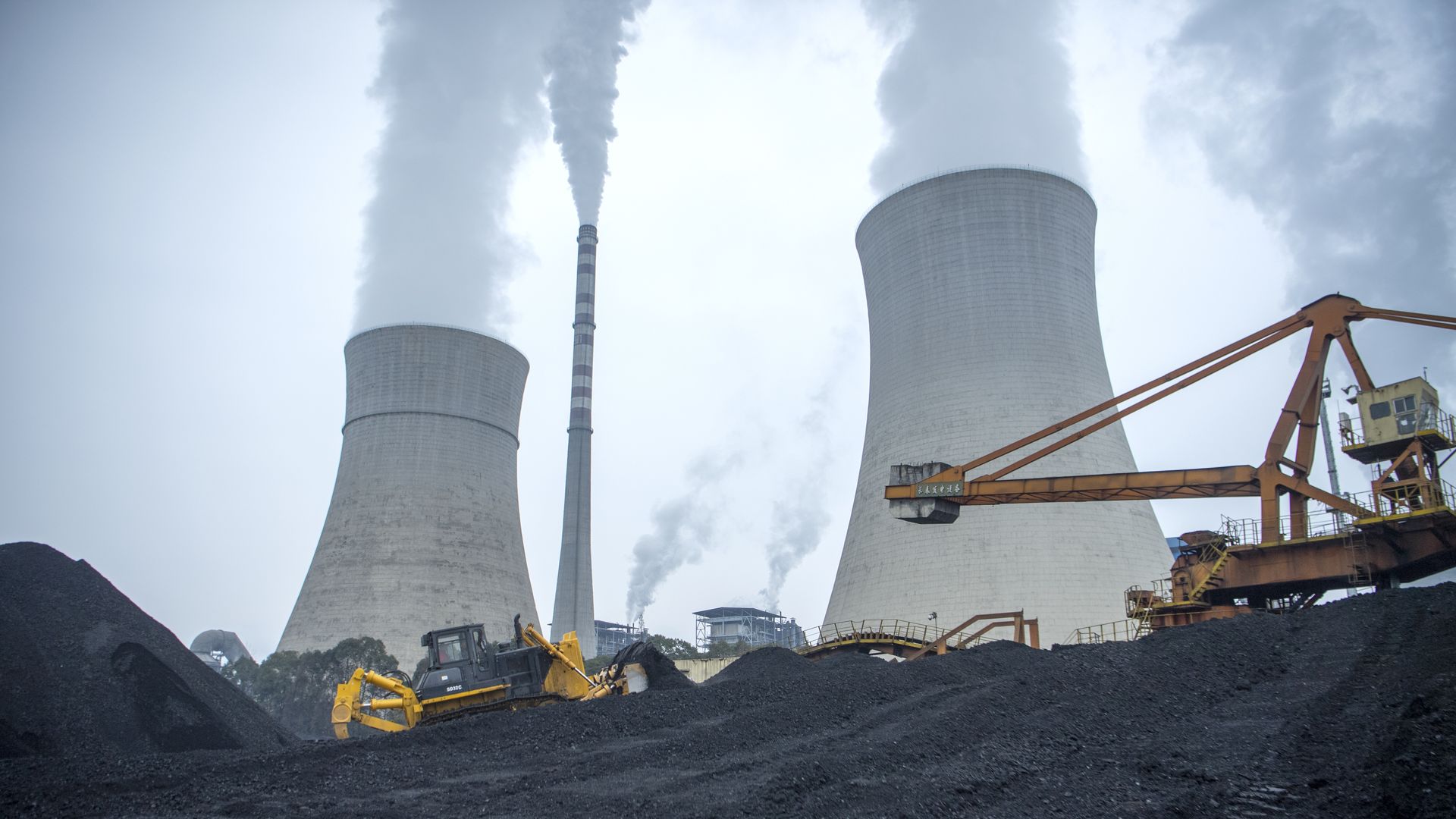
As world leaders gather for the COP28 climate summit in Dubai, carbon dioxide emissions from fossil fuels are soaring to record levels.
The big picture: That's according to new Global Carbon Project, which estimates fossil carbon dioxide emissions of 36.8 billion tonnes in 2023 — 1.1% more than last year, driven in large part by China and India emitting more CO2 as they use large amounts of coal.
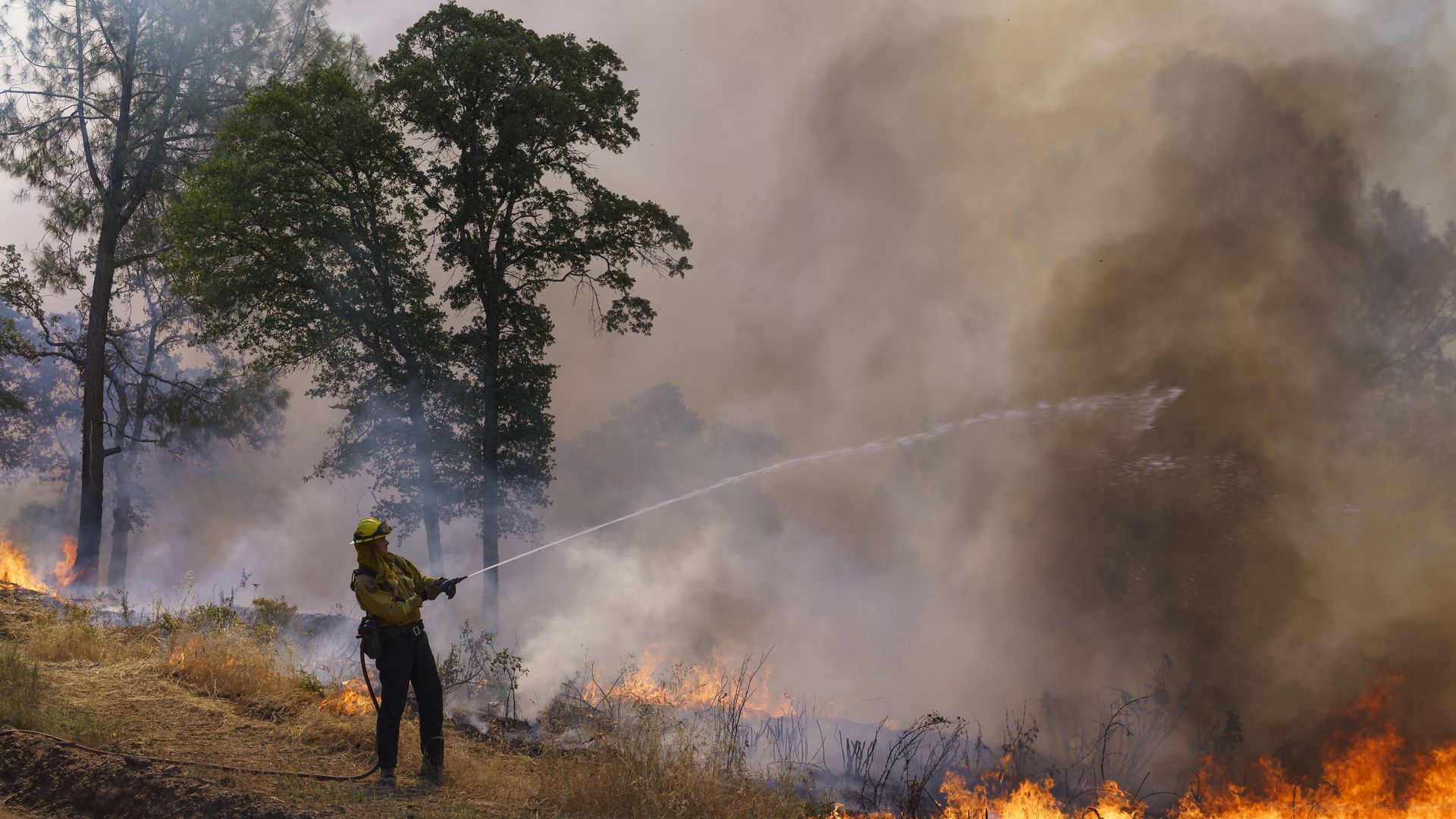
Increasingly intensive and frequent wildfires in the western U.S. are deteriorating air quality and causing more premature deaths, a new study found.
The big picture: Fires have damaged federal efforts from the Environmental Protection Agency to improve air quality mainly through reductions in automobile emissions, per the study published Monday in The Lancet Planetary Health.