Zoom in: They promised that, by the year 2020 and lasting through 2025, they would provide $100 billion annually to developing nations to help them withstand the effects of climate change and mitigate emissions.
Warming temperatures are changing where and when different plant varieties can grow most successfully, according to a U.S. Department of Agriculture (USDA) map released this week.
Why it matters: The Plant Hardiness Zone Map is a kind of bible for farmers and gardeners, helping them understand which plants can thrive in their area — and when to plant them.
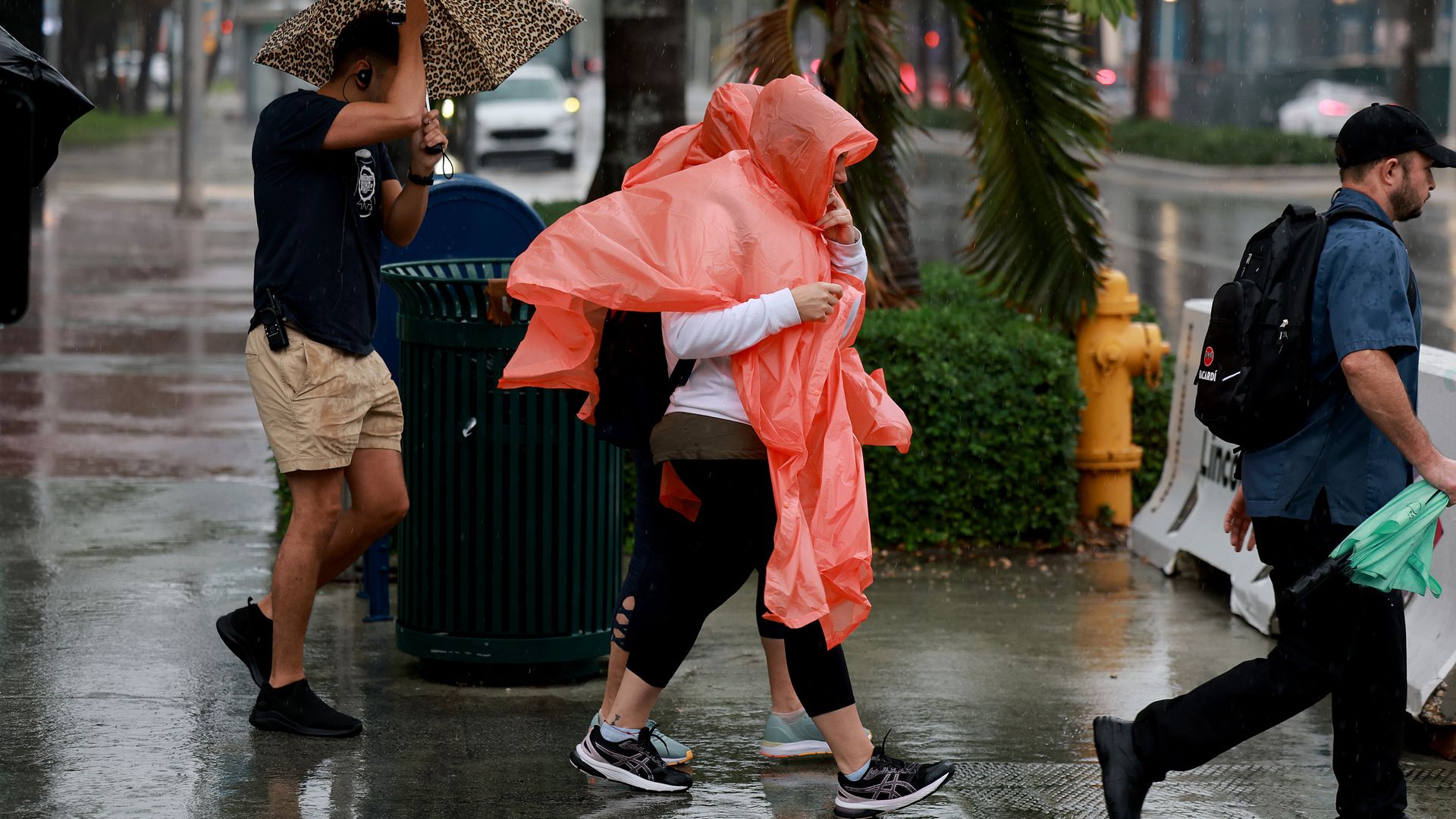
Thousands of customers in Florida were without power Thursday evening after an impactful nontropical storm lashed parts of the state's southeast with hurricane-forced winds and record rainfall that flooded streets in the I-95 corridor overnight.
The big picture: A weather system draped just off the Florida coast was bringing the threat of more heavy rain, gusty winds and "dangerous marine conditions" across the Space Coast region on Thursday, as officials in cities including Miami and Fort Lauderdale responded to flooding the previous night.
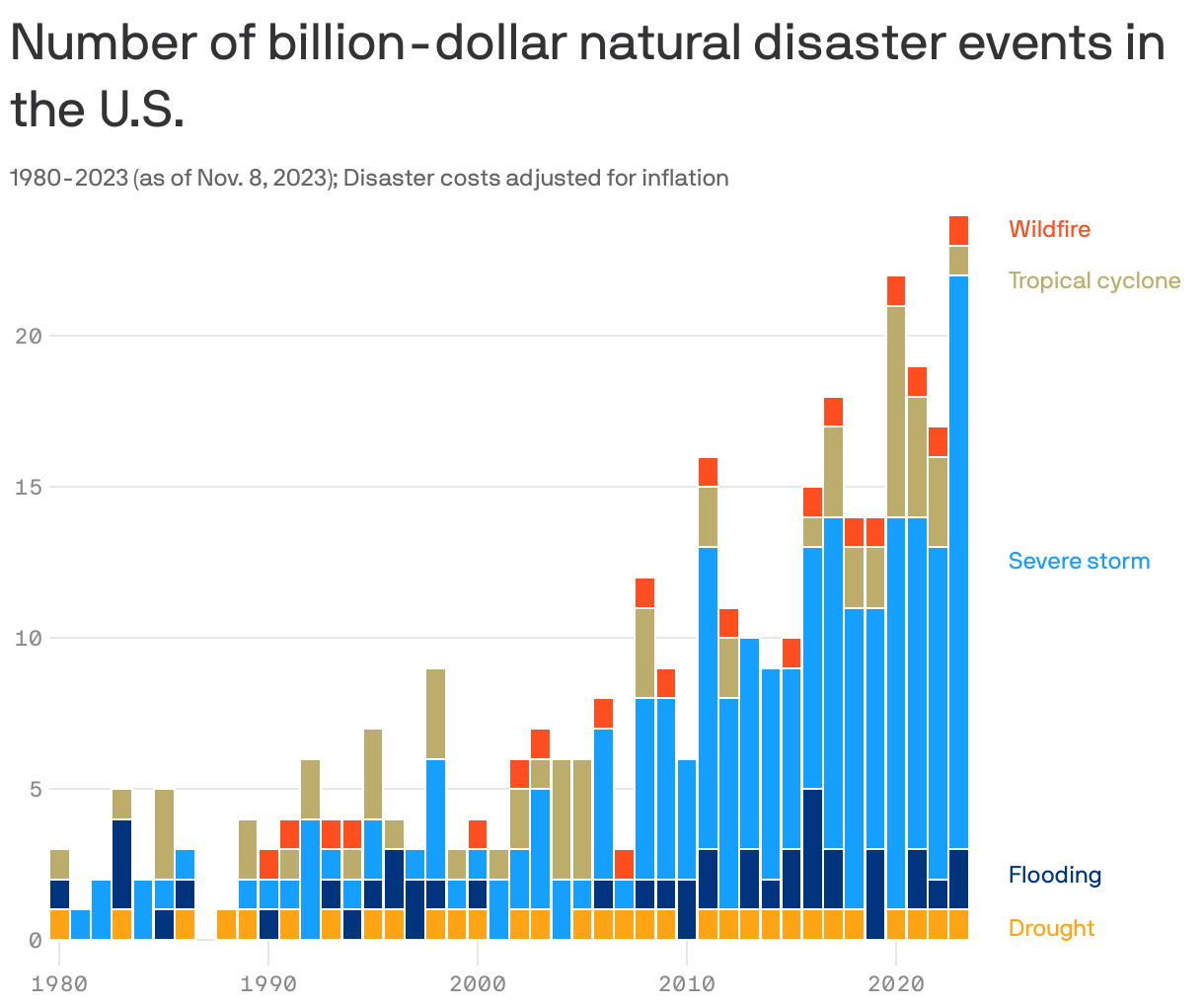
Why it matters: The cost of extreme weather events is projected to climb in the near-term and is already at least $150 billion per year in direct damages alone. (The report notes that is a conservative estimate.)
ExxonMobil boss Darren Woods is hoping for a vibe shift at COP28 and beyond.
Driving the news: Woods is seeking recognition that a wide array of parties and companies — including oil giants — are needed to cut emissions, he said in a response to a question from Axios' Hope King on the sidelines of the APEC summit in San Francisco.
Frontier, the group of business giants trying to juice carbon removal markets, has deals with two companies working to scale direct air capture (DAC) technology.
Why it matters: Contracts with Heirloom and CarbonCapture are Frontier's first major offtake agreements with startups using DAC, a method receiving a growing amount of federal and private sector finance.