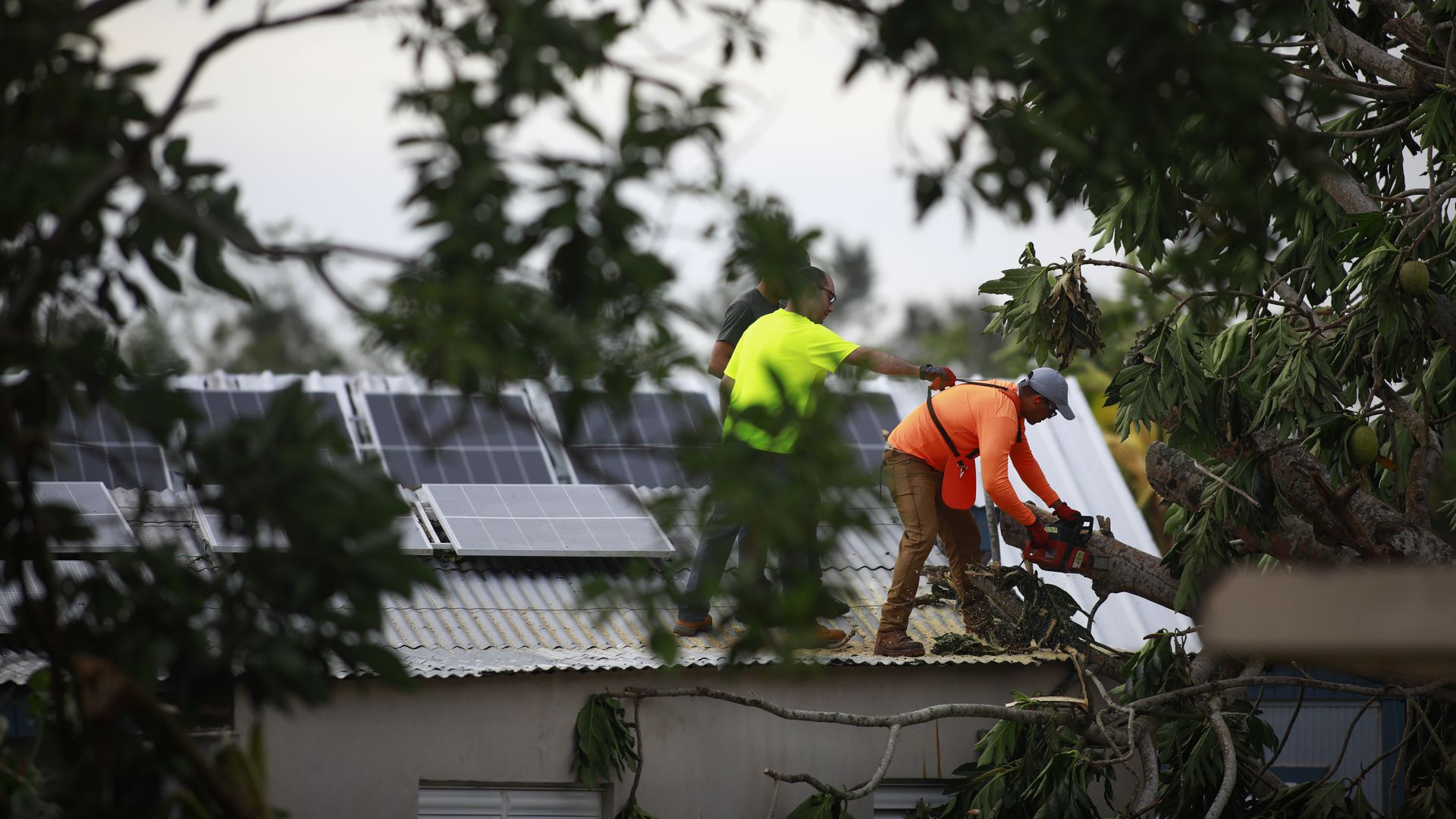
Puerto Ricans are scrambling to figure out how — or whether — to rebuild after yet another major disaster.
State of play: About 33%of homes and businesses were still without power Tuesday morning — more than a week after Hurricane Fiona hit, according to Luma Energy, the island's grid operator. Thousands still don’t have running water.
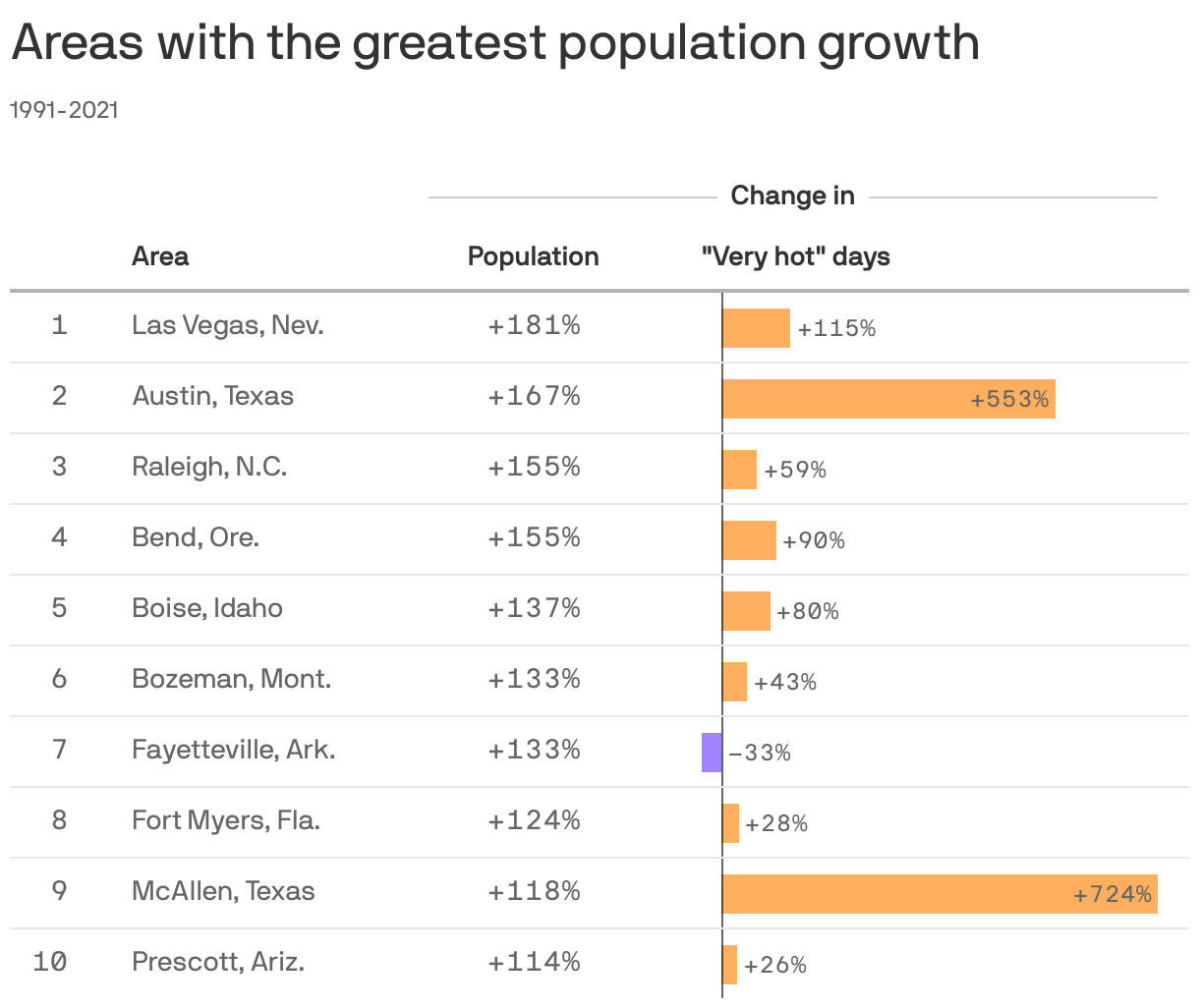
Note: "Areas" are defined as Core-Based Statistical Areas, which are one or more socioeconomically-tied counties anchored by an urban center. "Very hot" days are those with a high at or above the 1991-2020 95th percentile temperature for each given area. Data: U.S. Census, NOAA; Chart: Erin Davis/Axios Visuals
Almost all of the fastest-growing major metro areas across the U.S. are getting significantly hotter, and many are also at risk for other natural disasters.
Why it matters: These long-term population trends will strain cities' water supplies, power grids and other utilities, and put a lot of Americans at risk of heat-related health issues.
Ian strengthened into a Category 3 major hurricane just before making landfall over western Cuba on Tuesday morning, according to the National Hurricane Center.
State of play: The now-major hurricane continued to strengthen after making landfall in Cuba with maximum sustained winds of 125 mph, the NHC said in a 4:30am tweet. The storm's outer rain band began on Monday night lashing coastal areas of Florida, where it could hit as a Category 4 hurricane as early as Wednesday.
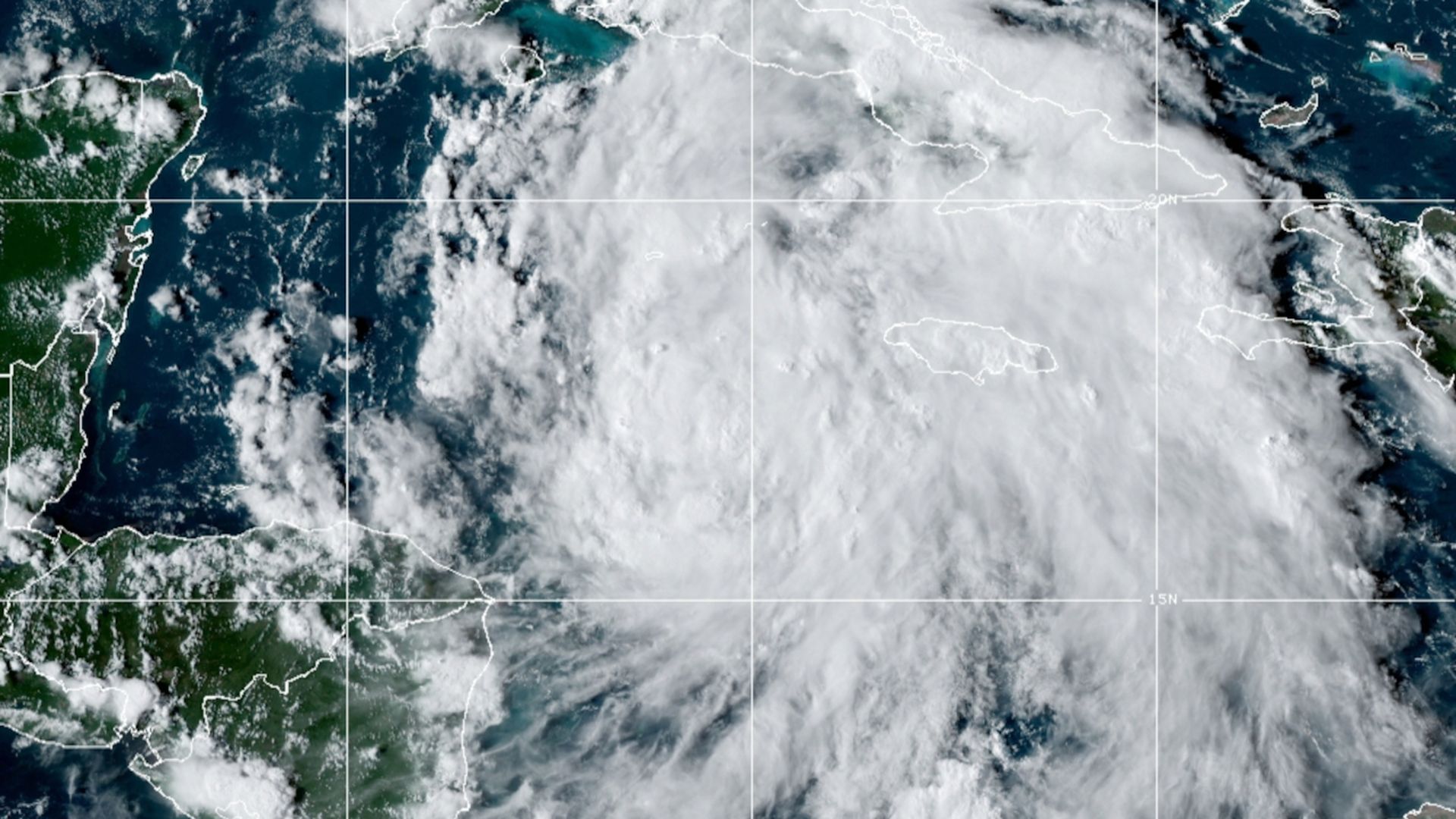
The eyewall Hurricane Ian was nearing Cuba early Tuesday as Florida was lashed with the outer bands of the Category 2 storm — which the National Hurricane Center warns could rapidly intensify into a Category 4 by midweek.
State of play: Ian was packing maximum sustained winds of 110 mph some 85 miles east of the western tip of Cuba at 2am Tuesday — just 1 mph off being classified as a major hurricane. There's a "danger of life-threatening storm surge" along much of the Florida west coast," the NHC said.
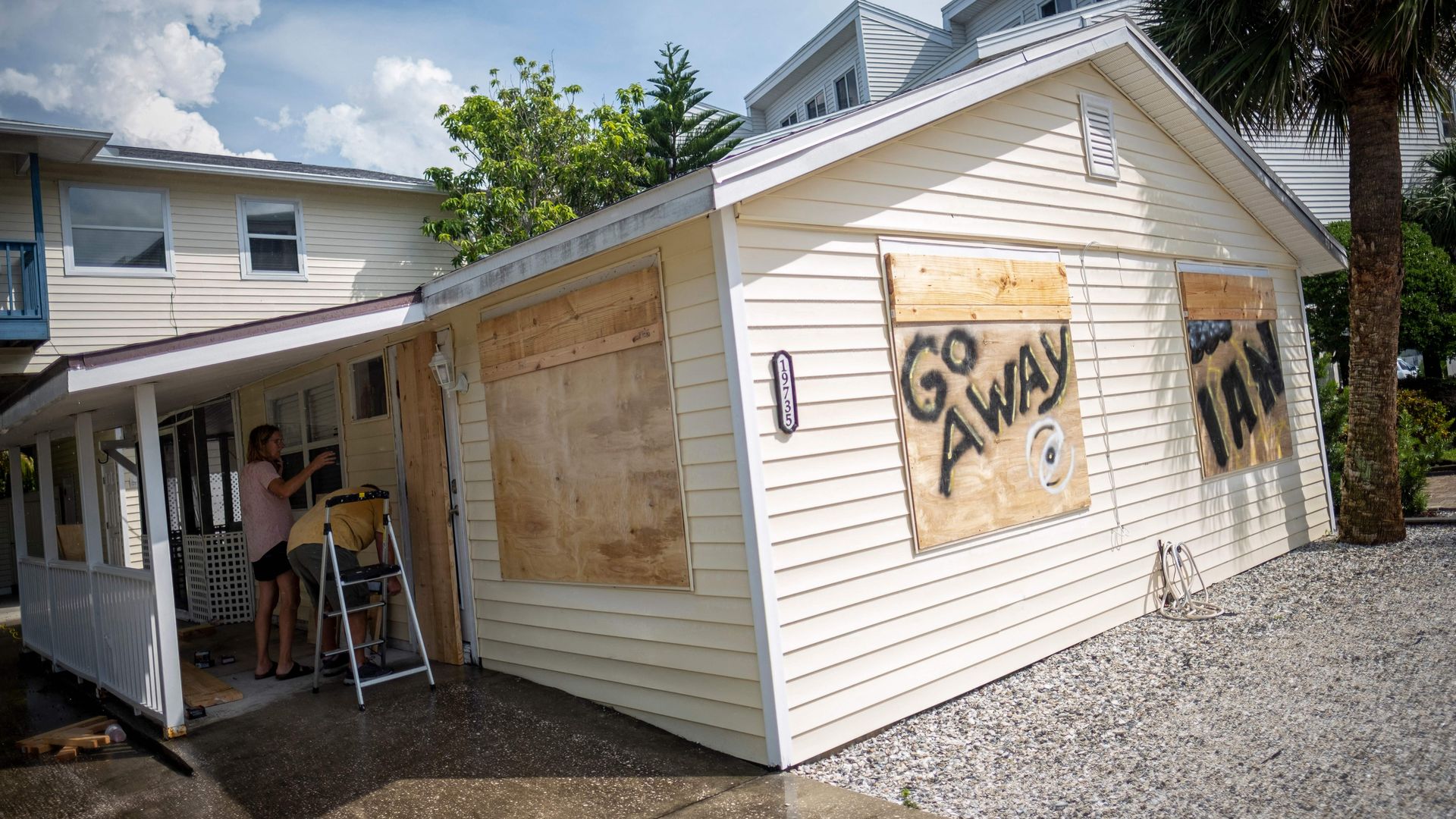
Hurricane Ian triggered evacuation orders across much of Florida’s Gulf Coast as the storm's outer bands unleashed heavy rains across the region on Monday night ahead of expected "life-threatening" storm and flooding by midweek.
Why it matters: Ian's expected to intensify further as it passes near or over western Cuba Tuesday while tracking toward Florida.
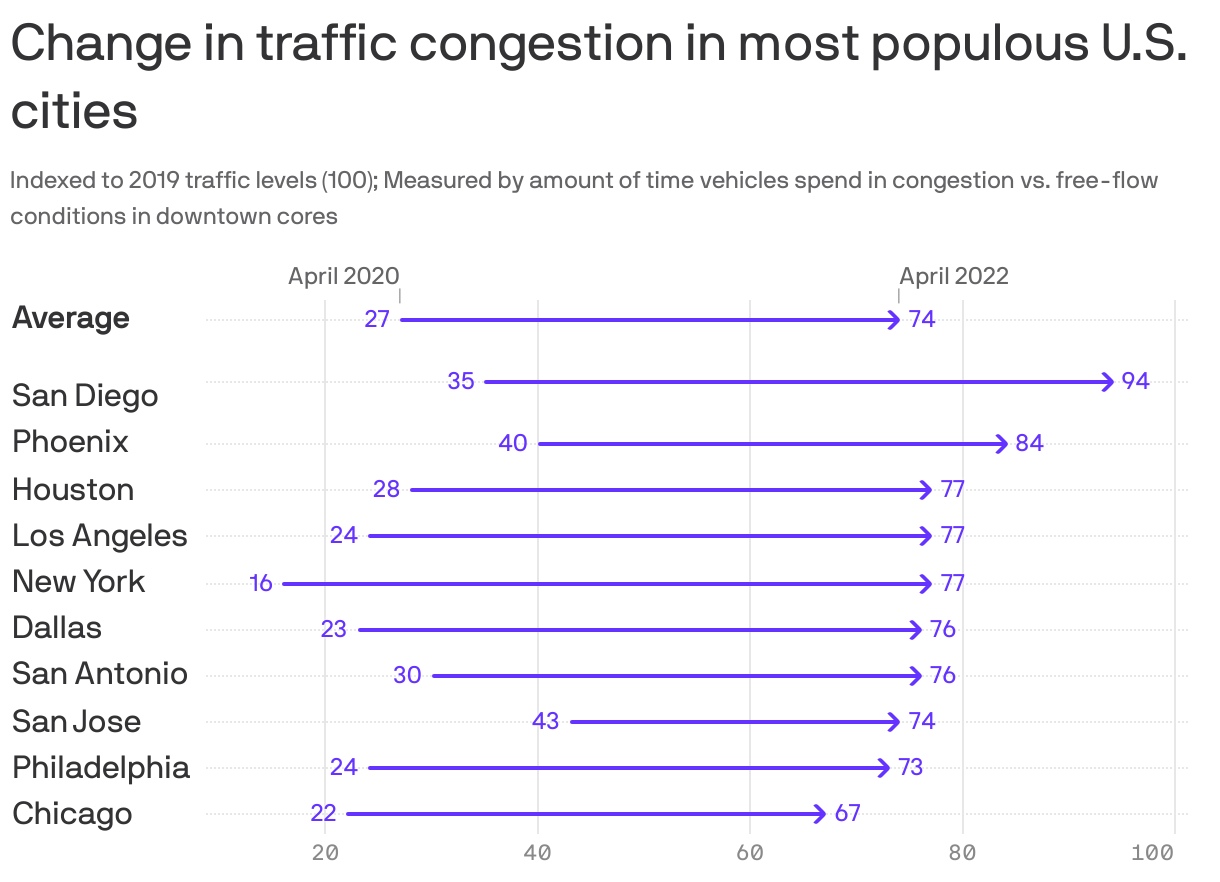
Downtown traffic congestion in major U.S. cities has risen significantly since the early days of the COVID-19 pandemic, but remains short of pre-outbreak levels, per a new analysis.
Why it matters: The pandemic has been an opportunity for cities to rethink their approach to car traffic.
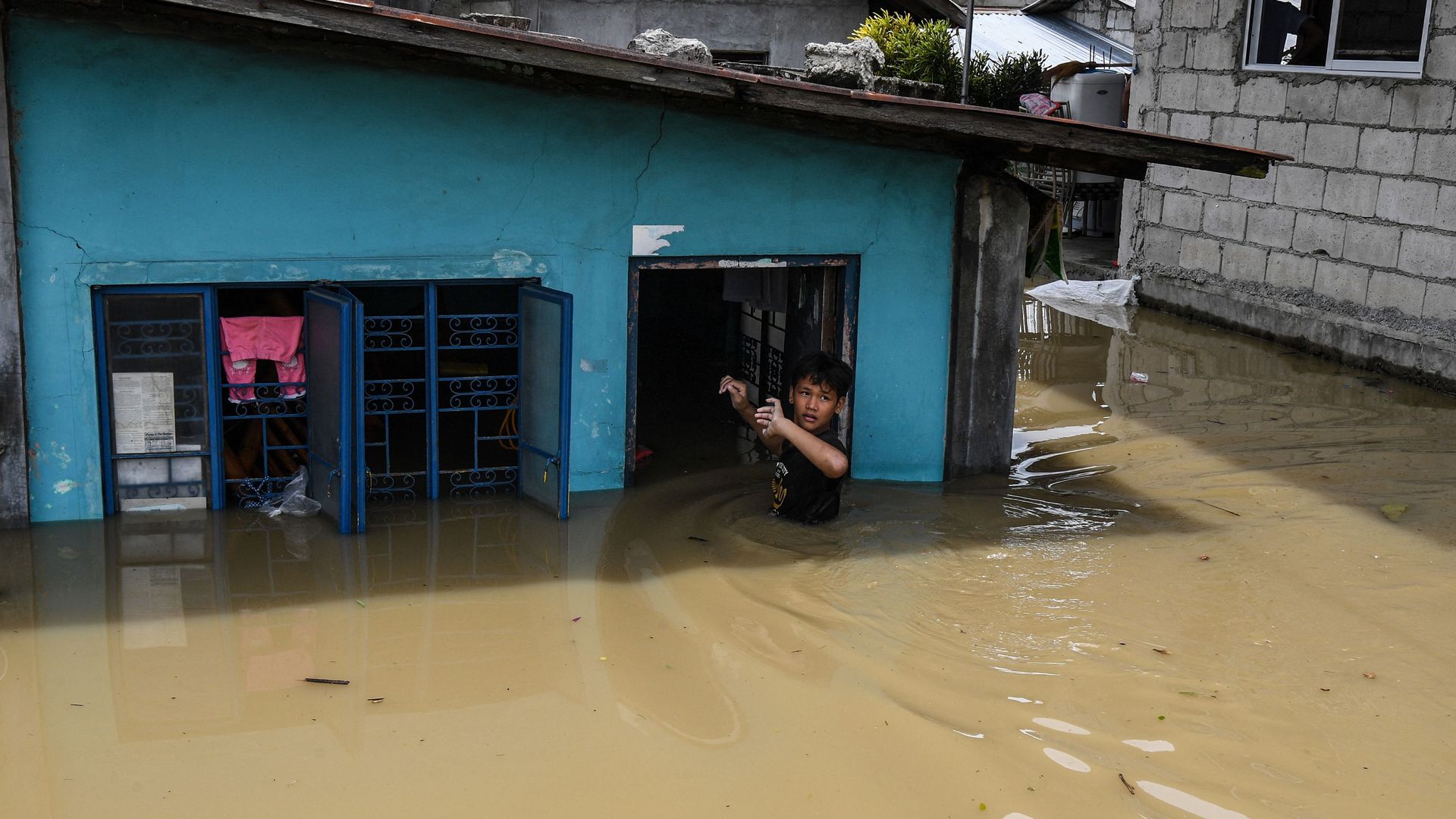
Homes across the northern Philippines were flooded and without power on Monday after the deadly Typhoon Noru swept through.
The big picture: Philippine President Ferdinand Marcos Jr. flew over flood-affected regions on Monday to survey the damage from the most powerful typhoon to strike the country this year.