President Biden has nominated Monica Medina to become assistant secretary at the State Department's Bureau of Oceans and International Environmental and Scientific Affairs, the White House announced Thursday.
Why it matters: Medina, the wife of White House Chief of Staff Ron Klain, previously worked at the National Oceanic and Atmospheric Administration.
The White House on Thursday evening nominated Rick Spinrad, an oceanographer at Oregon State University, to head the National Oceanic and Atmospheric Administration (NOAA).
Why it matters: Filling the NOAA slot would complete the Biden administration's leadership on the climate and environment team. The agency, located within the Commerce Department, houses the National Weather Service and conducts much of the nation's climate science research.
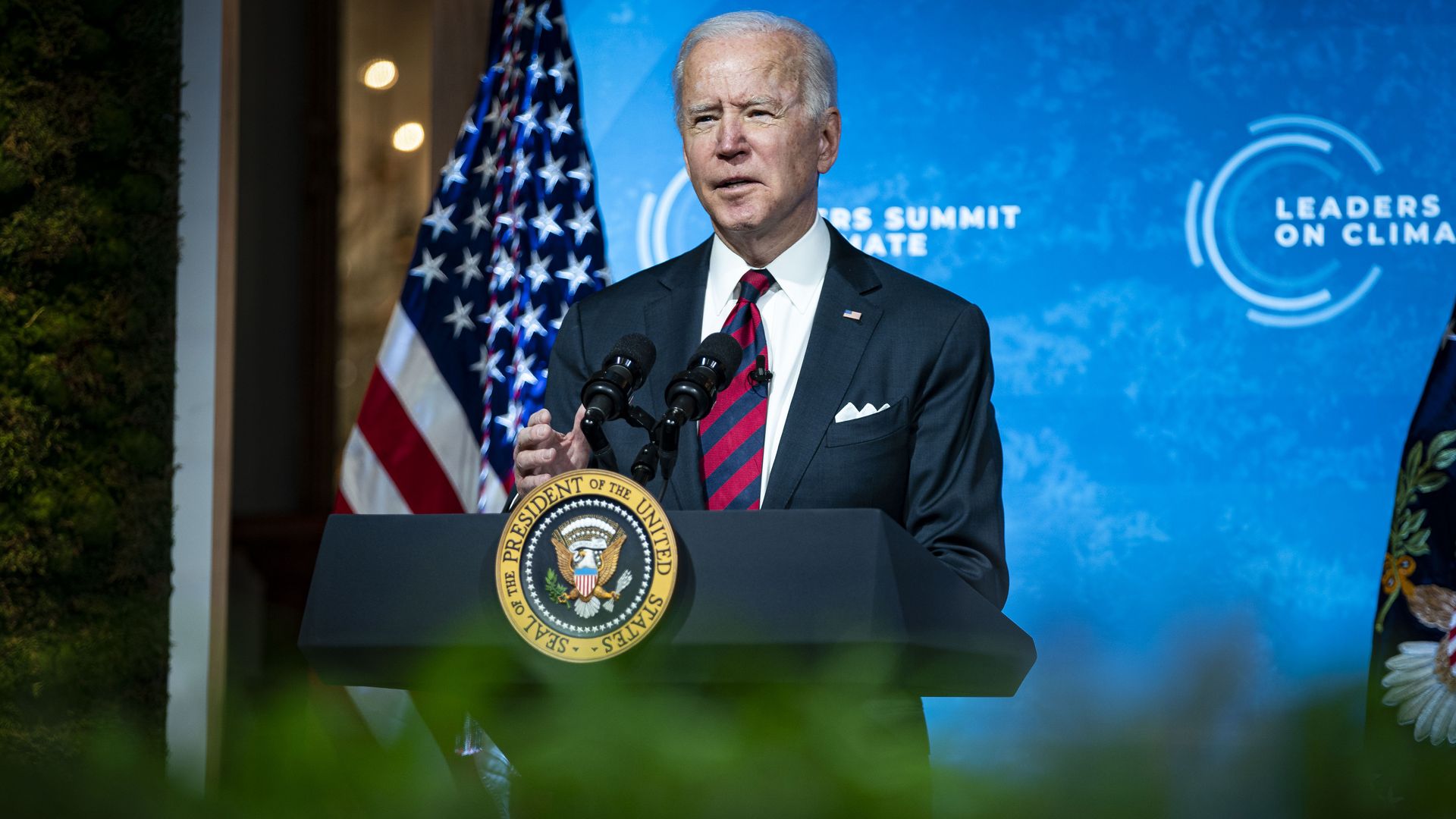
Wall Street got a front seat at President Biden's climate summit.
Why it matters: Banks, as financing gateways for other businesses, could help set the tone for the rest of corporate America. They're facing pressure — from world leaders, the United Nations, activists, you name it — to play their biggest role yet in greening the global economy.
The Earth's ocean acts as a global climate regulator, and scientists are increasingly studying its chemistry and geologyto find potential ways to store carbon dioxide captured from emissions or removed from the air.
The big picture: Oceans are bearing some of the brunt of climate change — they're acidifying, warming at the surface and experiencing other damaging effects. But deploying wind and solar energy offshore, restoring coastal ecosystems and other efforts could turn the seas into a solution, Axios' Andrew Freedman reports.
The White House released an international finance strategy Thursday that aims to help other nations fight climate change.
The big picture: A major part of the wide-ranging plan, released as the White House climate summit takes place, calls for Congress to approve big increases in U.S. financing to help other nations curb emissions and adapt to warming.
The U.S.-hosted climate summit has now begun, ahead of the bigger U.N. climate change conference in Glasgow in November.
The state of play: One major theme has already emerged: Investing in a zero-carbon future has moved from being a contrarian strategy with virtue-signaling upside, to being the central investing thesis for most giant financial institutions.
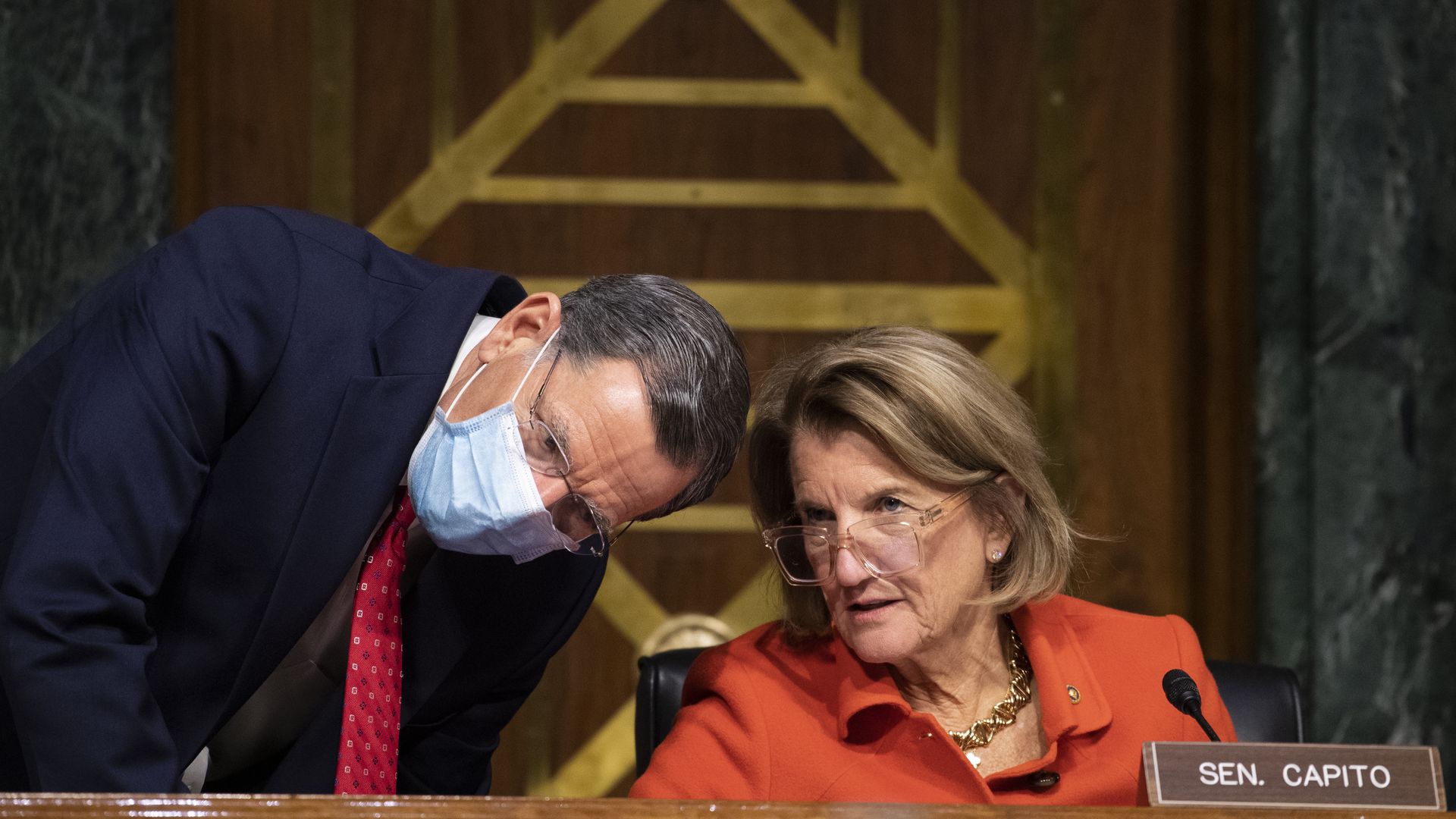
Senate Republicans formally rolled out the framework for their $568 billion counterproposal to President Biden's $2.5 trillion infrastructure plan on Thursday.
Why it matters: The package is far narrower than anything congressional Democrats or the White House would agree to, but it serves as a marker for what Republicans want out of a potential bipartisan deal.
Climate activist Greta Thunberg released a video Thursday denouncing world leaders for the "hypothetical targets" announced at President Biden's virtual climate summit this week.
Multiple world leaders announced new targets for reducing greenhouse gases during President Biden's virtual climate summit, which featured more than 40 heads of state and other world and business leaders.
Why it matters: The goal of the summit is to spur more ambitious emissions reductions through non-binding commitments, bringing the world in line with the global warming goals of the Paris Climate Agreement.
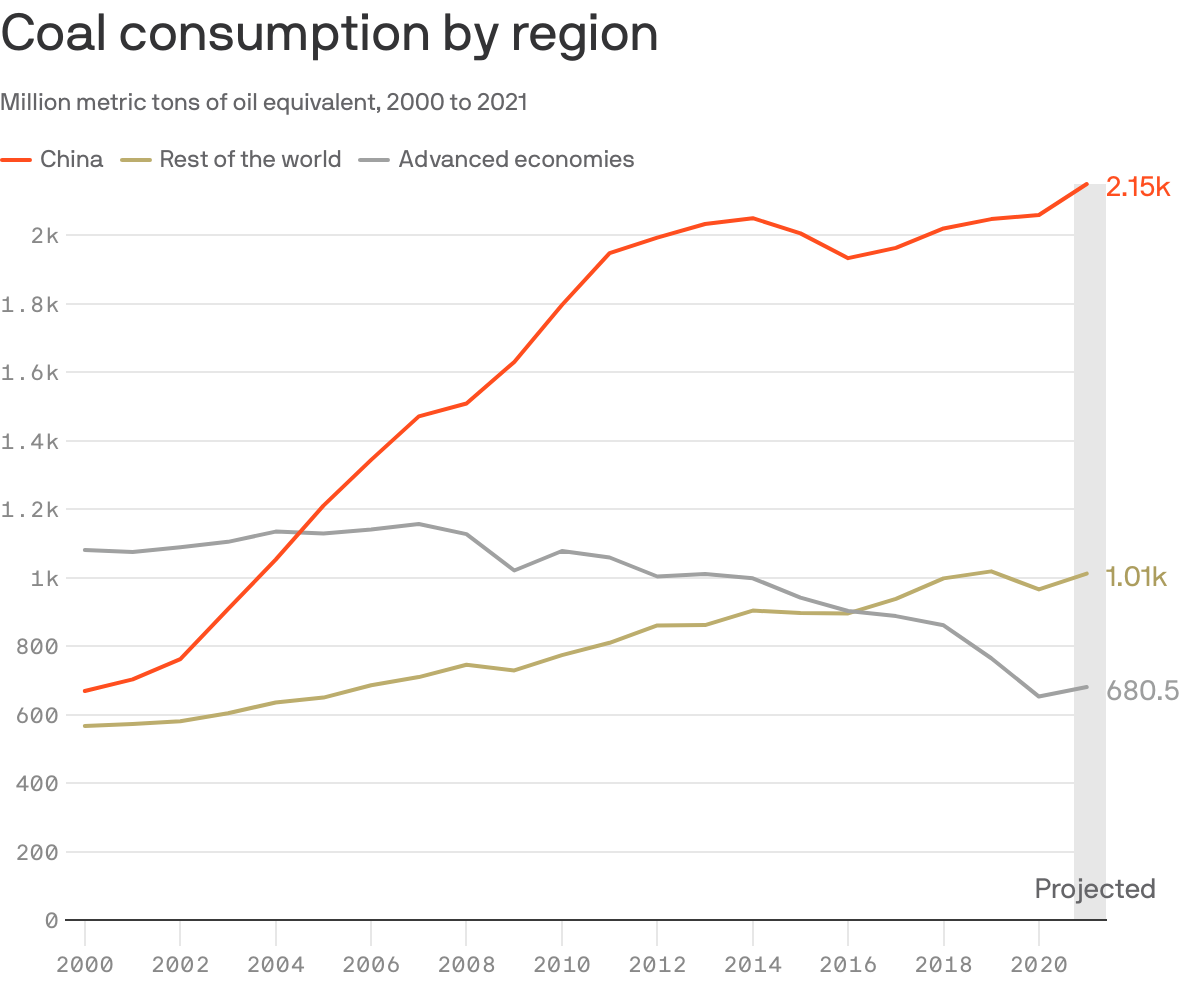
The chart above shows one reason cutting global emissions is so hard: the persistence of coal, especially in China, where demand for the most carbon-intensive fuel grew even during the pandemic.
The big picture: The International Energy Agency, in a report this week, said it sees global coal demand increasing by 4.5% in 2021 after last year's decline.
President Biden's new U.S. emissions-cutting target is a sign of White House ambition and a number that distills the tough political and policy maneuvers needed to realize those aims.
Driving the news: This morning the White House unveiled a nonbinding goal under the Paris Agreement that calls for cutting U.S. greenhouse gas emissions by 50%-52% by 2030 relative to 2005 levels.
The Biden administration is moving to address global warming by setting a new, economy-wide greenhouse gas emissions reduction target of 50% to 52% below 2005 levels by 2030.
Why it matters: The new, non-binding target is about twice as ambitious as the previous U.S. target of a 26% to 28% cut by 2025, which was set during the Obama administration. White House officials described the goal as ambitious but achievable during a call with reporters Tuesday night.