Green rooftops are growing in popularity, offering a slew of environmental benefits, the New York Times reports.
The big picture: The rooftops on apartments or commercial buildings often feature lawn areas, grills and seating. Some host community gardens, blossoming vegetables and herbs. But the greenery, and corresponding absence of asphalt and shingles, doesn't just up the aesthetic, it lowers surrounding temperatures, reduces energy use and assists in filtering storm water.
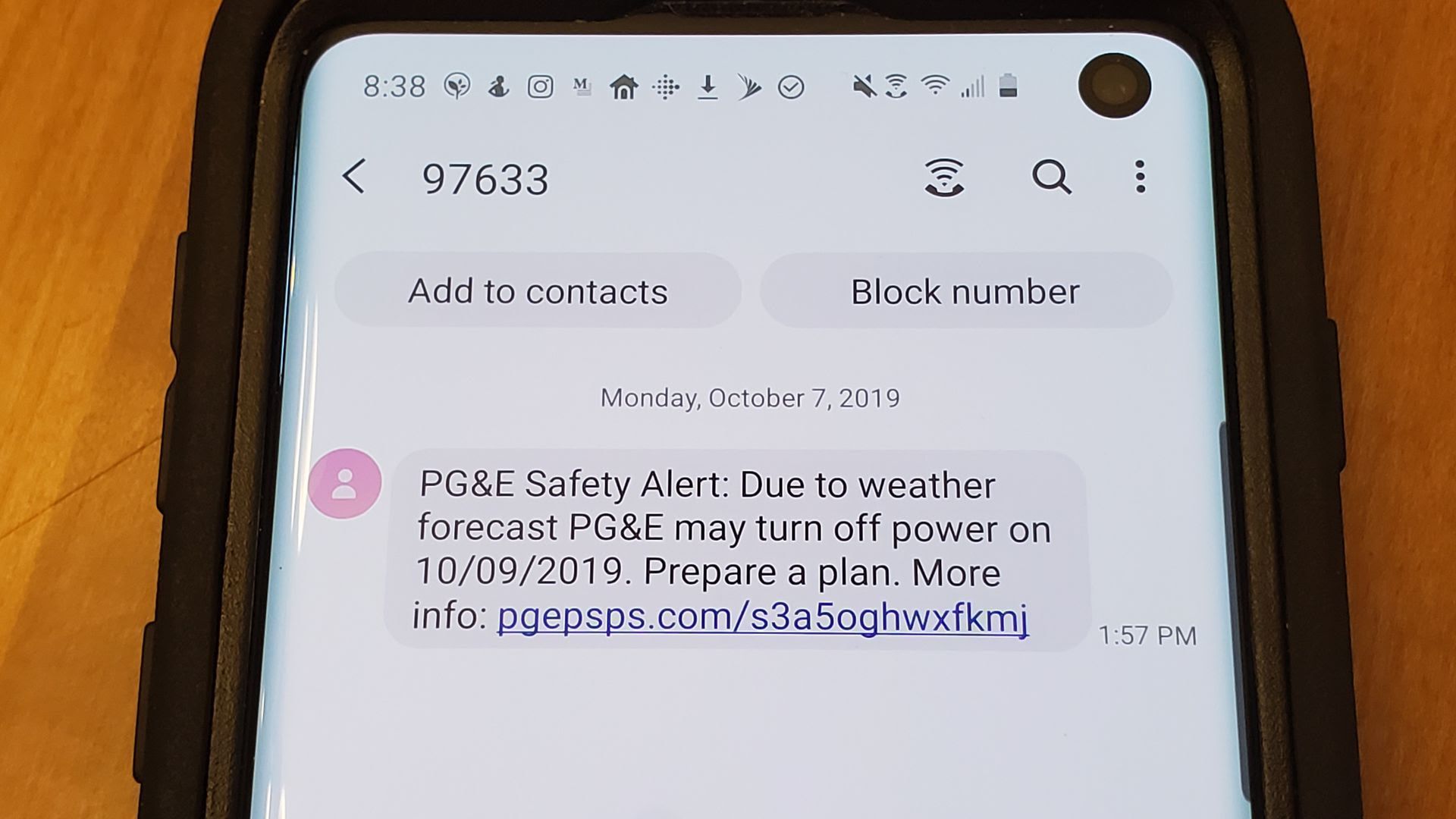
2 million Californians face intentional blackouts because their bankrupt power utility is using desperate measures to prevent wildfires caused by its crumbling infrastructure.
The big picture: "Utilities malfunctions have been tied to some of the state’s most destructive fires, including last year’s Camp fire, which devastated Paradise, Calif., and the 2017 wine country blazes," the Los Angeles Times notes.
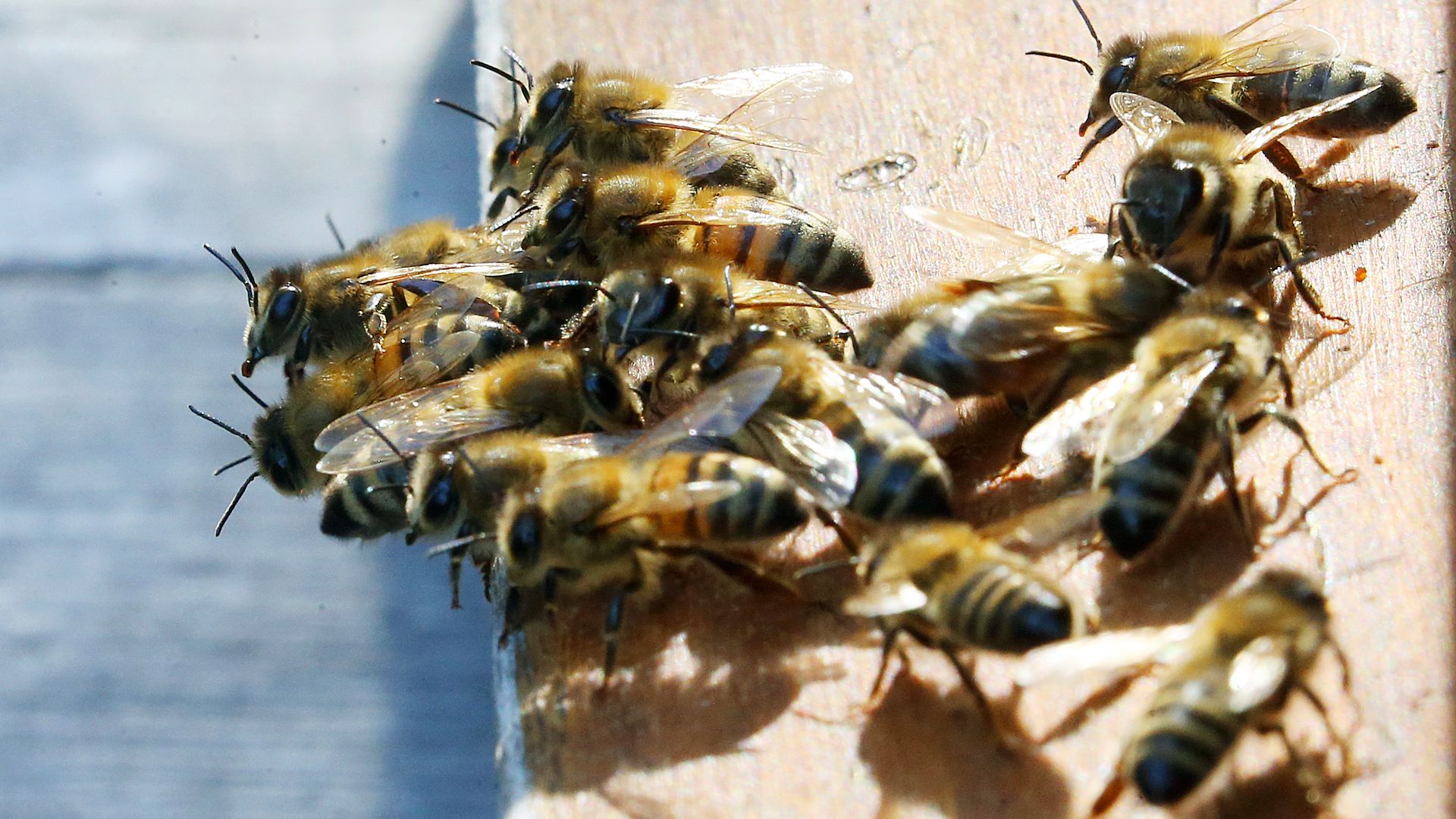
A 4-year study sh0wed that pollinating insects boosted margins for rapeseed farmers in France more effectively than pesticides to fend off unwanted bugs and damage, according agricultural researcher INRA and the country’s National Centre for Scientific Research.
Why it matters: The benefit of pesticides didn’t make up for higher costs. If farmers lessen their pesticide use, it can both help the environment and their gross margins. “Greater yields may be achieved by either increasing agrochemicals or increasing bee abundance, but crop economic returns were only increased by the latter,” the researchers said.
Mayors from 94 cities committed to cutting emissions from the sectors that most contribute to climate change (transportation, buildings, industry and waste) to keep global temperatures below the 1.5-degree Celsius goal of the Paris Agreement.
The big picture: The Global New Green Deal was announced today at the C40 Mayors Summit in Copenhagen. Despite the U.S. government pulling out of the Paris Climate Agreement, cities have committed to meeting greenhouse gas reduction goals.
Pacific Gas and Electric Company, the California power giant, said early this morning that it has begun shutting off power to almost 800,000 customers in a bid to prevent fires when strong winds arrive.
Why it matters:Via the San Francisco Chronicle, "For PG&E, the shut-offs will mark a high-stakes test of a program the now-bankrupt company developed after being implicated in two years of catastrophic infernos."
The turmoil in Ecuador is a fresh example of why fossil fuel subsidies are so persistent worldwide: There's support for phasing them out in theory, but in practice it's a different story.
Driving the news: President Lenín Moreno this week said he has temporarily moved government operations from the capital city, Quito, to the port city of Guayaquil.
Airports in the U.S. are attempting to reduce emissions by replacing equipment with electric- and solar-powered technology.
Why it matters: Air travel accounts for 2% of global emissions, and cities and public agencies are uniquely positioned to use their relationships with airlines and terminal operators to impact emissions reduction practices at the airports themselves.
2020 candidate Elizabeth Warren wants to put environmental justice at the center of responding to climate change.
Why it matters: Her plan, which was unveiled Wednesday and focuses on addressing the disproportionate pollution burdens that the poor and communities of color often face, arrives as Warren has reached the top of the Democratic primary field.
Kim Kardashian told Reuters Tuesday that she'd like to help teen climate activist Greta Thunberg's parents manage the 16-year-old's social media presence because "speaking on a big platform invites a lot of different opinions and personalities."
Ecuadorean President Lenin Moreno on Monday said he temporarily moved government operations from the capital Quito to the port city of Guayaquil amid protests against his termination of a fuel subsidy, the Wall Street Journal reports.
Why it matters: Only 2 Ecuadorian presidents have completed a full 4-year term over the past 27 years, but no previous president in recent Ecuadorian history has moved the government to avoid unrest, per WSJ. Moreno called a state of emergency on Oct. 4.
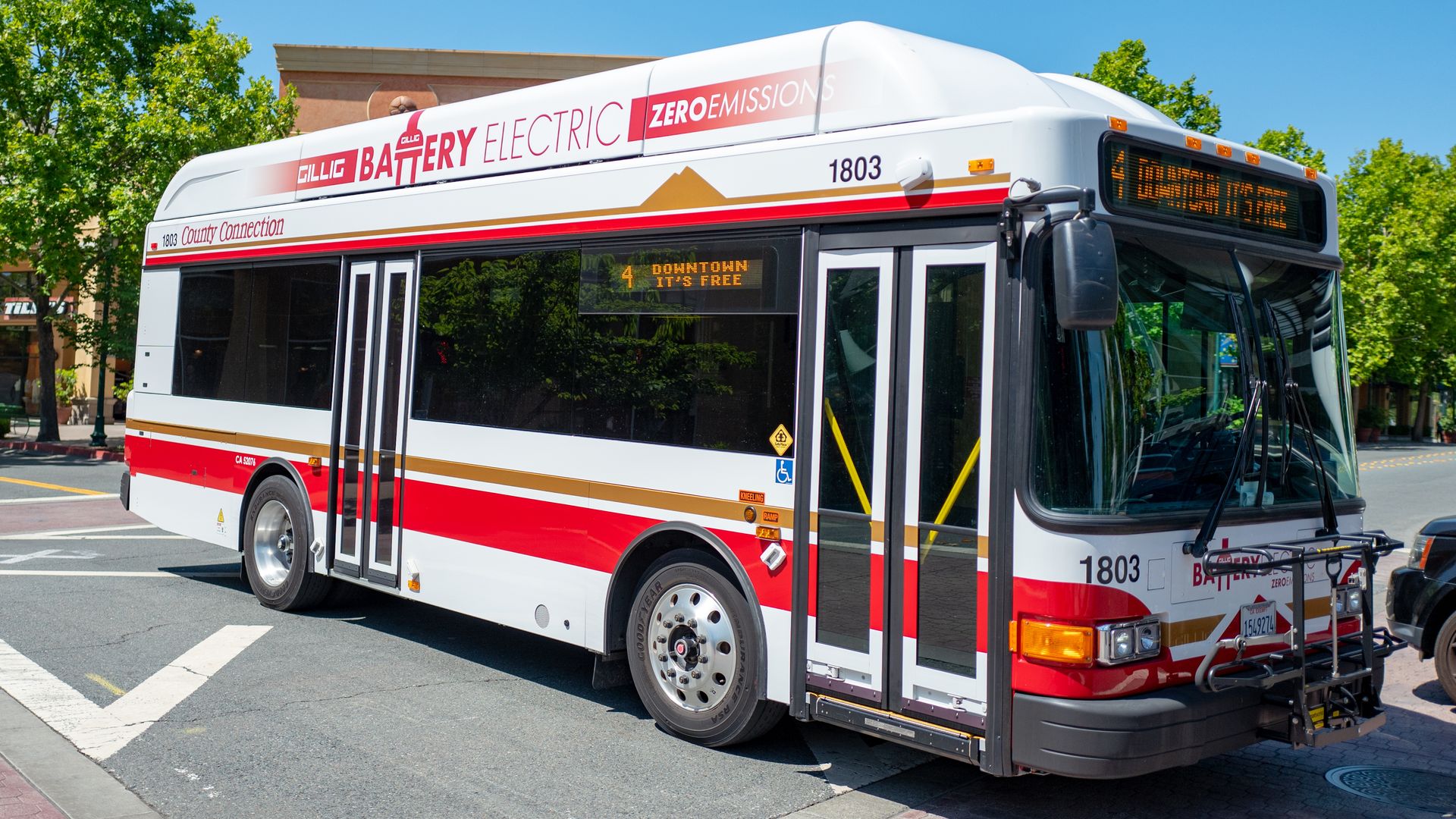
The electric bus maker Proterra announced yesterday that Miami-Dade County is buying 33 of its 40-foot, Proterra Catalyst E2 models.
Why it matters: California-based Proterra called it the "largest electric bus order on the East Coast." The order is the latest sign of growing global adoption of the technology that nonetheless remains very heavily concentrated in China.
California power giant PG&E may shut off electricity in parts of roughly 30 counties to stem risks of downed power lines sparking wildfires when strong and dry winds arrive later this week.
Why it matters: The plan announced Monday, which the San Francisco Chronicle called "unprecedented," highlights how utilities are grappling with dangers heightened by global warming.