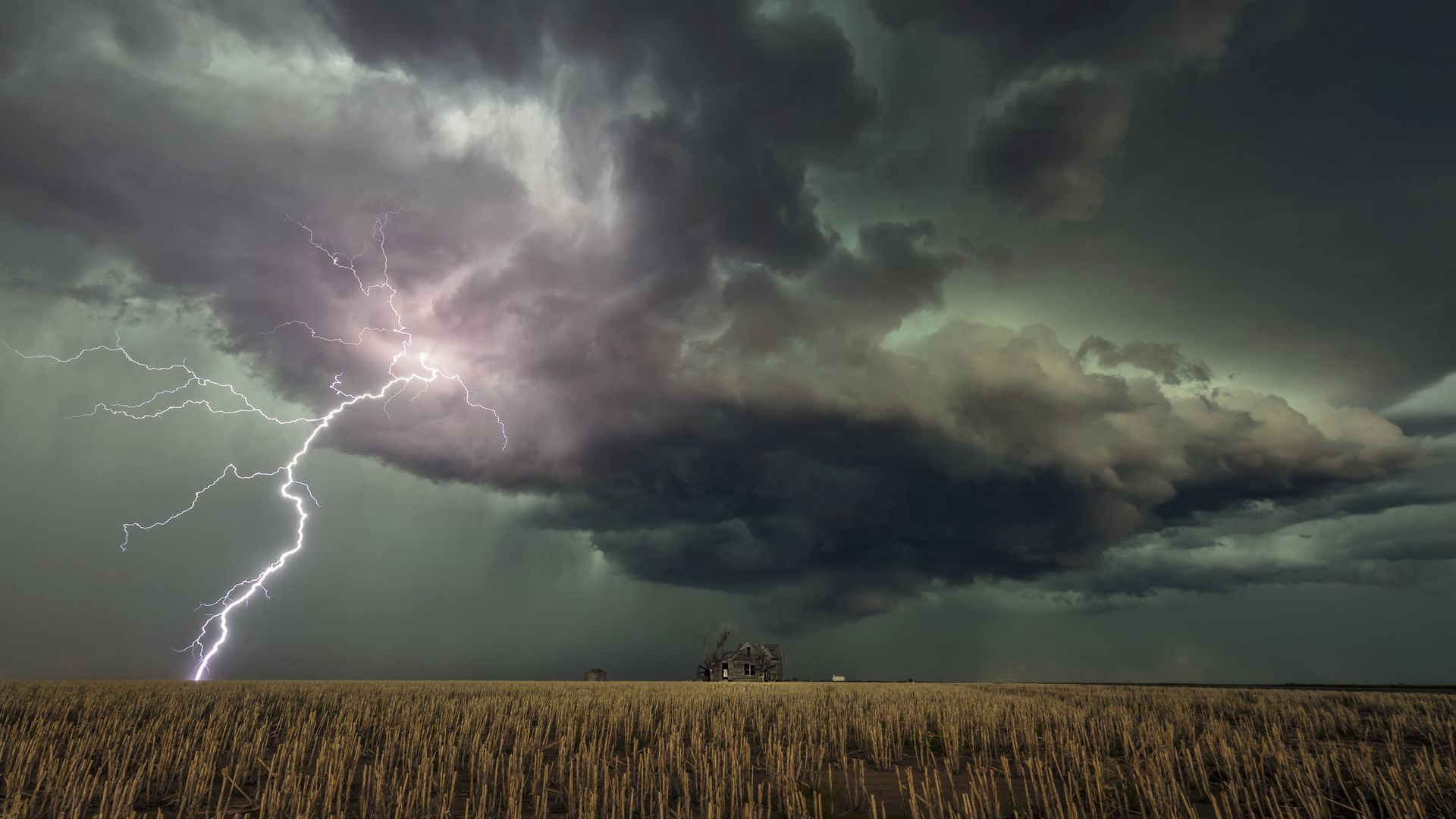
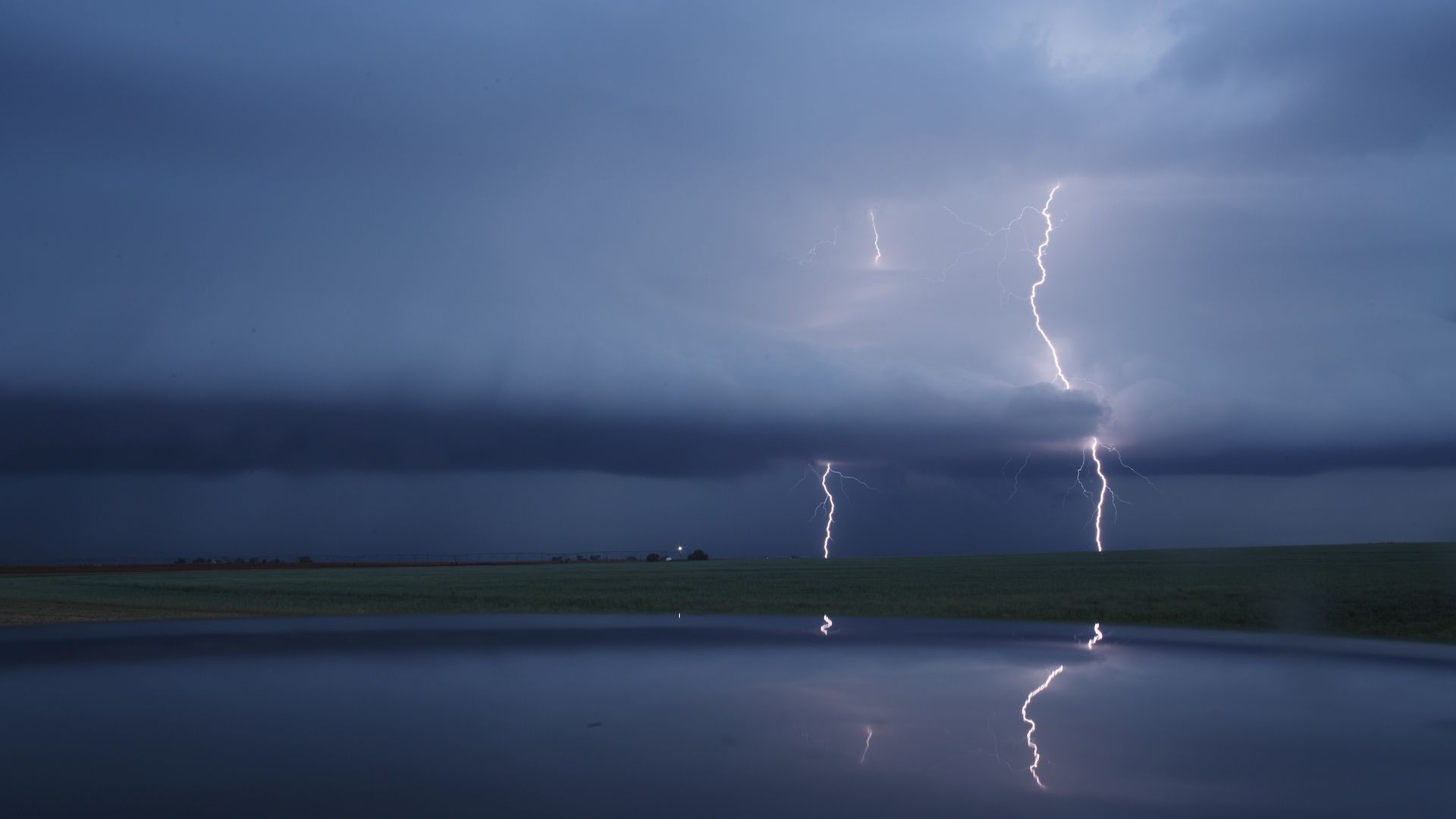
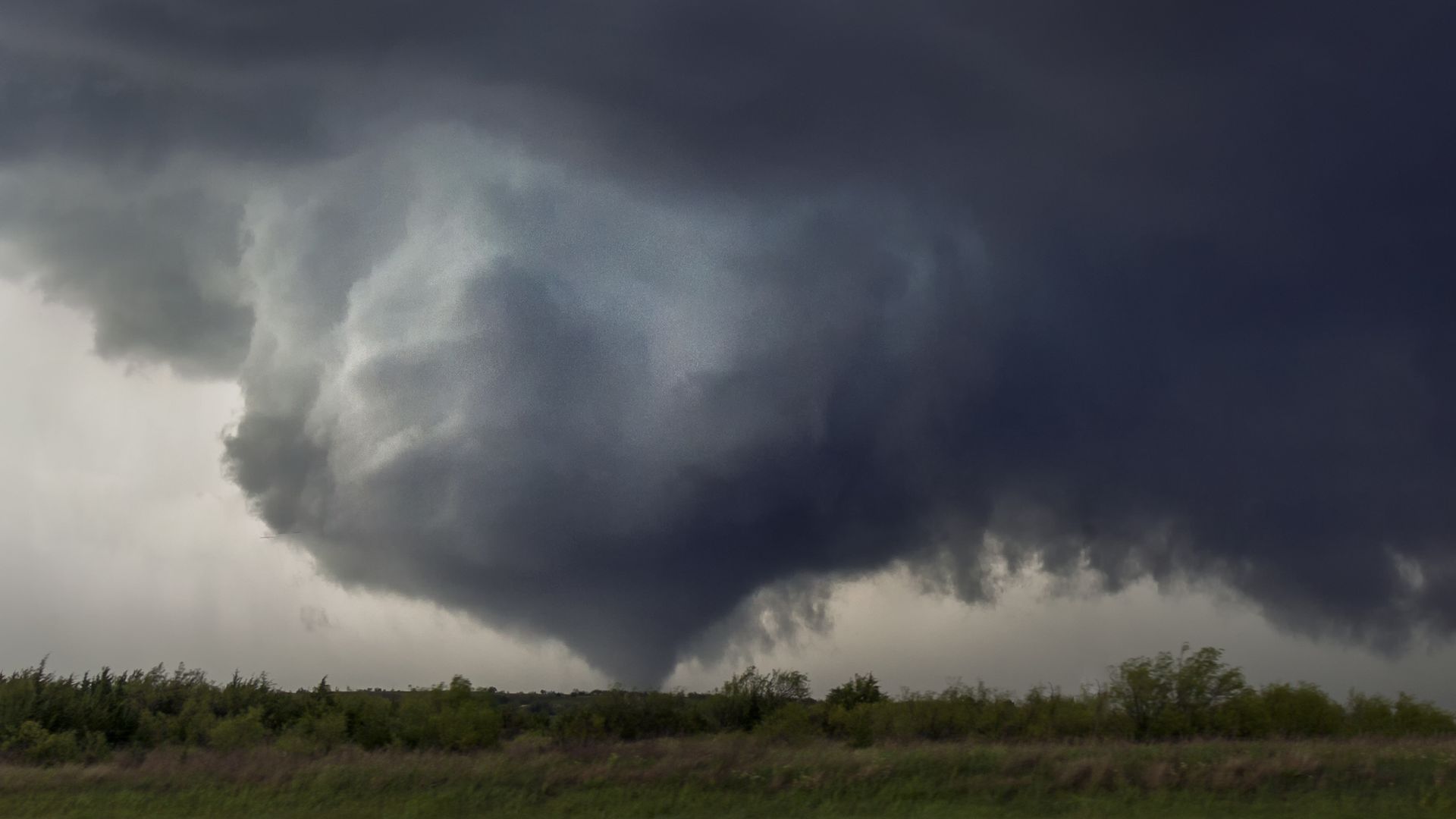
The forecast from the top tornado specialists in the world was dire: A "high risk" of severe thunderstorms, including numerous strong tornadoes, striking parts of Oklahoma. In the end, however, the tornado outbreak on Monday mercifully underperformed expectations in some areas.
Why it matters: The fact that there were no high-end tornadoes in populated areas during this tornado outbreak seems miraculous, considering the rare combination of ingredients that were present across southwest and central Oklahoma on Monday and Monday night. The atmosphere was essentially a powder keg, with abundant wind shear, instability and moisture.
A dangerous and potentially deadly severe weather outbreak is underway across the southern Plains, particularly in northern Texas and across Oklahoma, as a rare and especially volatile mix of tornado and flash flood-producing ingredients combine.
The big picture: The intense storm system brought a series of tornadoes over Monday night. Some damage was reported, but the tornadoes did not cause as much destruction as forecasters feared, per AP. But it's not over yet.
Emerging tech to suck CO2 from the air is getting lots of buzz and cash, but a new paper in the peer-reviewed journal Nature Sustainability proposes a method for atmospheric capture of methane to alleviate warming and buy more time to tackle the bigger CO2 problem.
Why it matters: Methane — a greenhouse gas originating from agriculture, natural gas production, and elsewhere — is emitted in smaller quantities than CO2 but is far more potent at trapping heat on a pound-for-pound basis in the near-term.
Generation Investment Management, a social impact private equity firm co-founded by Al Gore, has raised $1 billion for its third fund, broadening its mandate beyond green-tech to include areas like health care and financial inclusion.
The bigger picture: Social impact investing has taken some recent knocks, although market participant Kapor Capital recently published financial results to show it's on par with peer funds.
More people around the world say they’re worried about climate change — but that concern is not translating into a willingness to pay more for energy or vote for candidates supporting aggressive action on the issue.
Driving the news: At least 3 recent developments show this stark disconnect: In Australia, Washington state and France.
A tornado struck near Paducah, Texas, just after 3pm CST Monday, kickstarting a potentially deadly severe weather outbreak that's expected to continue to hit northern Texas and across Oklahoma through Tuesday.
Between the lines,per Axios' Andrew Freedman: An unusually powerful jet stream is roaring above the central and southern Plains, and there is plenty of wind shear (winds changing speed and/or direction with height) and powder-keg-like instability to trigger thunderstorms to erupt. Forecasters have warned of "significant threat to life and property" from this severe weather event, both from tornadoes and flash flooding.
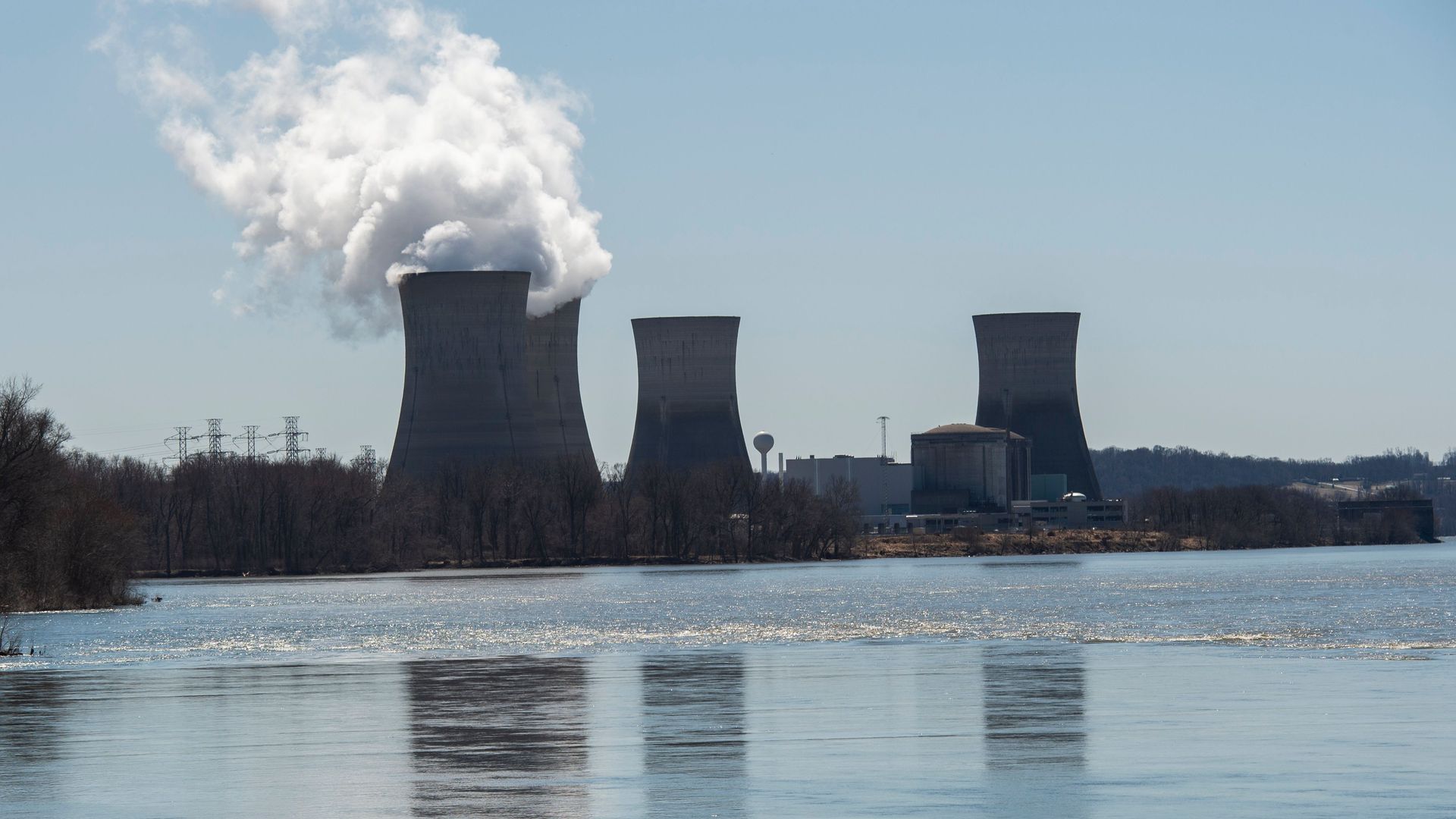
Due to atrophy at home and competition abroad, the U.S. nuclear industry is increasingly at risk of losing power plants, workforce talent and global business.
Why it matters: The civilian and military nuclear sectors depend on one another, and both are strategic assets vital to national security. Nuclear energy also eases the path to decarbonizing the U.S. electric grid.