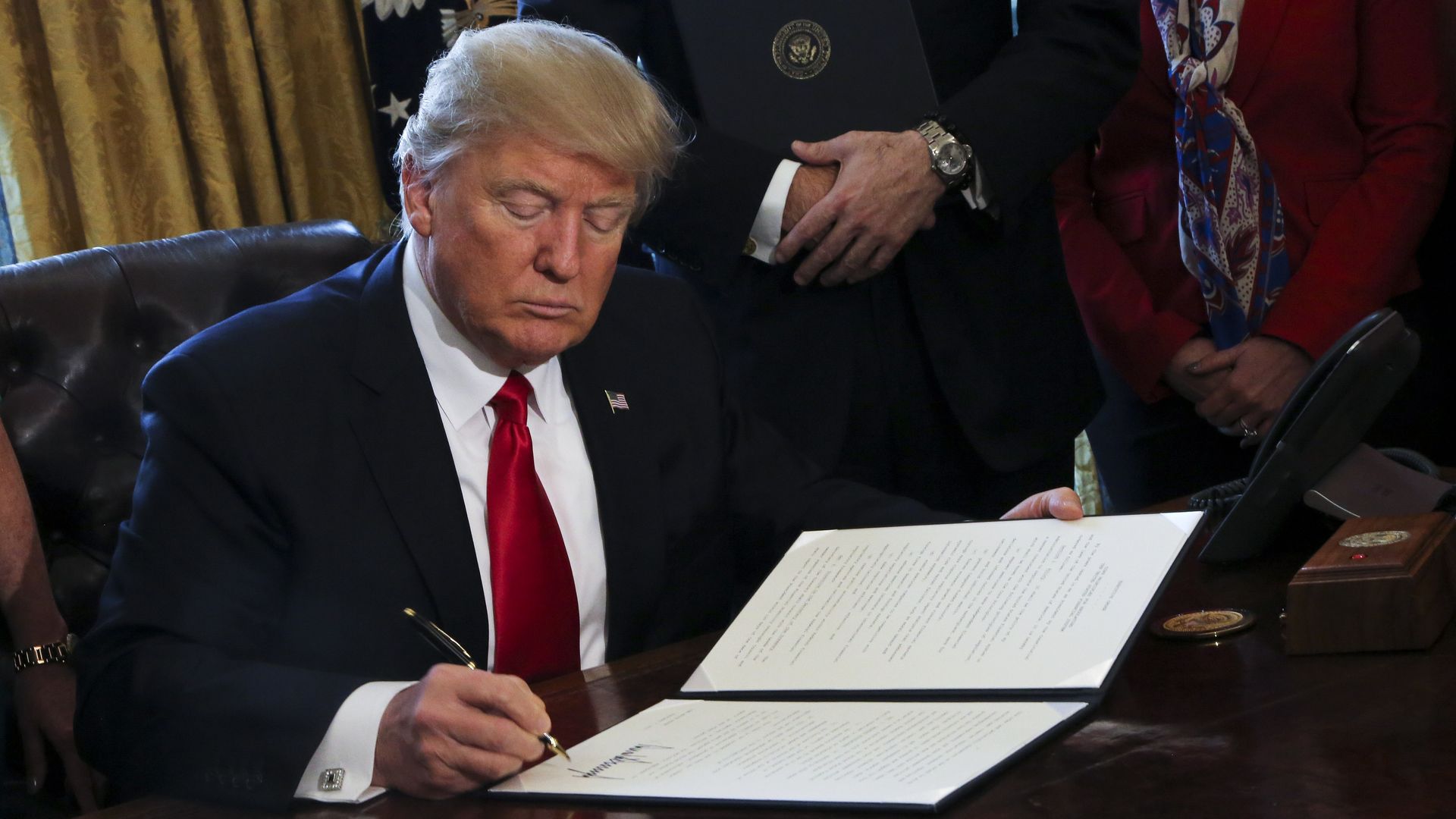
President Trump is expected to sign an executive order imminently to expedite pipeline development, according to sources familiar with the plans.
Details: White House economic advisor Larry Kudlow said the executive order could come as soon as next week, while speaking at a closed-door event Wednesday hosted by conservative think tank American Council for Capital Formation, according to two sources with direct knowledge.
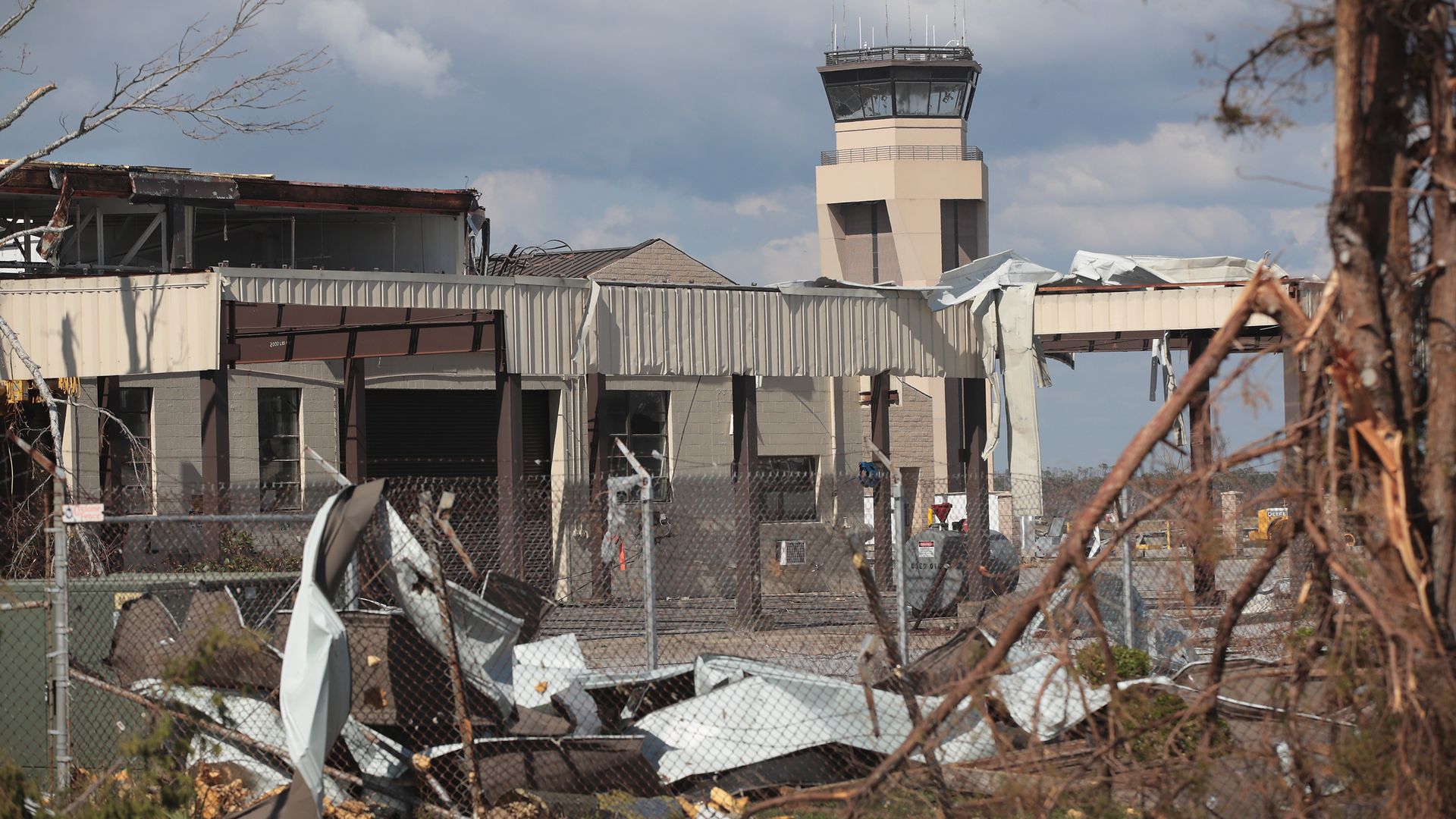
Following historic extreme weather in Florida and Nebraska, the U.S. Air Force is asking for $5 billion to repair two major bases in each state, reports Defense One.
Details: Officials said they will have to cut projects at the Offutt Air Base in Nebraska and Tyndall Air Force Base in Florida if they don't receive $1.2 billion for repairs by June, which could affect 18,000 pilot training hours.
Google, Facebook, Walmart and other corporate giants have launched a new trade association with hundreds of members aimed at greatly expanding direct renewable power purchases by companies large and small.
Why it matters: The Renewable Energy Buyers Alliance is a sign of both the mainstreaming of corporate procurement and a recognition that companies face market barriers, even as wind and solar costs have fallen.
New data from a Carnegie Mellon University project show that U.S. power sector carbon emissions ticked upward last year, because overall generation rose enough to outpace declines in emissions per unit of output.
Why it matters: The newly updated Power Sector Carbon Index shows the challenge of continuing — let alone accelerating — what has been a major decline in emissions from electricity over the last decade.
In the Roger Stone case, the government said it had turned over 9 terabytes of discovery — an amount so large that Stone's lawyers said if it were on paper, it would pile as high as the Washington Monument, twice, AP reports.
By the numbers: Mueller's evidence is likely massive. His "team issued more than 2,800 subpoenas, executed nearly 500 search warrants and interviewed more than 500 witnesses."
California's new insurance commissioner, Ricardo Lara, has received an administrative petition from consumer and environmental advocates requesting that insurance companies be required to disclose their underwriting of fossil fuel investments, given the growing impact on California of natural disasters exacerbated by climate change.
Why it matters: Globally, natural disasters cost $337 billion in 2017. As the ultimate bearer of risk in the financial system, the insurance industry has a stake in mitigating climate change, which has played a role in driving up these costs.
NEW YORK — A power technology conglomerate, known mostly for traditional energy sources like natural gas, has launched a new company to provide solar electricity and battery storage.
Why it matters: The announcement from Mitsubishi Hitachi Power Systems Americas, made Monday at the Bloomberg NEF conference, shows how the world's biggest energy and technology companies are adapting to a world, or at least many parts of it, that is demanding cleaner energy sources.
Equinor, the Norwegian oil-and-gas behemoth, is among two new investors in Volta Energy Technologies, a consortium that provides venture financing to startups seeking breakthroughs in battery technology.
Why it matters: The investment is a major sign of how the world's biggest oil companies are diversifying into low-carbon vehicle and grid tech, even though it remains a small part of their portfolios.
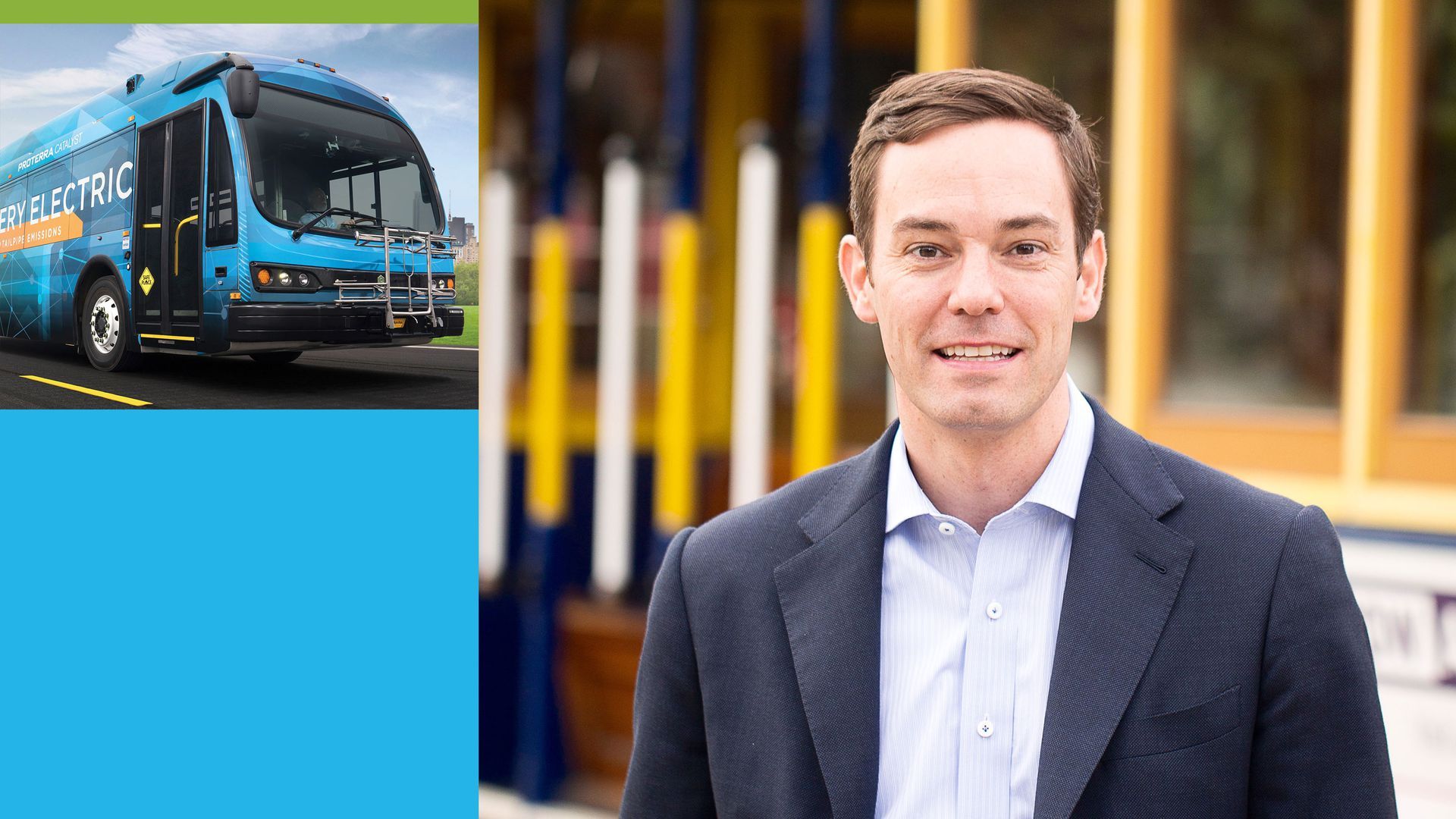
Electric buses are having a moment as falling battery costs make them increasingly competitive with diesel vehicles, and local and state clean air policies help drive deployment.
Driving the news: Major oil companies have approached electric bus maker Proterra — a heavyweight in the U.S. market with more than 300 buses delivered to cities and transit agencies and hundreds more on order — about investing in the company, but CEO Ryan Popple tells me he's steering clear for now.
The Federal Reserve waded unambiguously into the conversation about climate change this week, as the San Francisco Fed produced a report detailing the potential financial, economic and monetary policy implications of global warming.
Why it matters: In addition to the effects climate change has on businesses, such as "infrastructure damage, agricultural losses and commodity price spikes caused by droughts, floods, and hurricanes," Glenn Rudebusch, a senior policy adviser and executive vice president at the San Francisco Fed, argues climate change is becoming increasingly relevant for monetary policy.
NEW YORK — A power technology conglomerate, known mostly for traditional energy sources like natural gas, has launched a new company to provide solar electricity and battery storage.
Why it matters: The announcement from Mitsubishi Hitachi Power Systems Americas shows how the world’s biggest energy and technology companies are adapting to a world, or at least many parts of it, that is demanding cleaner energy sources.
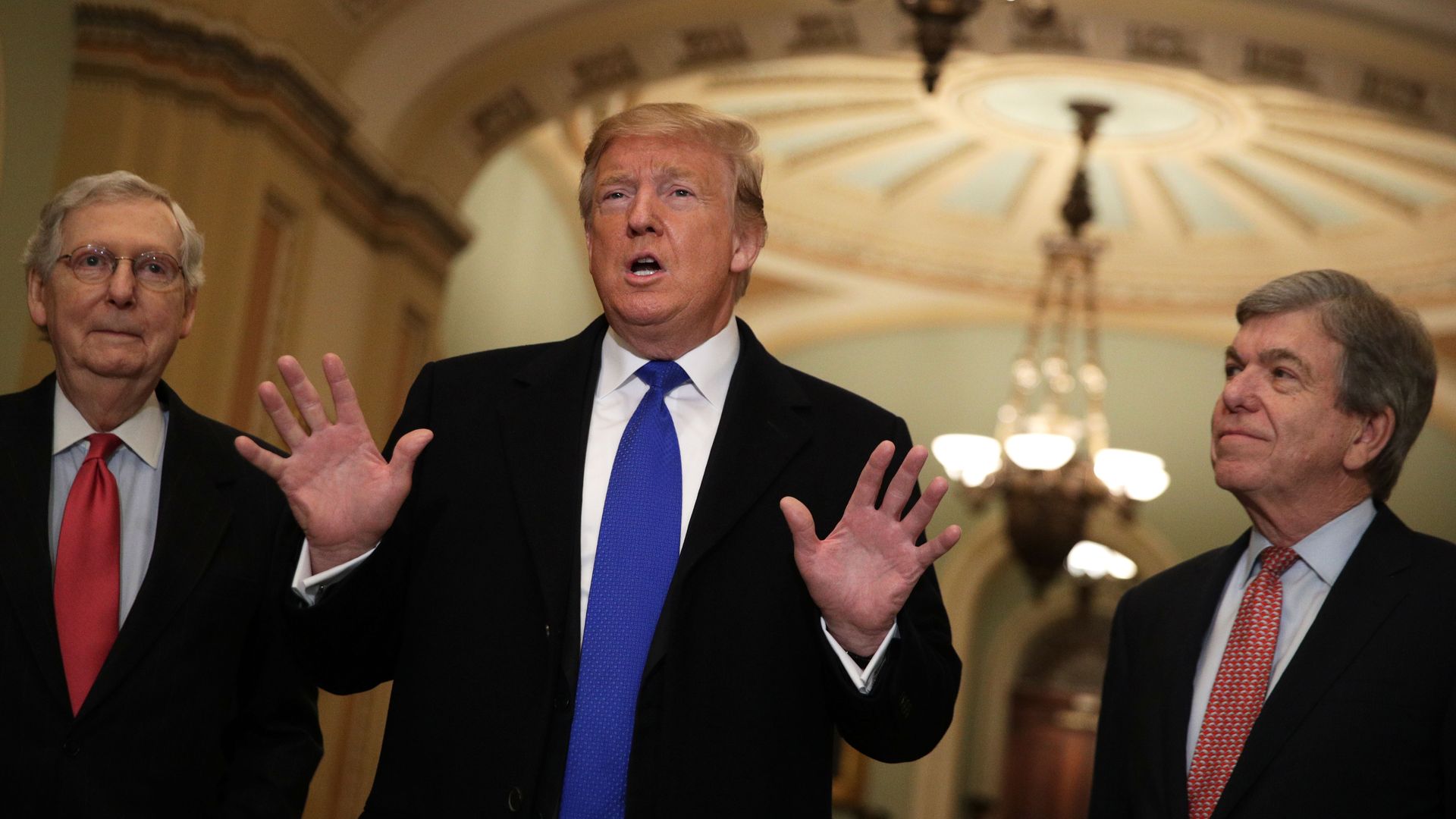
A Senate aide tells Axios that President Trump said he wants to run on the Green New Deal in 2020.
What he's saying: While speaking at Tuesday's Senate Republican lunch, Trump said, "You guys have done a great job on the Green New Deal. But don't kill it too badly, because I want to run on this" in 2020.