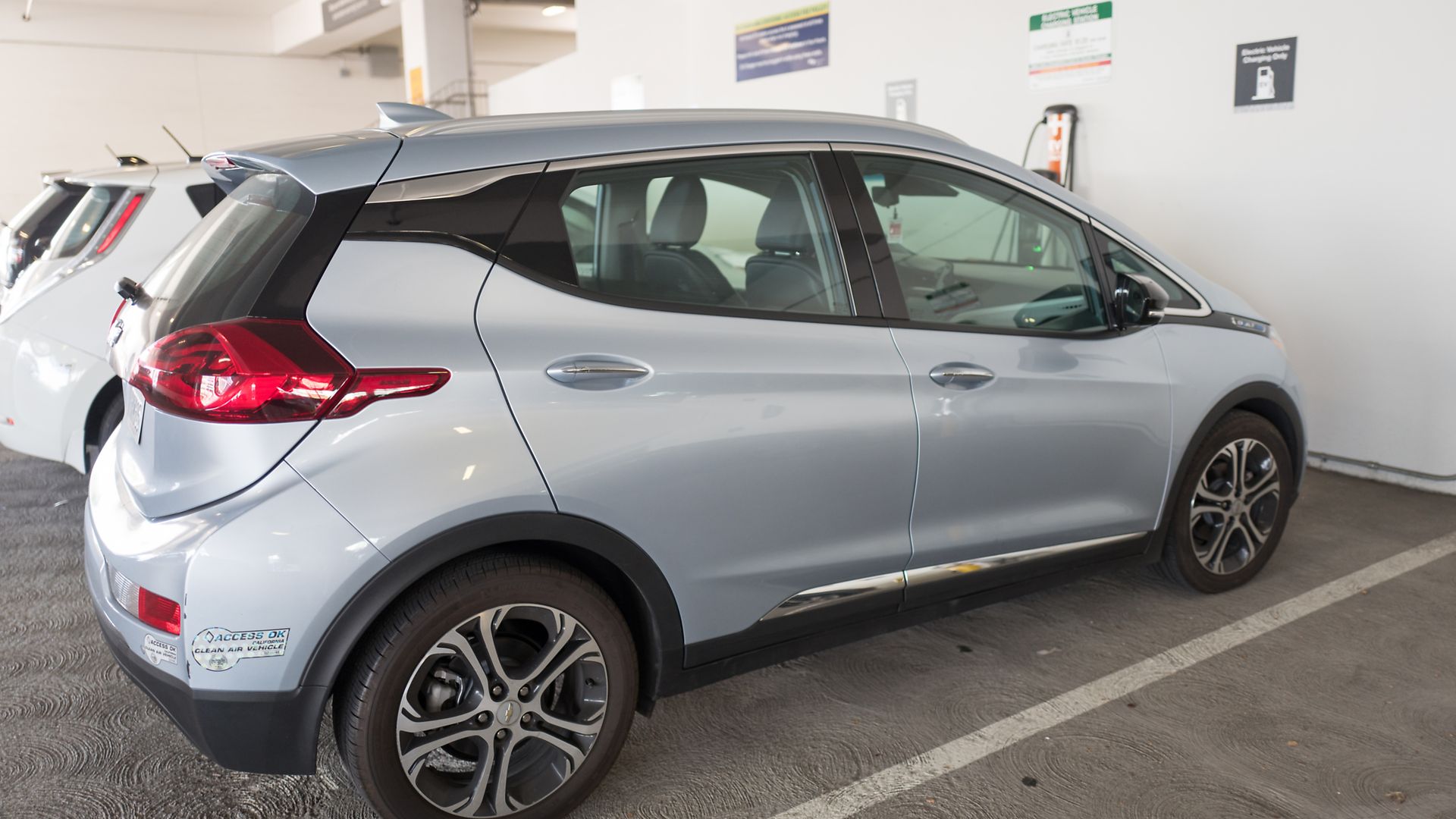
Major automakers are joining with California officials and big power companies to launch a multi-million dollar campaign aimed at speeding up adoption of electric vehicles in the state.
Why it matters: California, the world's fifth-largest economy, is by far the country's largest auto market. However, while EV deployment there is growing, carbon emissions from transportation are still rising in the state.
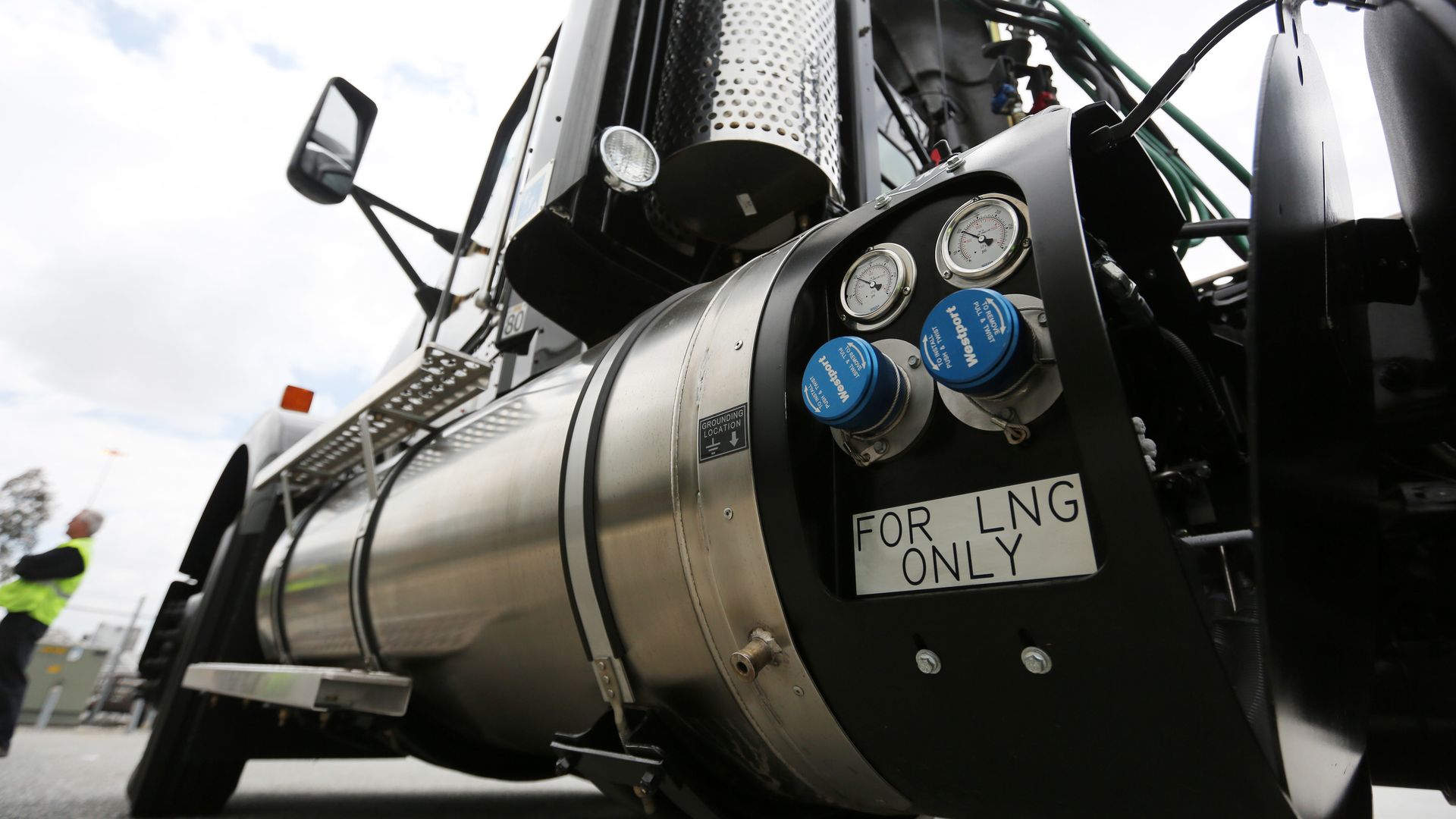
Not long after putting the news of Shell's big new Canadian LNG project to bed, Axios received a Wood Mackenzie note taking stock of the action with analyst Dulles Wang writing that after several quiet years, "We believe 2019 could be the busiest year of LNG [final investment decisions] ever. It seems that mega-projects are back."
Why it matters: The expected flurry of action reflects an important dynamic — China's energy needs are booming while it's trying to move away from coal in order to address terrible air pollution. The Canadian project joins others, like the proposed Alaska LNG project, planning to serve Asian demand more broadly.
In the wake of its 2015 emissions scandal, Volkswagen reached a settlement with the EPA to pay $2.7 billion across all 50 states to make up for unaccounted emissions from non-compliant vehicles. States have been instructed to use these funds to subsidize the purchase of zero-emissions vehicles, as California and New York are already doing.
Why it matters: The trucks, buses, planes and trains that drive the U.S. economy and get us from point A to point B are taking a hazardous toll on the environment, producing 28% of the country's greenhouse gas emissions. But with the Volkswagen payout, states will have new means to clean up their transportation sectors, laying the foundation for nationwide electrification.
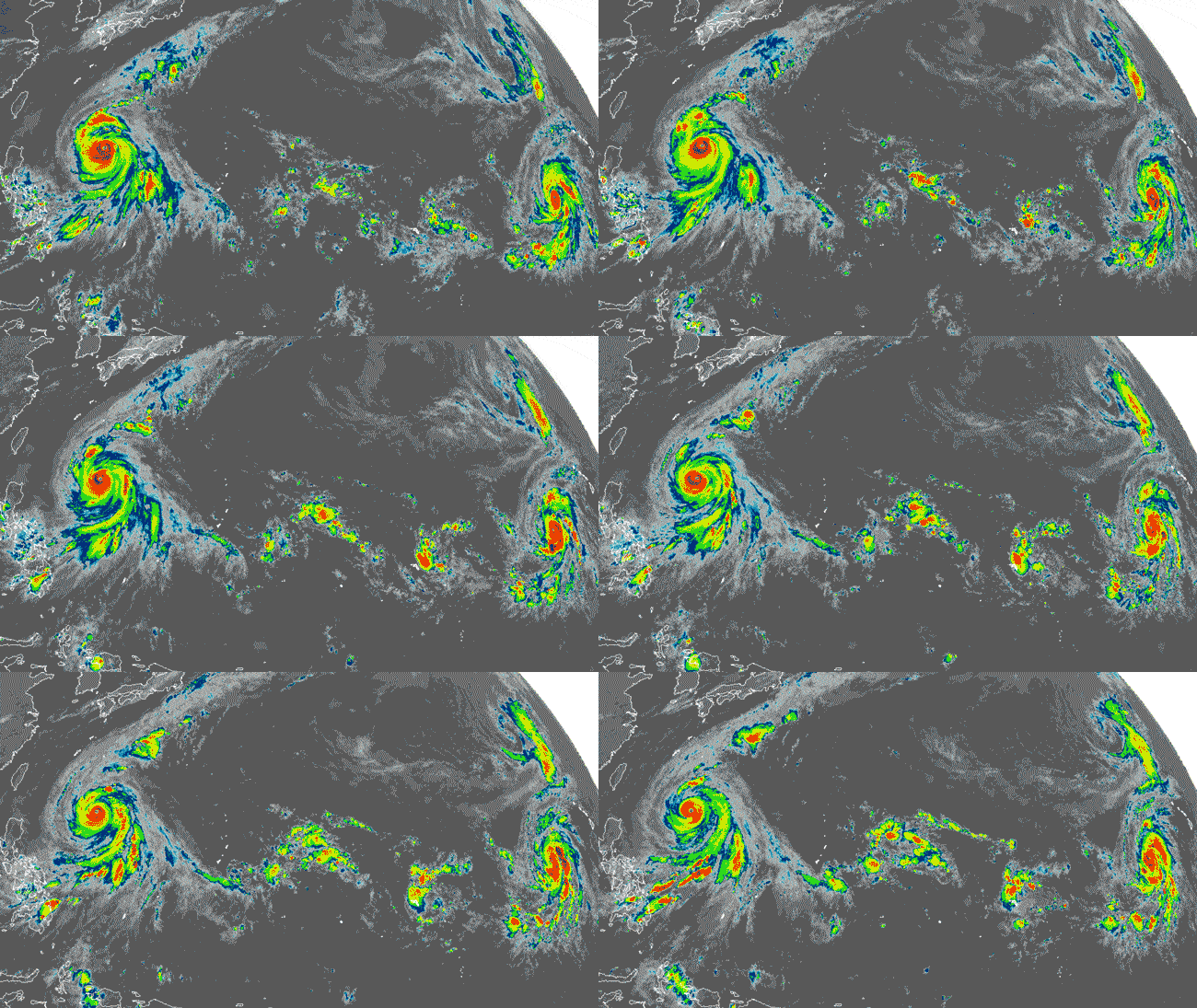
Infrared satellite loop showing Super Typhoon Kong-rey on the left and Hurricane Walaka on the right on Tuesday, Oct. 2. Image: CIRA/RAMMB
As of early Tuesday, something unprecedented transpired across the Pacific Ocean. There were two Category 5 storms spinning at the same time, in opposite parts of the massive ocean basin — Super Typhoon Kong-rey and Hurricane Walaka.
Why it matters: According to meteorologist Jeff Masters of Weather Underground, this was the first time on record that two Category 5 storms occurred simultaneously in the Northwest Pacific and the Northeast Pacific.
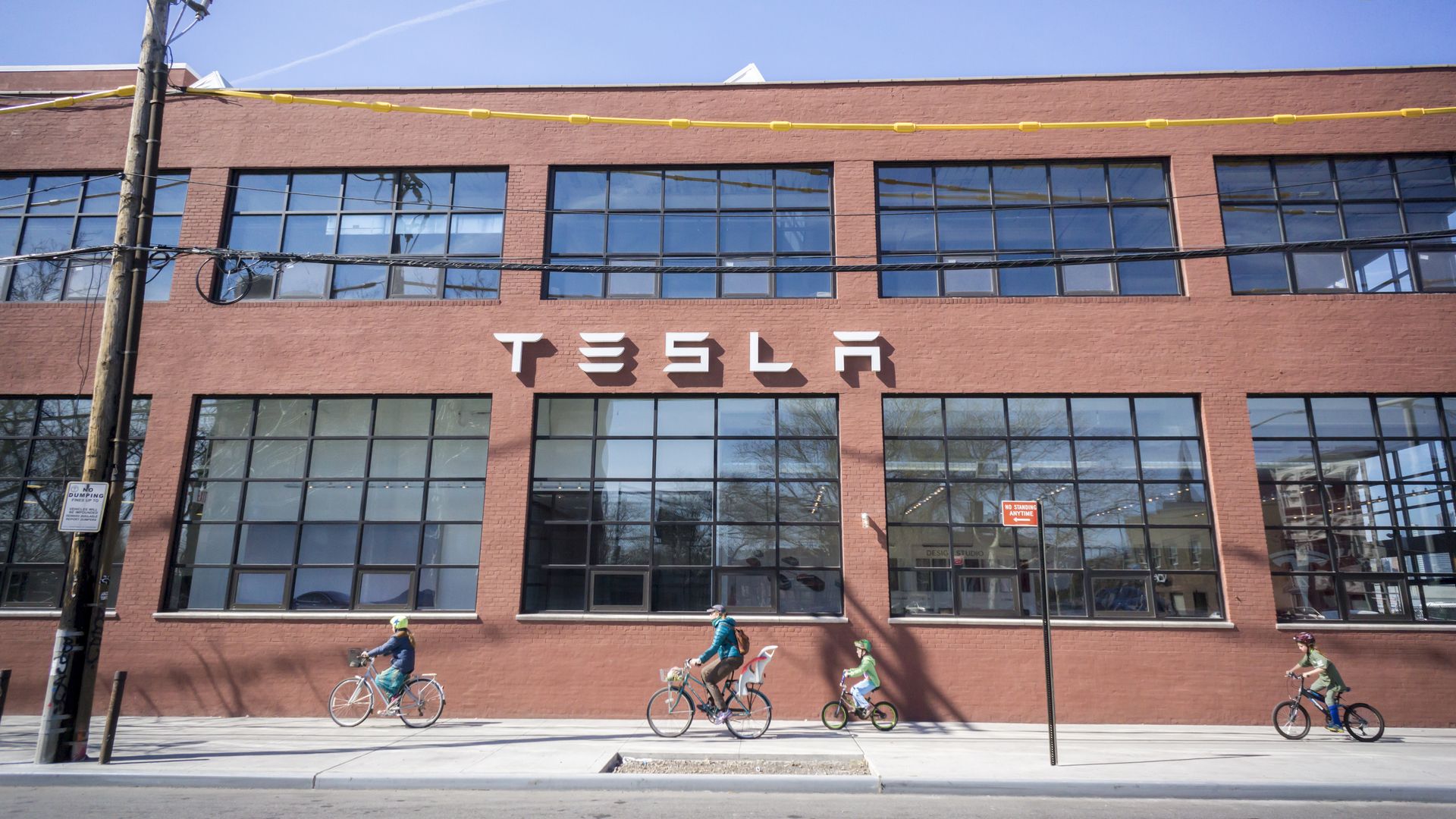
Money-manager Ron Baron, whose firm Baron Capital is Tesla's 13th largest shareholder, according to FactSet, told CNBC that Tesla could generate $1 trillion in revenue by 2030 and could sell up to 15 million cars per year.
Why it matters: Baron's prediction is ultra-bullish, perhaps even for a 12-year forecast. While Tesla reported $11 billion in revenue last year, and announced Tuesday that it had met third quarter production goals, there are new questions about whether demand for its vehicles are softer than expectations. Tesla has also seen a tumultuous few months after CEO Elon Musk's "go-private tweet" resulted in an SEC settlement under which Musk was forced to pay a $20 million penalty and step down as chairman of the company.
Oil prices are trading around their highest levels since late 2014 and have clearly abandoned — at least for now — the $70 to $80 neighborhood where Brent lurched around in the spring and summer.
Where it stands: Brent crude slipped back a bit to around $84.61 while U.S. benchmark WTI trades around $75.31, as of publication this morning.
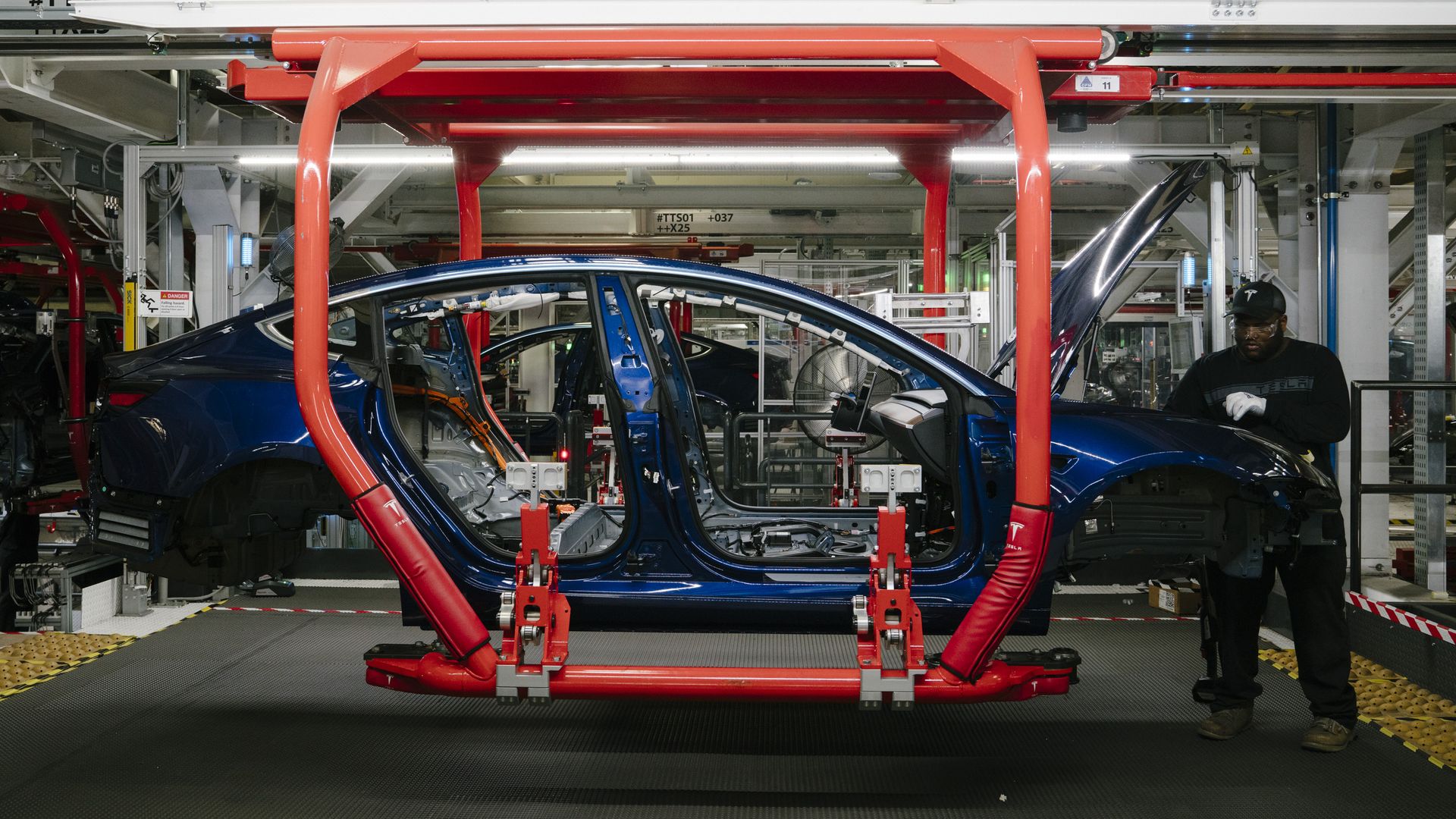
Tesla produced 53,239 Model 3 sedans in the third quarter and delivered 55,840, the company announced Tuesday, meeting its goal of producing between 50,000 and 55,000 Model 3s in the quarter.
Why it matters: Tesla delivered 83,500 vehicles in Q3, which the company said is 80% more than what they delivered during all of 2017. This comes at the height of a tumultuous few months for the electric car-maker following CEO Elon Musk's "go-private tweet," that resulted in an SEC settlement under which Musk was forced to pay a $20 million penalty and step down as chairman of the company.
The chief technology officer of Saudi Aramco, Ahmad Al-Khowaiter, sat down with Axios on the sidelines of a recent conference in New York to discuss what Saudi Aramco is doing to develop more sustainable resources.
Why he matters: He runs the growing tech work inside Saudi Arabia’s state-owned oil company, which pumps more oil out of the ground than any other oil company in the world.