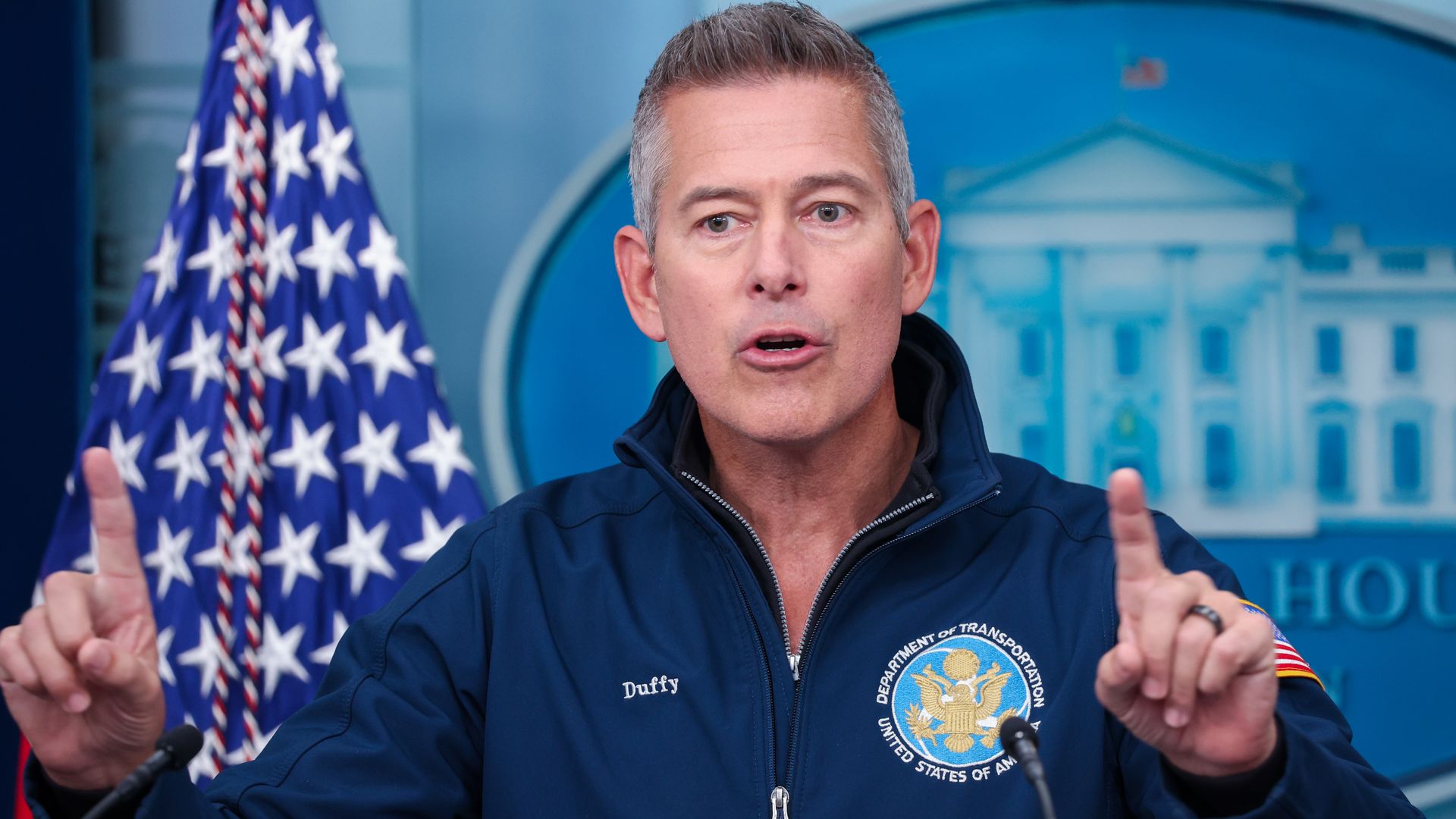
Transportation Secretary Sean Duffy said Saturday that all FAA systems are back to "full operations" after an hours-long outage Friday evening that grounded all air traffic across the U.S.
The big picture: Duffy reiterated his plea to Congress to fund upgrades to the nation's air traffic control equipment, explaining that proper upgrades could have prevented the ground stop.
Food prices are rising sharply even before they reach supermarket shelves.
Why it matters: Americans are already paying more for groceries. New inflation data this week suggests that the pressure is not letting up.
Wholesale fresh and dry vegetable prices surged 27% last month, adding to a 31% price jump the previous month.
These are the prices paid by food distributors, grocery chains and other businesses to farmers and other producers for eventual sale to consumers.
Wholesale food prices overall are up 1.7% from a year earlier, ending a three-month streak of annual price declines.
Zoom in: Unusually warm weather, crop disease and insect infestations have reduced lettuce and other leafy green harvests in California.
The Iran war, meanwhile, has driven up the cost of fertilizer and fuel, making it more expensive to grow and transport food.
A regional grocery chain recently told Federal Reserve officials that it now costs more to transport a head of lettuce from California than to buy the lettuce itself, citing high diesel fuel prices.
Truck freight costs are up almost 25% over the past year, the largest annual increase since 2022 and on par with the surge seen during the pandemic-era inflation shock.
The big picture: It's unclear how much of the surge in producer prices will be passed along to consumers. But steeper price increases were already showing up at supermarket checkout counters last month.
Grocery prices rose 0.4%, the biggest monthly increase in 6 months, driven by higher prices for meat, dairy products and snack foods.
Fresh vegetable prices climbed 2%, including a nearly 8% jump in lettuce prices.
The chaos from the FAA's nationwide ground stop lingered into early Saturday morning, with thousands of flights cancelled as airlines played catch-up.
Why it matters: Millions of travelers will find themselves inconvenienced over what the government says was simply old technology that couldn't keep up with modern upgrades.
The FAA lifted its nationwide ground stop Friday night after hours of chaos and thousands of delays and cancellations.
Why it matters: The effects of the rare and extreme move will likely ripple through the weekend, with travelers stranded and airlines' planes and crews out of position.
Neocloud startup Nscale reported ballooning debt and increased reliance on Nvidia for financing as the startup aims for an IPO amid swirling questions about the sustainability of the AI boom.
Why it matters: The U.K. company is buying chips from Nvidia, getting financing from Nvidia, promising cloud computing to Anthropic and collaborating with Microsoft — illustrating the increasingly dense thicket of ties that bind together the AI economy.
The latest producer price data suggests that the inflationary effects of the Iran war may be difficult to unwind.
Energy prices retreated last month — with diesel prices declining almost 8% — but the costs accumulated in recent months remained prominent across America's supply chain.
Why it matters: Higher fuel costs make it more expensive to transport key goods — including food — across the country, adding to the prices that businesses pay and possibly what consumers ultimately see on store shelves.
A defining story of this decade has been a series of global economic shocks: pandemic, war and geopolitical shifts. New research quantifies a rising set of vulnerabilities for the global trade system.
The big picture: Many crucial global goods are built on supply chains that have one or more Achilles' heels, a report from the consulting firm McKinsey finds — a critical input, concentrated suppliers and geopolitical strain.
Blackstone Life Sciences has agreed to pay Pfizer up to $1.5 billion to finance development of a monthly GLP-1 receptor agonist.
Why it matters: Blackstone has become something akin to a biotech bank, helping offset drug development costs for Pfizer, Apogee, Alnylam,Boston Scientific, J&J, Merck and Moderna.
Anthropic's IPO is just a week away, and is suddenly trying to dodge Nvidia fallout.
The big picture: The macro is a possible unwind, or at least reorientation, of the entire AI trade. The micro is a myriad of financial and strategic ties between the two companies.
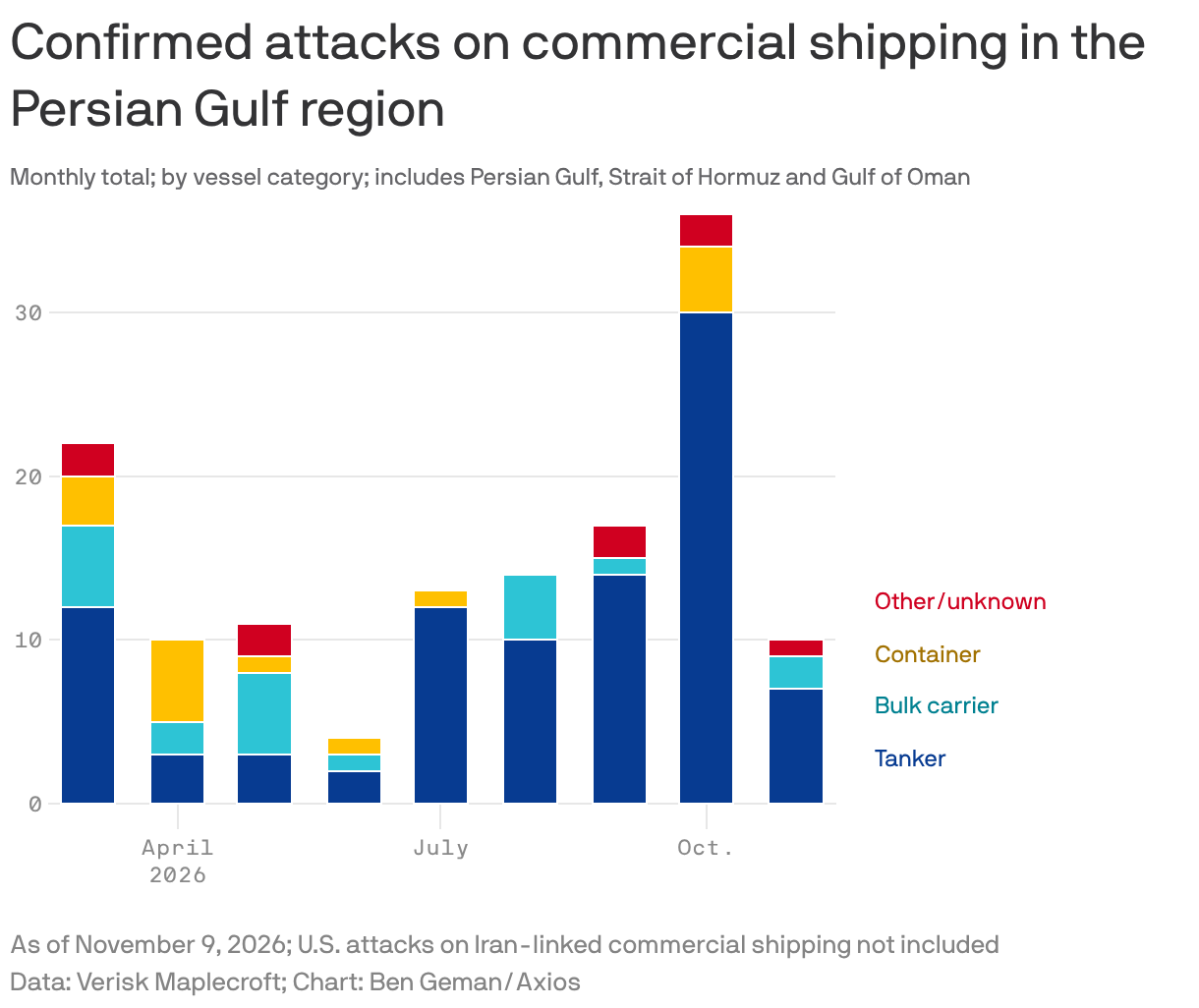
Oil markets are heading into an unusual period as the Iran conflict remains in dangerous limbo: The supply crunch is easing, but prices could stay stubbornly high.
Why it matters: While gasoline prices havedropped lately, don't expect pre-war levels anytime soon even as Middle East exports fitfully recover.
Jensen Huang's departure as Nvidia CEO is spurring investors to rethink the financial ties between the chip behemoth and some of the most heavily indebted AI entities.
Why it matters: Nvidia's role in the AI boom isn't limited to producing its highly sought-after GPUs (graphics processing units).
It has also extended its vast financial resources to support a range of companies involved in the infrastructure boom.
Businesses are spending billions of dollars to give workers access to AI tools — but most companies haven't yet figured out what to do after that, executives tell Axios.
Why it matters: Until they do, the miraculous economic growth promised by AI and its boosters could remain out of reach.
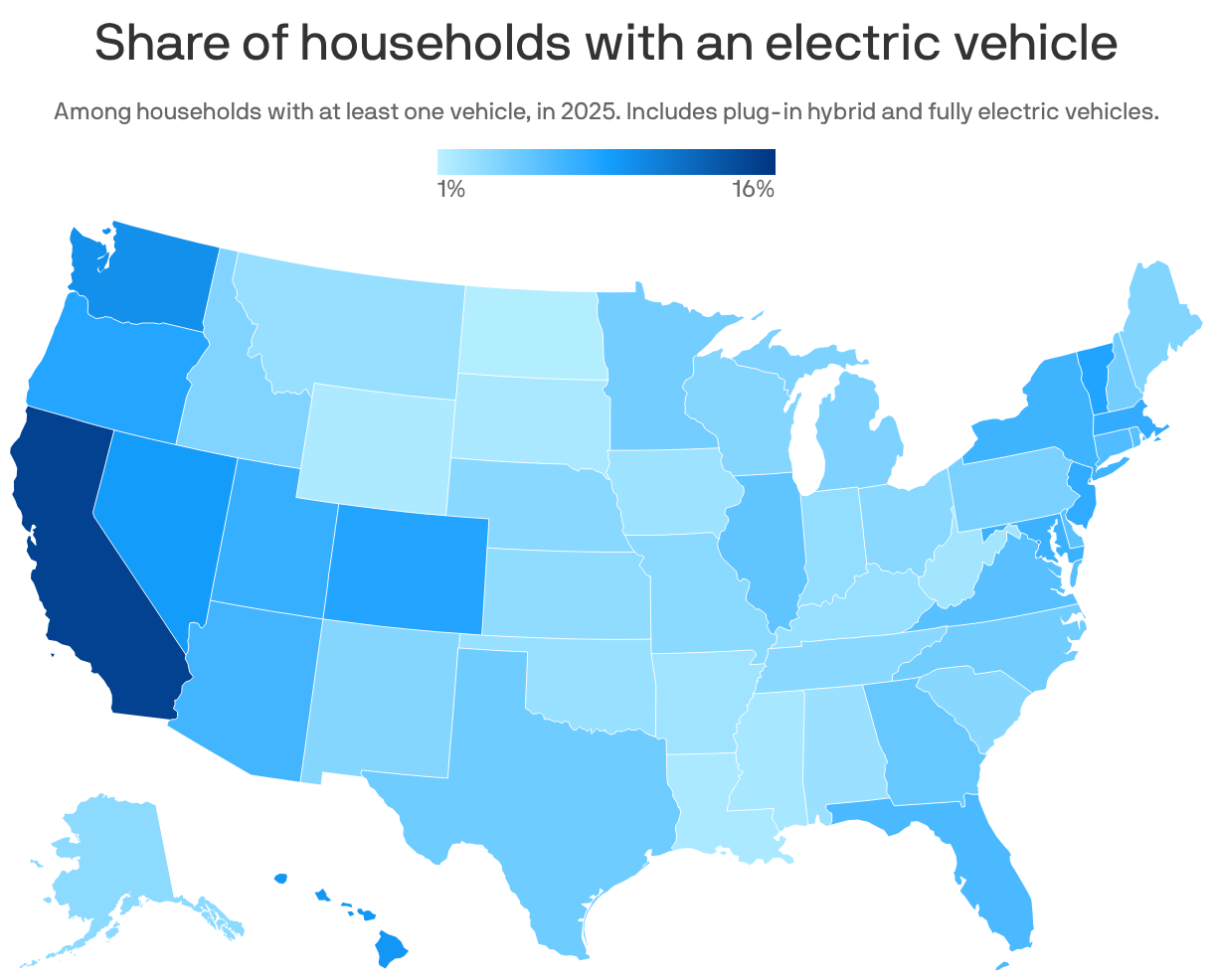
Data: U.S. Census Bureau; Map: Brad Jennings/Axios
U.S. electric vehicle ownership is most concentrated in the West and in major metropolitan areas, according to an Axios analysis of newly released Census Bureau data.
Why it matters: Where EVs are taking hold will shape who benefits first from electric transportation, where charging networks expand, and how quickly the country's auto market shifts away from gas-powered cars.
The AI boom without Jensen Huang will test a hard truth: Even if the tech world has grown somewhat less reliant on Nvidia's chips, it remains highly dependent on its checkbook.
Why it matters: With rival chips maturing and recent software breakthroughs, the tech ecosystem has achieved what would've seemed impossible a year ago: a viable path around Nvidia.