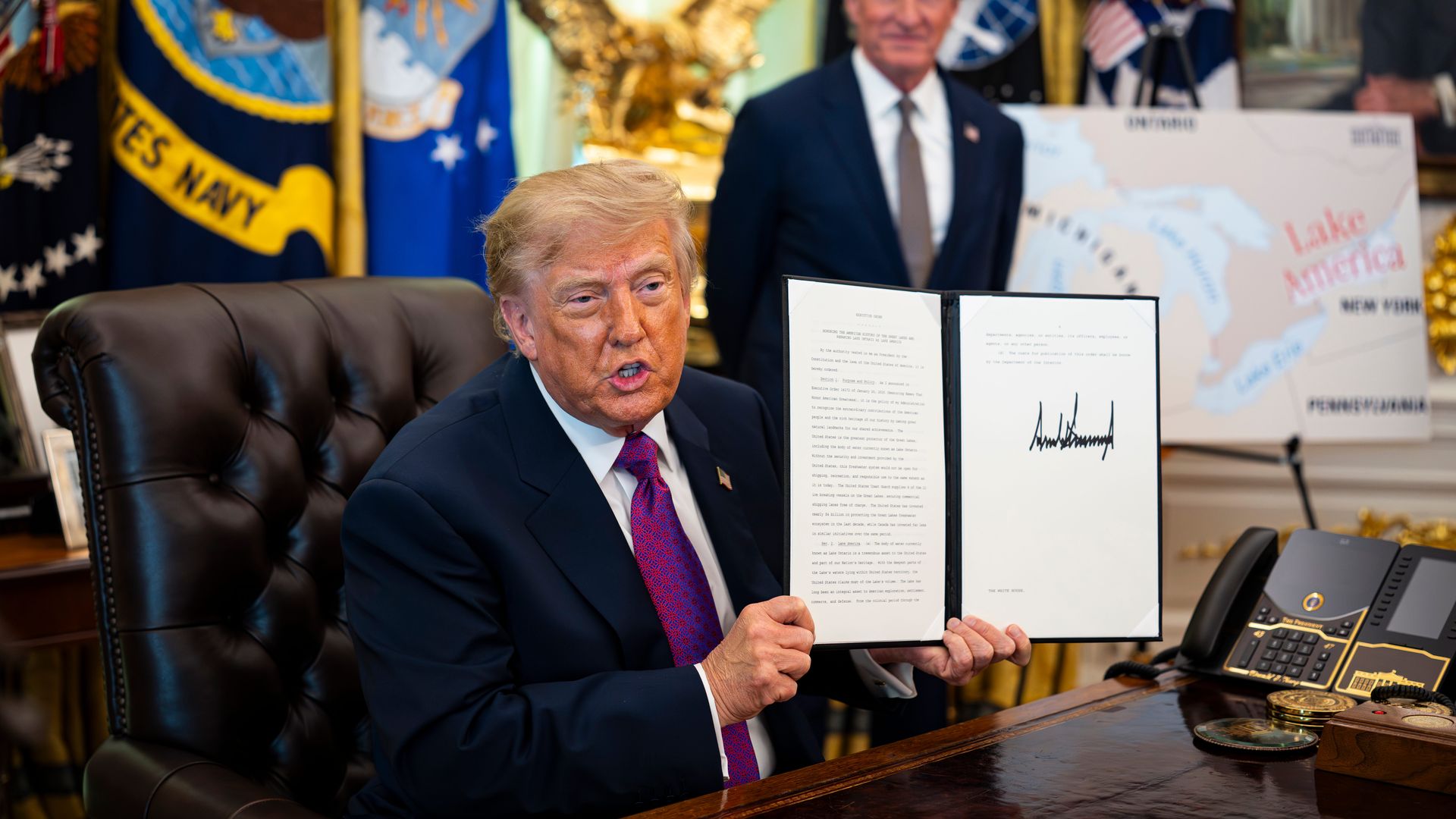
Why it matters: Democrats are scrambling to contain the fallout from an escalating economic conflict between the Trump administration and the Canadian government.
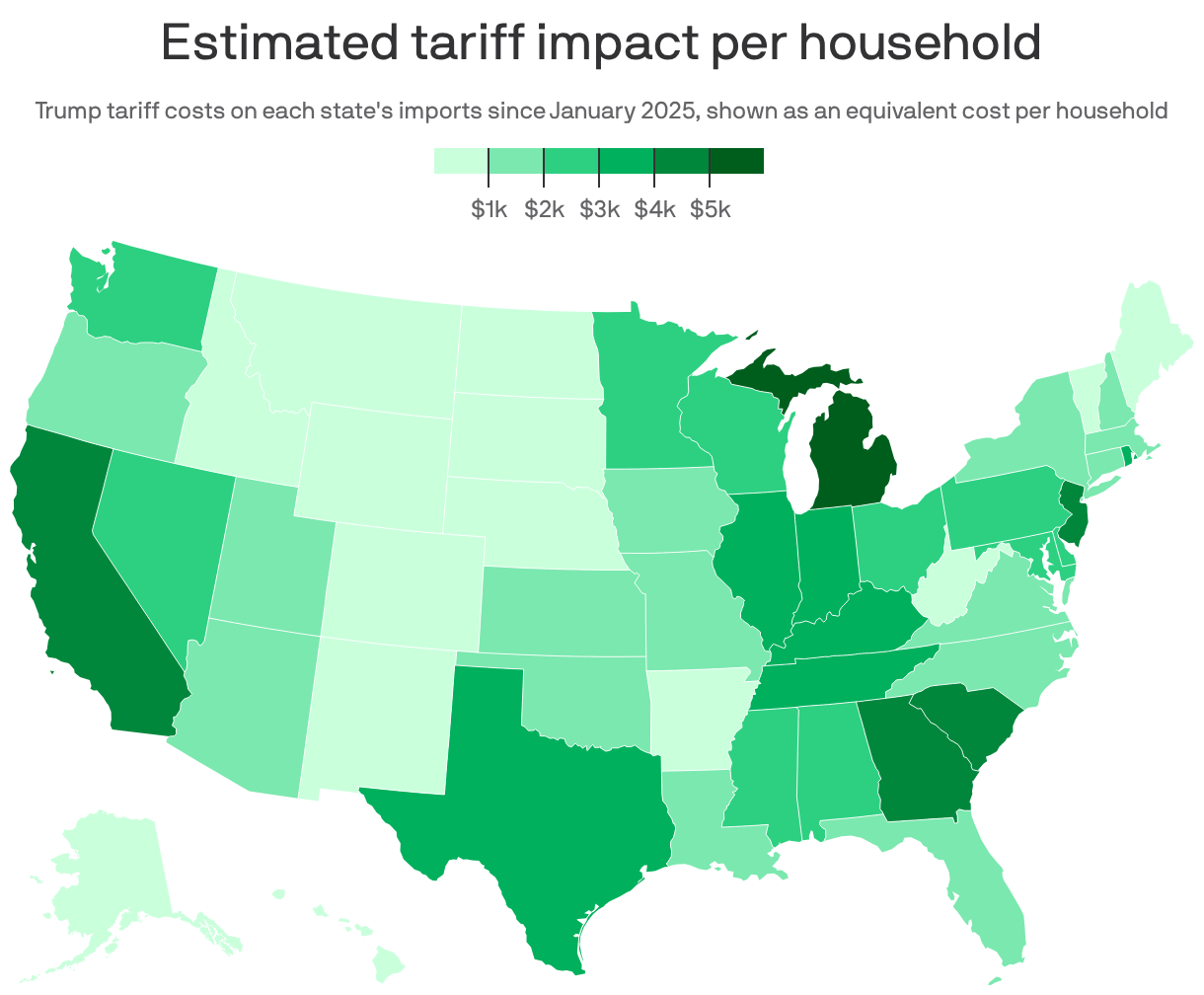
Data: Trade Partnership Worldwide, via National Taxpayers Union Foundation. Note: Includes tariffs mandated by executive order only. Totals through June 2026. Map: Brad Jennings/Axios
States bear wildly different estimated tariff burdens from President Trump's trade actions since the start of 2025, from California's $62.8 billion share to Wyoming's $107 million.
Why it matters: Local industries dictate how and how hard communities have been hit, from Michigan's auto industry to Virginia's aerospace sector.
RALEIGH, N.C. — Apprenticeships, skills-based training, technology and cross-sector partnerships are reshaping how employers identify, train and hire new talent.
Why it matters: The shift beyond four-year degrees is helping businesses build talent pipelines that can adapt faster to changing technology and workforce needs.
Axios' Zachery Eanes and Mary Helen Moore moderated the Aug. 25 roundtable discussion. The event was sponsored by Western Governors University.
5 big takeaways from the conversation:
AI could elevate employees rather than displace them, said SAS executive vice president and chief operating officer Gavin Day. "It's about teaching them how to embrace new technology."
Durable skills, or "soft skills" like adaptability and problem-solving, are increasingly important to landing a job and succeeding in it, Chegg Skills senior vice president and general manager Colin Coggins said.
It's time to "change the narrative" that everyone should go to college, ApprenticeshipNC director Chris Harrington said. "Only 30% of jobs in America require a four-year degree," he added. Pursuing other options isn't "an alternative pathway — it's just a different path."
There's a "significant shortage" of technology and cybersecurity workers in North Carolina, said Nate Denny, secretary and CIO of the N.C. Department of Information Technology. The department relies on "apprenticeship programs, on internships, to get folks outside of a traditional four-year institution" into agency roles.
Cross-sector collaboration can help shorten the timeline from education to employment, said Anke Kokrhoun, head HR at Siemens Electrification and Automation U.S. She points to relationships between businesses and schools that share grants, technology and training to prepare a new generation of workers.
Content from the sponsor's remarks:

Ben Coulter, Southeast regional director for Western Governors University, gives introductory remarks. Photo: Kelly Hudgins, Light Creative for Axios
In opening remarks, Ben Coulter, Southeast regional director for Western Governors University, said the organization is eager to contribute to the talent pipeline in North Carolina.
"There's a lot of conversation about the merit and worth of a college degree versus certificate, shrinking the four-year degree down to three years — a lot of dynamics in higher education that we're involved with."
The Trump administration is in talks with Venezuela's interim government about taking an ownership stake in the South American country's enormous oil resources, two U.S. officials tell Axios.
Why it matters: The historic deal would more than double U.S. oil reserves by drawing from a country that has the world's largest proven reserves.
Federal Reserve chairman Kevin Warsh made clear four weeks ago that he wants to use his speech at the Kansas City Fed's annual symposium in Jackson Hole, Wyoming, to take on big, lofty ideas, as opposed to the tactical details of what the Fed may do in this year's three remaining policy meetings.
Events have not cooperated.
The big picture: Warsh is under intense pressure to give a clearer message Friday at 10am ET than he has so far on the current inflation landscape, the prospects for near-term interest rate increases and the relationship between the Fed and the Treasury.
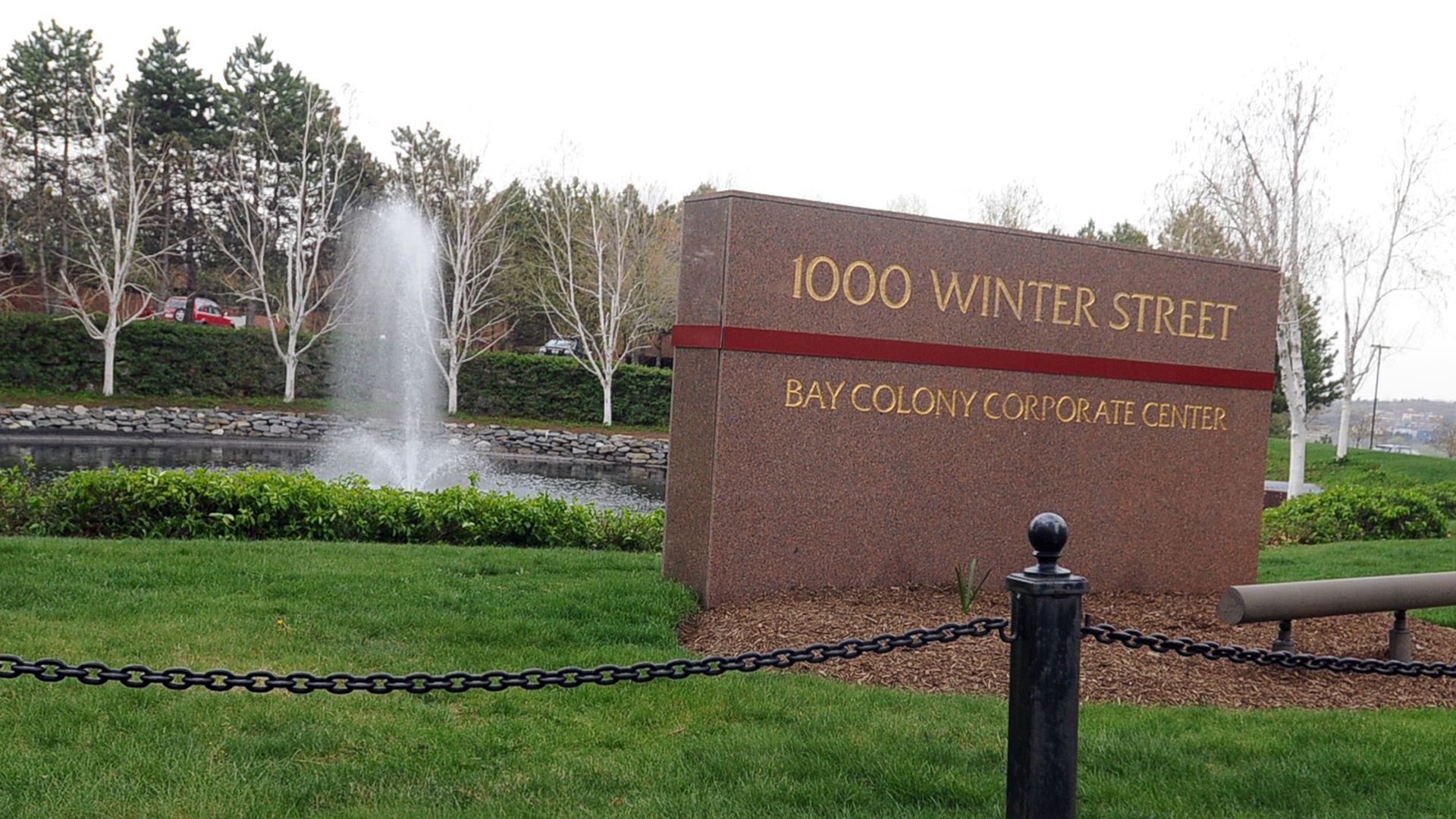
The East Coast used to have its own version of Sand Hill Road, but it's about to be rezoned out of existence.
Catch up quick: The area was nicknamed Mount Money, a collection of office parks perched above a reservoir in Waltham, Massachusetts. Just off of Route 128.
Private equity giant KKR has agreed to a $250 million settlement with the U.S. Justice Department, over its alleged failure to file proper pre-merger notifications on over a dozen deals in 2021 and 2022.
Why it matters: This is the largest civil penalty ever for HSR Act violations.
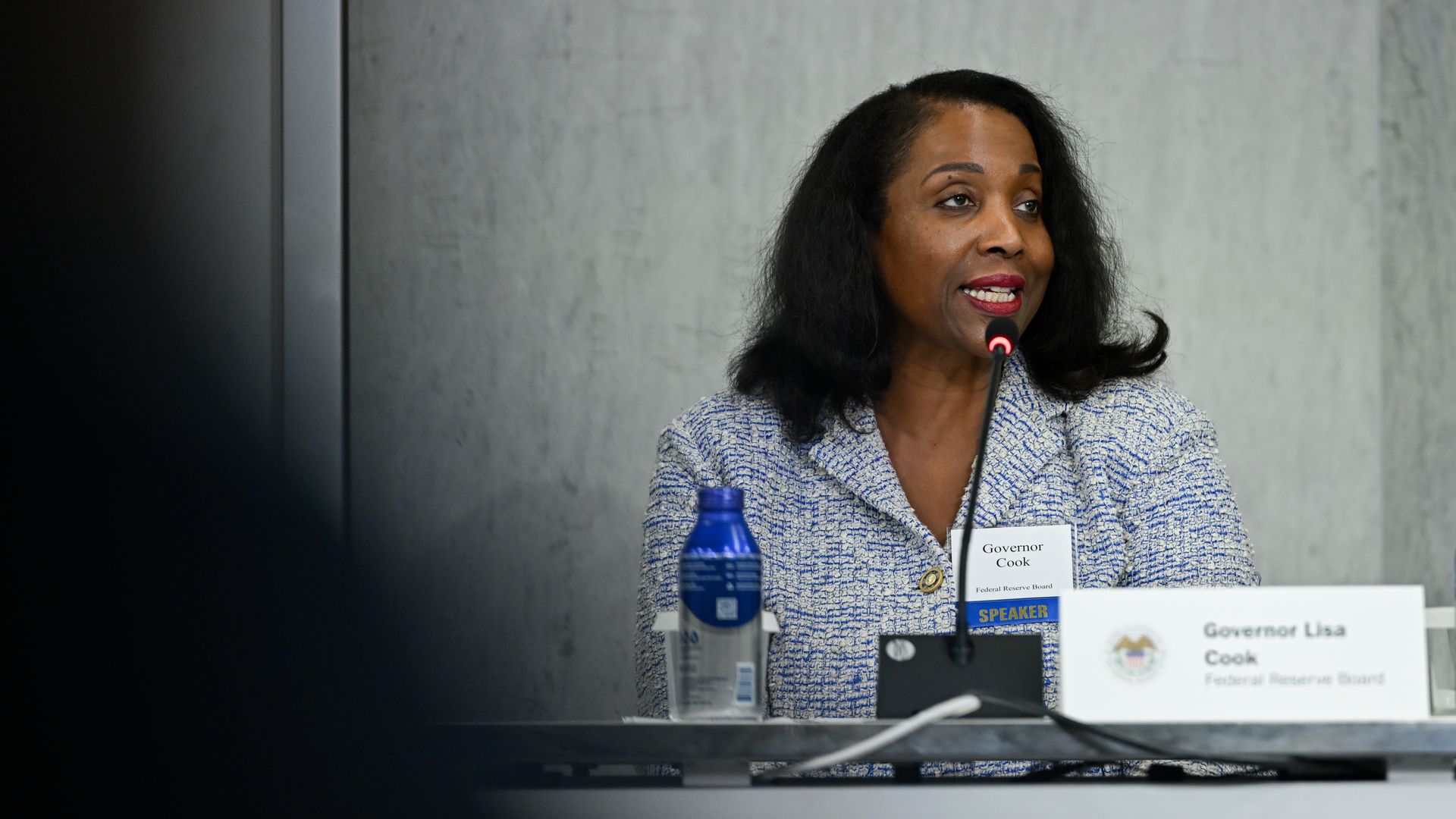
Lawyers for Federal Reserve governor Lisa Cook have submitted their case for why she cannot legally be fired, as President Trump seeks new avenues for dismissing the Biden appointee for cause.
The big picture: After the Supreme Court ruled against Trump's attempt to fire Cook last year over allegations that she claimed two different properties as her primary residence in mortgage documents, the White House has sought to introduce a more formal process in pursuit of the same goal.
It is a closely watched case that may determine the political independence of America's central bank, by setting how high the bar is for a president to fire Fed governors.
To paraphrase Justin Timberlake in his iconic turn in the 2010 film "The Social Network," a trillion dollars isn't cool. You know what is? $3 trillion.
The big picture: That's roughly how much money seven Big Tech companies, including Google, Microsoft and Nvidia, have committed to spending on AI-related infrastructure in off-balance-sheet commitments, according to a new analysis from Morgan Stanley.
And that's on top of the estimated $770 billion in debt and lease obligations that are on the balance sheets.
AI behemoth Nvidia reported blowout earnings Wednesday — exceeding Wall Street's expectations — and even jaded investors who had grown a bit immune to the company's stratospheric growth over the past year seemed to like it.
Why it matters: The chipmaker's earnings are viewed as a barometer of the overall health of the AI trade.