Nvidia projected 70% revenue growth in its next fiscal year, sending its stock up in after-hours trading, while the company defended its decision to provide capital solutions to its customers.
Why it matters: The stock is widely considered a bellwether for the health of the broader AI economy, but lately it has been trailing the broader semiconductor sector in market gains.
WASHINGTON — The SELF DRIVE Act could accelerate the expansion of driverless cars by providing a needed national regulatory framework, Rep. Erin Houchin (R-Ind.) said at an Axios Live event.
Why it matters: Autonomous vehicles could be a key part of the future of transportation, but the U.S. can't fully realize their potential — or compete globally — without consistent safety and design standards across state lines.
Axios' Nathan Bomey spoke with Houchin, Indianapolis Motor Speedway and IndyCar president Doug Boles, and Consumer Technology Association president and CEO Kinsey Fabrizio. The Aug. 22 event was sponsored by Honda.
The public and private sector are lining up to support emerging technologies.
What they're saying: "The roadway doesn't stop at the state line," said Houchin, who co-sponsored the bill.
This "requires a federal framework because of interstate commerce issues," she added.
The patchwork of state policies is "challenging. It's costly. It's confusing," Fabrizio said.
"Companies need to know what [the rules] are, so that they can develop their products and their services around them," Fabrizio added.
Zoom in: The SELF DRIVE Act prioritizes safety standards, sets national thresholds for testing and deploying autonomous vehicles and addresses cybersecurity concerns. However, it leaves licensing and registration to the states.
If the bill doesn't pass by December, "we're going to bring it right back up again in the 120th Congress," Houchin said.
Meanwhile, Boles sees great potential for emerging technologies in car racing.
"I see those becoming tools that help inform drivers of what's going on, help them make smarter decisions," he said.
Content from the sponsor's segment:

Axios publisher Nicholas Johnston (left) and Honda EVP Noriya Kaihara. Photo: Lord Made for Axios
In a View From the Top conversation, Honda executive vice president Noriya Kaihara highlighted the company's decades of investment in the U.S.
"We build the product here in America because our policy is that [we] manufacture where there is the demand. So that means: build the products where the customers are … and now we have 12 plants in America."
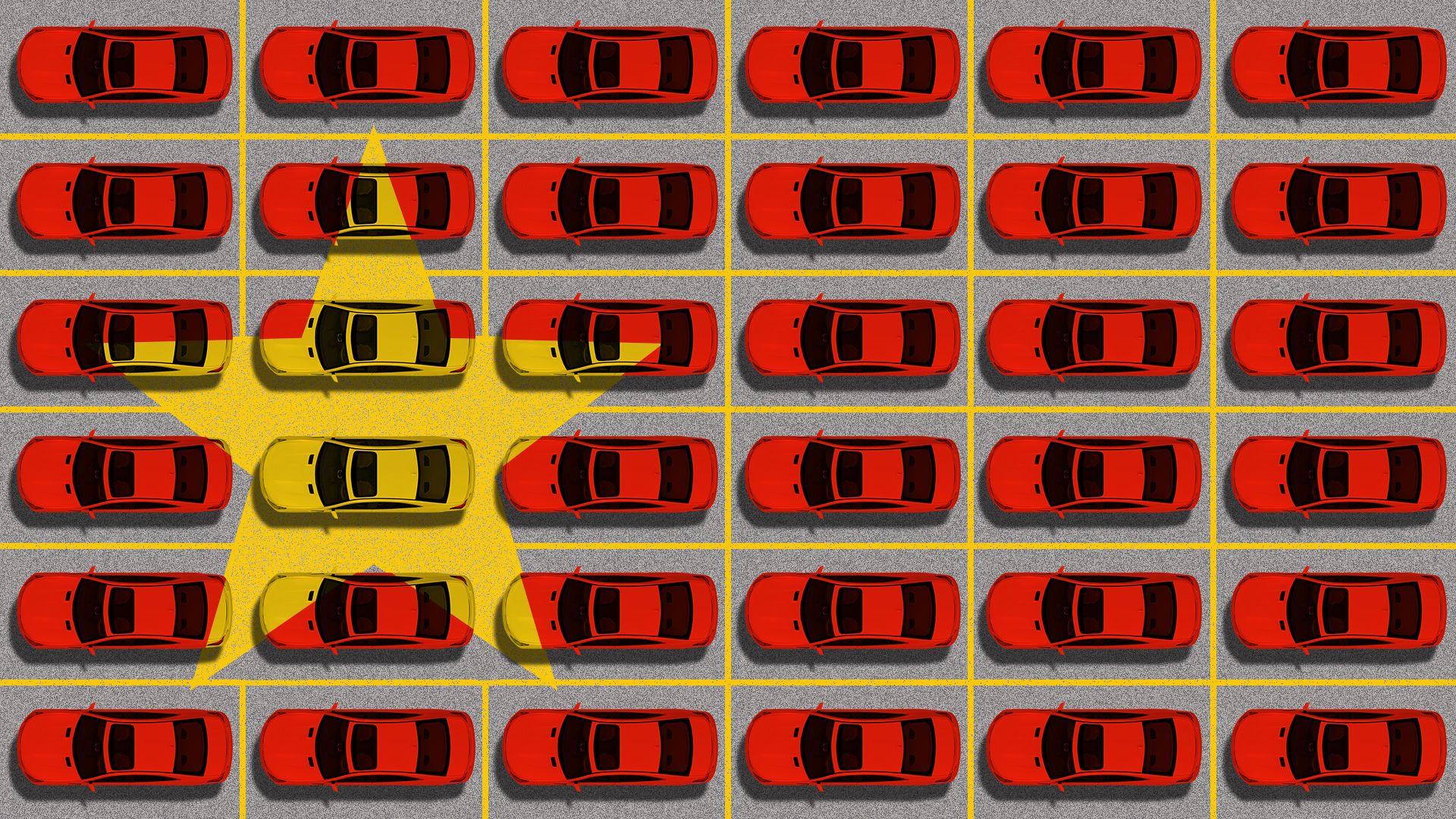
Protectionist trade policies may buy Detroit automakers some time, but they can't hide the U.S. auto industry's deteriorating global competitiveness forever.
Why it matters: American consumers don't see Chinese brands like BYD, Geely, Chery or Xiaomi in dealerships, so the rise of Chinese competition can feel theoretical.
The latest data offers a mixed picture of the economy: Incomes are rising at a solid clip, but inflation remains stubborn and consumer spending has lost momentum.
Why it matters: Consumers are becoming more cautious. The potential upside of weaker spending is that it should help cool inflation, but that payoff has yet to materialize, with underlying inflation still higher than at any point in 2024 or 2025.
Persistent inflation keeps pressure on the Federal Reserve to raise rates, but greater caution among consumers raises concerns that policy tightening would weigh on spending and economic growth.
There is a hot debate over the wisdom of the Treasury Department's bond market intervention. In the meantime, market moves suggest Treasury's intended purpose — of reining in longer-term borrowing costs — is working.
The big picture: Long-term Treasury yields have stabilized since the government said a week ago that it would buy back longer-term securities by at least $4 billion at a time.
Technical indicators in the bond market, specifically the gap between Treasury yields and swaps of equivalent duration, have narrowed, implying global investors are more willing to hold Treasuries.
The Trump administration has struck data-sharing deals with major technology firms to help track how AI is affecting jobs and hiring, acting Labor Secretary Keith Sonderling told Axios.
Why it matters: AI could reshape the labor market faster than traditional government statistics can capture it. That could make it difficult for economic policymakers to see major shifts in jobs and hiring in real time.
Vanguard Group on Wednesday announced an agreement to acquire Altruist, a California-based provider of software for registered investment advisors.
No terms were disclosed, but Axios has learned the price was $4.6 billion in cash.
Why it matters: Vanguard is seeking to expand deeply into lucrative advisory work — competing with firms like Fidelity and Schwab — despite being best known for its low cost index funds.
Nvidia snapped a seven-day losing streak in the stock market on Tuesday, but its mini slump in August has called attention to questions over the AI darling's growth trajectory.
Why it matters: Nvidia is trying to use its massive pile of capital to keep the good times rolling — through a wide assortment of investments and capital deals — while continuing to feed the growing chip needs of the AI hyperscalers.
Rolls-Royce will this week mark the completion of a $1 billion investment in Indiana, where the company has expanded and renovated its manufacturing, assembly and test facilities.
The big picture: The overhaul competitively positions Rolls-Royce amid wartime-production messaging from the Pentagon and a growing portfolio of projects, including propulsion for the Army's MV-75, the Air Force's B-52J and the Navy's MQ-25A.
"If you go back to 2014, we knew that we were at an inflection point. We had aging facilities, some dating back to World War II," Adam Riddle, president of Rolls-Royce Defense, told Axios.
Bill Gates says governments may eventually need to do something that runs counter to centuries of technological progress: deliberately stop machines from replacing people in some jobs.
Why it matters: Gates expects AI to eventually outperform humans at such a wide range of work that simply retraining displaced employees won't be enough.