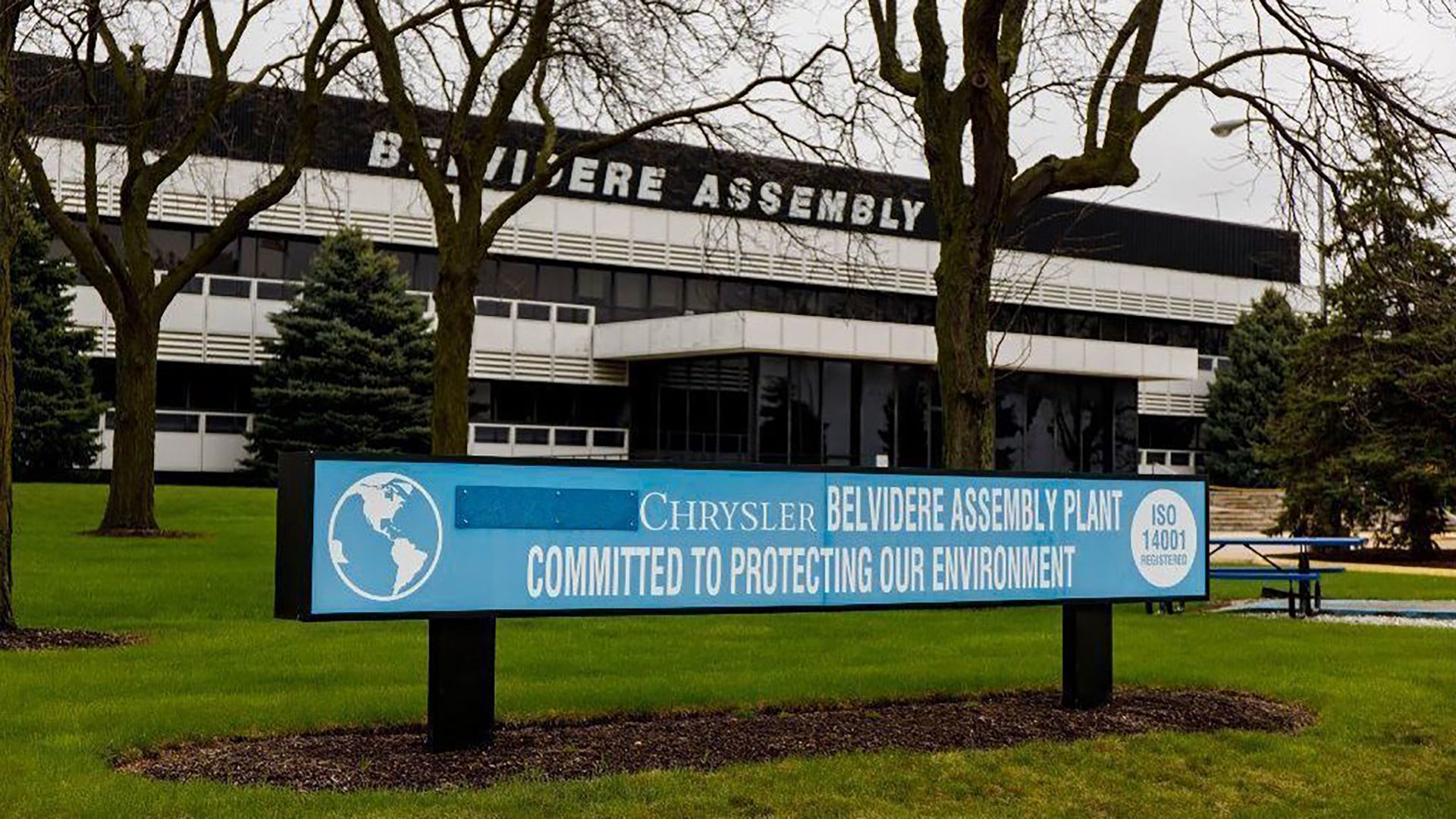
The automaker formerly known as Fiat Chrysler on Tuesday announced plans to invest $13 billion over four years in the U.S. and add more than 5,000 jobs here.
Why it matters: Stellantis is moving to mitigate the impact of President Trump's tariffs on its business by locating more production locally.
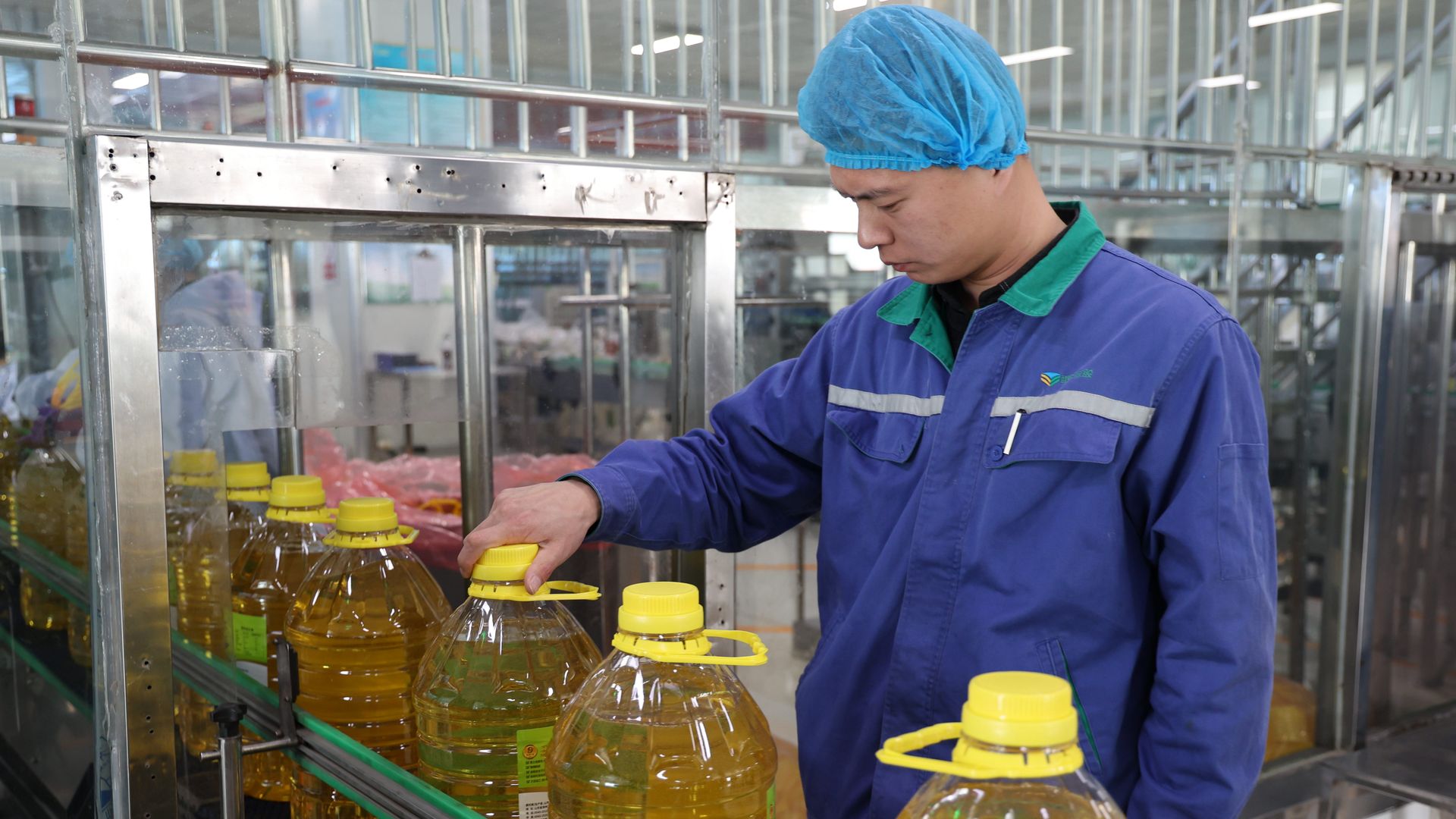
The U.S. could cut off imports of cooking oil from China in the fight over soybean exports, President Trump threatened Tuesday.
Why it matters: The sudden re-escalation of the trade war, at a time of rising inflation at the grocery store and elsewhere, threatens to amplify the pain for consumers.
All it took was one post from President Trump to send the crypto market into a spiral Friday, driving $19 billion in liquidations against people making future bets in the market.
Why it matters: Friday's shock was bad, but the real extent of any lasting damage will likely become clearer over the next few days — if battered trading firms are forced into more large-scale selling.
Buying a car is the second-biggest purchase most Americans will ever make — and it can be one of the most complicated. Between choices in models, financing and paperwork, the process can be overwhelming.
The global economy is still on a slower growth track in the years ahead, the IMF says — even if tariff threats proved to be less economically damaging than previously believed.
Why it matters: New projections from the IMF show a brighter outlook relative to early 2025, though dimmer prospects compared to those outlined this time last year.
The group is skeptical the AI boom, at least in the near-term, can make up for the global economy's tariff hit — and warn that there is risk of an AI-related bubble popping.
What they're saying: "[D]espite multiple offsetting drivers, the tariff shock is further dimming already lackluster growth prospects," IMF chief economist Pierre-Olivier Gourinchas writes in a blog released alongside the new forecasts.
"Even in the United States, growth is weaker and inflation higher than we projected last year — hallmarks of a negative supply shock," Gourinchas adds.
By the numbers: The IMF projects the global economy will grow by 3.2% this year and 3.1% in 2026. The forecasts are better than those projected in July, but cumulatively 0.2 percentage points below the estimates from this time one year ago.
It's a similar story for the United States: The IMF projects the domestic economy will grow by 2% in 2025, a massive slowdown from the 2.8% growth rate last year.
That 2% growth is marginally higher than what was anticipated in the spring and summer, though still below the 2.2% rate that was anticipated a year ago.
The intrigue: AI-related investments — along with lower tariffs implemented by the U.S. —are the key reason why growth has fared slightly better than expected.
But the IMF warns that the investment surge is among the biggest downside risks for the global economy.
"Markets could reprice sharply, especially if AI fails to justify lofty profit expectations," Gourinchas writes, adding that "continued exuberance may require tighter monetary policy just as in the late 1990s" during the dot-com boom.
"That would dent wealth and curb consumption, with adverse effects potentially reverberating through the financial system."
Yes, but: Investment surge aside, the IMF says the productivity effects from AI could be a tailwind for growth in the months and years ahead — though growth effects could be undercut by continued trade tensions.
"Under modest assumptions, the combined effects of lower uncertainty, lower tariffs and AI could raise global output by about 1% in the near term," Gourinchas says.
Reducing tariff rates to levels that prevailed before President Trump took office could raise global growth by roughly 0.3 percentage points, the IMF projects.
What to watch: Renewed tensions between the U.S. and China last week show the tricky balance for the global economy, with trade seemingly at risk of being upended at any moment.
Trump threatened to impose an additional 100% tariff on all Chinese imports on Nov. 1 if China moved ahead with stricter export controls.
Over the weekend, Trump said it "will all be fine" with China — without taking the tariff threat off the table.
Glue, an aspiring Slack killer co-founded last year by White House AI czar David Sacks, has raised $20 million in Series A funding.
What they're saying: CEO Evan Owen explains that Glue has refocused around MCP (model context protocol), after learning that it was an "uphill battle" to get all of a company's internal information synced.
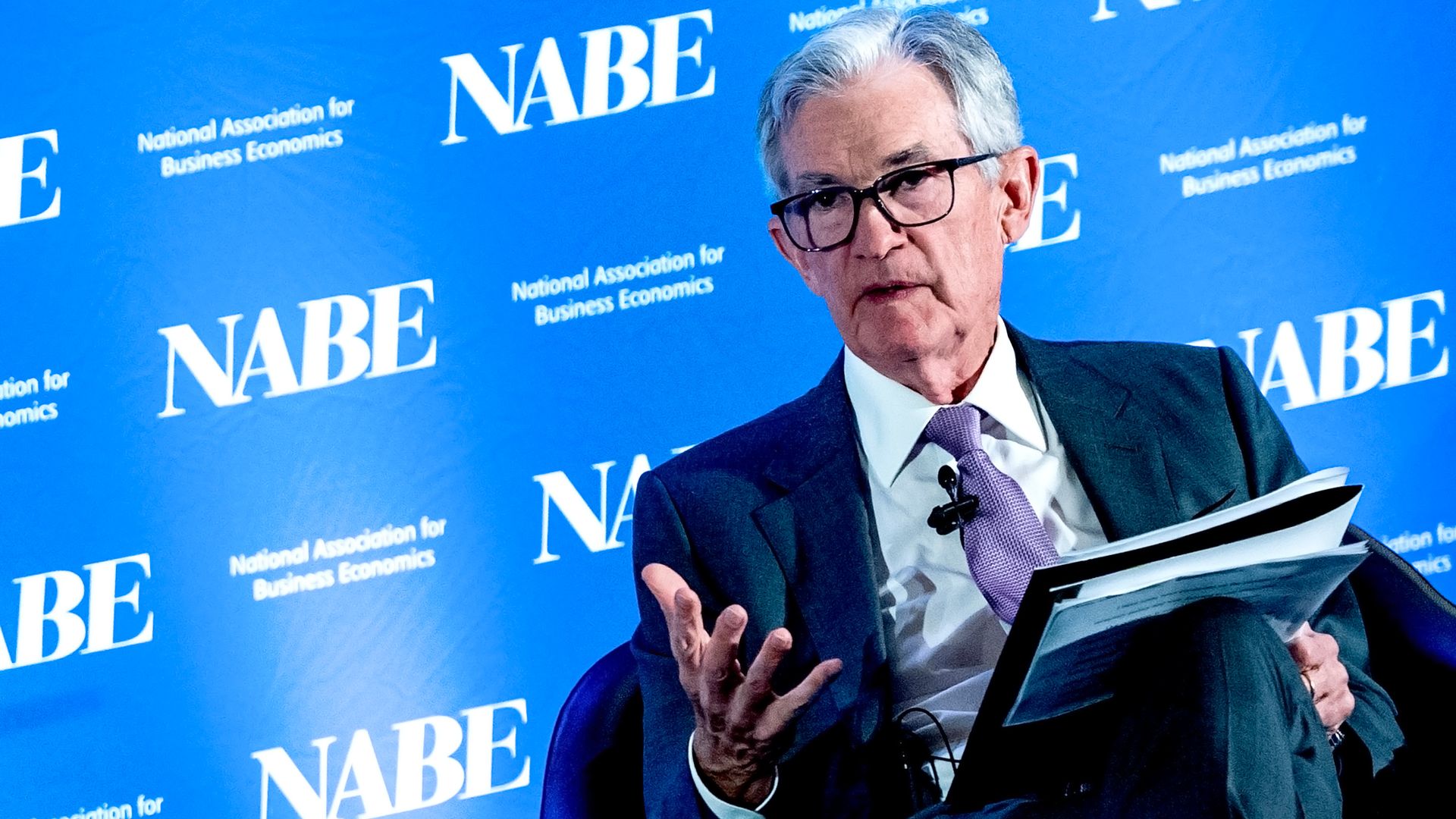
Federal Reserve chair Jerome Powell defended the central bank's management of its $6.6 trillion balance sheet, implicitly rejecting criticism from the Trump administration.
Why it matters: As the president weighs Powell's replacement, the Fed chief argued that large-scale bond purchases helped keep the economy from the abyss during the pandemic, and can be an important tool in the future.
Goldman Sachs has agreed to pay upwards of $965 million to acquire Industry Ventures, a 25-year-old firm that focuses on direct VC, indirect VC, and VC secondaries.
Why it matters: Wall Street keeps digging deeper into alternatives, particularly as successful startups shun the public markets.
Walmart is teaming up with OpenAI to turn shopping into a conversation — letting customers plan meals, restock essentials and check out directly through ChatGPT.
Why it matters: The world's largest retailer's new OpenAI partnership signals the arrival of "agentic commerce" — where AI doesn't just answer questions but anticipates what shoppers need next.
Why it matters: The Trump administration released the video for airing at TSA checkpoints earlier this month, but some transportation authorities have shelved the message out of concern it violates the Hatch Act.
A new report from JPMorgan Chase warns that AI will shake up global alliances, stoke fresh populism and change the rules of war in the century ahead.
Why it matters: The report, first seen by Axios, says the U.S. is dominating the worldwide AI race. Efforts to maintain that dominance are ushering in new, uncomfortable norms.
Visa is prepping for AI holiday shoppers with a new "Trusted Agent Protocol" that helps retailers distinguish legitimate AI shopping agents from malicious bots, the payments giant exclusively told Axios.
Why it matters: AI-fueled shopping is rising fast and Visa's move could lay the groundwork for "agentic commerce" — when your digital assistant can safely browse, compare and buy on your behalf.
As President Trump basks in his success in the Middle East, hairline fractures within his Republican base are cropping up on a smattering of domestic issues.
Why it matters: Republicans have been in near-lockstep with Trump in his second term. So the small pockets of resistance — on the National Guard deployments, free speech, the federal shutdown and more — signal concerns within the GOP as the 2026 midterms come into sight.