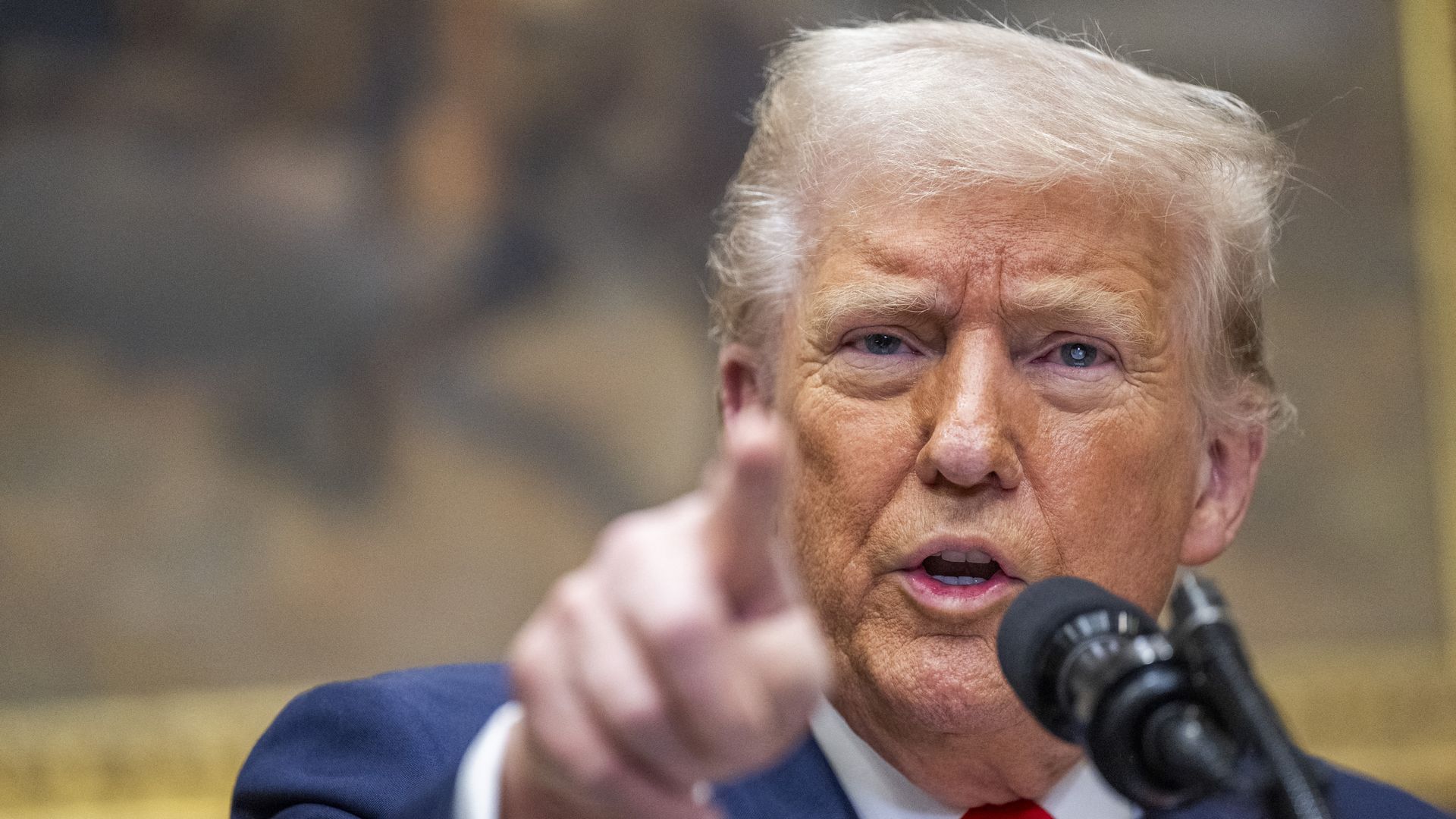
The stock market is now lower than when Donald Trump was sworn in as president — and lower than when he was elected president.
Why it matters: With the imposition of severe tariffs on America's largest trading partners, investors seem to have lost whatever euphoria greeted Trump's election.
By the numbers: The S&P 500 closed today at 5,775. That's lower than the 5,783 at which it closed on Nov. 5, before the presidential election results were known.
The Nasdaq Composite closed at 18,285, also now below its Nov. 5 closing level of 18,439.
The stock market isn't just flat since Election Day. It's also down 4.3% since Inauguration Day, and it's down 6% from the high of 6,147 it hit on Feb. 19.
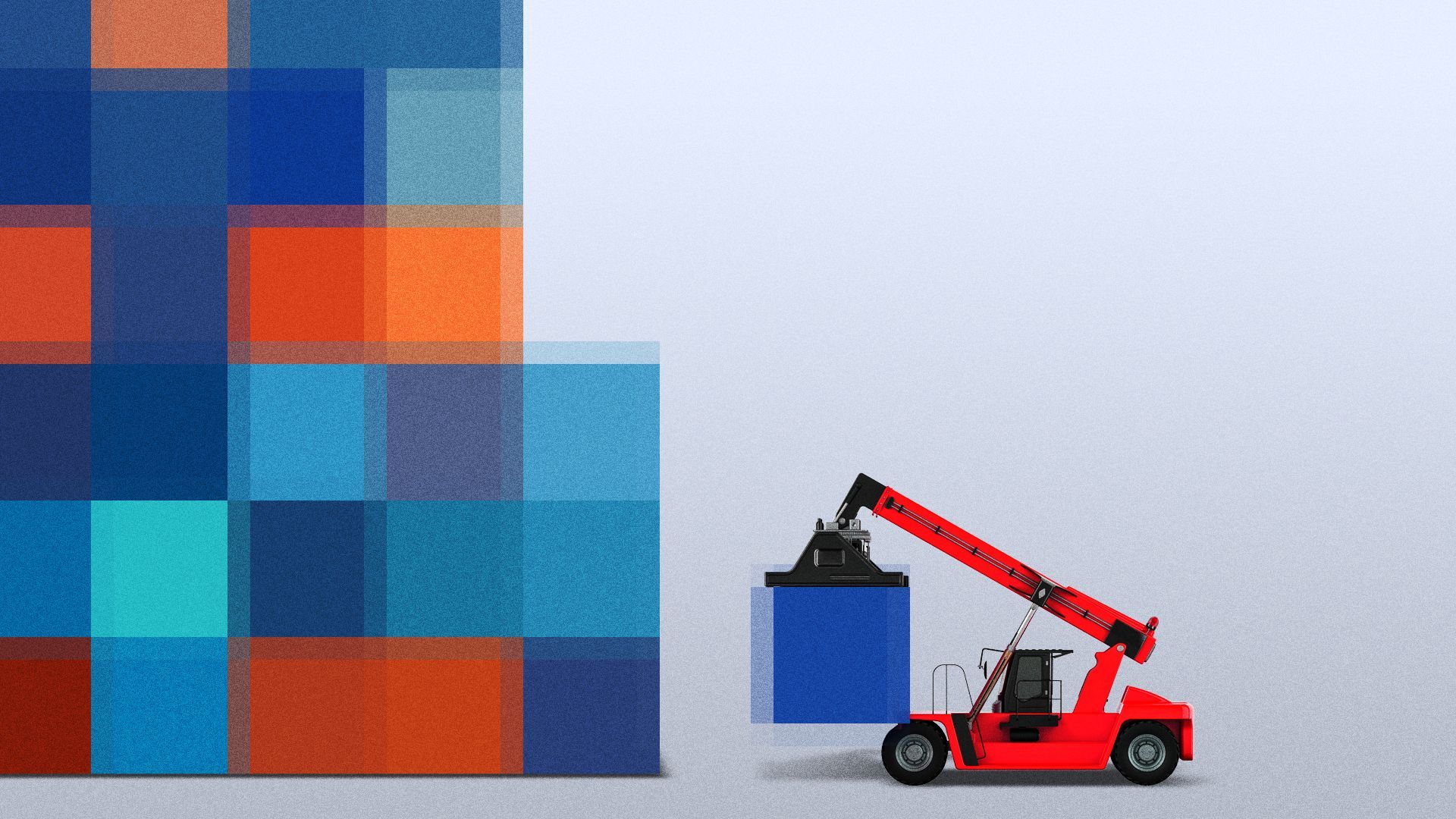
After weeks of stalled decision-making, the global trade war automakers were hoping to avoid is now here, providing a measure of clarity that had been missing.
While significant disruption is inevitable, at least there's a playbook from the last big shock to hit the industry: COVID.
Why it matters: Though unwelcome, supply chain upheavals are nothing new for carmakers, who have built a culture of resiliency while dealing with everything from tsunamis and fires to labor strikes and safety recalls — not to mention the global health crisis.
American farmers are bracing for impact as President Trump's trade war threatens foreign markets for U.S. agricultural products.
Why it matters: Ag, food and related industries made up about 5.5% of the U.S. economy in 2023, contributing more than $1.5 trillion to GDP, according to the U.S. Bureau of Economic Analysis.
The stock market is now lower than when Donald Trump was sworn in as president — and lower than when he was elected president.
Why it matters: With the imposition of severe tariffs on America's largest trading partners, investors seem to have lost whatever euphoria greeted Trump's election.
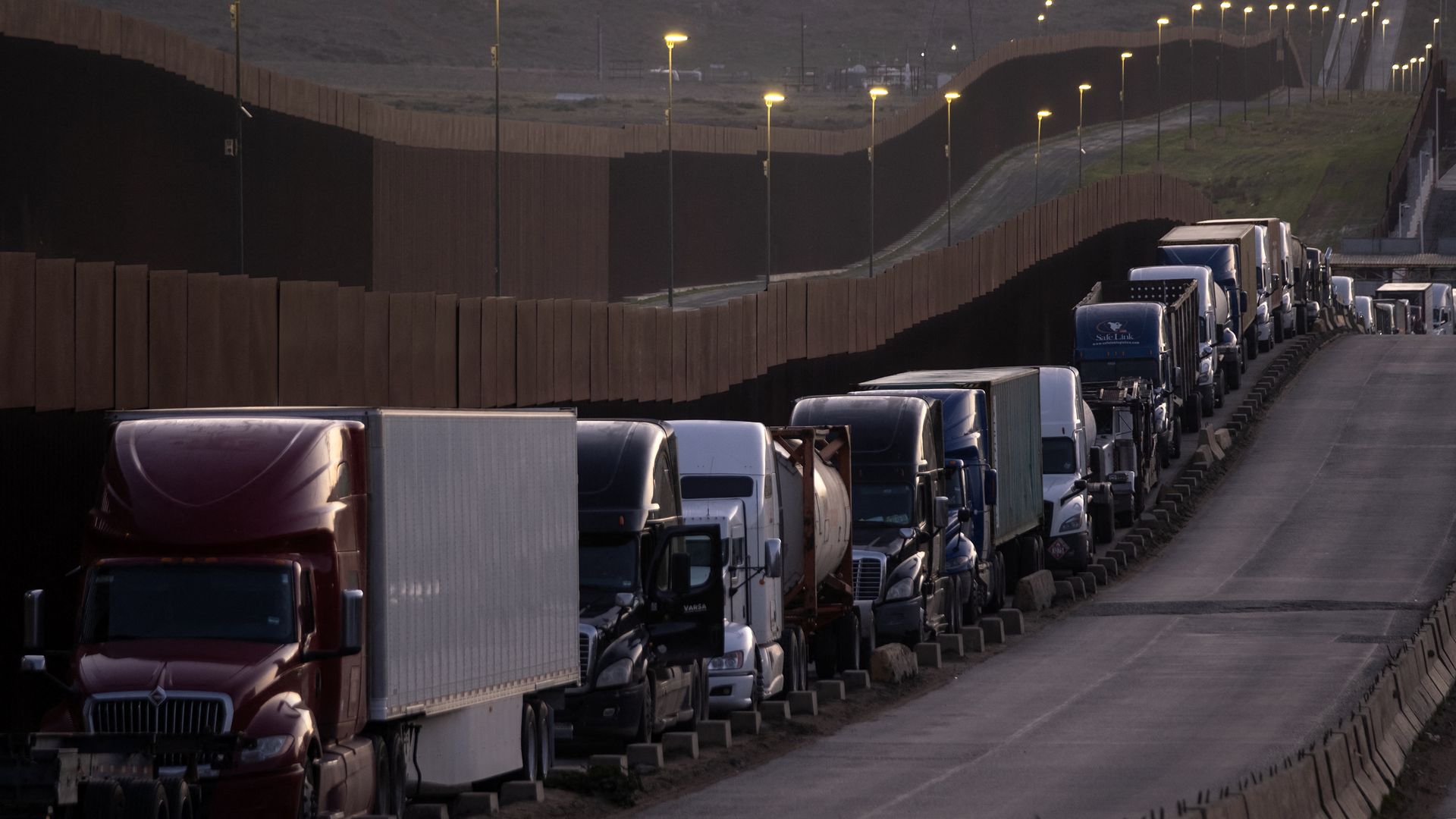
President Trump's 25% tariffs on imports from Canada and Mexico, as well as new levies on Chinese imports took effect on Tuesday.
Why it matters: Trump's confirmation of the tariffs sent markets sliding amid fears it could raise prices for U.S. customers, hurt the economy and prompt a trade war.
In the wake of a judge's ruling pausing the terminations of federal probationary employees, the Office of Personnel Management (OPM) is now telling agencies that they're the ones with the power to fire workers.
Why it matters: The firings of as many as 30,000 probationary federal workers have sparked chaos, stress and confusion, as well as disrupted work, across the government.
Canada's Justin Trudeau skewered President Trump over aggressive tariffs that went into effect Tuesday, claiming they hurt Americans and would be subject to retaliatory measures.
Why it matters: Relations between the two longtime allies are rapidly souring. The Canadian prime minister accused Trump of launching a "trade war" aimed at tanking the economy of its closest friend.
Data: Trade Partnership Worldwide; Note: Based on January-November 2024 trade data. Map: Alex Fitzpatrick/Axios
President Trump imposed sweeping tariffs Tuesday on America's largest trading partners, triggering a global trade war that promises to affect the wallets of everyday Americans.
Why it matters: After running — and winning — on a promise to curb inflation, Trump's trade war threatens to raise prices for everything from food and clothes to cars and computers.
President Trump's trade war and spending cuts are testing the economy's resiliency. But the economy probably isn't in the midst of the kind of steep contraction suggested by a closely followed model that has made headlines lately.
Why it matters: The trillion-dollar question this year is how slumping business and consumer confidence will translate into slower economic activity.
While that might happen, most signs point to expansion still underway at the moment.
But that's not the signal sent by the Atlanta Fed's GDPNow model, a "nowcast" that uses incoming data to estimate in real-time, current-quarter GDP growth.
That model's estimate of first-quarter GDP growth has been in freefall. It now points to a 2.8% rate of Q1 contraction, compared to a 2.3% rate of growth just a week ago.
But while risks abound, the situation is probably not as gloomy as the model implies.
The intrigue: Preliminary data that showed a historic surge in goods imports pushed GDPNow into negative territory. Businesses trying to get ahead of tariffs might have played a role in the import spike — but that would have been a one-off impact, not an ongoing hit to GDP growth.
Moreover, a team of economists at Goldman Sachs say that it was driven by a flood of gold imports that are excluded from GDP "because they are generally not consumed or used in production."
The bank believes the economy will grow at a 1.6% rate in the first quarter, lower than its initial forecast but well above what the Atlanta Fed is tracking.
The big picture: The exaggerated impact of trade and the whipsaw in growth estimates is a result of how GDPNow is calculated.
It's a running estimate of the data released for January that factors into GDP, not a traditional forecast of how the entire quarter might shake out.
With two more months' worth of data, first-quarter GDPNow is set to move around some more.
There is another reason to believe the downside risk from imports is exaggerated: The drag on GDP from imports will likely be offset by other categories as more data from the quarter is released.
For instance, inventory stockpiles would be a boost to GDP. If the goods are sold within the quarter, that would translate into stronger consumption.
What they're saying: "None of these measurement issues are relevant to the question of how fast domestic economic activity is actually growing," Lou Crandall, chief economist at Wrightson ICAP, wrote in a note.
Big-time tariffs are now in place on America's three largest trading partners. It should be enough to meaningfully move the dial on U.S. economic growth and inflation.
The big picture: President Trump implemented 25% tariffs on imports from Canada and Mexico (10% on Canadian energy) and a cumulative 20% on Chinese imports, after postponing the North American levies a month ago.
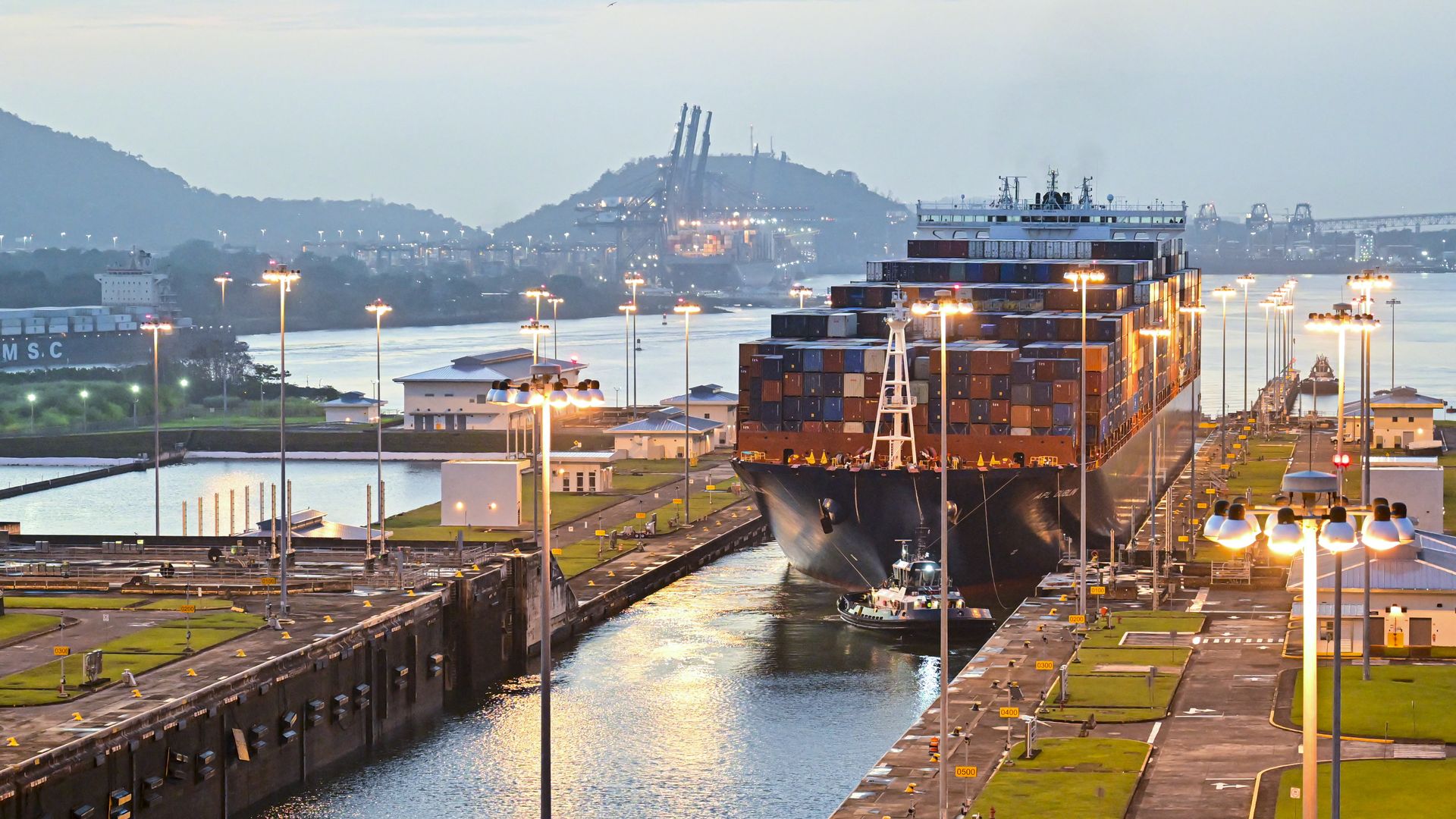
BlackRock on Tuesday said it agreed to acquire two ports serving the Panama Canal from Hong Kong's CK Hutchinson, as part of a larger $22.8 billion deal.
Why it matters: President Trump has threatened to retake control of the Panama Canal, due to what he perceives as unfair treatment of U.S. vessels because of Chinese influence.
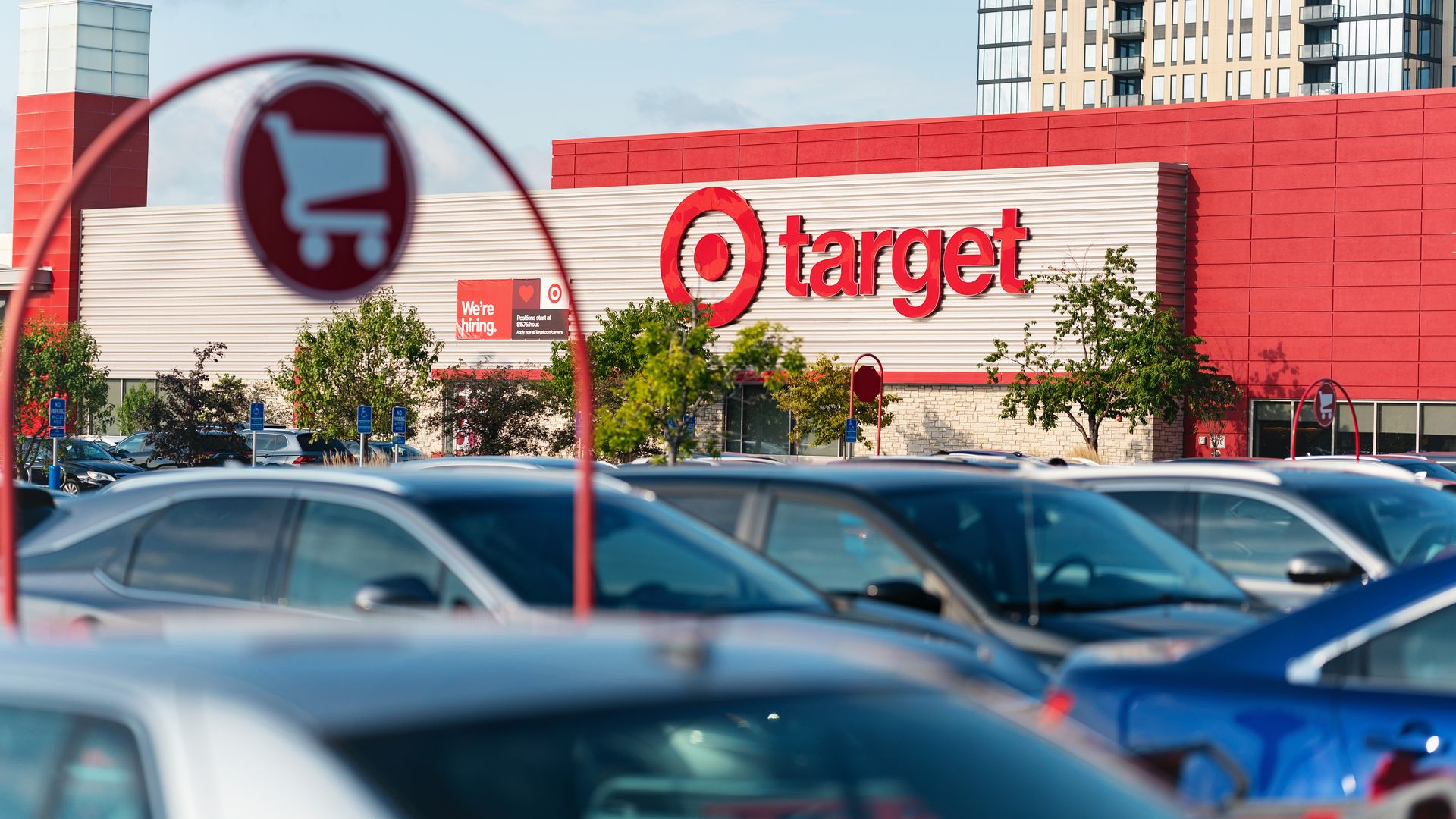
New tariffs are expected to cause food prices to rise in the coming days, especially on produce from Mexico, Target CEO Brian Cornell warned Tuesday.
Why it matters: President Trump's long-promised tariffs on goods from Mexico and Canada went into effect Tuesday along with an additional 10% levy on Chinese imports.
The Trump administration says tariffs will encourage domestic production and investment, but that's a trend that was already well underway.
Why it matters: Long before tariffs, deglobalization and reshoring trends were accelerated by the passage of U.S. tax legislation in 2017, and then supercharged by an executive decree from Mexico last December.
Waymo's autonomous vehicles are now available on the Uber network in Austin, as more robotaxis begin to share the road with human drivers in select pockets of the U.S.
Why it matters: Maybe you don't feel like conversation with a chatty Uber driver, or you don't like the way they drive. Now you can choose to have a robot-driven car all to yourself.
President Trump is making good on tariff threats that will raise the stakes of his trade war with China and potentially ignite another in North America.
Why it matters: It breaks a pattern of head fakes that Wall Street and businesses large and small had hoped would continue.













/2025/03/04/1741061685061.gif?w=3840)