How Trump's tariffs may affect everyday Americans


Add Axios as your preferred source to
see more of our stories on Google.

President Trump imposed sweeping tariffs Tuesday on America's largest trading partners, triggering a global trade war that promises to affect the wallets of everyday Americans.
Why it matters: After running — and winning — on a promise to curb inflation, Trump's trade war threatens to raise prices for everything from food and clothes to cars and computers.
- Some estimates suggest just Tuesday's tariffs alone could cost the average U.S. household $830 a year — and that's before you factor in the cost of anticipated retaliatory tariffs from Canada, China and Mexico.
- Already, the impacts are escalating — the map above, for example, was based on a 10% China tariff, which has now been raised to 20%.
Tariffs on the top U.S. import partners
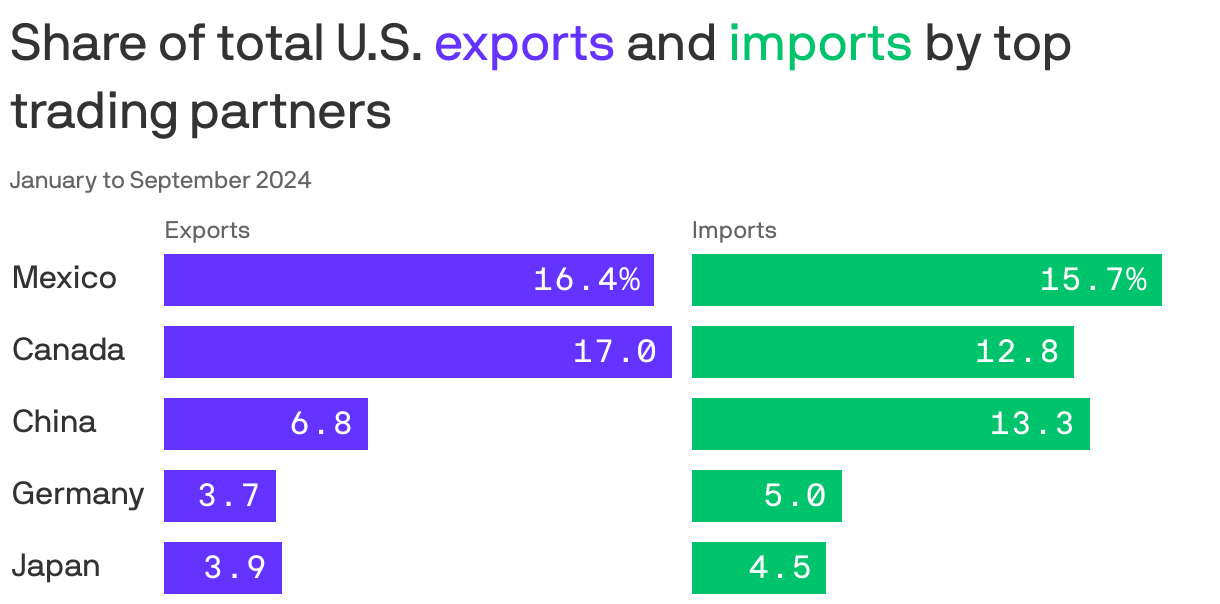
Zoom out: More than 40% of all U.S. imports come from Mexico, Canada and China — over $1.3 trillion worth in 2024 alone, per Census data.
- The tariffs will affect big-ticket items like machinery and cars, but also consumer staples — everything from beer (more than 80% of U.S. imports come from Mexico) to oats (almost all U.S. imports come from Canada).
Tariffs as a regressive tax
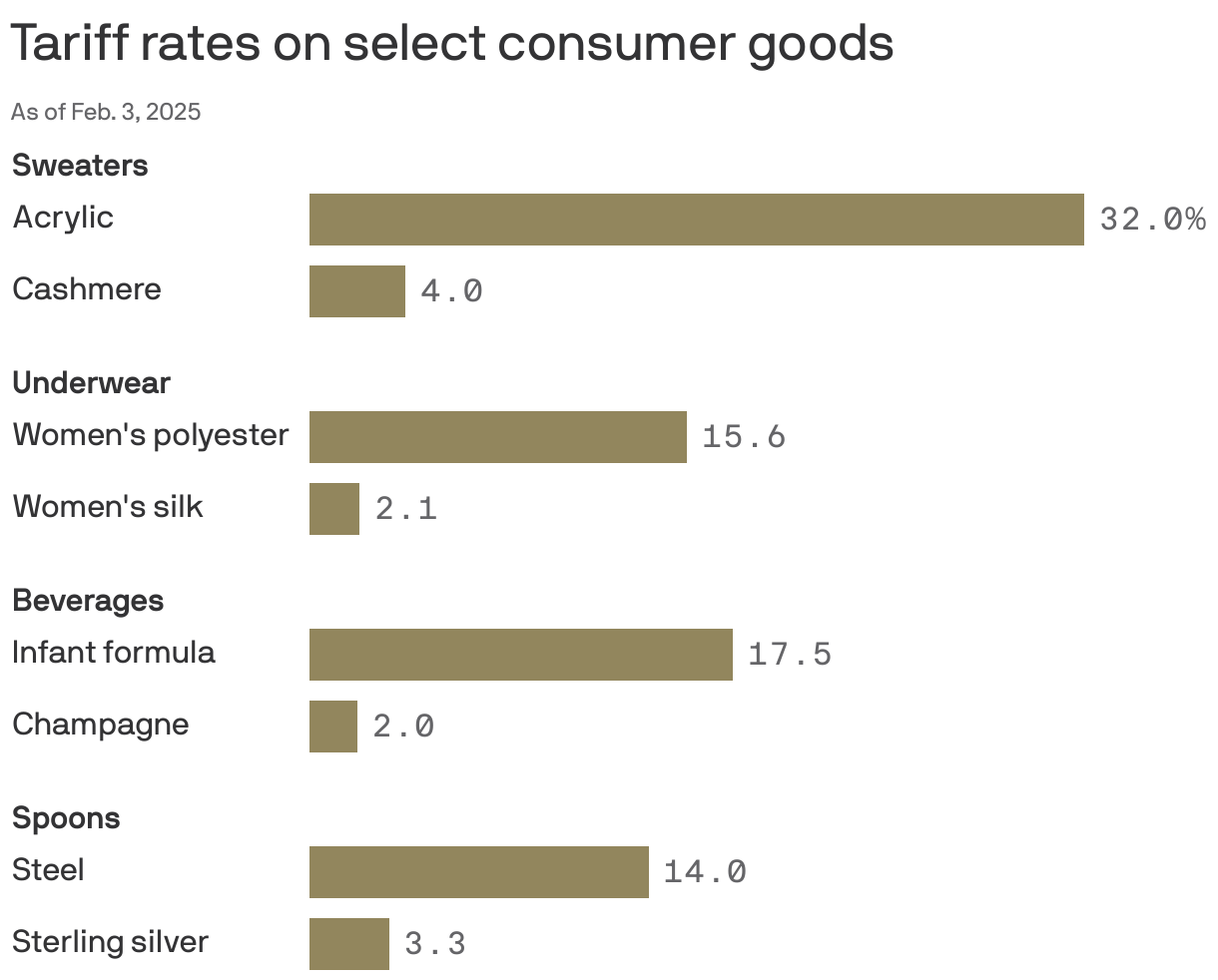
Zoom in: Tariffs are generally regressive, in that they more heavily affect lower-income people who spend a greater share of their resources on goods, particularly necessities like food and fuel.
- As data from the Progressive Policy Institute shows, even before Trump's new levies this week, the existing U.S. tariff system already charged much higher rates for low-cost products than their luxury counterparts.
The China trade deficit


Between the lines: Tariffs, especially on China, do move the needle on trade a little, but over time it tends to rebound.
- The trade deficit with China has been more than $200 billion for 20 years now, and Chinese retaliatory tariffs will offset some of the benefit of the new duties Trump assessed.
Fentanyl realities


The intrigue: In assessing tariffs on Canada and Mexico in particular, Trump cited the flow of fentanyl across both borders.
Yes, but: As U.S. Customs and Border Protection data shows, over the last 40 months, fentanyl volume that's trafficked through Mexico is almost 1,000x the amount coming through Canada.
- In January 2025 alone, CBP stopped almost half a ton of fentanyl at the Mexican border — and about half an ounce at the Canadian border.
The next tariffs


What to watch: The tariffs are a long way from over — the White House has made clear more are coming, and they'll stack up on top of each other.
- Steel and aluminum tariffs come in next week, which will particularly impact automakers and beverage companies, among others.
- Reciprocal tariffs on April 2 could affect dozens of countries, with as-yet unknown impacts on almost everything the country imports.
Go deeper: Tariff worries, Trump cuts signal emerging economic growth risks
Editor's Note: This story has been updated with additional details on the tariff map.
