A day after Monday's DeepSeek-induced market frenzy, a relative calm set in as AI leaders and tech companies assessed how new assumptions in the AI economy may affect their own trajectories.
State of play: Executives see a path to lower operating costs.
"Businesses are already champing at the bit to use the Chinese [DeepSeek R1] model in their products because it's so cheap compared to American ones," The Information's Jon Victor reports in Applied AI.
That prospect of more efficient spending continued to be reflected in markets today. Apple's stock, for instance, jumped for a second day and is up 7% on the week.
JetBlue today beat expectations on quarterly revenue and earnings, but the airline's stock plummeted after it projected higher costs in 2025.
Zoom in: JetBlue expects its unit cost — expenses per available seat mile — to jump as much as 7% when excluding fuel.
"The outlook is a setback to Chief Executive Officer Joanna Geraghty's turnaround plans after two failed attempts to broaden JetBlue's network through tie-ups with other carriers," Bloomberg reported.
DAVOS, Switzerland – Many companies are getting stuck in the AI experimentation phase and have yet to see a substantial return on their investments, experts in the technology say.
Why it matters: Companies are investing hundreds of billions of dollars into AI at rapid speed as the business world increasingly signals that doing so is an economic imperative.
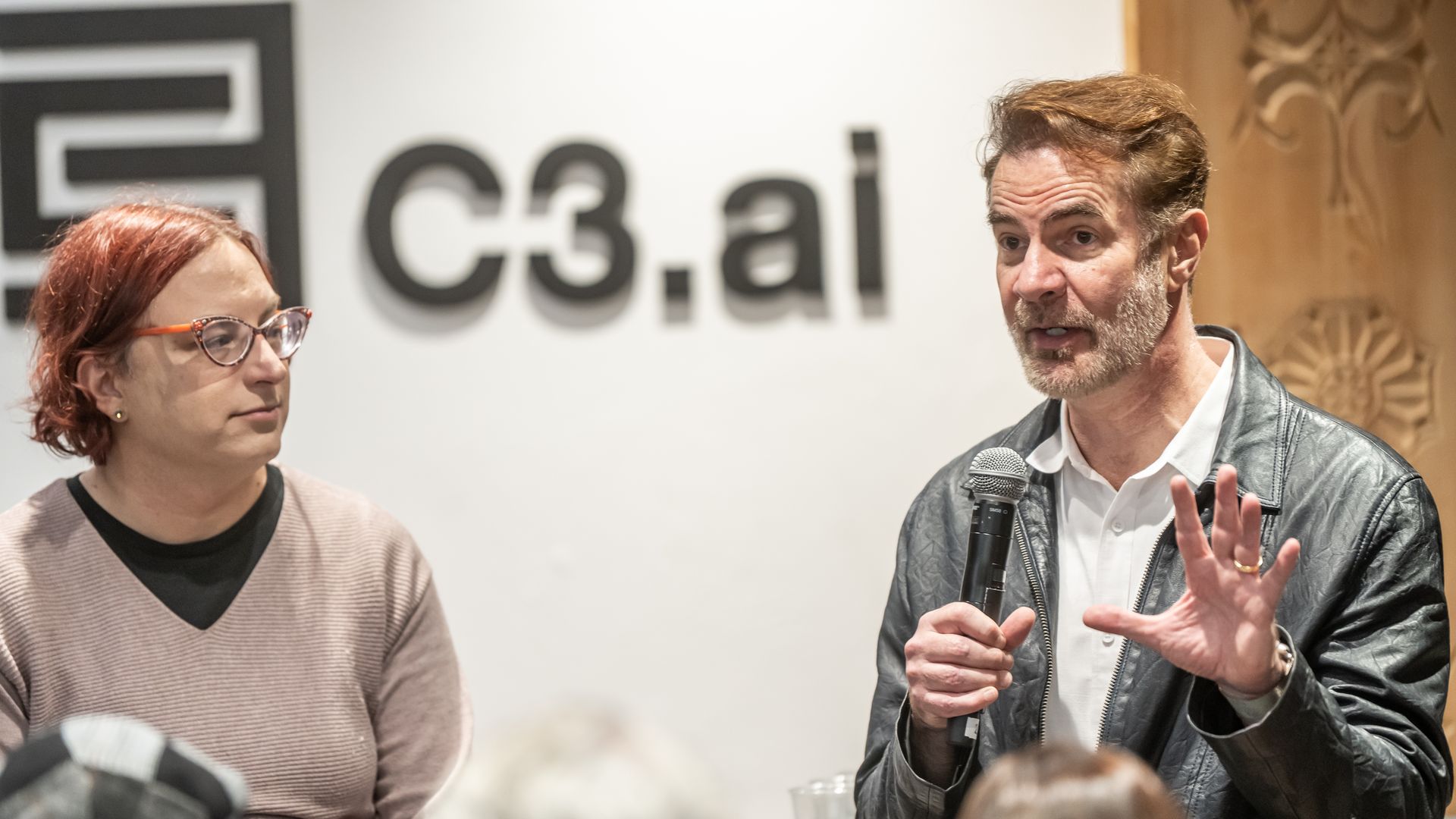
Axios' Ina Fried moderated conversations with Stanford Institute for Human-Centered AI professor and senior fellow Erik Brynjolfsson and Credo AI founder and CEO Navrina Singh. The Jan. 23 conversations were sponsored by C3 AI.
What they're saying: "There's an amazing hype here and billions of dollars are being wasted," Brynjolfsson said.
Ultimately, the investments "only matter if they turn into business value, and we're not seeing that right now," Brynjolfsson said.
Brynjolfsson, an economist specializing in productivity, said the impact of AI on productivity has been minimal.
"There's always this difficulty of translating even the most amazing, or maybe especially the most amazing, technologies, into productivity and business value," he said. "I call it the 'productivity J-curve,' because it sometimes even gets worse before it gets better."
"We saw it with electricity, the steam engine, early computers, we're seeing it now. … The real challenge, the bottleneck, is figuring out how to identify business value."
Having rules in place for AI governance can help companies maximize the benefits of AI and minimize risk, Singh said.
Singh's Credo AI helps companies quantify and manage AI pitfalls and rein in bias through defined rules.
"[G]overnance is the way that most of these businesses, especially in generative AI, are getting the competitive advantage," Singh said.
"The companies that we work with … understand it's not about just bringing in AI. It's about how they bring in AI by building trust not only with their customers but with their internal stakeholders, their employees."
What's next: The time for just experimenting with AI has passed, Brynjolfsson said. Now, companies "have to really connect it to a specific business goal."
"I can bet on it. … All the companies who started to adopt the AI governance from the design phase, they are more competitive going into the future of especially agentic AI," Singh said.
Sponsored content:
In a View From the Top sponsored segment, C3 AI chairman and CEO Tom Siebel said most companies are still in the very early stages of adopting AI to its full potential.
"As it relates to the application of AI to business and social processes, it is the first half of the first inning and the first batter is on his way to the plate," Siebel said. "We're just getting started."
DAVOS, Switzerland – A commitment to embracing AI and the changing digital world are key to success in legacy industries, Bank of America CEO Brian Moynihan and Takeda Pharmaceutical CEO Christophe Weber said.
Why it matters: While companies in traditional sectors have at times been slow to adopt the latest advancements and respond to shifting consumer needs, they must now to keep up and meet the moment.
Axios' Mike Allen, Courtenay Brown and Dan Primack moderated conversations with Moynihan and Weber. The Jan. 23 conversations were sponsored by Lightspeed Venture Partners.
What they're saying: Becoming a digital biopharma company "means that we are really being able to harness big data, different technology combined with AI and change the way we operate across our entire value chain," Weber said.
"We are a pure brick-and-mortar, legacy-type company" and embracing technology "is actually a big shift," Weber said.
For example, he said Takeda is using AI to develop its molecule design and clinical trial processes faster.
Using the latest technology tailored to customer needs is at the core of Bank of America's digital strategy, Moynihan said.
"You can't forget, it's real customers. All the science projects in the world mean nothing if the customer doesn't understand what you're doing," Moynihan said.
"Those technologies will change, our job is to be just at the right place with the customer technology interface and make it work."
Technology and AI aren't the only major change agents at work, as U.S. companies also face a new administration with big plans on regulation, tariffs and growth, Moynihan points out.
He said bank customers and clients' waning concerns about inflation and interest rates in 2024 had been "overwhelmed in the last six months by the regulatory burden."
With talk of President Trump doing away with many regulations, "[t]hat's the optimism, because the question is how much does that uncork in the United States and how much was being held back?" Moynihan said.
Moynihan also said the benefits of a looser regulatory environment could outweigh potential burdens from tariffs "as long as they're in the 10% to 15% range."
Sponsored content:
In a View From the Top sponsored segment, BetterUp co-founder and CEO Alexi Robichaux explained how companies can guide their workers to make use of the more effective but lesser-known functions of AI.
"Health care workers in particular, compared to the rest of the population, are more likely to use AI for administrative tasks and more hesitant to use AI to make judgment or critical-thinking decisions compared to the average knowledge worker," Robichaux said.
"The two things that are important to get people out of the copy-and-paste behavior to actually unlock productivity gains are one … you as an organization to tell people that they're not cheating at their jobs if they actually use AI. … The second thing is to actually guide them through role modeling into what are creative, productive use cases of AI."
If cryptocurrency makes no sense to you, think about it like different ways of sharing photos.
You take a picture on your mobile of your kid eating a doughnut. It's a cute photo, right? You send it to your family group text, and now 20 people have that photo.
But you don't actually send the group text the photo. You make copies, for each recipient. After all, your photo is still right there in your phone.
Between the lines: Before Bitcoin, the internet could be understood as a giant Xerox machine. It didn't send anything to anyone — it made copies on their devices — to infinity.
Here in the physical world, though, one thing stays one thing. If you send it, you hand it over.
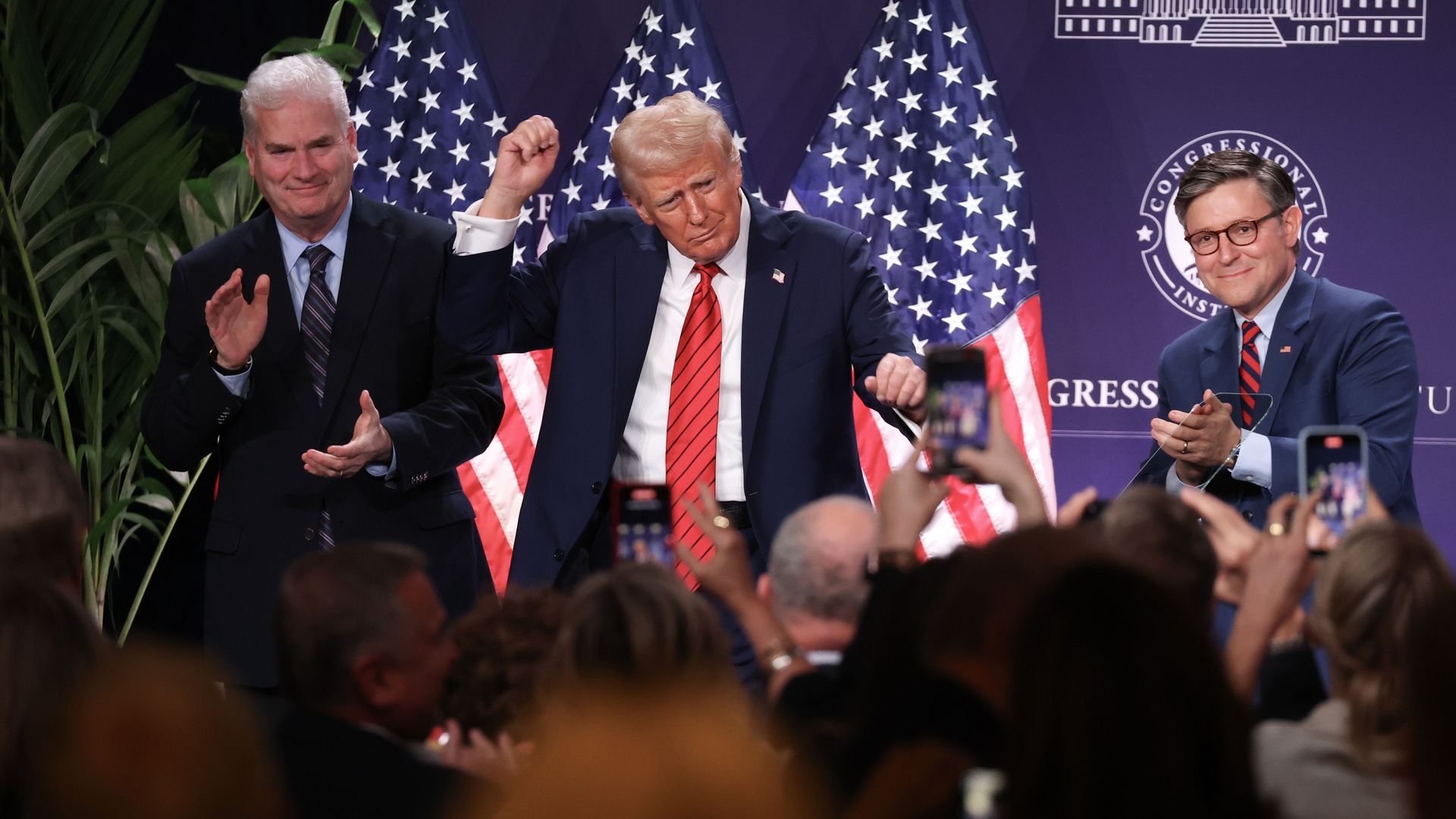
President Trump yesterday said that Microsoft is among those in talks to acquire TikTok, or at least enough of TikTok that it would be allowed to continue operating in the U.S.
Why it matters: This new divestiture dance is beginning to feel like an imitation of what we saw five years ago.
The Trump administration has directed agencies to suspend all federal grants and loans starting at close of business Tuesday.
Why it matters: The new administration is showing signs — in its unilateral actions and legislative strategy — that it is more serious about fiscal austerity than the last time President Trump was in office.
The Trump administrationtemporarily paused federal grant, loan and other financial assistance programs, effective 5 p.m. ET Tuesday.
Why it matters: The suspension will provide the administration with time to review agency programs and determine the best uses of funding for those programs consistent with the law and Trump's priorities, says a White House Office of Management and Budget memo, via Reuters.
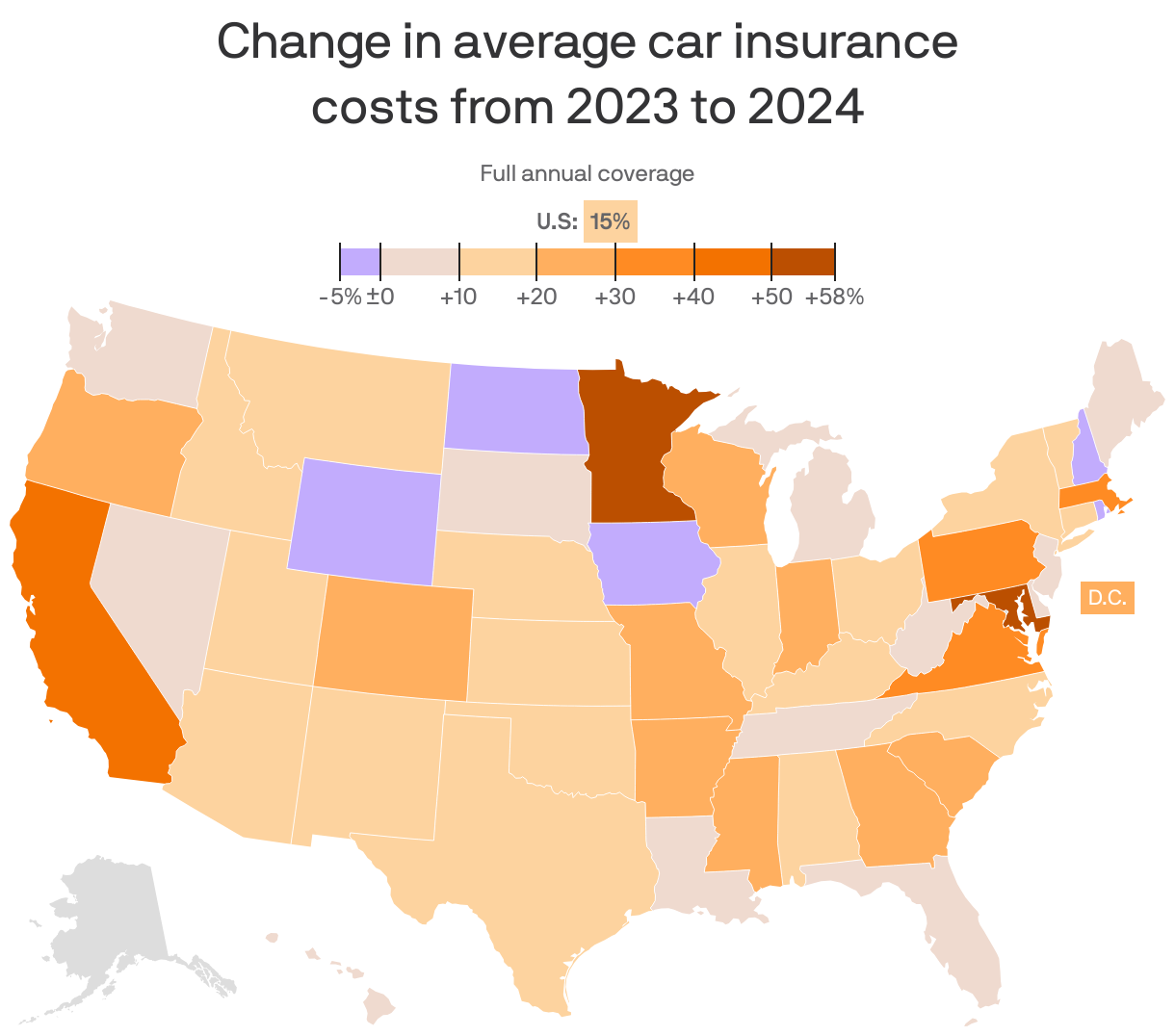
Car insurance costs increased in all but a smattering of states between 2023 and 2024, a new report finds.
Why it matters: Rising insurance costs and other car-related expenses are creating an affordability crisis with little room to maneuver, as Axios' Courtenay Brown writes.











/2025/01/24/1737677432492.gif?w=3840)