Zoom out: Making cryptocurrency less abstract

Add Axios as your preferred source to
see more of our stories on Google.
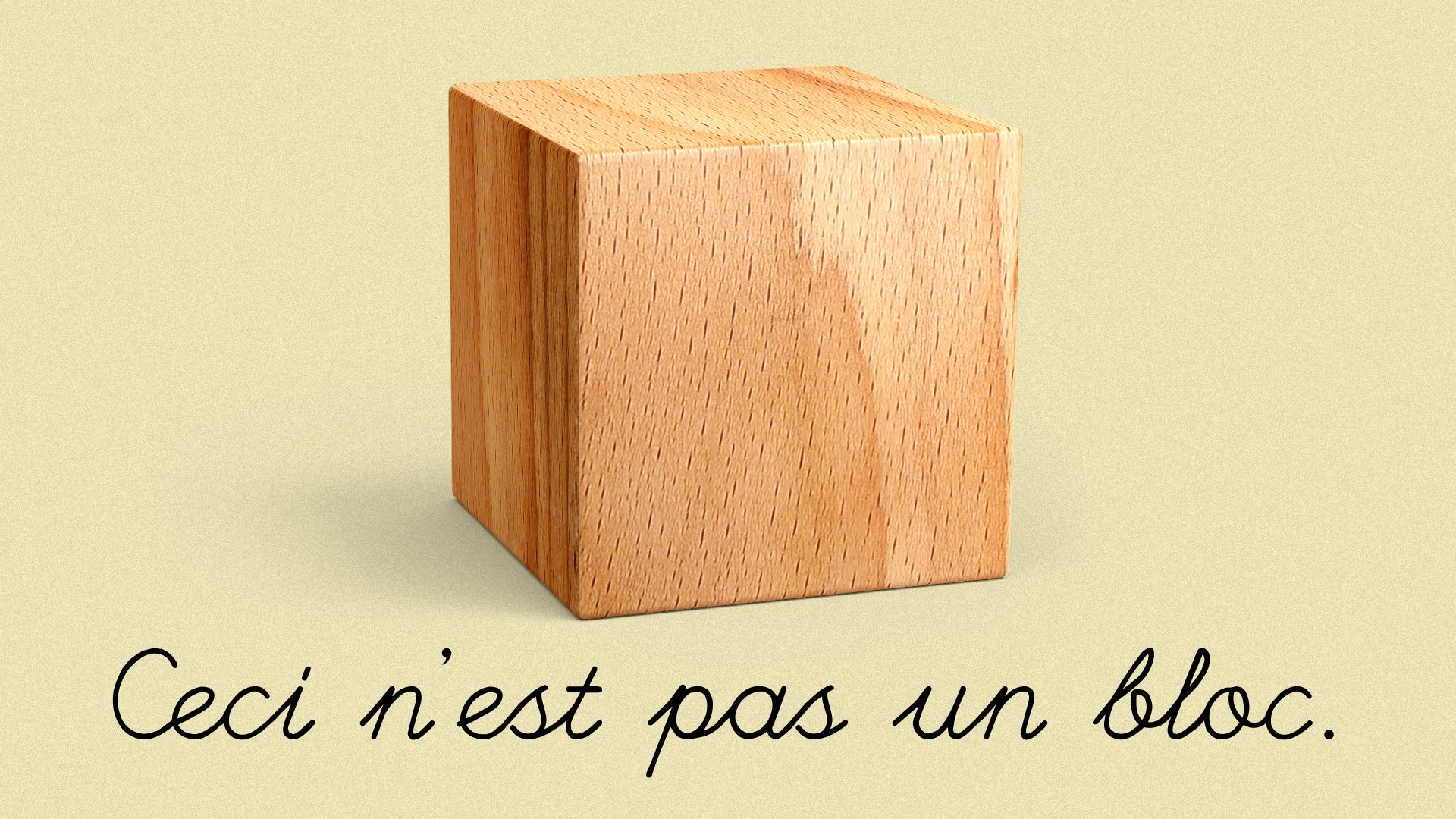
If cryptocurrency makes no sense to you, think about it like different ways of sharing photos.
- You take a picture on your mobile of your kid eating a doughnut. It's a cute photo, right? You send it to your family group text, and now 20 people have that photo.
- But you don't actually send the group text the photo. You make copies, for each recipient. After all, your photo is still right there in your phone.
Between the lines: Before Bitcoin, the internet could be understood as a giant Xerox machine. It didn't send anything to anyone — it made copies on their devices — to infinity.
- Here in the physical world, though, one thing stays one thing. If you send it, you hand it over.
- Case in point: If I send a postcard to you in the mail (a picture!) that actual picture goes from me to you. You have it, and I don't.
The big picture: Bitcoin brought "sending-but-not-copying" to the internet.
- Copying is fine for most things. Like, for instance, sending photos of your kid eating a doughnut. (Sure that has value too, but why wouldn't you want to share it with other people? The kid is cute!)
- But sometimes you want to transact. And transactions are zero-sum. I give, and you take. I have less. You have more. That's how a transaction works.
Zoom in: Bitcoin was the first computer system that created a way to send a thing — a digital thing, not unlike a picture — to someone else such that I have it and you don't — without someone in the middle who can meddle.
- Fun fact: Crypto also created a way to send that photo of your kid to someone else that way — they're called NFTs.
The bottom line: You can think of blockchains as a system of global pneumatic tubes for pictures of your cute kid eating a doughnut.
- With Bitcoin, it's not pictures: It's money. With Ethereum and other chains, it could be a lot of other things too.
That's what I wish I would have said last weekend. I hope the caller subscribed to our newsletter and is reading this now.
- A digital asset is inherently abstract, and the only way to really understand it is to use it. But better explanations don't hurt.
