A public market crash, geopolitical turmoil, soaring global inflation and U.S. interest rates don’t seem to have lessened optimism among European venture capitalists for investing in the near term.
Why it matters: European VCs have historically been more conservative than their American counterparts — but that may be changing.
As the annual tech startup conference, with its 71,000 attendees,drew to a close on Friday, I caught up with co-founder and CEO Paddy Cosgrave.
The big picture: “I think the West is just going through an uncontrolled demolition of venture capital,” says Cosgrave, adding that China was early in spotting the bubble and pivoting away from internet companies.
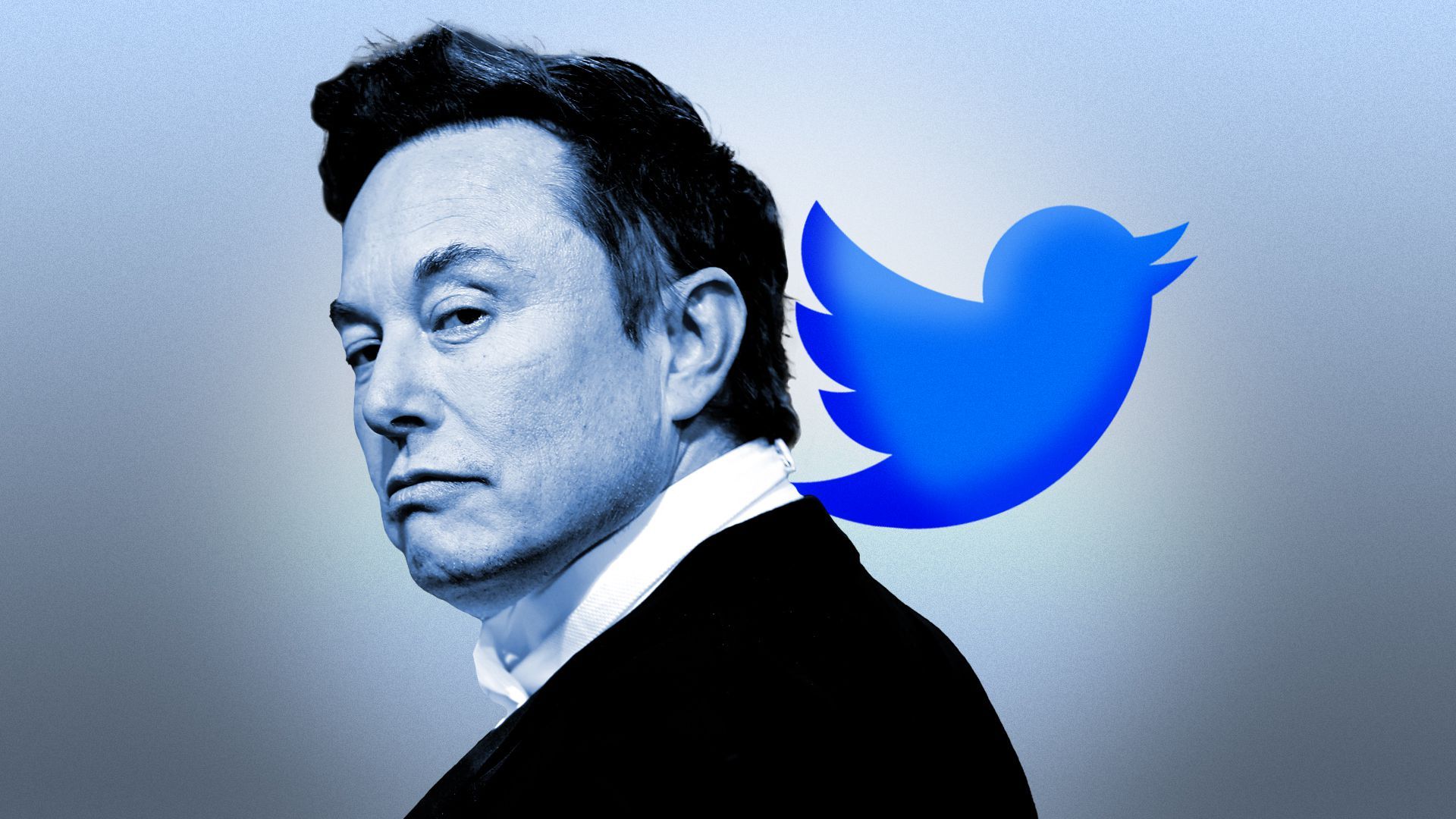
Advertisers are slowing or pausing their Twitter buys as companies grow frustrated with Elon Musk's moves.
Why it matters: Sources have told Axios that Musk wants to make subscriptions a bigger revenue stream for Twitter, but building that business will take time, and for now, advertising remains the way Twitter keeps its lights on.
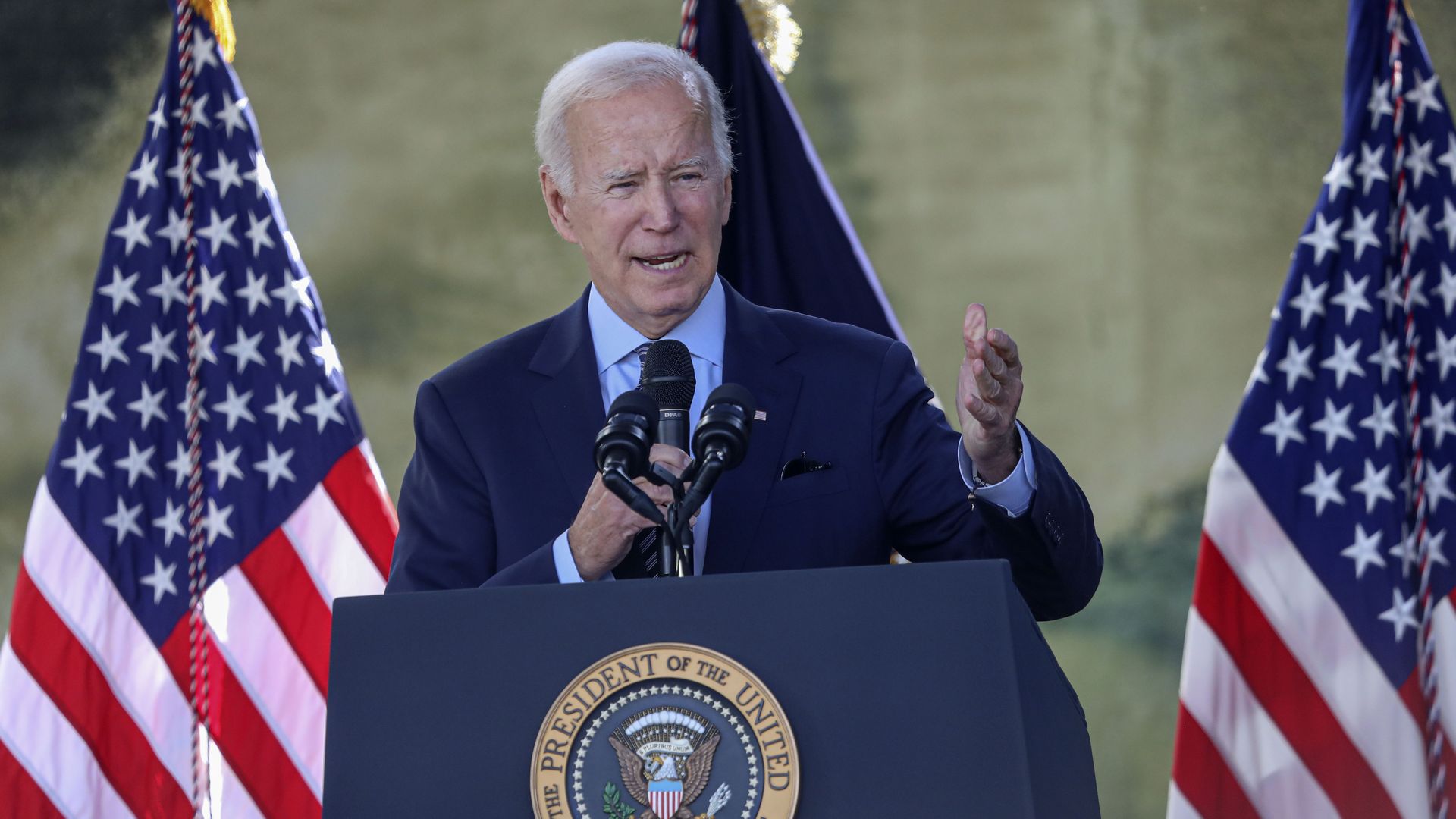
President Biden said Friday that Elon Musk has purchased a social media company that "spews lies" around the globe.
The big picture: Twitter laid off as many as 3,700 people Friday — about half of its staff — but said the cuts were smaller for the team in charge of preventing the spread of misinformation, per Reuters.
Sunday is the bi-annual changing of the clocks, but it could be the last time we “fall back” if legislation is approved to make daylight saving time permanent.
The big picture: The U.S. Senate unanimously approved the Sunshine Protection Act in March, a move that could make daylight saving time permanent in 2023, but the bill hasn’t been voted on by the House.
Twitter is launching a $7.99 monthly subscription that comes with a blue checkmark next to users' names, per the latest Apple app store update Saturday.
Driving the news: The company is offering the blue check marks "just like the celebrities, companies and politicians you already follow" to users who "sign up now."
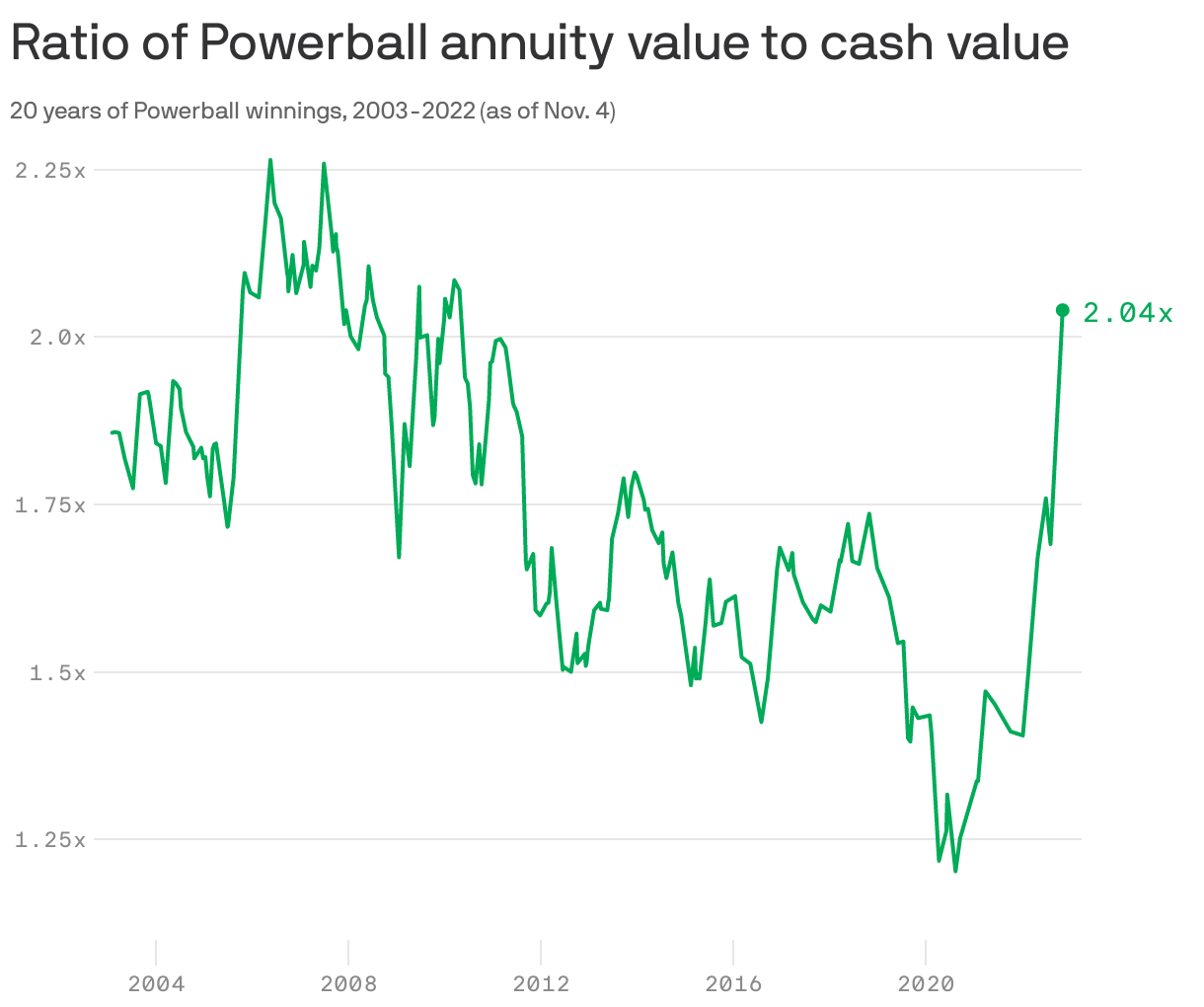
You won't walk away with $1.6 billion if you win the lottery today. In fact, the estimated prize pool — the amount you'd actually win, before taxes, assuming you don't have to share the jackpot with anybody else — is less than half that amount, at $782 million.
Why it matters: Billion-dollar jackpots are good at whipping up excitement — so the lottery has always exaggerated the amount of money winners stand to get.
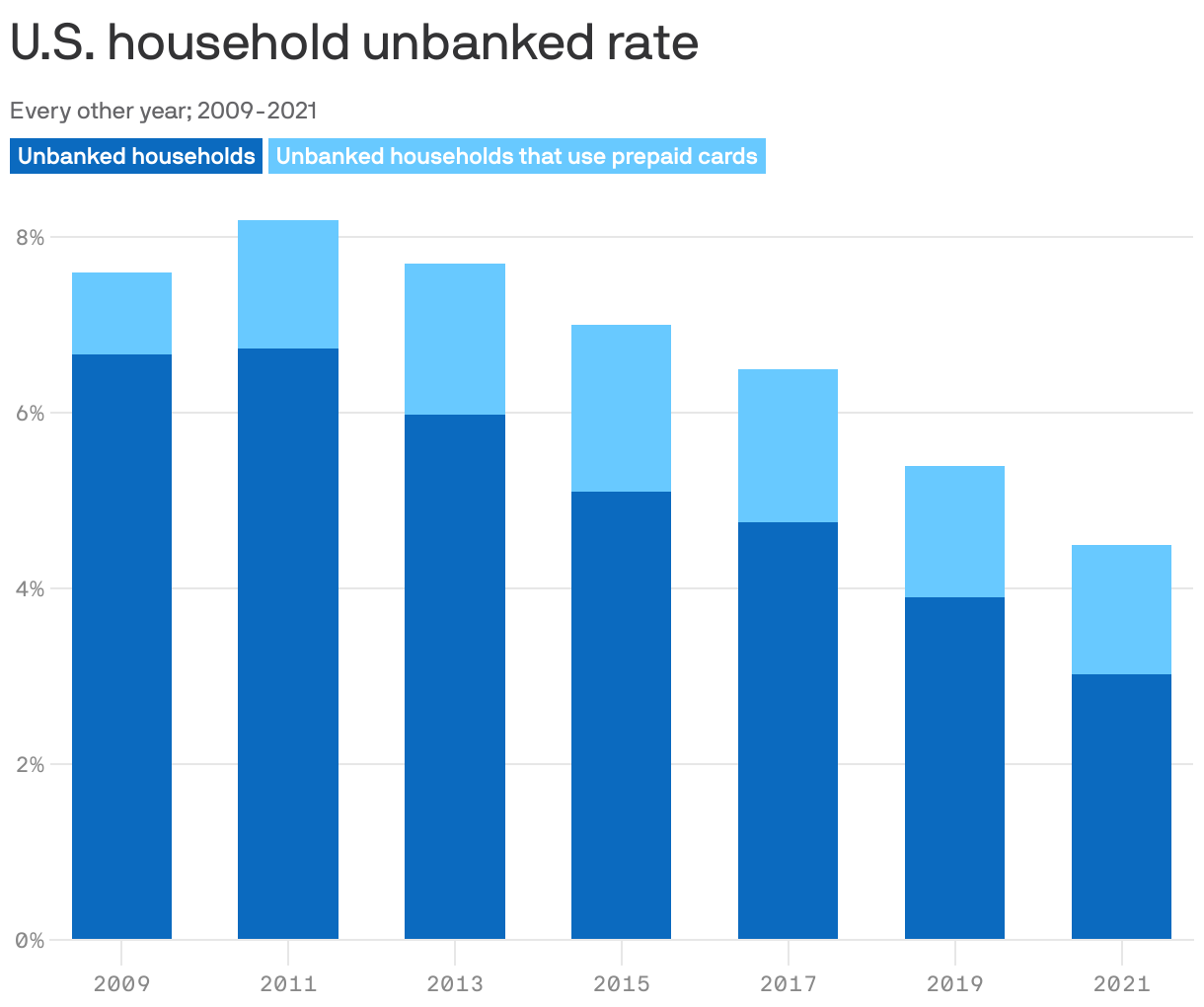
The fiscal stimulus unleashed on America in the wake of the pandemic had one interesting side effect: It significantly decreased the number of U.S. households without bank accounts.
Why it matters: Broadly speaking, the pandemic was good for economic inclusion. It seems to have significantly increased homeownership among Black, Asian, and Latino Americans; it also significantly decreased the number of households outside the banking system entirely.
One longstanding dream of artists is that they might somehow be able to share in the future appreciation of their art, even after it has been sold. Once again, technologists have a solution to sell them.
Why it matters: One of the great promises of NFTs was that they could incorporate resale royalties into the art itself. Recently, however, that dream has started to fall apart.
Luiz Inácio Lula da Silva, Brazil's president-elect, is resuscitating the dream of a Latin American single currency. It's an idea that plays well on the campaign trail, but it would be a disaster in practice.
Why it matters: The tensions between economics and politics tend to run high in Latin America, which has a long history of disastrous monetary policy.
Artists often use cutting-edge technologyto create their work, but technology tends to change the art world only slowly and infrequently. Right now could be one of those times.
Why it matters: AI technology has created a serious debate in the art world around issues of authorship and ownership — a debate that feels much more consequential than, say, arguments over monkey copyright.
Technology jobs and the rebound in tourism are fueling a reshuffling of America's population centers, according to an October report by a nonpartisan think tank affiliated with the University of North Carolina at Chapel Hill.
Driving the news:The American Growth Project by the Kenan Institute of Private Enterprise, a business policy think tank, found that the top 10 fastest-growing cities in the U.S. are moving the "center of gravity" for economic activity away from the East Coast, Kenan executive director Gregory Brown tells Axios.