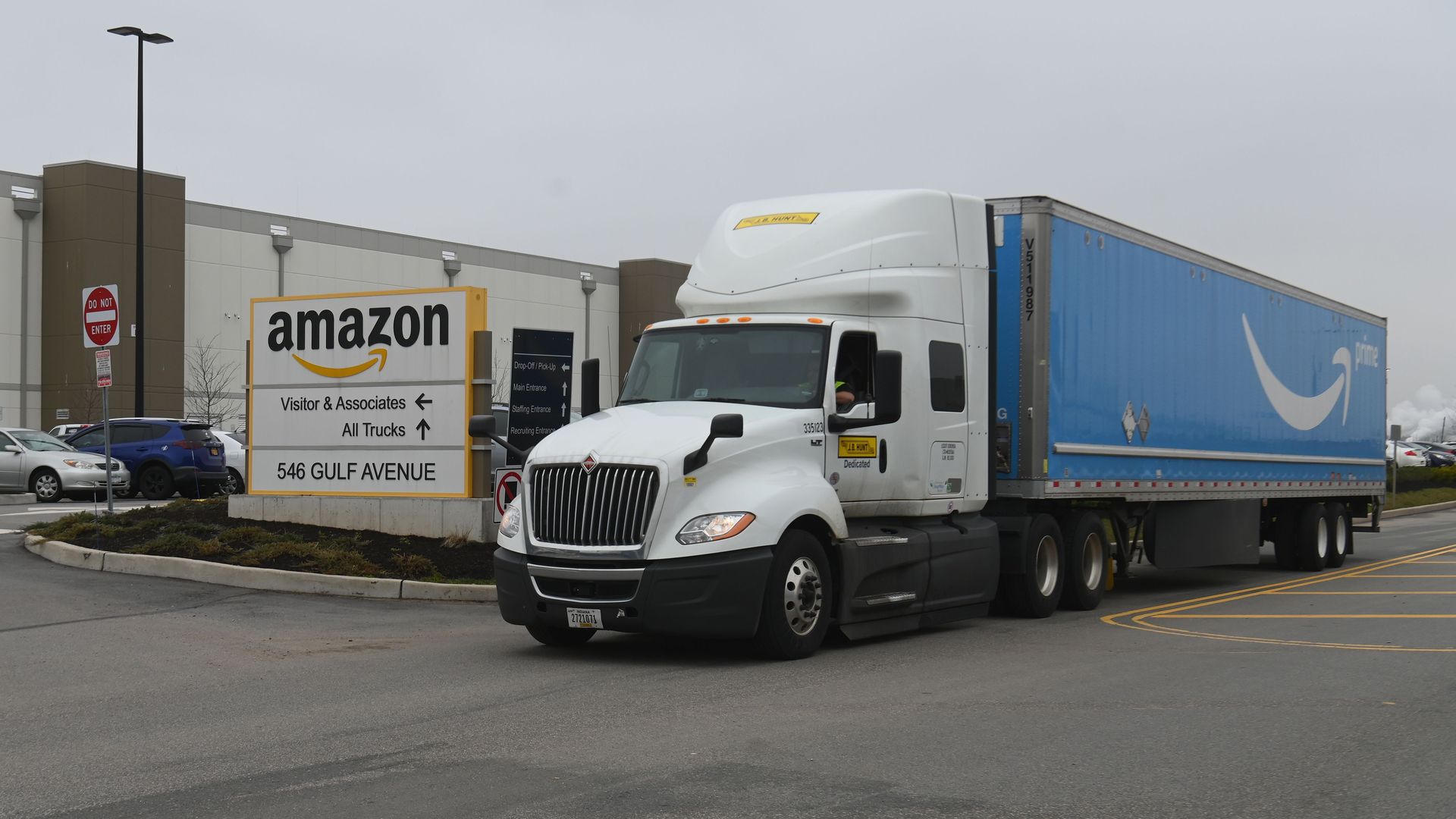
Amazon recorded 19,816 presumed or confirmed COVID-19 cases across its roughly 1.37 million Amazon and Whole Foods Market front-line employees in the U.S. between March 1 and Sept. 19, according to data released by the company on Thursday.
What they're saying: The company said its rate of infection among employees was lower than expected, noting "we've introduced or changed over 150 processes to ensure the health and safety of our teams," per the statement.
Federal coronavirus aid for airlines expires on Thursday with no renewal in sight, meaning massive layoffs for the industry aren't far behind.
The big picture: Airline workers aren't alone on the unemployment line. Oil companies, tire manufacturers, book publishers and insurers are among those that have announced tens of thousands of layoffs. Federal aid through the CARES Act earlier this year delayed most layoffs — until now.
The House is planning to move ahead Thursday with Democrats' revised $2.2 trillion coronavirus relief bill as 11th-hour negotiations with the White House continue.
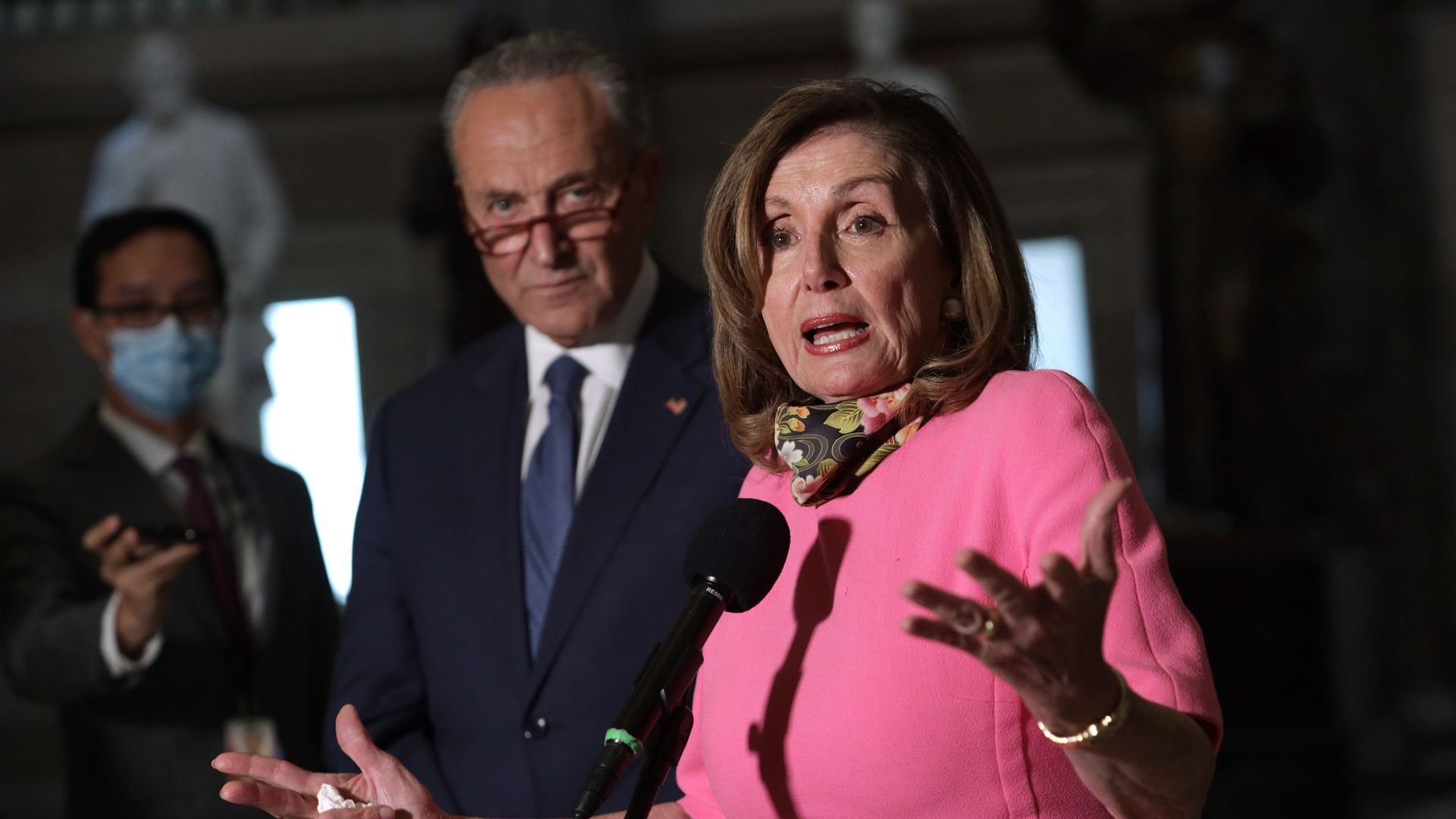
The latest: House Speaker Nancy Pelosi and Treasury Secretary Steven Mnuchin spoke by phone at 1 p.m., following a 90-minute meeting on Capitol Hill Wednesday — the first in-person meeting between the two since August, when negotiations stalled. The two plan to speak again later this afternoon, according to a Pelosi aide.
Traders always aspire to "best execution" — if they're buying or selling a certain asset in the market, they want to get the best possible price. The problem is that high frequency traders (HFTs) make that extremely difficult.
Why it matters: One time-honored (yet illegal) tool for trying to outwit the HFTs is "spoofing." That's where a trader enters a series of fake orders that she has no intention of filling, to fool the HFTs about the supply and demand in the market.
The prime example of something highly improbable that became conventional wisdom: The idea that both interest rates and inflation will remain near zero for well over a decade.
Why it matters: As Axios' Dan Primack writes, private equity firms (the polite rebranding of "leveraged buyouts") have historically bought companies and loaded them up with debt.
When Bain Capital bought Varsity Brands in 2018, it snapped up most of the U.S. cheerleading industry.
Why it matters: Varsity Brands owns nearly all aspects of the cheer ecosystem. It even pays cheer's regulators — the people who are accused of shirking their duty of protecting young cheerleaders from sexual predators.
Coinbase this week offered severance packages to employees who don't feel aligned with the company’s apolitical culture and mission, which CEO Brian Armstrong clarified Sunday in a blog post.
Why it matters: The crypto company, most recently valued by investors at over $8 billion, is setting itself up as a guinea pig in a culture battle that's more about stereotypical Silicon Valley vs. stereotypical Wall Street than it is about progressives vs. libertarians.
In June, a group of Coinbase employees walked out after CEO Brian Armstrong did not immediately commit to making a public statement in support of Black Lives Matter.
Why it matters: The crypto "unicorn" is now offering severance packages to employees who no longer feel aligned with the company’s apolitical culture and mission, which Armstrong clarified Sunday in a blog post.
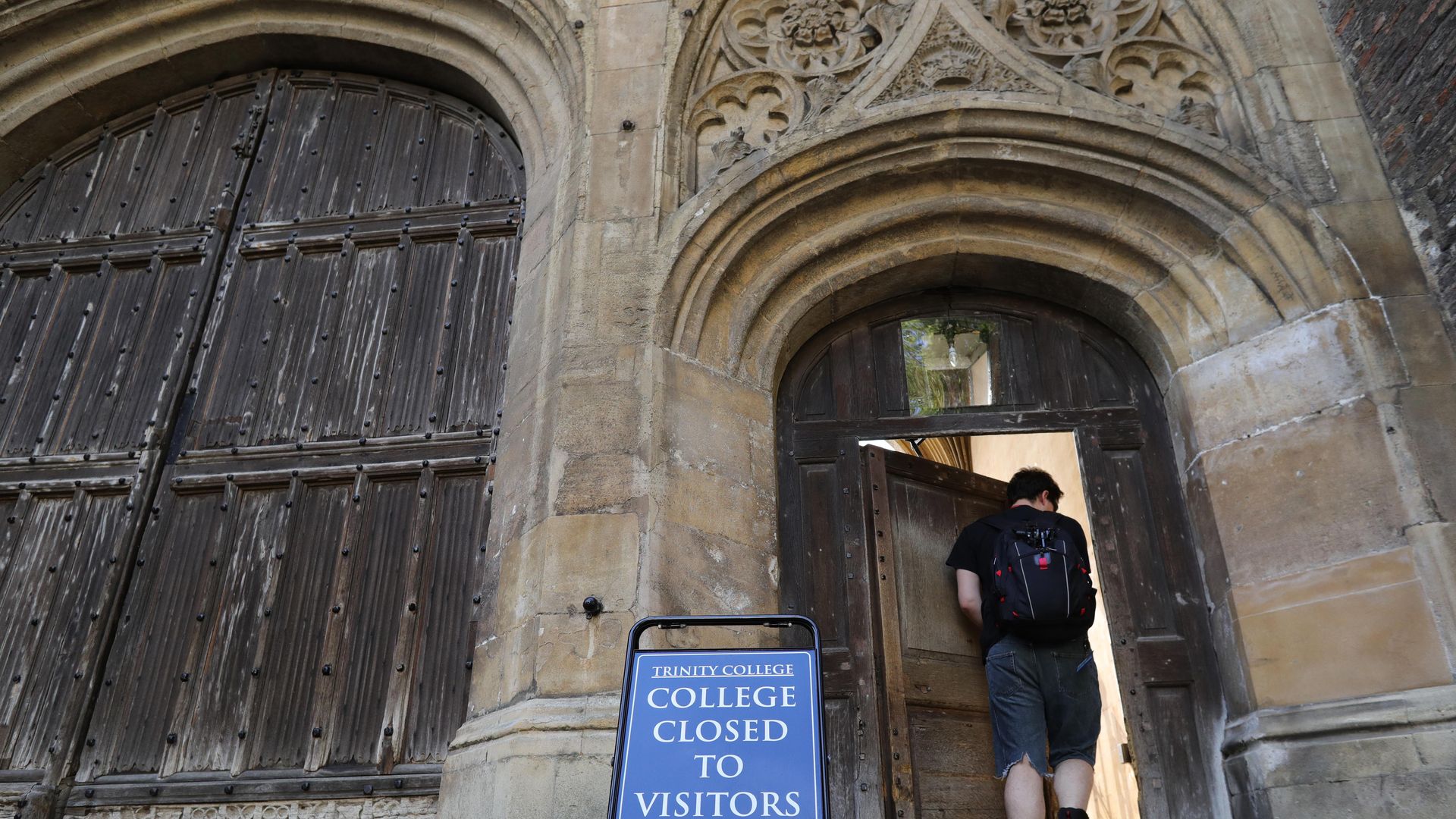
The University of Cambridge said this morning that it "aims to divest from all direct and indirect investments in fossil fuels by 2030" and plans to ramp up renewable energy investments.
Why it matters: With one of the largest endowments in Europe at £3.5 billion ($4.45 billion), the U.K. school " arguably becomes the most prominent university to aim for divestment," per Institutional Investor.
Hims, a San Francisco-based direct-to-consumer provider of men's prescription health care products, agreed to go public via a reverse merger with Oaktree Acquisition Corp. (NYSE: OAC), a SPAC formed by Oaktree Capital Management, at an initial valuation of $1.6 billion.
Why it matters: While the pandemic battered many businesses, Hims is within a smaller cohort that the pandemic helped validate, as remote medicine moved mainstream.
Unexpectedly strong U.S. data may have helped pull the stock market out of its funk over the past few days.
Driving the news: Following Tuesday’s stronger-than-expected consumer confidence report from the Conference Board, ADP reported the biggest increase in private-sector job growth in three months Wednesday and a measure of business conditions in the Midwest rose to the highest level since the end of 2018.
Amazon's decision to move its Prime Day to Oct. 13–14 this year will pull the whole holiday shopping season forward by more than a month and help make online retail bigger than ever, as more families shop electronically and jostle to get presents purchased ahead of December holidays.
Why it matters: The reality of the coronavirus pandemic pushing people toward e-commerce combined with the pull of Amazon Prime Day and the Christmas shopping season this year are setting up a bonanza for retailers — but only those with the ability to offer steep discounts, delivery and an attractive online platform.
FuboTV, a digital TV service created as a cable replacement with a focus on sports, announced on Thursday that it's launching a public offering on the New York Stock Exchange.
Why it matters: Streaming companies like fuboTV have rarely gone public, and are usually developed or bought by a bigger media or tech company. But fuboTV, which focuses on live sports rights, might consider itself more of a tech company.
American Airlines and United Airlines said they will begin furloughing 32,000 employees Thursday, as federal aid that propped up the industry during the pandemic expires, with no deal in sight for an extension.
Why it matters: As many as 50,000 workers across the industry face immediate job losses unless lawmakers and the White House can agree on a broader pandemic-relief package that includes more federal aid for airlines.











/2020/10/01/1601553921833.gif?w=3840)