What’s happening: The spat has caused other G7 countries — including Canada, Germany, and France — as well as top Trump critics to issue scathing rebukes of the administration's pushback against America's top allies.
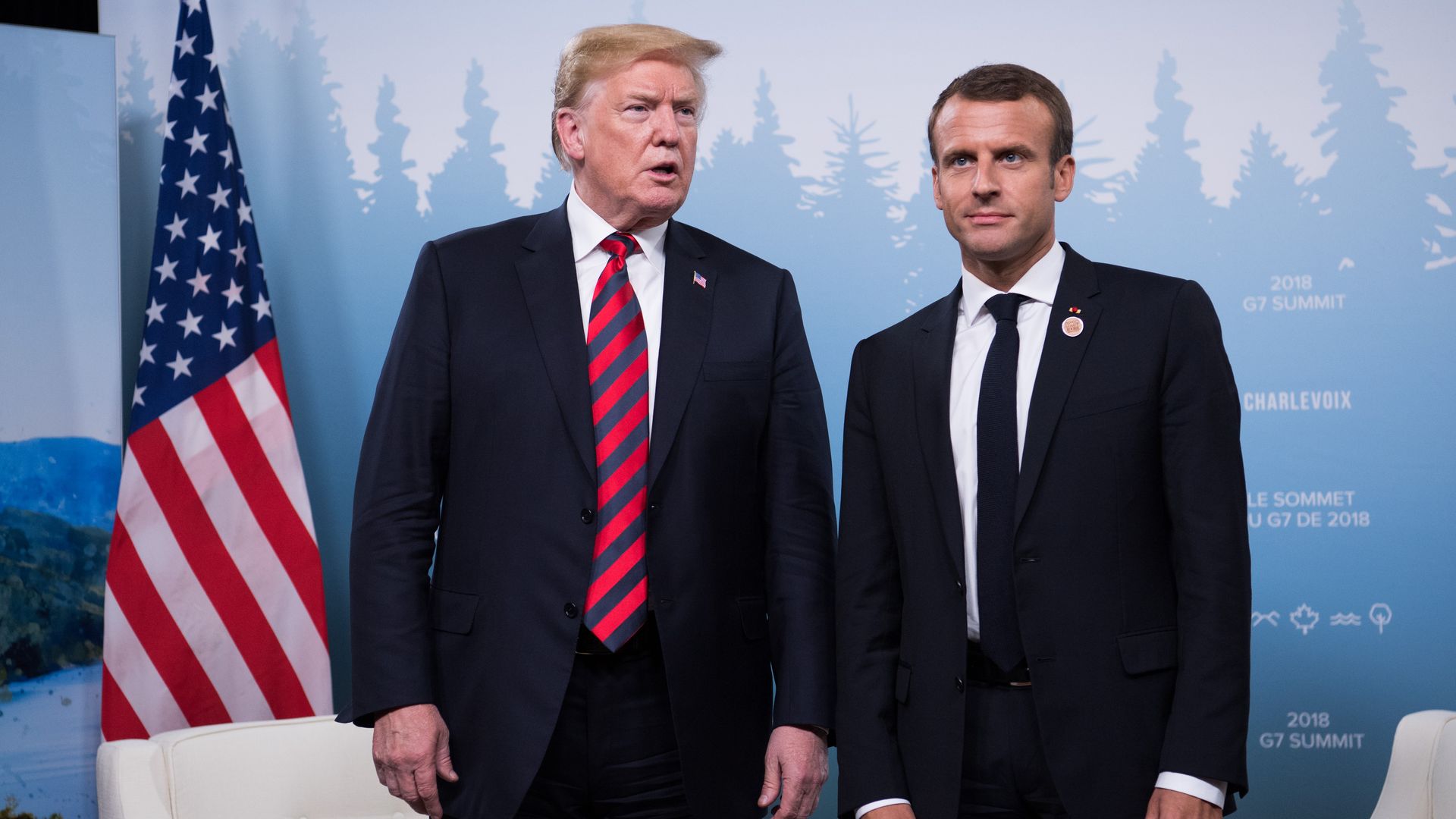
When French President Emmanuel Macron visited Washington, he and President Trump had a tough conversation about trade that foreshadowed the breakdown of transatlantic relations at the G7 summit.
What happened: In their bilateral meeting in the White House's Cabinet Room, on April 24, Macron said to Trump, "Let’s work together, we both have a China problem," according to a source in the room. The source said Trump responded that the European Union is "worse than China."
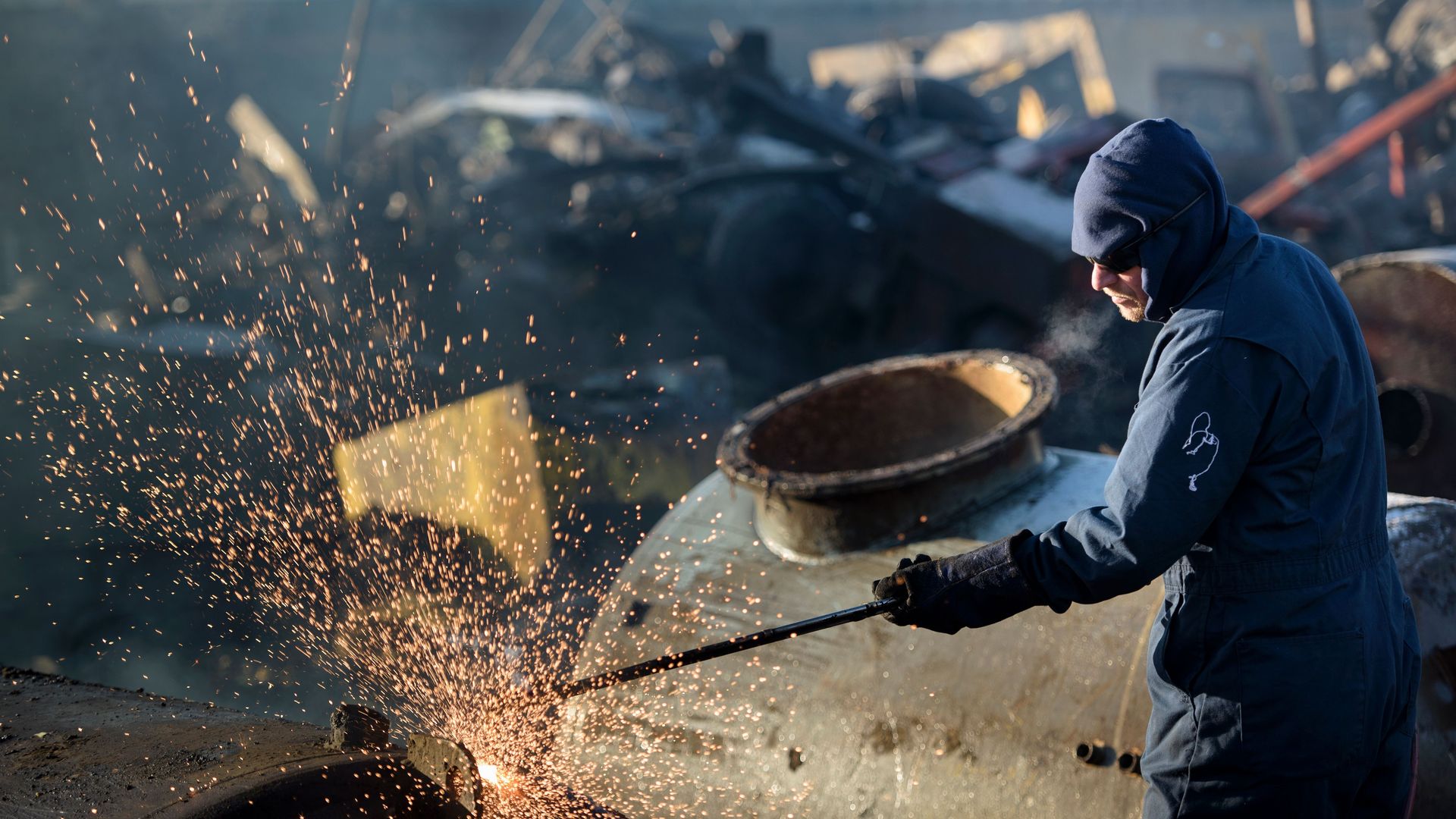
Last week, Axios' Jonathan Swan asked Peter Navarro, Trump's trade adviser, to respond to critics who say steel tariffs are excessive. Navarro advised them "get out more often to the Heartland and see what Main Street and Trump country really look like ... We on Team Trump are astonished by the argument that America's future is in the services sector, and Americans don't want 'dirty' jobs in steel furnaces."
The big picture: That piqued the interest of Jed Kolko, chief economist at Indeed, who emailed Swan and me saying he had looked at recent county-level employment data, and combined that with 2016 presidential voting patterns. He said, "Even places that voted most strongly for Trump are primarily service-producing, not goods-producing, economies."
For years, an unwavering certitude of industry, think tanks, demographers, policy-makers and city planners everywhere has been that humanity is moving to the city: We just needed to figure out how to house, employ and feed everyone in a condensed space.
Yes, but: As more and more millennials marry and have children, that presumption is coming under scrutiny.
President Trump's trade adviser Peter Navarro branded Canadian Prime Minister Justin Trudeau's denouncement of U.S. steel and aluminum tariffs after the G7 summit as "one of the worst political miscalculations of a Canadian leader in modern Canadian history" on "Fox News Sunday" this morning, adding that he believes "there's a special place in hell" for leaders like Trudeau.
Our thought bubble from Axios' Jonathan Swan: The language is like nothing we’ve seen in recent memory from a White House official to a Canadian leader. And, as Navarro made clear in his interview, he was taking his marching orders straight from the big guy on Air Force One.
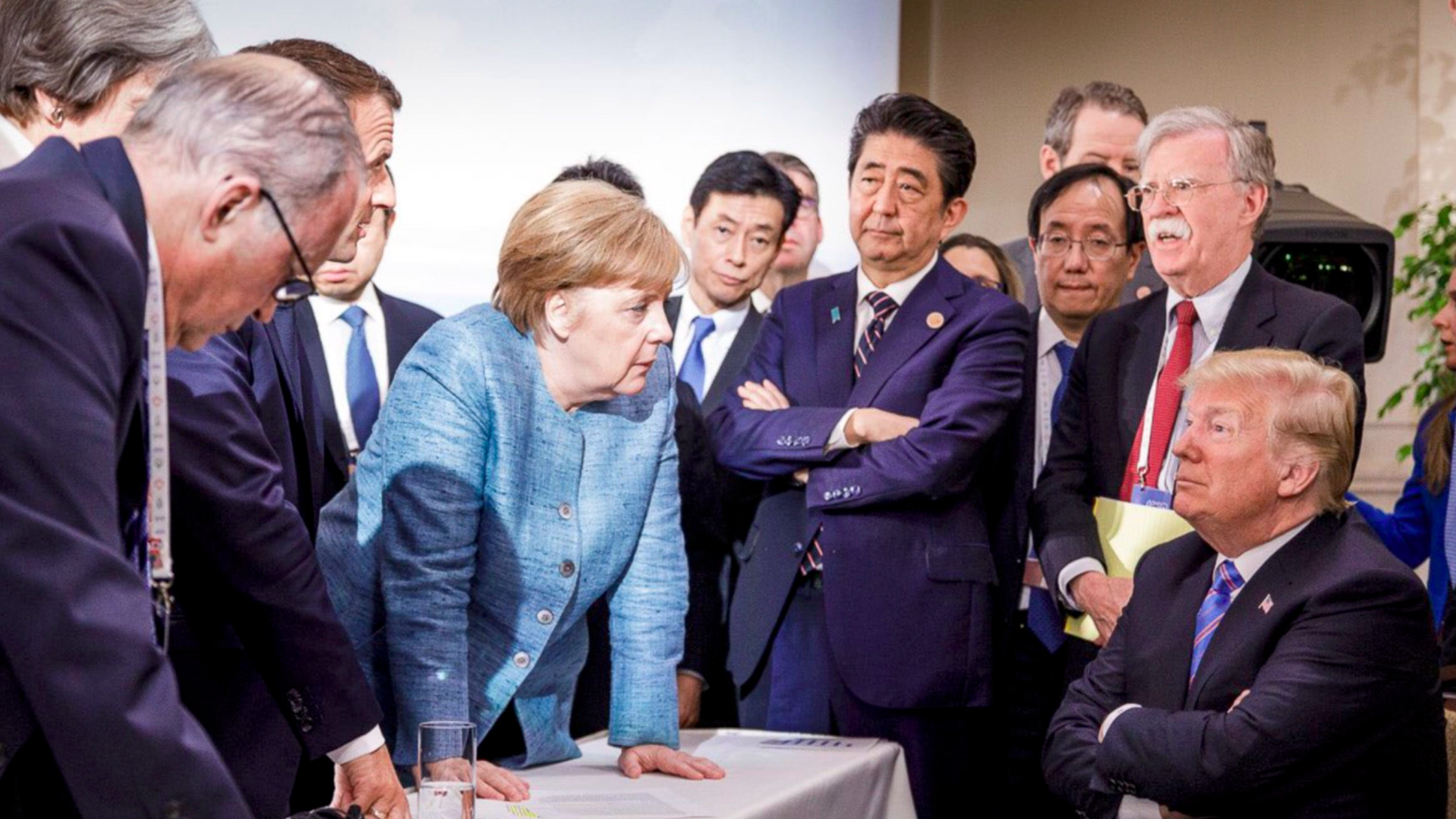
"A picture of U.S. President Donald Trump and German Chancellor Angela Merkel displaying less-than-friendly body language is turning out to be a defining image of the contentious meeting of the Group of Seven leaders of the world's advanced economies," AP's David McHugh reports.
The details: "The picture ... shows a standing Merkel with hands firmly planted on a table staring down at Trump, who is seated with his arms folded and eyes glaring. Japanese Prime Minister Shinzo Abe stands next to Trump as French President Emmanuel Macron leans in next to Merkel ... The photo was tweeted by Merkel spokesman Steffen Seibert. Shortly afterward, the White House issued a photo showing Trump speaking as Merkel, Abe and Canadian Prime Minister Justin Trudeau listen."
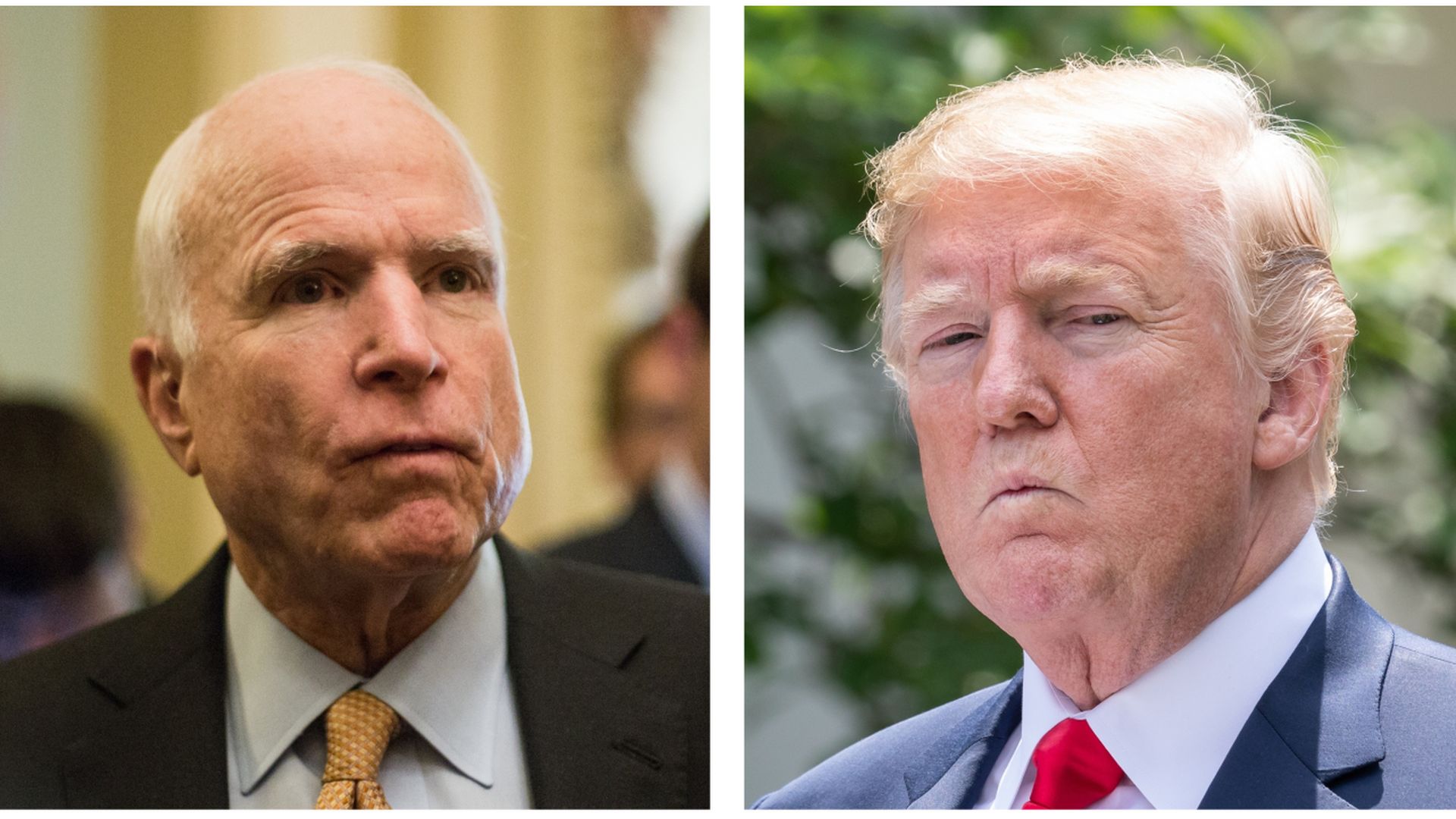
The backdrop: In response to President Trump's decision not to sign the G-7 joint communique, McCain tweeted a reassurance to U.S. allies that " bipartisan majorities of Americans remain pro-free trade, pro-globalization & supportive of alliances based on 70 years of shared values."
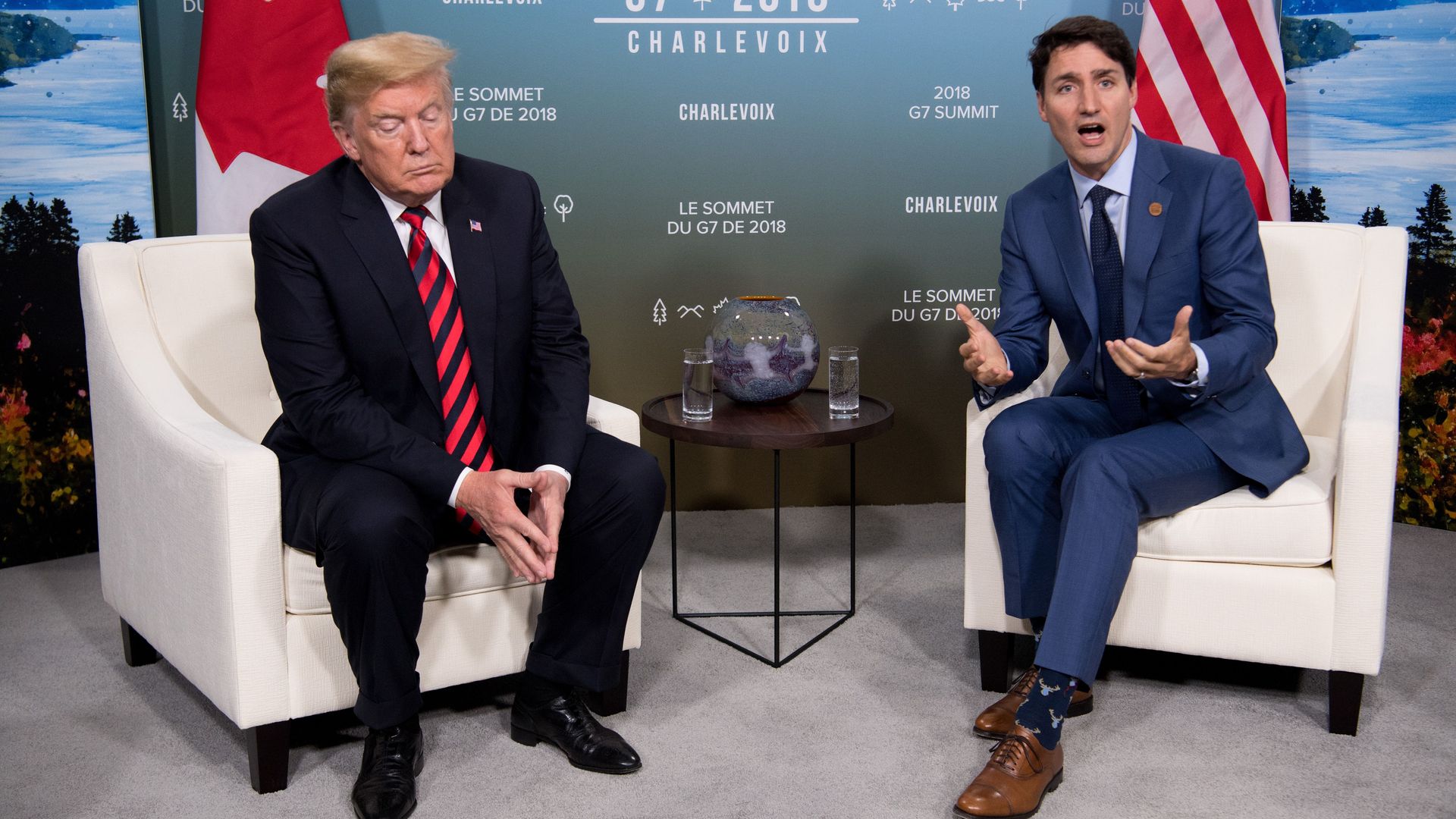
During an appearance on CNN's "State of the Union" this morning, President Trump's chief economic adviser Larry Kudlow said that Trump's unprecedented decision not to sign onto the G7 summit's joint communique came as a show of strength before his summit with North Korean leader Kim Jong-un: "POTUS is not going to let a Canadian prime minister...push him around on the eve of this. He is not going to permit any show of weakness on the trip to negotiate with North Korea."
The juice: Kudlow also said that Canadian Prime Minister Justin Trudeau "stabbed [the United States] in the back" with his denunciation of the U.S. decision to impose steel and aluminum tariffs after yesterday's conclusion of the G7 summit during an appearance. He added that Trump's choice not to sign the joint communique was "completely a reaction" to what he called Trudeau's "sophomoric play."
Net neutrality rules are getting wiped from the books on Monday — a move that starts a new chapter in the wonky regulatory debate while also attracting new mainstream attention outside of Washington.
Why it matters: The decade-long fight over how bits and packets should travel across the internet has fallen victim to political ping-pong between parties and industries. In Washington, net neutrality fatigue has set in as lobbyists begrudgingly take the battle to Capitol Hill. But as the internet plays an increasingly central role in peoples' lives, the rest of the country is starting to take notice.
Senator John McCain is not shying away from breaking with Trump on trade issues as he slammed the president's decision to pull his endorsement of the commitment with fellow G7 nations.