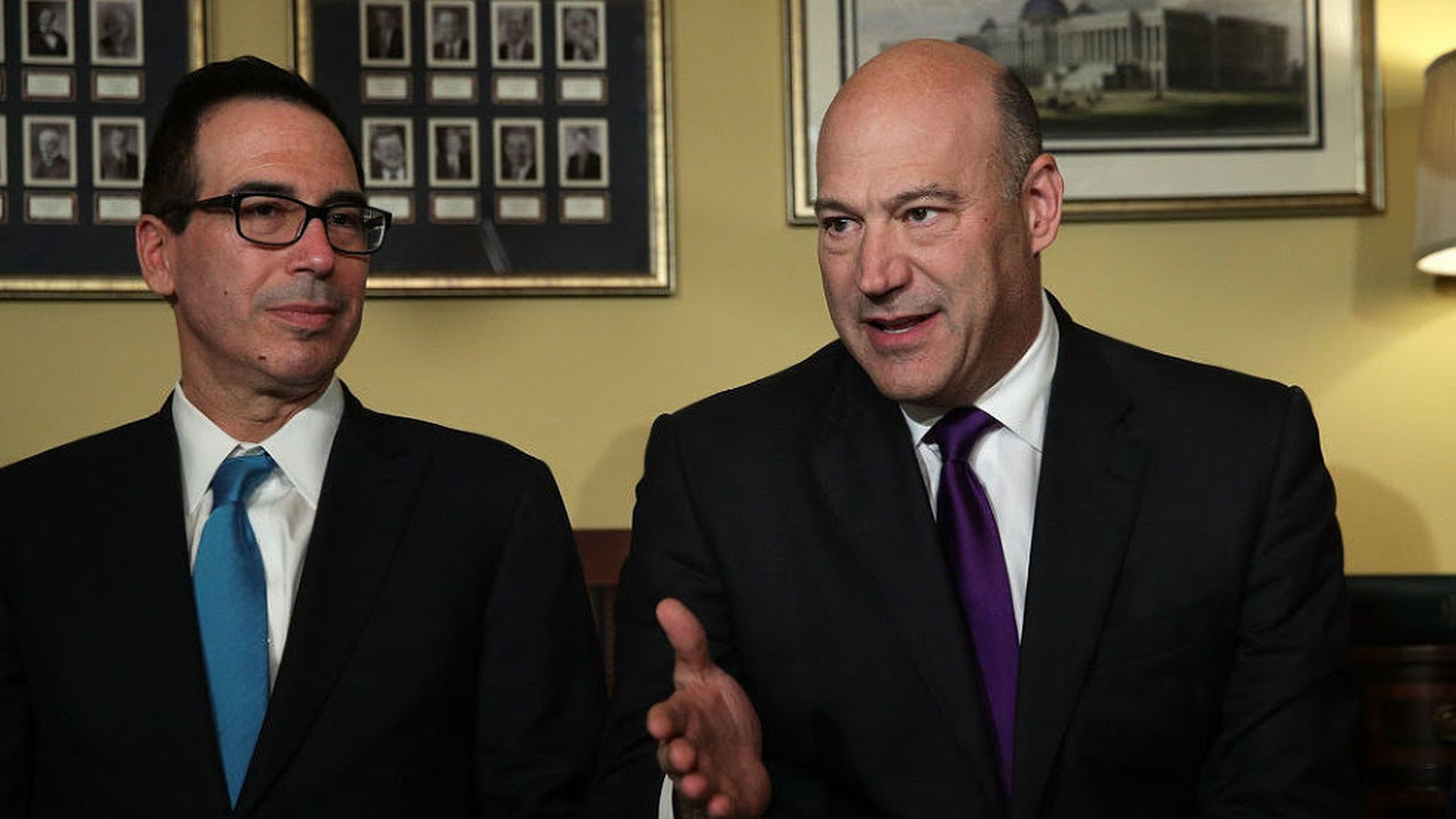
Gary Cohn and Steven Mnuchin successfully kept President Trump from making any disruptive trade actions during the tax reform fight. Now that tax reform is done — and Trump remains hell-bent on tariffs — they're making new arguments to try to mellow his hardwired trade-warrior impulses.
Cohn and Mnuchin are now appealing to Trump's obsession with the record-breaking run of the stock market under his presidency, according to four sources with direct knowledge.
Early this year, President Trump invited Mark Halperin to dinner in the White House residence. Seated around the table were Trump's inner circle, including Jared Kushner, Hope Hicks, Reince Priebus, Stephen Miller, Kellyanne Conway, Steve Bannon, and Sean Spicer.
They spent a rollicking evening reminiscing about the campaign, according to two sources in the room.
Sears Holding Corp., the parent company of Sears and Kmart, reportedly didn't run any national television ads during the critical holiday season, per The Wall Street Journal. The last national ad for Kmart ran on November 24 and the last for Sears ran on November 25. Last year, the company ran $8.4 million in national ads for Sears and $6.5 million for Kmart during December.
Why it matters: With most of Sears' sales still focused on its struggling brick-and-mortar stores, the decision not to run television ads — especially during the critical holiday period — has caused controversy amongst its executive teams. While its competitors like Macy's and J.C. Penney spent tens of millions in national television advertising dollars, Sears focused its advertising budget on targeted digital and social advertising.
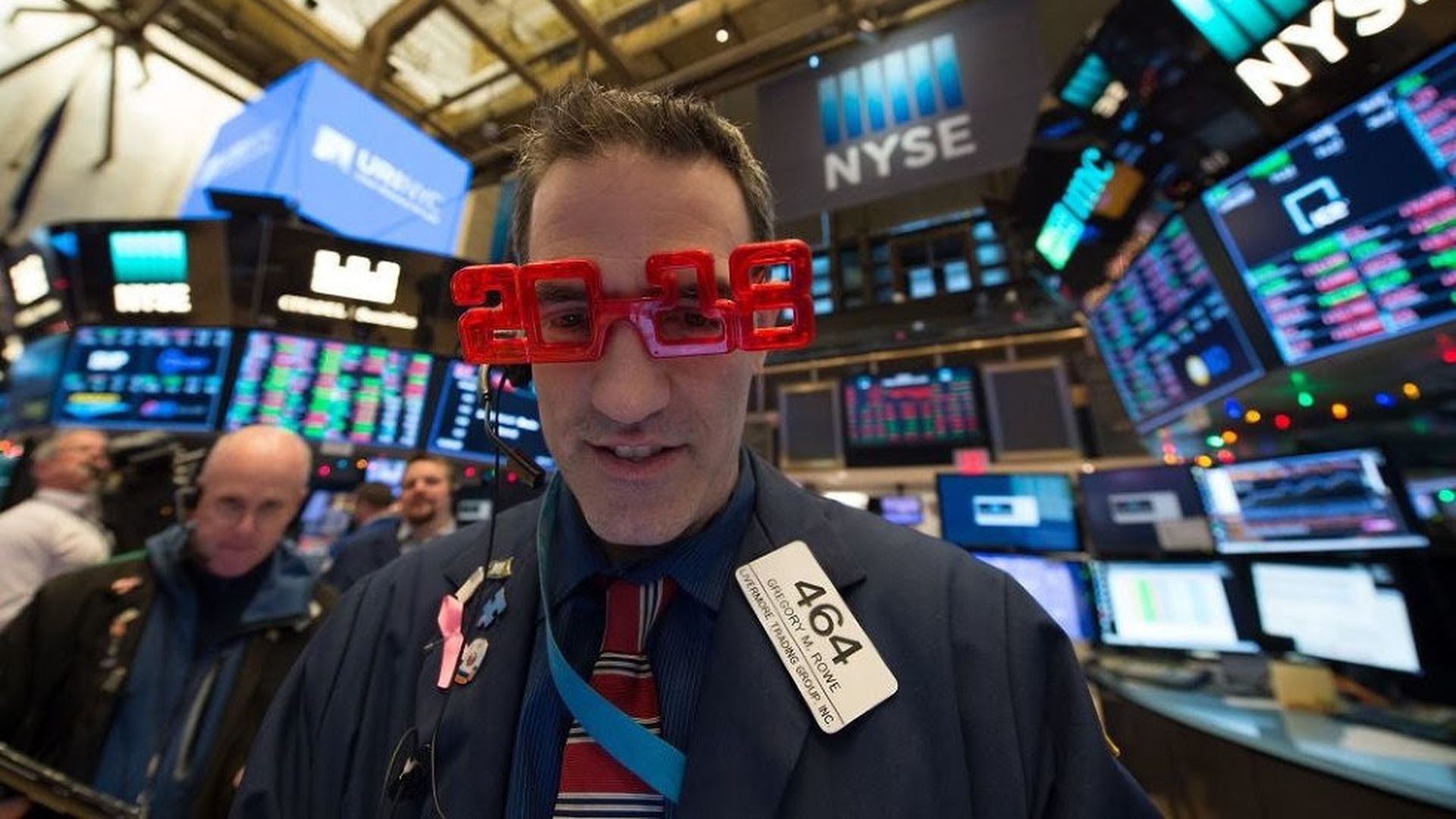
"The major stock indexesmade double-digit gains for the year, led by Apple, Facebook and other technology stocks," per AP Business Writer Alex Veiga.
The takeaway: "By some measures, the market is looking expensive. The S&P 500 is now trading around 18 times forward earnings. That's above the historical average of 16."
"Even so, eight years into the bull market, many analysts expect stocks to keep climbing next year.
The average U.S. smartphone user now gobbles up 31.4 gigabytes of data a month, a 25% increase since last year, according to NPD Group and reported by Twice. That's roughly the equivalent of streaming 31 hours of standard-definition video on Netflix.
Why it's happening: The major U.S. wireless companies now all offer unlimited data plans, allowing consumers to blow through as much data as they want without incurring extra fees or having to seek out Wi-Fi hotspots for bandwidth-heavy downloads. Streaming video accounts for 83% of total data consumed, per NPD.