Thursday's economy stories

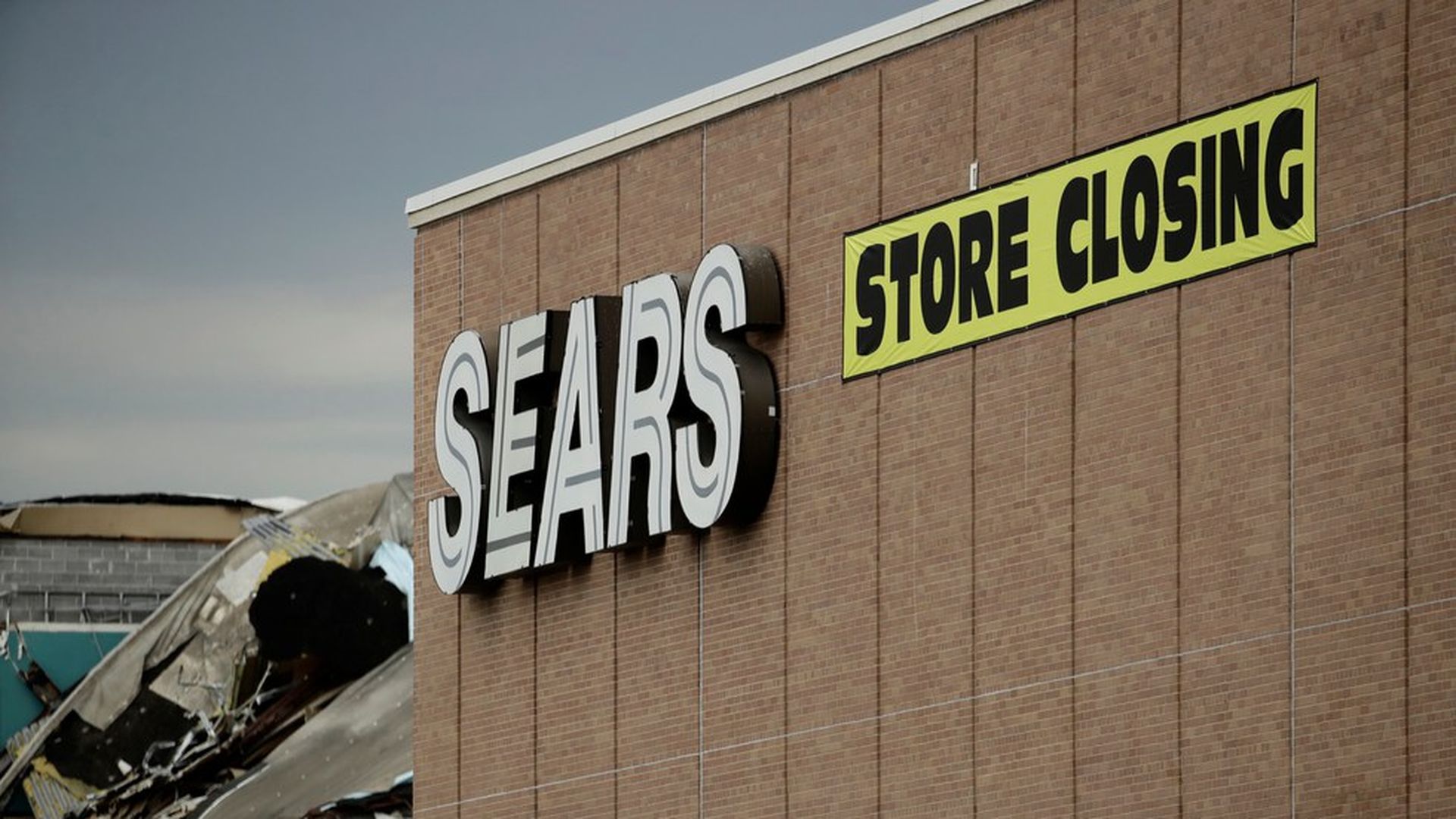
Sears beats expectations amid collapsing sales
Sears Holdings, parent company of Sears and Kmart, posted a better-than-expected loss of $558 million in the third quarter. Investors initially cheered the news, sending the company's stock soaring as much as 30% higher in pre-market trading, though those gains were wiped out by early Thursday afternoon.
Why it matters: Even as it lost less money than analysts expected, Sears financial situation is dire. "Whichever way you cut them, the fundamental economics of the business do not add up," GlobalData Retail Managing Director Neil Saunders tells CNBC. "Nothing in this latest set of results changes our view."

Cumulus Media files for bankruptcy
Cumulus Media, one of the largest U.S. radio broadcasters, filed for bankruptcy protection, according to Reuters. The company says it has entered an agreement with lenders to restructure its business to reduce more than $1 million in debt.
Why it matters: The announcement comes amid a wave of media consolidation in all sectors, driven mostly by tech companies that have been able to drive users and revenue with their ability to move at the speed of 21st century consumer demands. In April, Cumulus rival, iHeartMedia — the holding company of IHeartRadio, which is the biggest operator of radio stations in U.S. — said it expected bankruptcy within a year.

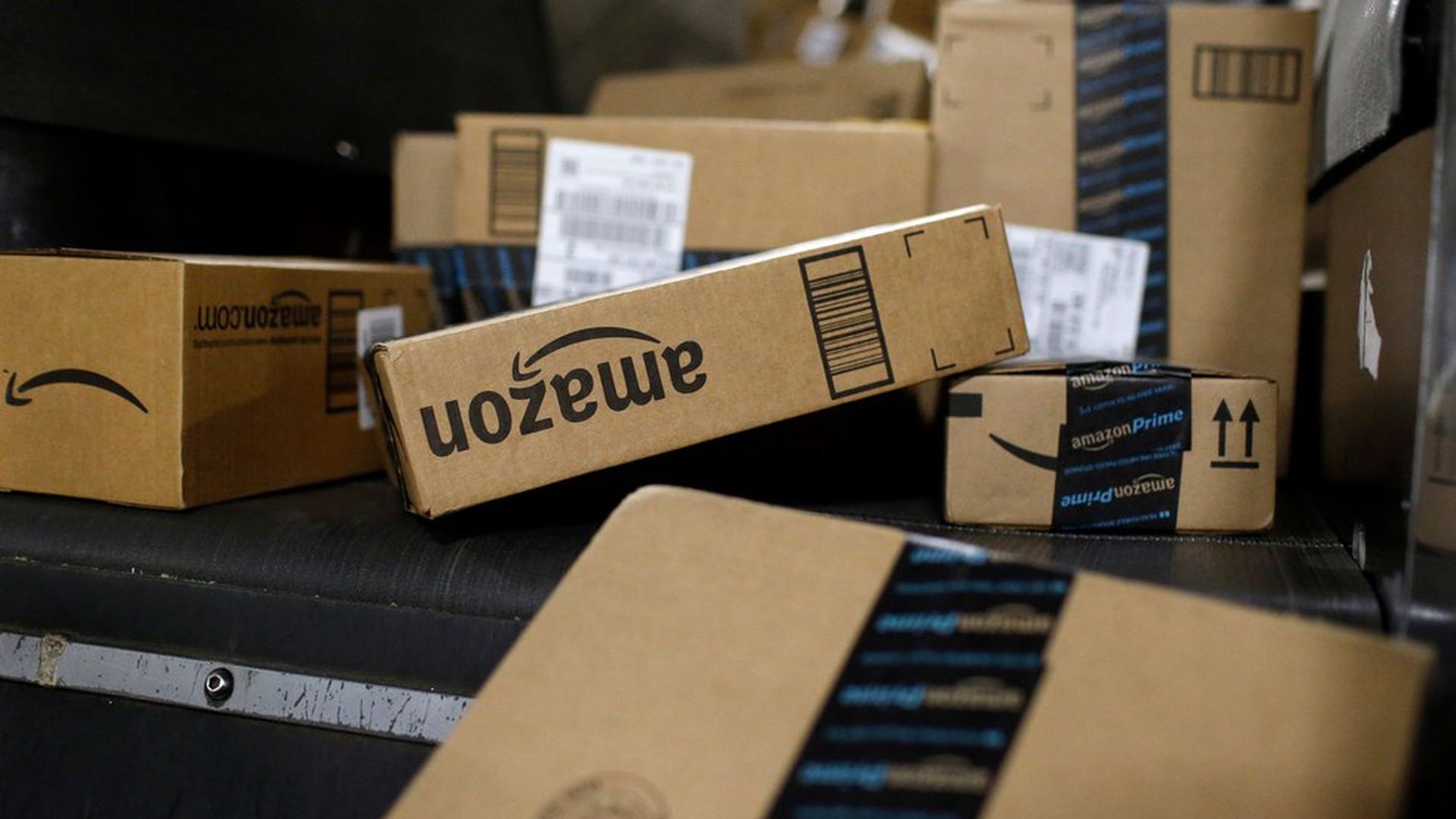
Amazon seeks to wean Mexico off cash
In an effort to encourage more Mexicans to shop online, Amazon is promoting a new payment system whereby shoppers can deposit funds into their Amazon accounts via kiosks at local convenience stores, Bloomberg reports.
Why it matters: Developing countries' e-retail sectors are hemmed in by their customers lack of access to credit cards. In places like India and China, e-commerce firms have worked around this by enabling delivery workers to accept cash, a solution that isn't viable in countries like Mexico where assaults and robberies are common.
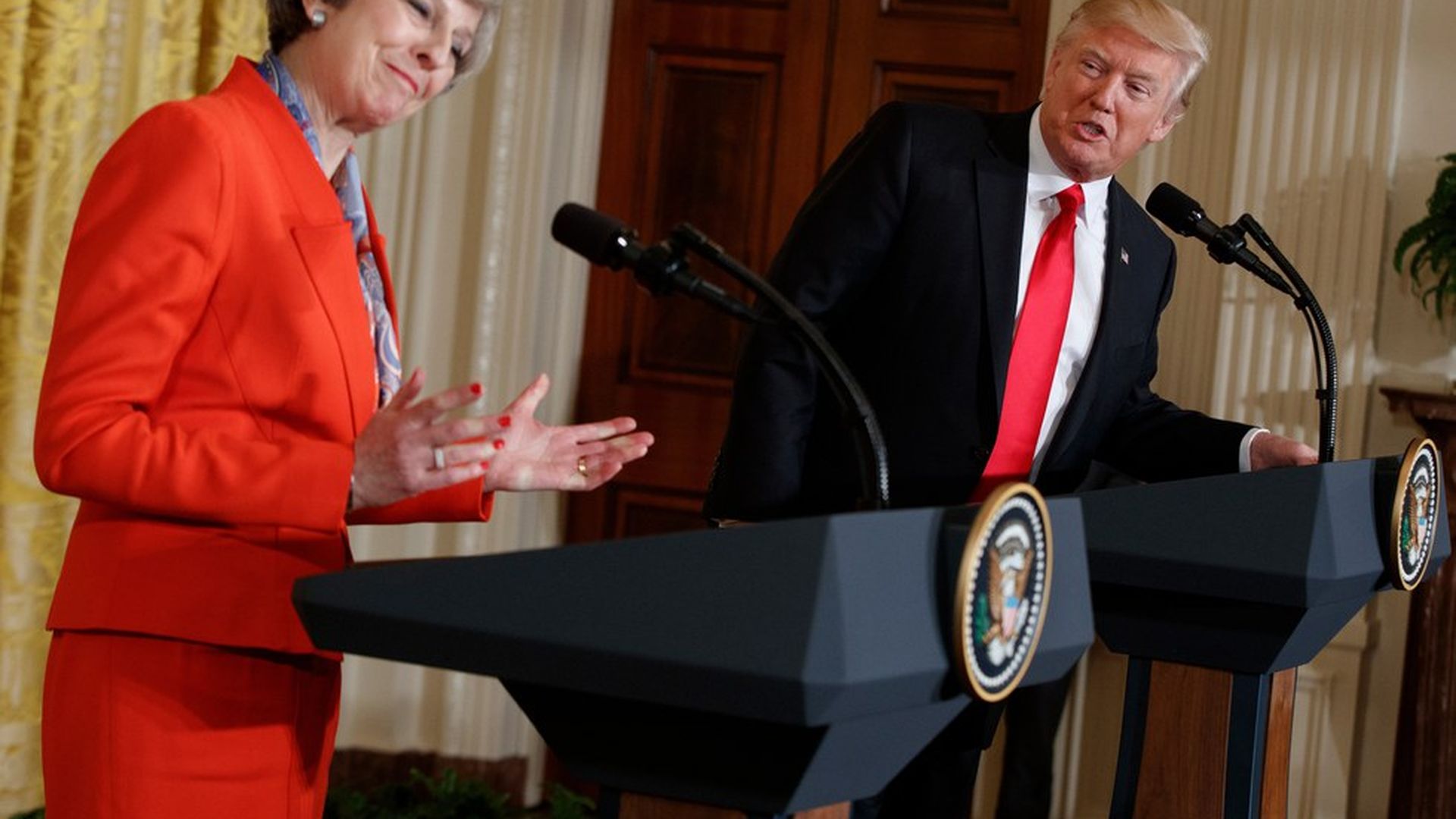
Theresa May battles Trump for Aramco IPO listing
British Prime Minister Theresa May yesterday pitched London's stock exchange as the best location for the massive IPO of state oil giant Saudi Aramco next year, a move that comes two weeks after President Trump publicly urged the kingdom to select the U.S. for the offering slated for 2018.
Why it matters: The international venue selected for the listing will bring huge fees to the exchange that wins the IPO of 5% of the company, which Saudi officials hope will raise tens of billions of dollars to help fund the kingdom's economic diversification and modernization efforts.
Making her case: "I think London is extremely well placed, not only from its importance as an international financial centre, also technically well placed in relation to Aramco," she told reporters just ahead of her visit with top Saudi officials in Riyadh, according to the Mirror.
- The outcome of the very public courtships — not to mention behind-the-scenes appeals — also carry geopolitical ramifications, forcing the Saudi rulers to make a choice between the U.S. and the U.K. (or perhaps another venue like Hong Kong) at a time of tensions between Trump and May.
Separately: Yesterday May rebuked Trump for retweeting anti-Muslim hate videos from British far-right leader Jayda Fransen.

Big tech's next prey: Big Finance
With tens of billions of dollars in fees at stake, the financial sector seems on the verge of disruption from the next burst of technologies, including artificial intelligence and blockchain. Data-laden tech giants including Amazon, Google, and China's Alibaba and Tencent are invading an industry dominated for more than a century by firms like JPMorgan Chase and Goldman Sachs.
Why it matters: Look for Big Tech, with caches of data about billions of people around the globe, to power the next jumps in financial technology ("fintech"), keeping users reined within their own, ever-expanding platforms and absorbing billions in profit that otherwise would have gone to traditional financiers.

21 occupations of the future
In a new report, Cognizant, the IT services firm, identifies 21 jobs that, given economic and commercial trends, people could reasonably be expected to hold, like chief trust officer and man-machine teaming manager.
Why it matters: The key question of the age of automation is whether this time of technological disruption is different from all the others that have occurred over the last two centuries. That is, will the economy produce sufficient well-paying jobs for everyone, or will there be profound and intractable joblessness? To begin to answer that question, we've needed to know what at least some of those jobs might be.


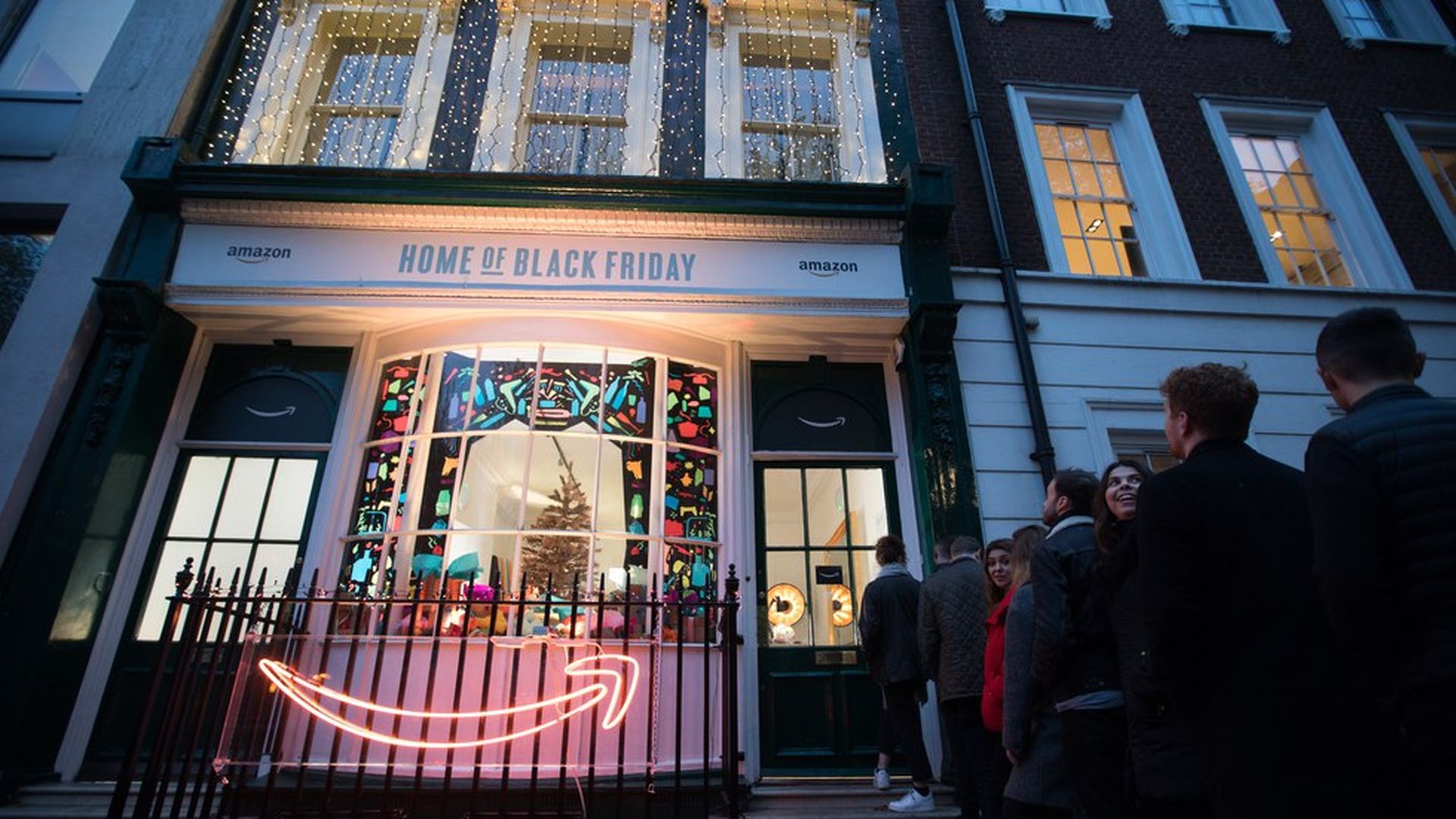
Amazon's London pop-up shows one future of retail
For a third-straight year, U.K. retailers celebrated Black Friday wildly, and Amazon dived into the spirit, deploying a five-room, 3,000-square-foot pop-up shop in London's Soho square.
Why it matters: Retail start-ups, e-commerce outlets, and brands are increasingly looking to pop-up stores as a means for driving sales and creating brand awareness. PopUp Republic, a services provider for the pop-up industry, estimates that broadly measured, these stores generate $50 billion in sales in the U.S. annually.
Report: Former Google exec Andy Rubin had inappropriate relationship with a coworker
Android creator and former Google executive Andy Rubin left the company after an internal investigation found he'd had an inappropriate relationship with a subordinate, The Information reports. Rubin's spokesperson denied that any relationship during his time at Google was non-consensual.
Context: Rubin, a respected Silicon Valley exec, who now runs smartphone company Essential, is the latest high-profile tech figure to be accused of misconduct with female coworkers. Also today, NBC fired Matt Lauer for inappropriate sexual behavior in the workplace.