Friday's economy stories

Tim Cook: people are wrong to discount Apple's AI efforts
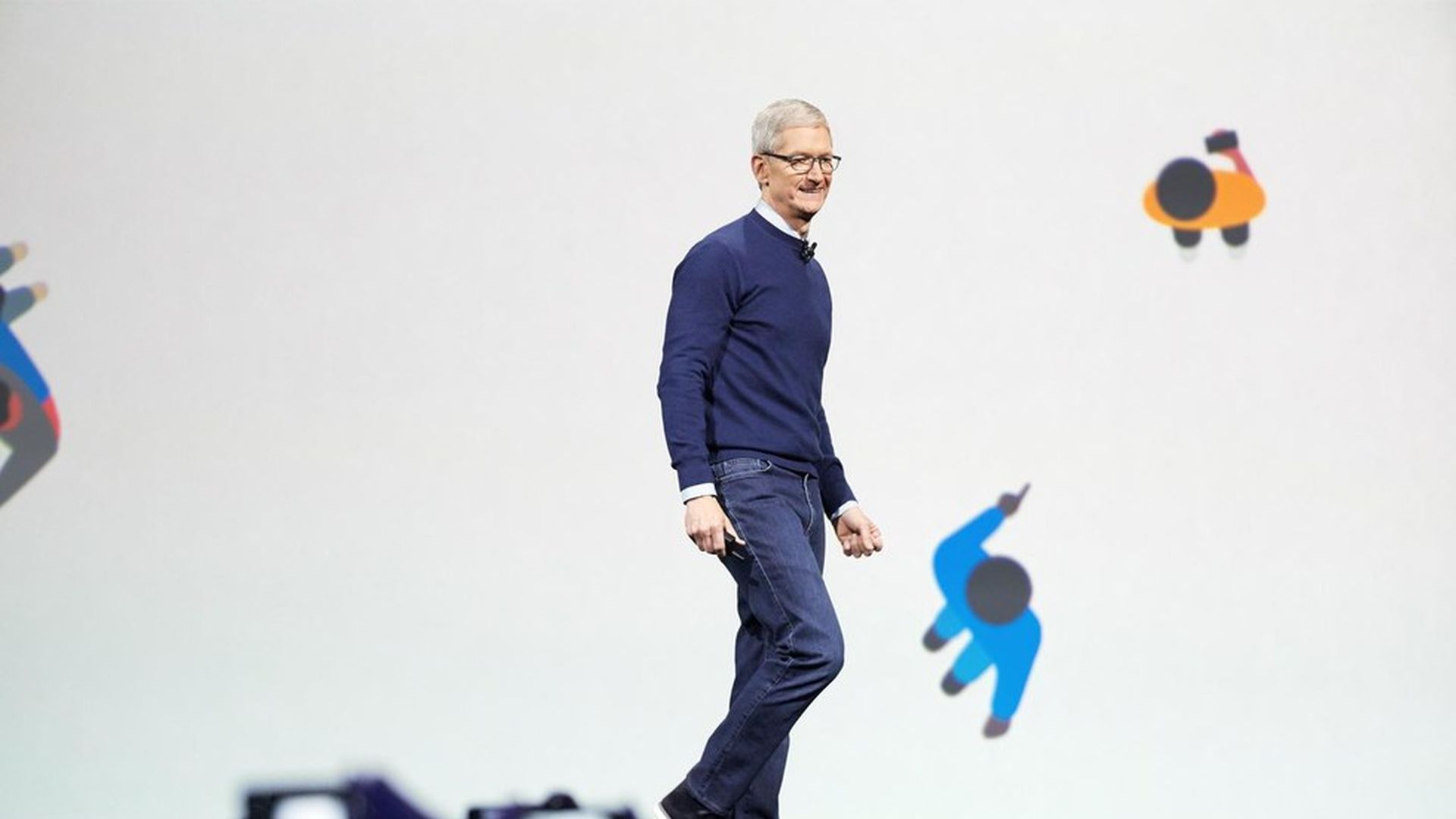
Apple may be late to the party with its AI-enabled HomePod personal assistant and speaker system, but CEO Tim Cook tells the MIT Technology Review that doesn't mean that the firm isn't on the cutting edge of artificial intelligence technology.
Cook says that the iPhone is chock-full of AI capabilities, like photo recognition, a music-recommendation engine, and a system that helps conserve battery power. The difference, Cook, says Apple is less flashy when it comes to touting future developments. "We are not going to go through things we're going to do in 2019, '20, '21," Cook said. "It's not because we don't know that. It's because we don't want to talk about that."
What they are doing now: While Siri is the most visible aspect of Apple's AI work, the company has also added a bunch of machine learning capabilities in iOS 11, the next version of the iPhone operating system, including new tools to let developers tap computer vision and natural language processing capabilities.
Why it matters: Apple has gotten flak for trailing competitors Amazon and Google in this space. Some of the issues are matters of approach. Amazon and Google have opened their assistants more broadly than Apple, which has focused on adding capabilities to Siri one capability at a time. More broadly, some have expressed concern that Apple doesn't have enough customer data as rivals because of its focus on privacy.

Driverless car makers hire hackers for protection
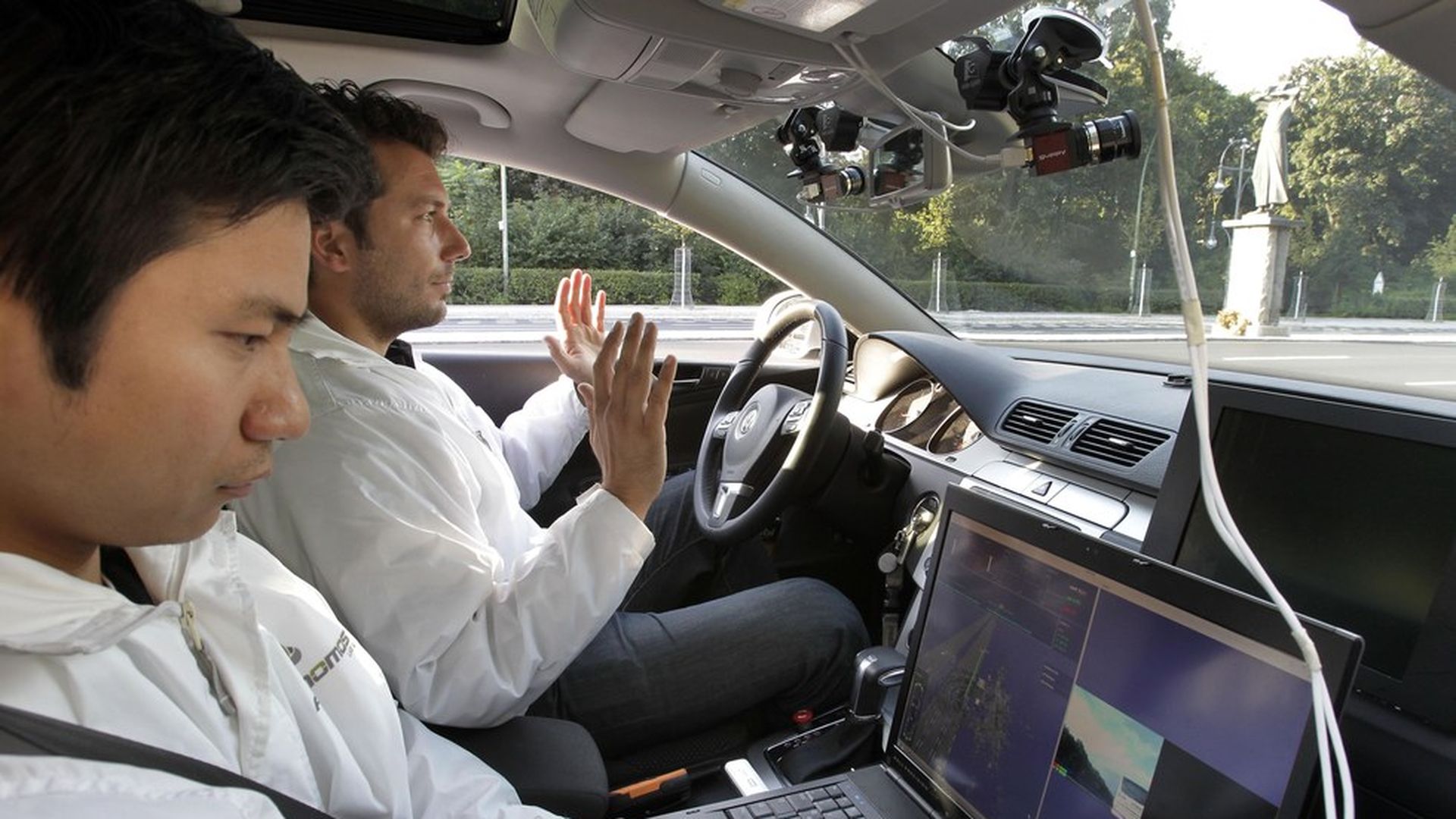
Cars aren't just cars, but "data centers on wheels," which will be aggressively targeted by hackers, security researcher Marc Rogers tells NYT. Back in 2015, his firm hacked into a Tesla Model S with a connected laptop, and he says that it's just a matter of time before driverless cars can be hacked wirelessly.
Specialists like Rogers are in high demand, both by car companies on the defense and others with less pure motivations, like a Chinese app company, which Rogers says approached him following the hack in order to purchase his findings. (It wanted to use the discovery to surreptitiously install itself on Tesla's dashboard.)
Why it matters: The biggest fear is that these cars will be hacked for violent ends. That's why companies in the driverless car space, from Uber and Apple to GM and Fiat-Chrysler, are hiring hackers to find vulnerabilities in their own code.

This video game trailer is the first to be nominated for an Academy Award
The 11-minute-long, promo video featuring the voice of British philosopher Alan Watts for the new video game "Everything," developed by David OReilly, has been nominated for an Academy Award, Engadget reports. This is the first time a video game has received a nomination. The trailer already won the Jury Prize for Animation at the 2017 Vienna Shorts film festival. The game: "Everything" is a world simulator game, which allows the player to take the form of anything and everything in nature and is already out on PS4, PC and Mac. Fun fact: OReilly has worked in cinema before, creating the video game scenes in the 2013 film Her.

People want to see each other face to face
Our expert voices conversation about the death of retail.
Best Buy was written off for dead a few years ago. The company rebounded through sharper pricing, more services, and an increased assortment of products that aren't readily sourced online, such as mobile phones and brown goods.
For customers, the experience of retail shopping retains an edge over the online experience. Shopping remains fundamentally a social experience that people enjoy doing together. Two, customers continue to rely on malls to access services such as nail salons, for purchases that require customization, such as the tailoring of garments, and for entertainment.
For some product categories, retail settings are simply superior. For example, companies who struggle to express important features of their product online — such as sportswear, for which the texture and precise color of fabric is critical — will continue to rely on stores.
Moreover, new retail formats are emerging that are less susceptible to online competition. Brands like Uniqlo, H&M and Zara sell lower-priced products that are often purchased on impulse and do not offer sufficient margin to cover the cost of returns and free shipping that online shoppers demand.
The bottom line: Retail employment will not disappear. It will decline, but stabilize as retailers innovate.
Other voices in the conversation:
- Mark A. Cohen, professor, Columbia Business School: Amazon is unstoppable
- Kirsten Green, founder, Forerunner Ventures: Online shopping is no fun
- Stuart Appelbaum, president, retail workers union: Retail won't die, but it will change
- Oscar Yuan, president, Ipsos Strategy3: Amazon spurns Gucci shows
Joseph Fuller is Professor of Management Practice at Harvard Business School.

Why guaranteed income may come to the poor world first
One of the most commonly touted remedies for an expected future bloodbath in the job market is the universal basic income, a concept whereby the government would issue monthly payments to all citizens, regardless of employment status. Its advocates argue that UBI would be the best way for citizens to support themselves should most productive work end up being done by machines and artificial intelligence.
But a recent analysis by the Brookings Institution argues that UBI already makes sense as a tool for fighting poverty around the world.
Why it matters: If developing countries like Brazil, India and Indonesia were to implement such a program at a cost of 1% of GDP, it could help bring around 185 million people out of extreme poverty, Brookings says.

How partisan media covered Comey’s hearing
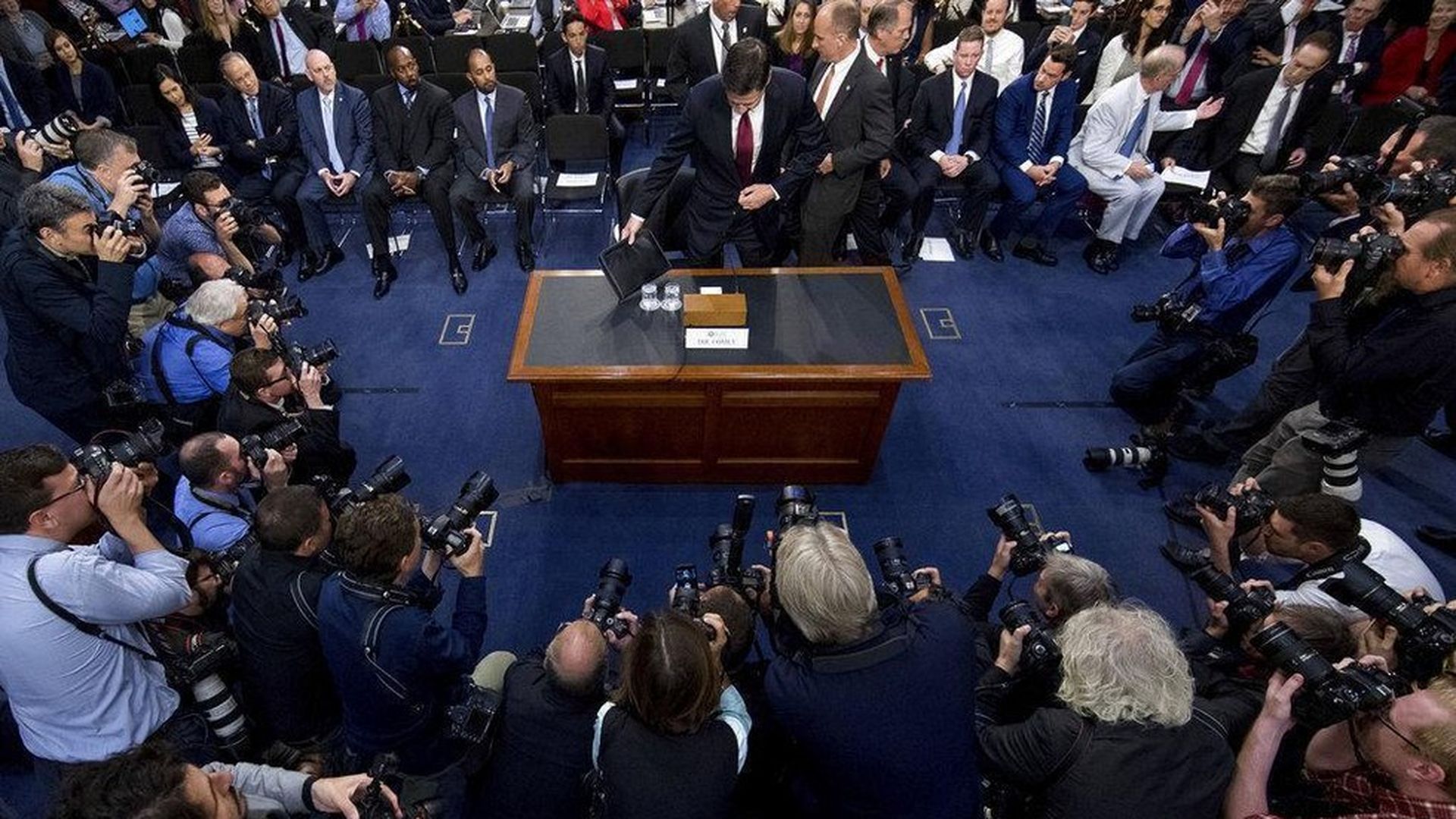
Everybody's watching James Comey testify in front of the Senate Intelligence Committee today. But the headlines from right-leaning and left-leaning news organizations tell a different story.
Why it matters: The far-right is eager to clear Trump's name, pointing to Comey's comments about Trump wanting the Russia investigation to find any of his "satellites" who might be colluding with Russia and that the President himself was not under investigation. Meanwhile, the far-left is looking for signs of obstruction, lies and criminality based on Comey's testimony.

OECD: income growth still lousy
Global economic growth may have improved, but this new income isn't filtering down to the average worker, OECD Chief Economist Catherine Mann tells the Financial Times. "We are concerned that policymakers ... will become complacent and think that 'our job is done'," she said. Here are some further points to keep in mind:
- Wage growth has risen in the U.S., with total compensation jumping 2.4% in the year ended in March versus 1.9% a year earlier. It remains below rates prior to the 2008-09 recession.
- The calm before the storm: Slow U.S. economic and wage growth has been paired with low productivity improvement, wich means jobs are plentiful right now despite the looming threat of automation. But a fractious political climate has hobbled Washington's ability to do much policy experimentation in preparation for a potential future of widespread technological unemployment.
- Why it matters: To the degree that the anti-establishment political wave in the West is related to slow growth in individual income, there's no reason to believe those movements will lose momentum soon.
States try to speed up deployment of 5G wireless networks
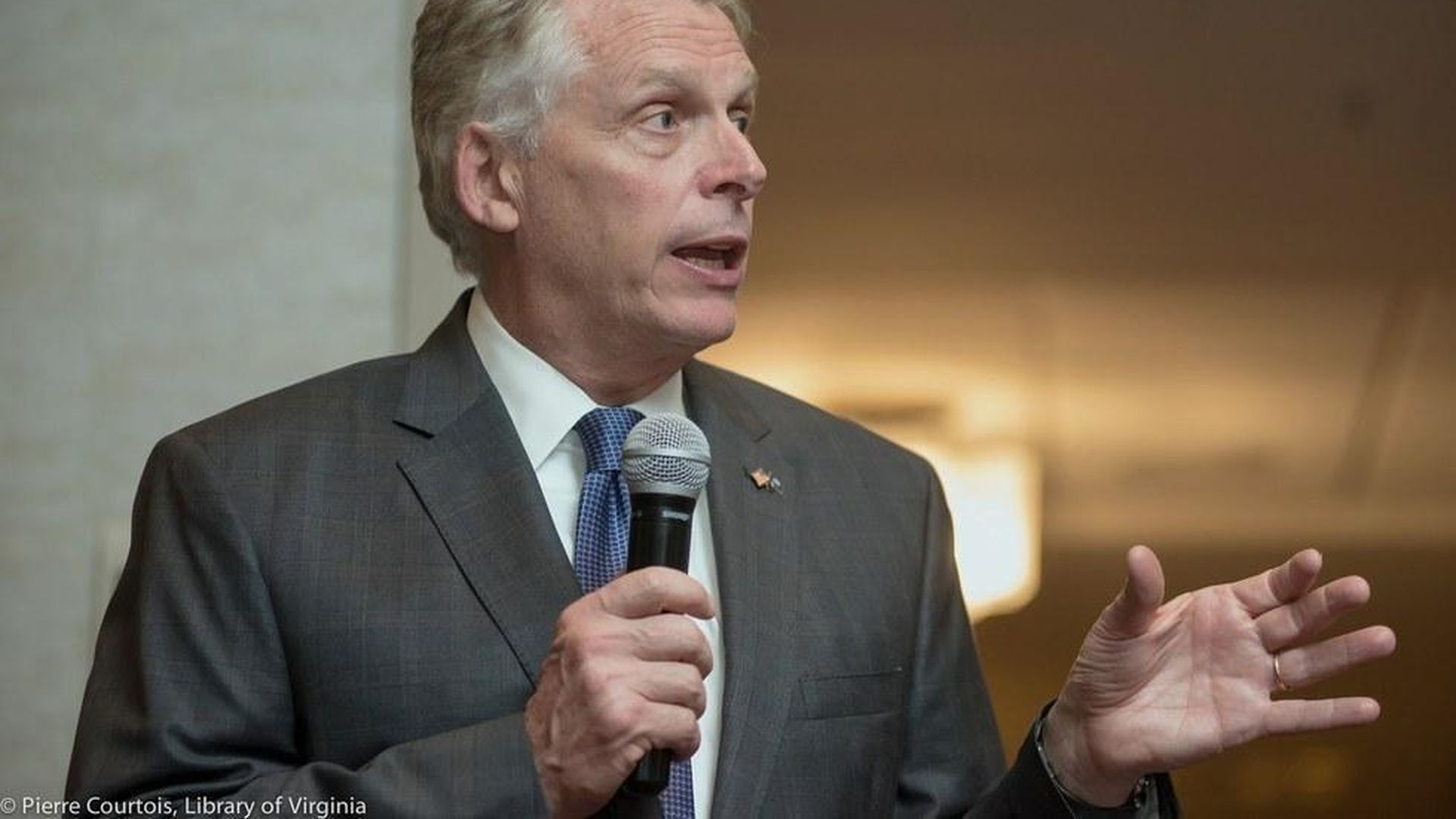
Virginia Gov. Terry McAuliffe this morning signs a bill designed to speed up the deployment of the small cell infrastructure needed to support 5G wireless networks. The bill provides a uniform process for installing the new network equipment on lamp posts, utility poles, buildings and public rights of way.
Why it matters: Permitting for new wireless facilities in municipalities can take a long time. So a number of states are trying to make the process less painful (and expensive) to encourage more rapid deployment of the networks, which require 10 to 100 times more antenna locations than 4G or 3G. Florida, Texas, Minnesota, Arizona, Colorado, Indiana and Iowa passed similar bills this year.

Automation leads to globalization and inequality
Since Donald Trump was elected and before, economists and politicians have debated whether disaffected Rust Belt communities are struggling because of the impact of automation, globalization, or foreign trade. Which is the culprit?
None of them by itself, according to new research by economists Laura Tyson and Michael Spence. They argue that automation, trade and globalization are part of the same, sometimes brutal cycle: Automation first allows companies to contain and cut employee counts, and goes on to trigger a "turbo-charged" reverberation around the world.
Why it matters: If Tyson and Spence are right, the policy answer to rising income inequality and popular disaffection is more complicated than simply attacking robots or globalization. It's been the interplay of these forces that's in part driven a steady decline in labor costs as a share of company profits over the past generation or two.