Thursday's economy stories

Why guaranteed income may come to the poor world first
One of the most commonly touted remedies for an expected future bloodbath in the job market is the universal basic income, a concept whereby the government would issue monthly payments to all citizens, regardless of employment status. Its advocates argue that UBI would be the best way for citizens to support themselves should most productive work end up being done by machines and artificial intelligence.
But a recent analysis by the Brookings Institution argues that UBI already makes sense as a tool for fighting poverty around the world.
Why it matters: If developing countries like Brazil, India and Indonesia were to implement such a program at a cost of 1% of GDP, it could help bring around 185 million people out of extreme poverty, Brookings says.

How partisan media covered Comey’s hearing
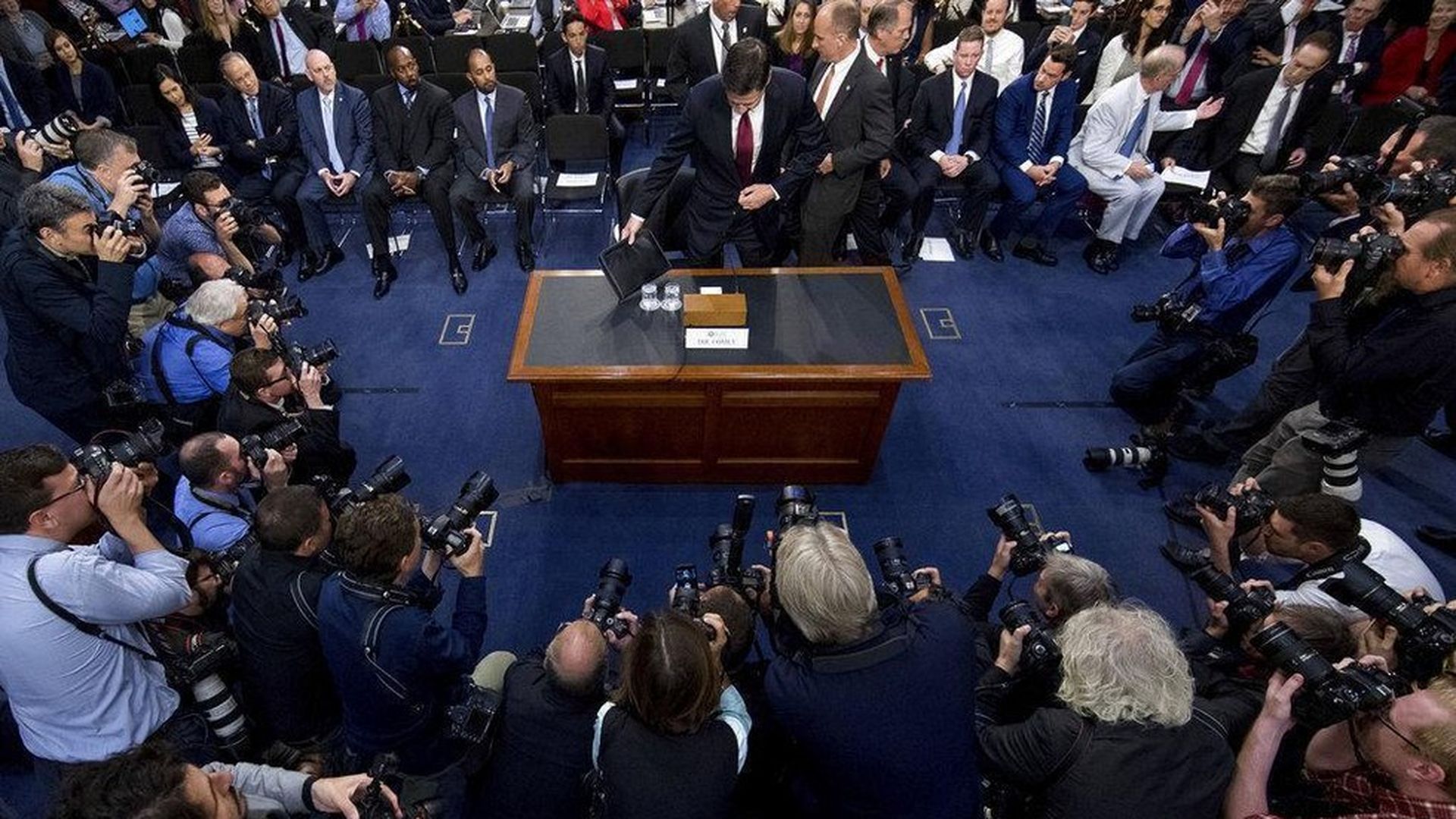
Everybody's watching James Comey testify in front of the Senate Intelligence Committee today. But the headlines from right-leaning and left-leaning news organizations tell a different story.
Why it matters: The far-right is eager to clear Trump's name, pointing to Comey's comments about Trump wanting the Russia investigation to find any of his "satellites" who might be colluding with Russia and that the President himself was not under investigation. Meanwhile, the far-left is looking for signs of obstruction, lies and criminality based on Comey's testimony.

OECD: income growth still lousy
Global economic growth may have improved, but this new income isn't filtering down to the average worker, OECD Chief Economist Catherine Mann tells the Financial Times. "We are concerned that policymakers ... will become complacent and think that 'our job is done'," she said. Here are some further points to keep in mind:
- Wage growth has risen in the U.S., with total compensation jumping 2.4% in the year ended in March versus 1.9% a year earlier. It remains below rates prior to the 2008-09 recession.
- The calm before the storm: Slow U.S. economic and wage growth has been paired with low productivity improvement, wich means jobs are plentiful right now despite the looming threat of automation. But a fractious political climate has hobbled Washington's ability to do much policy experimentation in preparation for a potential future of widespread technological unemployment.
- Why it matters: To the degree that the anti-establishment political wave in the West is related to slow growth in individual income, there's no reason to believe those movements will lose momentum soon.
States try to speed up deployment of 5G wireless networks
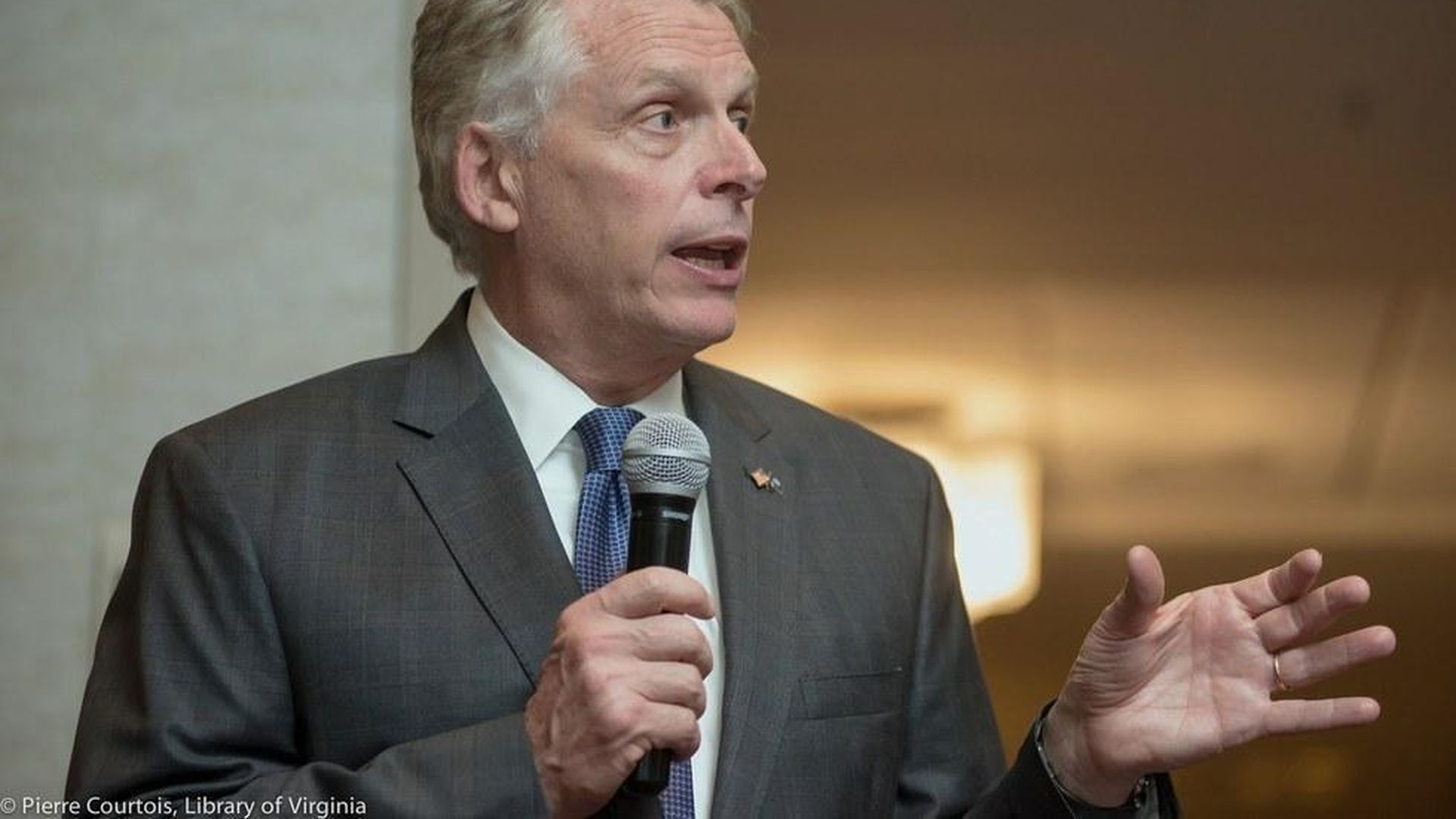
Virginia Gov. Terry McAuliffe this morning signs a bill designed to speed up the deployment of the small cell infrastructure needed to support 5G wireless networks. The bill provides a uniform process for installing the new network equipment on lamp posts, utility poles, buildings and public rights of way.
Why it matters: Permitting for new wireless facilities in municipalities can take a long time. So a number of states are trying to make the process less painful (and expensive) to encourage more rapid deployment of the networks, which require 10 to 100 times more antenna locations than 4G or 3G. Florida, Texas, Minnesota, Arizona, Colorado, Indiana and Iowa passed similar bills this year.

Automation leads to globalization and inequality
Since Donald Trump was elected and before, economists and politicians have debated whether disaffected Rust Belt communities are struggling because of the impact of automation, globalization, or foreign trade. Which is the culprit?
None of them by itself, according to new research by economists Laura Tyson and Michael Spence. They argue that automation, trade and globalization are part of the same, sometimes brutal cycle: Automation first allows companies to contain and cut employee counts, and goes on to trigger a "turbo-charged" reverberation around the world.
Why it matters: If Tyson and Spence are right, the policy answer to rising income inequality and popular disaffection is more complicated than simply attacking robots or globalization. It's been the interplay of these forces that's in part driven a steady decline in labor costs as a share of company profits over the past generation or two.


The U.S. state most desperate for workers
While many are focusing on a forecast robot apocalypse, a lot of states are desperate to fill jobs, including ones requiring comparatively little skill. Colorado has the worst problem. It's short 10,000 construction workers. Its ski industry needs winter workers. Its frackers need rig workers.
The state attracts 30,000 to 50,000 new residents every year. Yet, joblessness is at a rock-bottom 2.3%, according to the federal government. At 1.8% in April, the city of Boulder's jobless rate was the lowest of any city in the country.
A level deeper: It's a snapshot of a possibly ephemeral nationwide skilled jobs shortage. The national jobless rate in May was 4.3%, its lowest since May 2001; the number of job openings rose to another all-time high in April, but firms had serious trouble filling them -- all evidence of what economists call a burst of employment before automation causes massive joblessness, years from now.

Eric Trump: "I've never seen hatred like this"
Eric Trump with Sean Hannity on Fox News:
- "I've never seen hatred like this. And to me, they're not even people. It's so, so sad. I mean, morality's just gone."
- Trump added that he blames both politicians and the media for the "lack of morals in society" since "the way they act are out of control."
- Democrats, he said, are becoming "obstructionist because they have no message of their own…And honestly it's because the Democratic Party is sinking.'

Big companies, fewer workers
The five most valuable companies in the U.S. are all technology firms that employ far fewer workers than their industrial predecessors.