Saturday's economy stories


Tim Cook: people are wrong to discount Apple's AI efforts
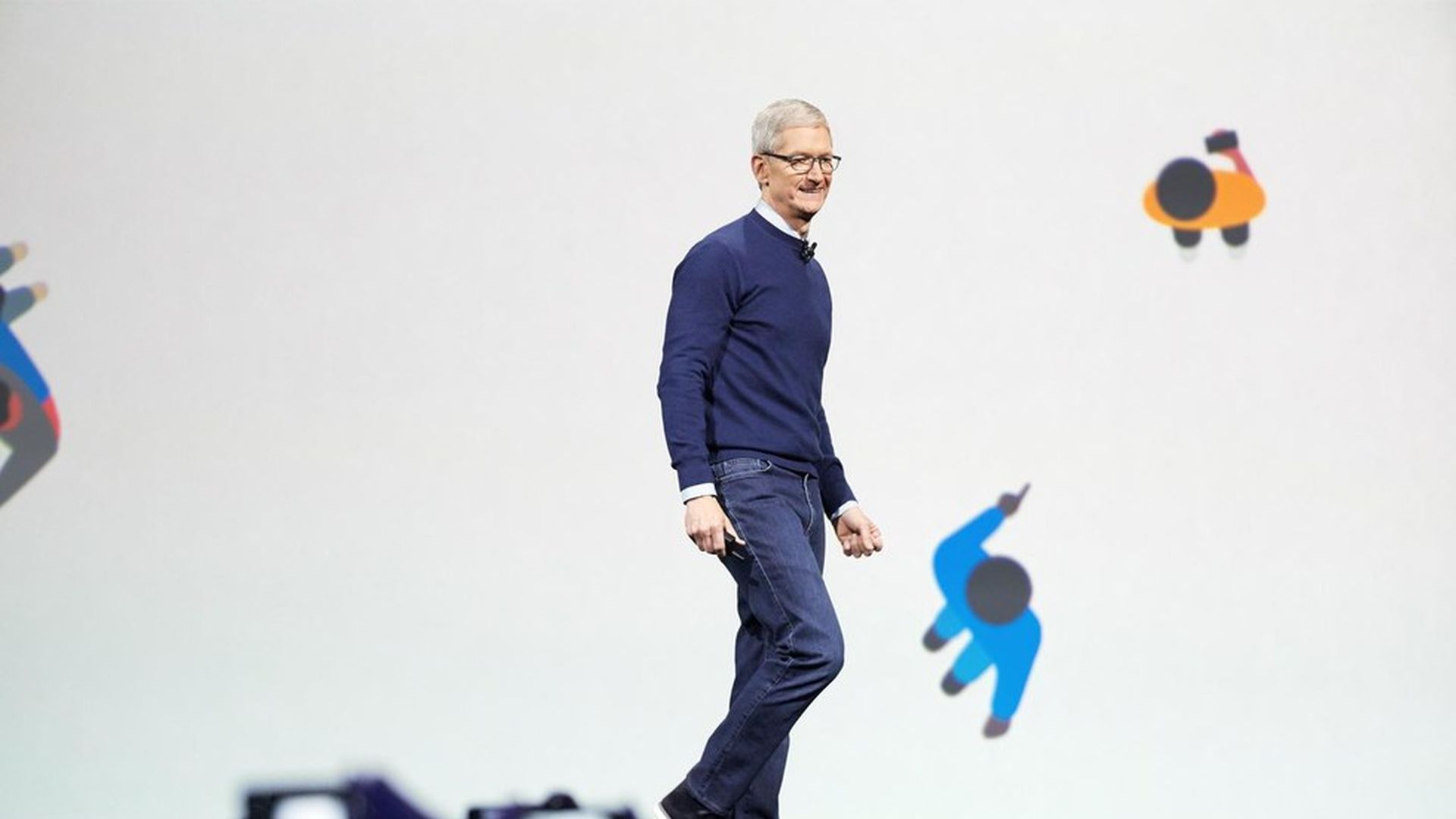
Apple may be late to the party with its AI-enabled HomePod personal assistant and speaker system, but CEO Tim Cook tells the MIT Technology Review that doesn't mean that the firm isn't on the cutting edge of artificial intelligence technology.
Cook says that the iPhone is chock-full of AI capabilities, like photo recognition, a music-recommendation engine, and a system that helps conserve battery power. The difference, Cook, says Apple is less flashy when it comes to touting future developments. "We are not going to go through things we're going to do in 2019, '20, '21," Cook said. "It's not because we don't know that. It's because we don't want to talk about that."
What they are doing now: While Siri is the most visible aspect of Apple's AI work, the company has also added a bunch of machine learning capabilities in iOS 11, the next version of the iPhone operating system, including new tools to let developers tap computer vision and natural language processing capabilities.
Why it matters: Apple has gotten flak for trailing competitors Amazon and Google in this space. Some of the issues are matters of approach. Amazon and Google have opened their assistants more broadly than Apple, which has focused on adding capabilities to Siri one capability at a time. More broadly, some have expressed concern that Apple doesn't have enough customer data as rivals because of its focus on privacy.
Driverless car makers hire hackers for protection
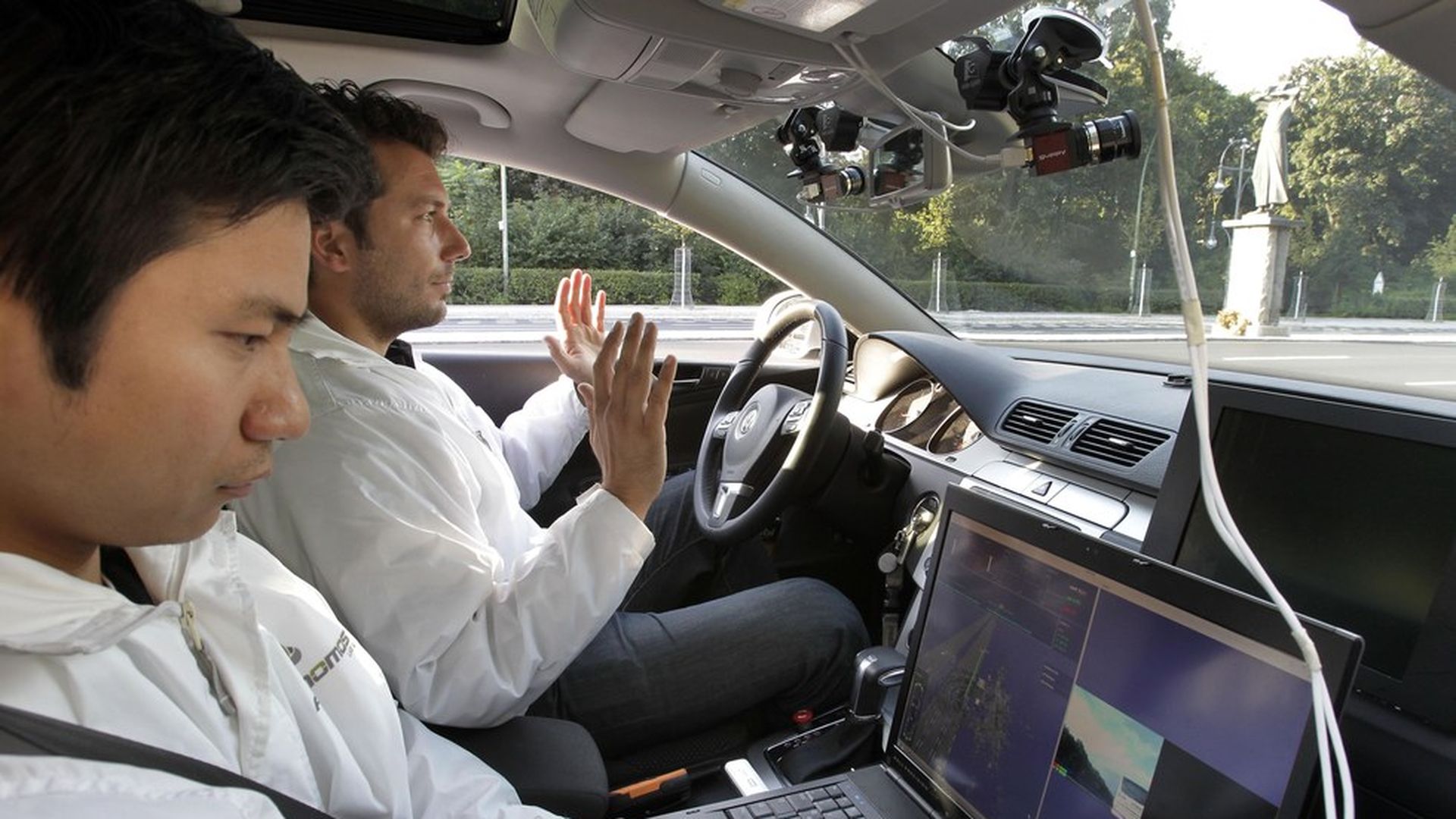
Cars aren't just cars, but "data centers on wheels," which will be aggressively targeted by hackers, security researcher Marc Rogers tells NYT. Back in 2015, his firm hacked into a Tesla Model S with a connected laptop, and he says that it's just a matter of time before driverless cars can be hacked wirelessly.
Specialists like Rogers are in high demand, both by car companies on the defense and others with less pure motivations, like a Chinese app company, which Rogers says approached him following the hack in order to purchase his findings. (It wanted to use the discovery to surreptitiously install itself on Tesla's dashboard.)
Why it matters: The biggest fear is that these cars will be hacked for violent ends. That's why companies in the driverless car space, from Uber and Apple to GM and Fiat-Chrysler, are hiring hackers to find vulnerabilities in their own code.

This video game trailer is the first to be nominated for an Academy Award
The 11-minute-long, promo video featuring the voice of British philosopher Alan Watts for the new video game "Everything," developed by David OReilly, has been nominated for an Academy Award, Engadget reports. This is the first time a video game has received a nomination. The trailer already won the Jury Prize for Animation at the 2017 Vienna Shorts film festival. The game: "Everything" is a world simulator game, which allows the player to take the form of anything and everything in nature and is already out on PS4, PC and Mac. Fun fact: OReilly has worked in cinema before, creating the video game scenes in the 2013 film Her.

People want to see each other face to face
Our expert voices conversation about the death of retail.
Best Buy was written off for dead a few years ago. The company rebounded through sharper pricing, more services, and an increased assortment of products that aren't readily sourced online, such as mobile phones and brown goods.
For customers, the experience of retail shopping retains an edge over the online experience. Shopping remains fundamentally a social experience that people enjoy doing together. Two, customers continue to rely on malls to access services such as nail salons, for purchases that require customization, such as the tailoring of garments, and for entertainment.
For some product categories, retail settings are simply superior. For example, companies who struggle to express important features of their product online — such as sportswear, for which the texture and precise color of fabric is critical — will continue to rely on stores.
Moreover, new retail formats are emerging that are less susceptible to online competition. Brands like Uniqlo, H&M and Zara sell lower-priced products that are often purchased on impulse and do not offer sufficient margin to cover the cost of returns and free shipping that online shoppers demand.
The bottom line: Retail employment will not disappear. It will decline, but stabilize as retailers innovate.
Other voices in the conversation:
- Mark A. Cohen, professor, Columbia Business School: Amazon is unstoppable
- Kirsten Green, founder, Forerunner Ventures: Online shopping is no fun
- Stuart Appelbaum, president, retail workers union: Retail won't die, but it will change
- Oscar Yuan, president, Ipsos Strategy3: Amazon spurns Gucci shows
Joseph Fuller is Professor of Management Practice at Harvard Business School.