Since introducing bitcoin on the Cash app, more than 10 million accounts have bought some of the original cryptocurrency, according to the Q1 shareholder letter from Block, Inc (the company most people probably still think of as Square), released Thursday.
Why it matters: 10 million people is a lot of people. That level of usage suggests that there really is demand for bitcoin from people who don't want to mess with weird wallets and keeping track of private keys.
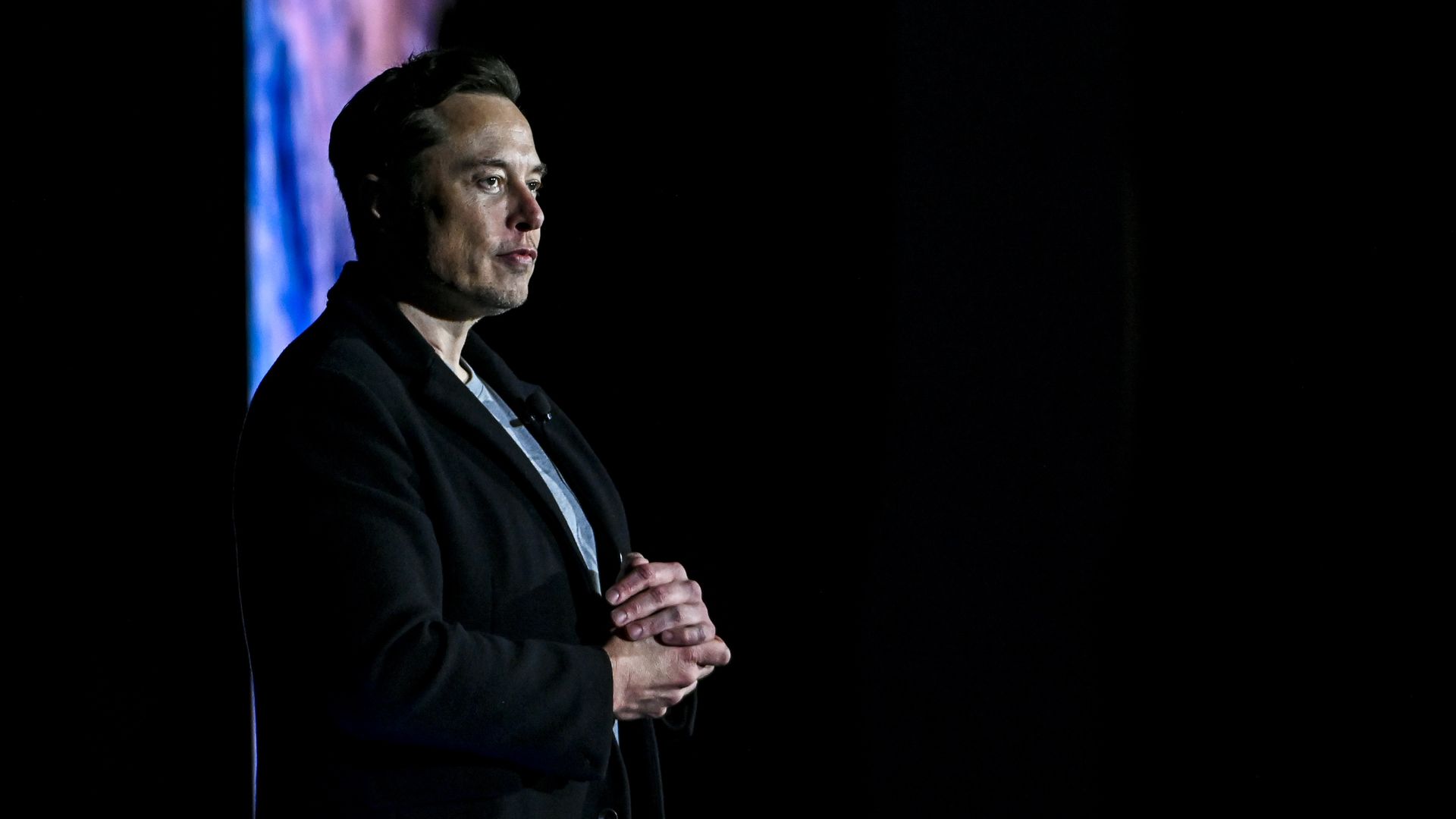
Why it matters: Elon Musk is testing the boundaries of what it means to be stretched thin, having apparently agreed to become the temporary CEO of Twitter if and when he closes his deal to acquire the company.
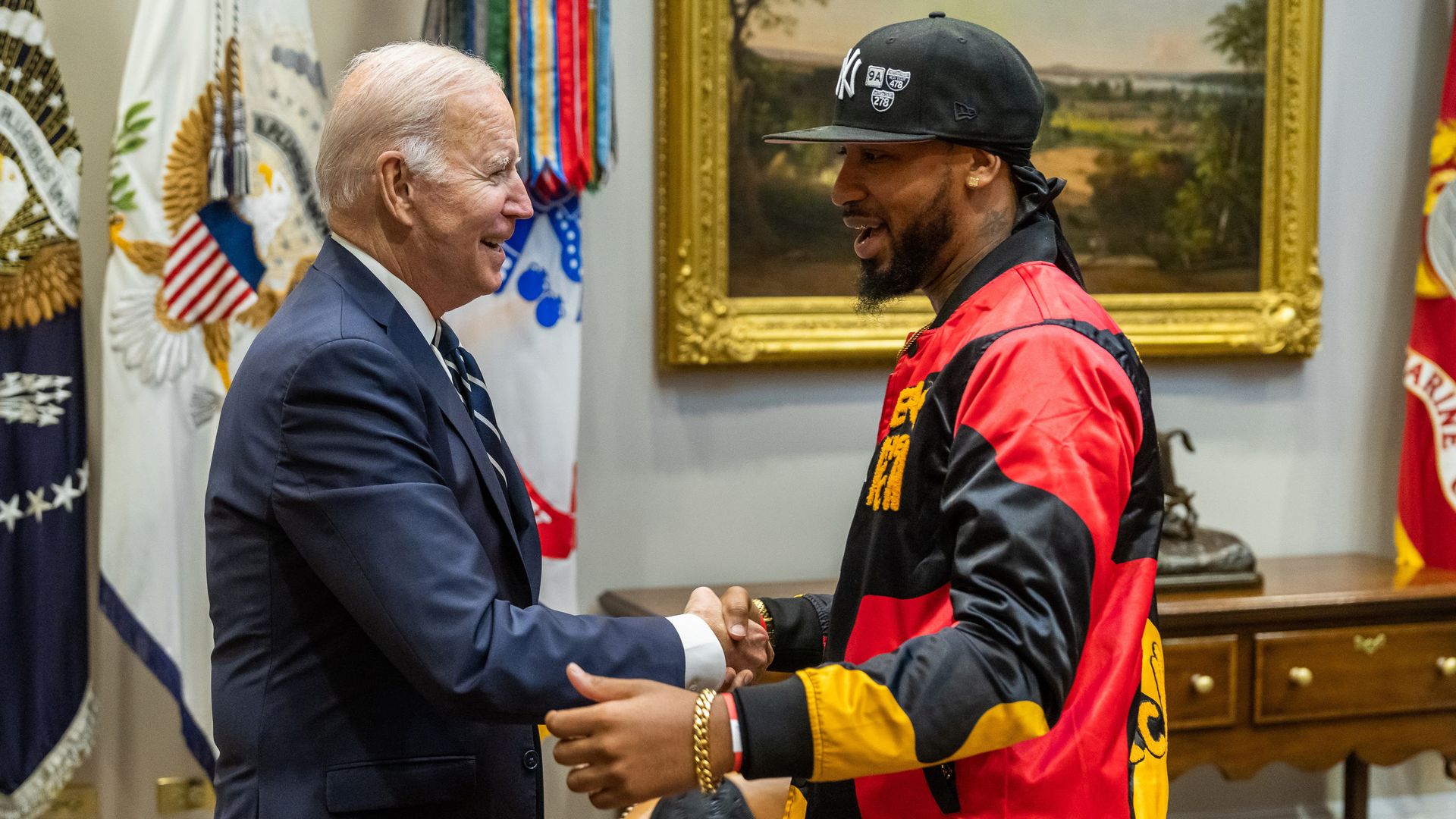
President Joe Biden on Thursday met with Christian Smalls, the president of the Amazon Labor Union, along with other grassroots worker organizers at the White House.
Driving the news: There has been a sustained push for unions among workers from companies like Amazon and Starbucks, and Biden has broadly expressed support for these efforts.
Robots on the internet are waiting to make money for you — if you have a lot of money.
Driving the news: Yearn Finance, the leading robo-advisor for yield, revealed details about its v3 this week, catching the project up with an effort that spans decentralized finance (DeFi) to standardize tokens that earn money.
Data: Forbes Global 2000, Yahoo Finance; Note: *Market cap is for Darden Restaurants; Chart: Erin Davis/Axios Visuals
Stock market indices are a good guide to broad sentiment, but individual valuations can be much more idiosyncratic.
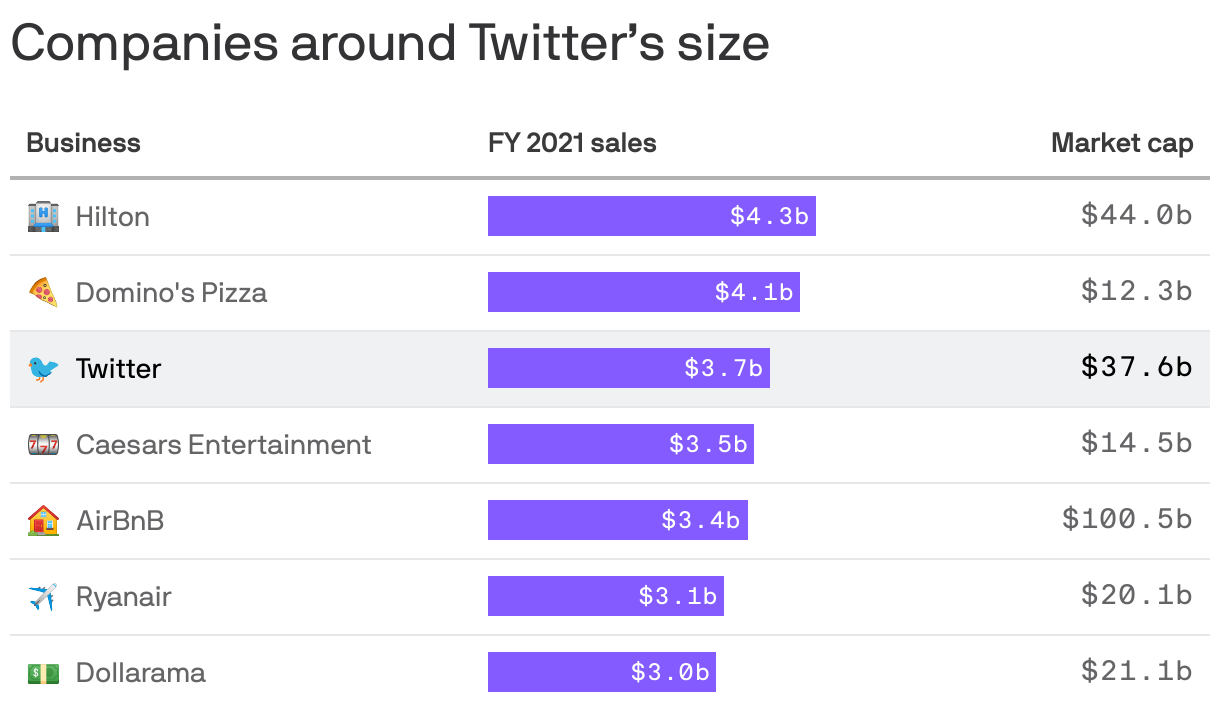
The big picture: The acquisition of Twitter by Musk has thrown into sharp relief companies' seemingly arbitrary valuations, and the way in which a soaring share price doesn't necessarily mean a stratospheric valuation.
Federal bank regulators released a proposal Thursday that would overhaul a decades-old law meant to address systemic inequities in banking and prevent the practice of redlining — where banks won't lend to lower-income, typically Black borrowers.
Why it matters: The aim is to modernize the historic Community Reinvestment Act, which evaluates banks on how much lending they're doing in the physical area situated around their branches. That's far less relevant in an era of online banking.
If painting roads saves lives, how about putting up billboards? Turns out, that might be counterproductive.
Why it matters: There's a general tendency to believe that "awareness" is always and everywhere a good thing. But that's not an empirical finding. Sometimes, such awareness can backfire.
We've reverted to normal, and, all things considered, it's not so bad.
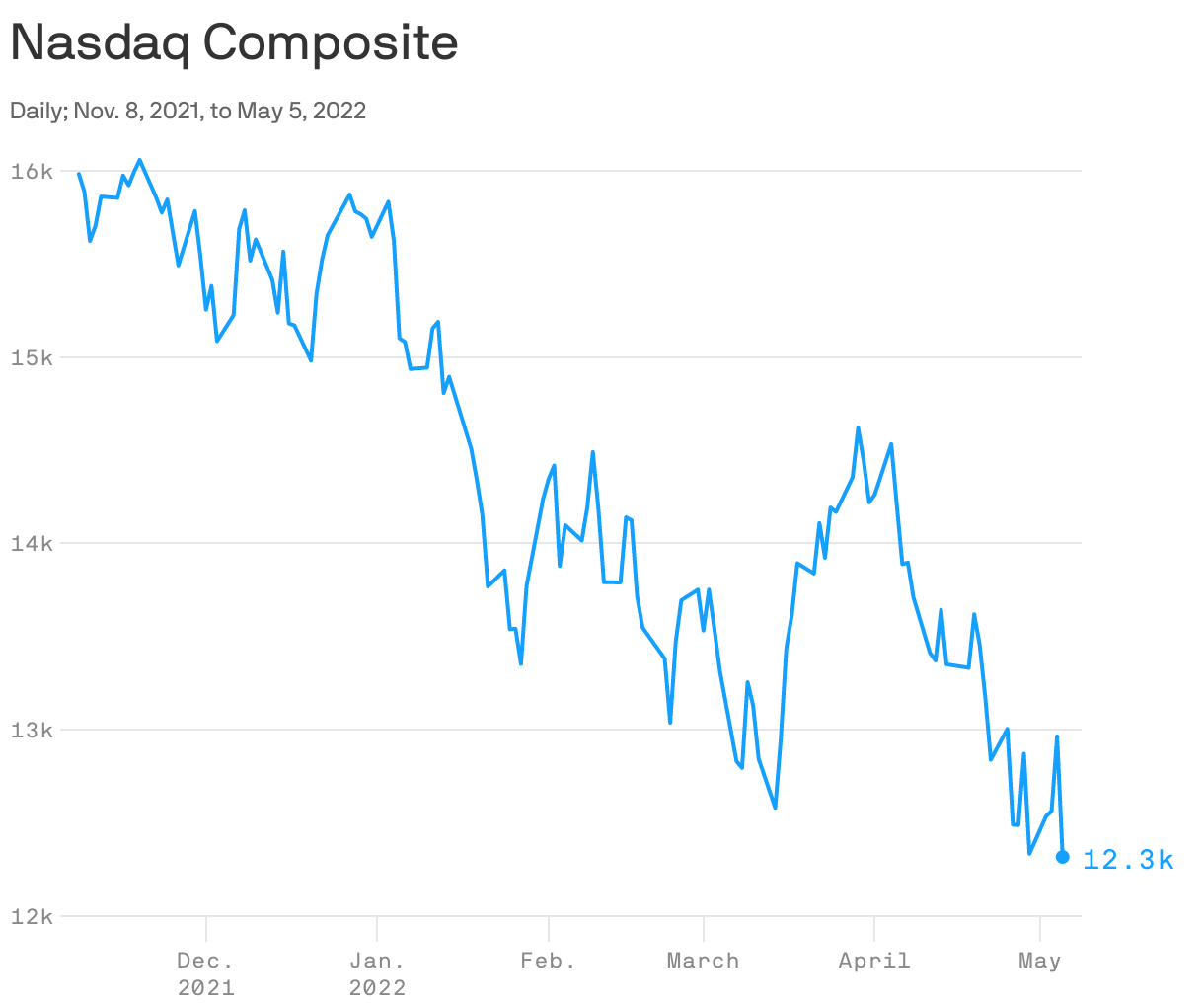
Why it matters: For the first time in well over a decade, it's hard to look at the stock market and declare that it's being artificially boosted by ultra-low interest rates.
Heard, a startup that handles administrative tasks for behavioral health providers, raised $10 million in Series A funding, the company's co-founders Andrew Riesen and Victoria Li tell Axios exclusively.
Why it matters: As the digital health stage crowds with buzzy provider players, businesses that handle the administrative (less sexy) tasks of virtual care are making their own debut.
The proportion of homes being sold for cash — deals where the buyer isn't taking out a mortgage — hit a new high of 28% in March. That's the highest level we've seen since the post-crisis years, when a lot of home sales were foreclosures. (To buy a home out of foreclosure, you have to pay in cash.)
Why it matters: This is a sign that the housing market is still extremely tight, and that there's little hope high mortgage rates will bring down prices. After all, high borrowing costs do nothing to deter cash buyers.
The Fed delivered the biggest rate hike in over two decades, and the stock market seemed to love it.
Why it matters: The rally, after a dreadful month, suggests many had thought the Fed would threaten even harsher rate hikes in the future, to tamp down sizzling inflation.
Elon Musk on Thursday disclosed a group of co-investors in his Twitter takeover. The names are impressive, but most of their check sizes aren't.
Driving the news: Musk secured around $5.2 billion in equity commitments from 18 investors, plus a rollover of nearly 35 million Twitter shares from Saudi Prince Alwaleed bin Talal.
Fundingis notyet secured. Elon Musk has promised to raise $20 billion of equity to pay for Twitter, but it's still difficult to see where that money is going to come from — even after $7 billion of new equity commitments on Thursday morning.
By the numbers: Twitter shares rallied by about a dollar in pre-market trading on the news, but they're still trading at a 7.5% discount to Musk's agreed takeover price, in large part because the market still doesn't entirely believe that this deal is going to happen.
Bonuses on Wall Street will be lower this year, according to a closely watched early projection released this morning.
Why it matters: Bonuses were sky-high in 2021, along with everything else. This year everyone is returning to earth. The so-called "war for talent" will slow and firms will be looking to control expenses, according to the report, from Johnson Associates, a compensation consulting firm in New York City.
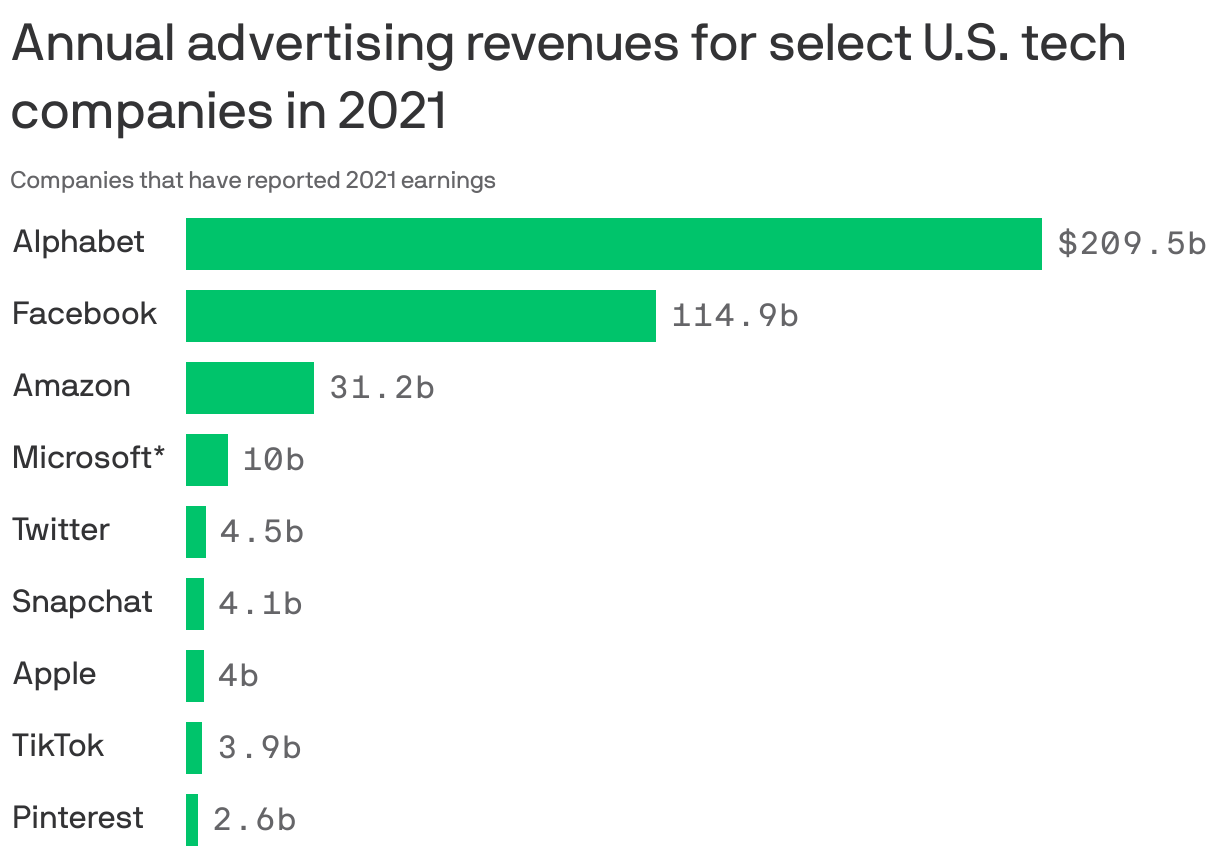
Data: Company reports, analyst reports; Note: Microsoft reported a revenue of more than $10 billion but did not disclose an exact figure; Chart: Thomas Oide/Axios
After years of touting their scale and efficiency, Big Tech companies have a new pitch for Madison Avenue: Social media creators are good for brands.
Why it matters: The user-generated content that tech giants rely on to fuel engagement has long been considered a brand-safety risk for marketers. But professional creators or influencers offer more polished content that poses less brand risk.