If you don't spend your time parsing monetary policy statements or listening to Federal Reserve chair Jerome Powell's dulcet tones, much of the terminology you hear from the Fed will seem unfamiliar and strange. We're here to help.
Why it matters: The Fed has a jargon all its own, but this guide can help you understand it.
The Federal Reserve has been assigned a task by Congress that is easy to describe, yet fiendishly difficult to achieve. It's known as the dual mandate: to achieve both price stability and maximum employment.
During the high unemployment and low inflation of the 2010s, both parts of that dual mandate pointed in the same direction. Not anymore.
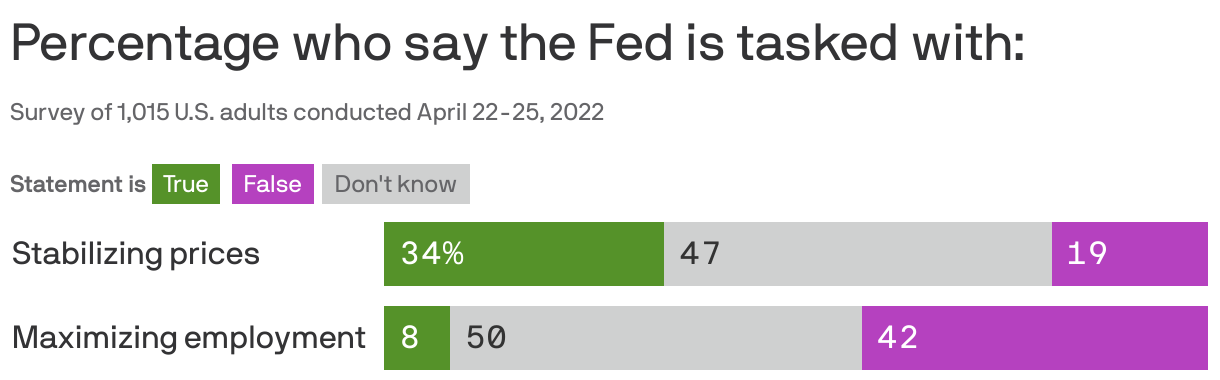
Most Americans are unaware of both goals of the Federal Reserve's dual mandate: stable prices and maximum employment, according to an Axios-Ipsos poll.
Why it matters: It's not surprising that public understanding of the Fed is so low. Most people aren't economists and have lives. But these are the Fed's biggest and most difficult jobs — and the poll shows how little Americans understand or appreciate them.
The vast majority of what the Federal Reserve does on any given day takes place in reserve banks stationed across the country, with an unusual quasi-private structure and wide-ranging, yet below-the-radar, responsibilities.
Why it matters: The regional Fed banks are facing intense new political pressures, including allegations from conservatives that they have ventured far outside their lane, essentially taking stands on social justice and other issues that undermine the central bank's independence.
Good afternoon, and welcome to the first installment of our new Modern Money & Markets Deep Dive series. This edition is a guide to how the Federal Reserve really works, led by Axios chief economic correspondent Neil Irwin.
It is the high season for being mad at the Federal Reserve. Critics accuse them of beingfeckless as inflation pressures built last year, and as a result, the United States is facing prolonged high inflation, a painful recession to rein it in — or both.
Why it matters: In reality, the Fed didn't create the current inflationary surge by itself — but it was too complacent as prices spiked last year. Now the economic future depends on its ability to make up for lost time, and navigate a tightrope-thin path to bringing inflation down without tanking the economy.
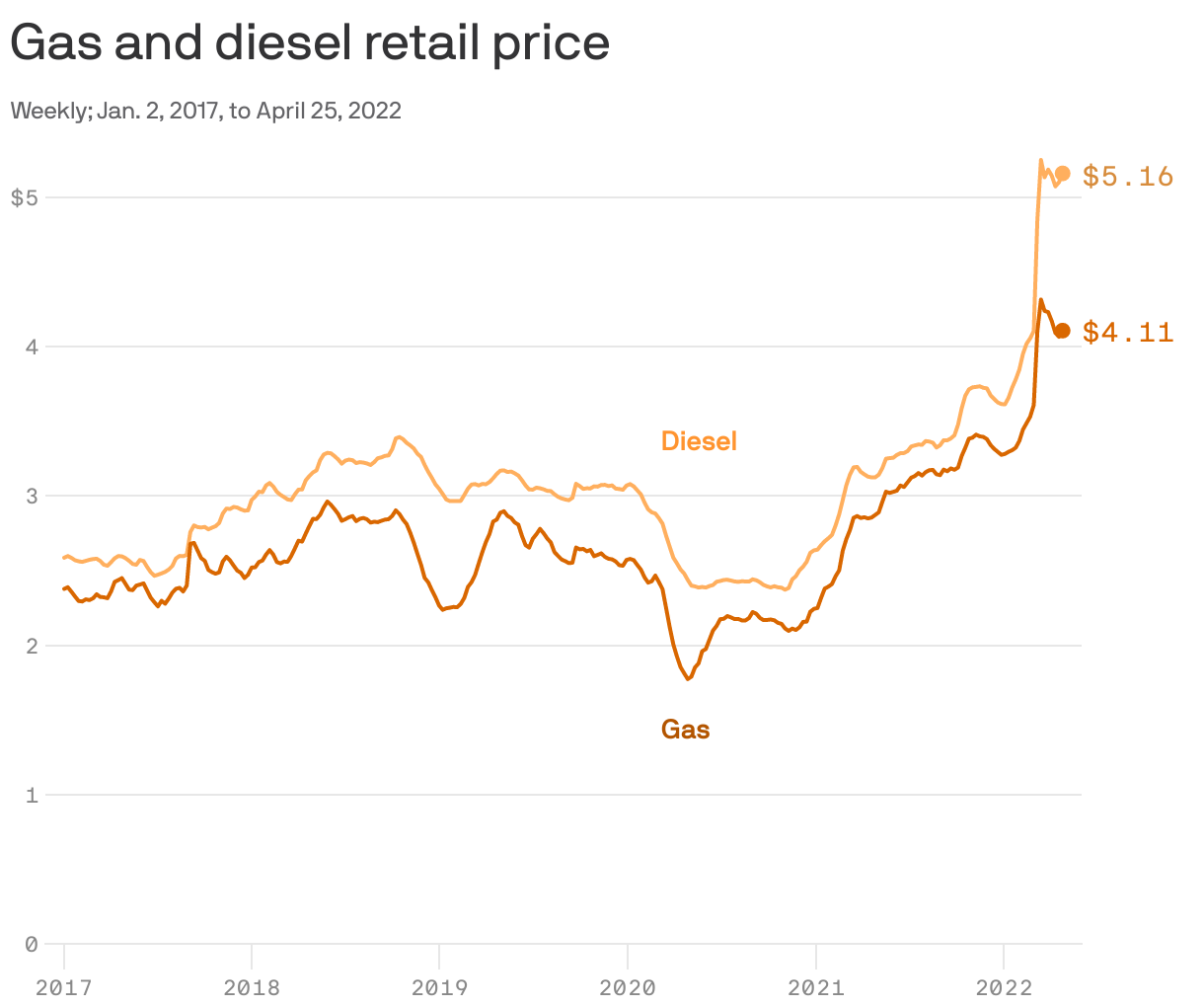
Data: U.S. Energy Information Administration; Chart: Thomas Oide/Axios
The gap between the prices of diesel and regular gasoline has reached an all-time high.
Why it matters: The escalating price of diesel fuel is contributing to inflation, potentially driving up shipping costs as truckers seek to pass along the extra costs to their customers.
There's a new reason to lose sleep over the chip shortage. Sleep Number's mattress production capacity is plunging as lockdowns in Shanghai further slow the output of semiconductors needed to make the company's high-tech beds.
Why it matters: Our need for chips goes far beyond phones and cars, making us vulnerable to hiccups in the supply chain.
Berkshire Hathaway Vice Chairman Charlie Munger called Robinhood "disgusting" and said the stock trading app was "unraveling," in an annual shareholder meeting on Saturday.
The big picture: The app reported a decrease in users and a larger-than-expected loss for the first quarter, CNBC reports.
Some Twitter power users, including journalists and politicians, are apoplectic about Elon Musk’s planned takeover of the platform. But there are plenty of optimists, in tech and among the general public, who believe Musk could make Twitter better.
Why it matters: With the deal expected to close later this year, what happens on the platform and to the platform will likely shape both the 2022 midterms and the next presidential election.
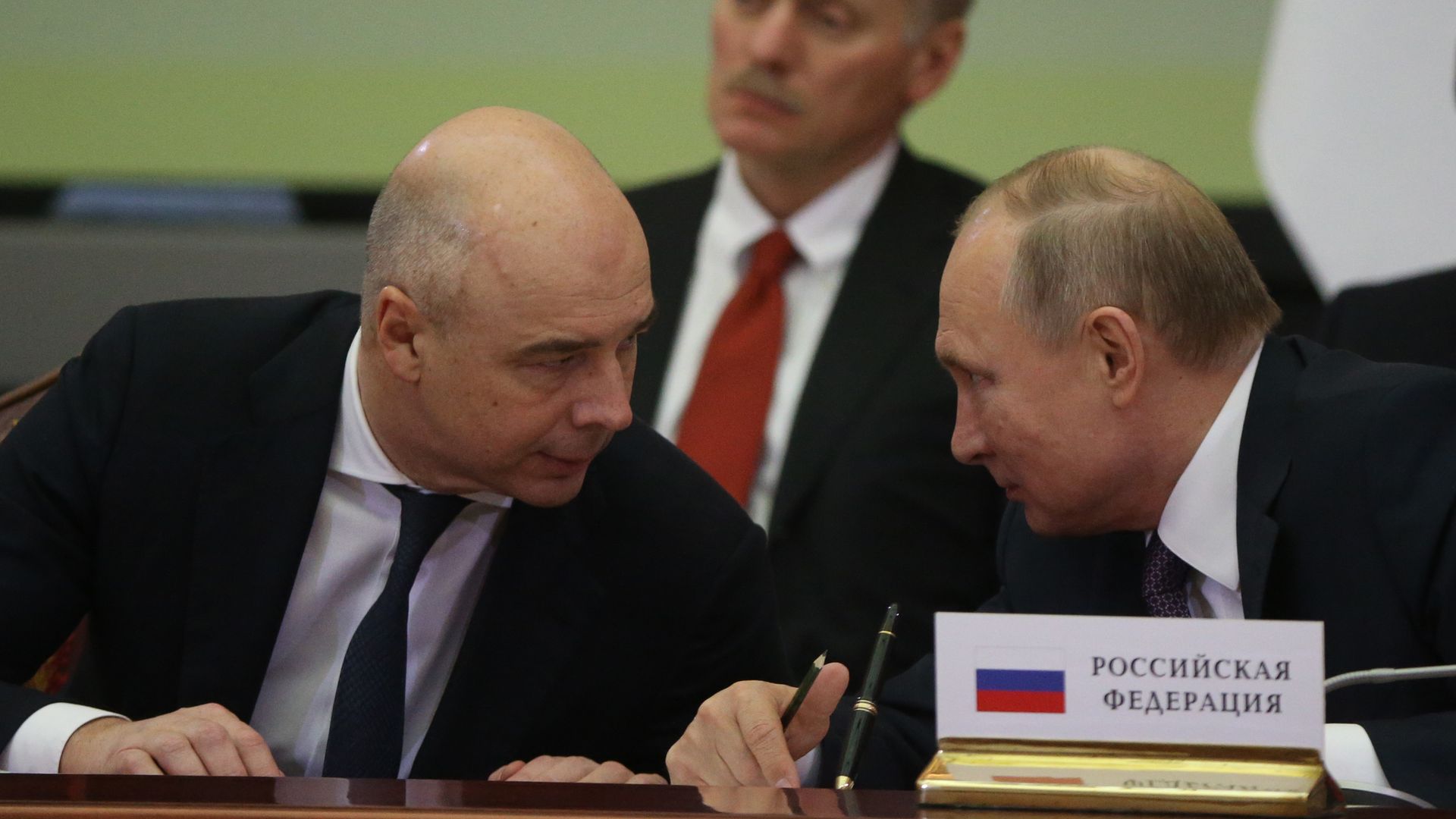
Russia made a number of international debt payments late Friday to avoid a default, Reuters reports.
Why it matters: It made the payments in dollars and euros, despite a decree from Russian President Vladimir Putin in early March that Russia and Russian companies would only pay foreign creditors in rubles. Moscow took the stance after Western sanctions on its foreign reserve currencies in response to Russia's invasion of Ukraine.
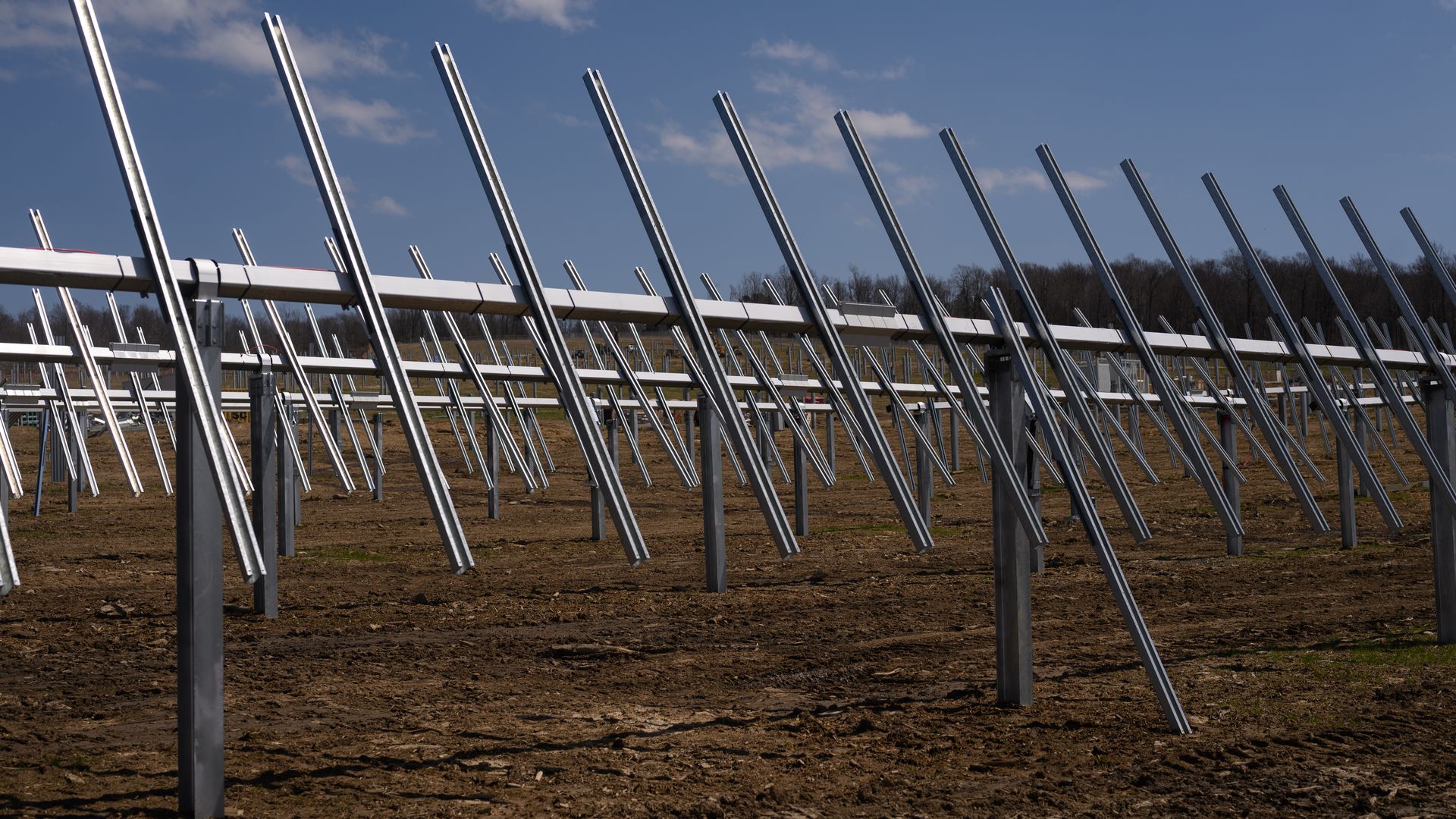
The Department of Commerce's probe into whether Chinese companies are skirting tariffs on solar panel shipments to the U.S. is delaying projects nationwide, according to the Solar Energy Industries Association (SEIA).
Why it matters:The industry trade group claims that the investigation is setting back efforts to cut carbon emissions and harming U.S. green jobs, while potential tariffs resulting from it could further stunt solar growth.