If happiness can be learned, Harvard has a class for that.
What’s happening: Harvard Business School is offering “Leadership and Happiness,” a popular class for 180 MBA students led by “Gross National Happiness” author Arthur C. Brooks.
Advertisers during last night’s Super Bowl painted a picture of what the future might hold.
Ad spots were filled overwhelmingly with still-nascent trends like VR and crypto, areas that businesses hope to make mainstream.
Why it matters: Companies that dropped millions for a spot wanted to strike an upbeat, forward-looking tone while the world is just barely easing out of the pandemic.
The game remains one of the few chances companies have to make a positive, lasting impression on a massive number of people, so the stakes are high.
Catch up quick: Through their ads, companies across the board — Big Tech (Amazon, Facebook/Meta), auto (Kia, BMW), food (Pringles), crypto and digital services (FTX, Criteo) — told stories against a non-pandemic (and often dystopian) setting.
There was no mention of the health crisis or masking, and instead there were stories about people being out and about, whether it was bowling, weddings or parties, notes Tim Calkins, clinical professor of marketing at the Kellogg School of Management at Northwestern University.
Flashback: Companies last year were careful to avoid the “p” word too, even as ads focused on spending time outdoors or alone.
What they’re saying: “I was struck by the positive tone of a lot of the ads,” Calkins tells Axios.
“The reality is a lot of people are still very much working through the pandemic … so there was [a split] between what people are experiencing and what advertisers were talking about.”
Between the lines: Marketers likely leaned into the positive tone because even though “we're still working through this pandemic, people don't want to talk about it. They don't want to think about it. They want to focus on other things right now,” he adds.
The intrigue: Among the most-watched ads from the night, based on YouTube views, was Amazon’s Alexa ad featuring celebrity couple Scarlett Johansson and Colin Jost at home, mostly alone.
The big picture: Super Bowl advertisers generally focus on a cheery or even idealized view of the world.
"You have to arouse emotion and warm positive emotions are better than negative,” Gerard Tellis, professor at the USC Marshall School of Business, tells Axios.
For those keeping their own score: Meta, parent company of Facebook, ran one of the few ads with darker moments, including the “very disturbing downfall” of stuffed animals, says Calkins.
The ad portrayed the metaverse as “the place you go when everything is falling apart in your life, which is not maybe the best way to sell [it],” he adds.
On the other hand, the return of a Clydesdale in Budweiser’s ad ended on an inspirational “down never means out” message, and is a type of ad that lingers on the mind for a long time, says Tellis.
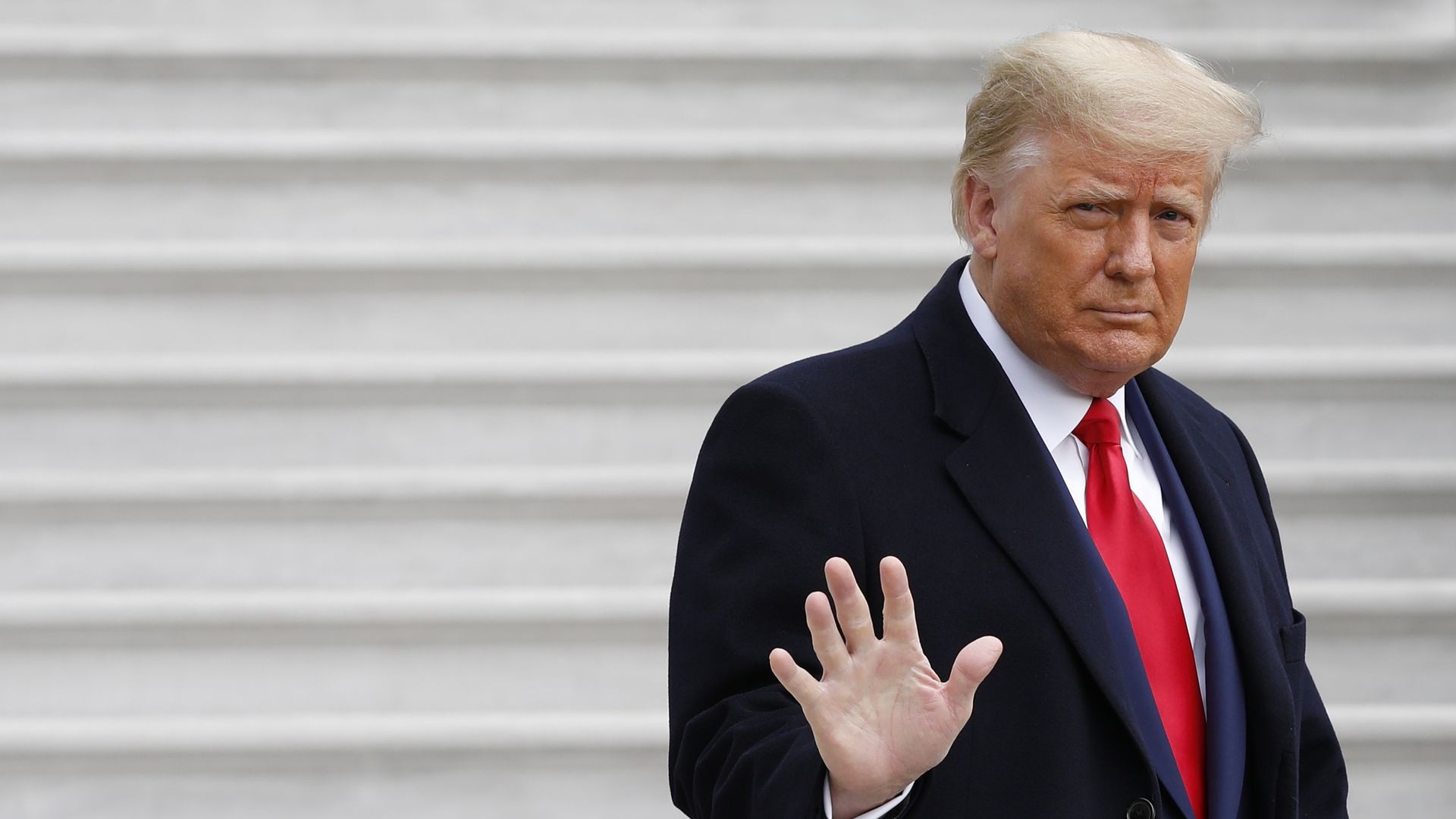
Former President Trump's longtime accounting firm, Mazars USA, abruptly cut ties with his business last week, court documents filed Monday show.
Driving the news: The accounting firm said in a letter to the Trump Organization dated Feb. 9 that annual financial statements it prepared for Trump from 2011 to 2020 "should no longer be relied upon."
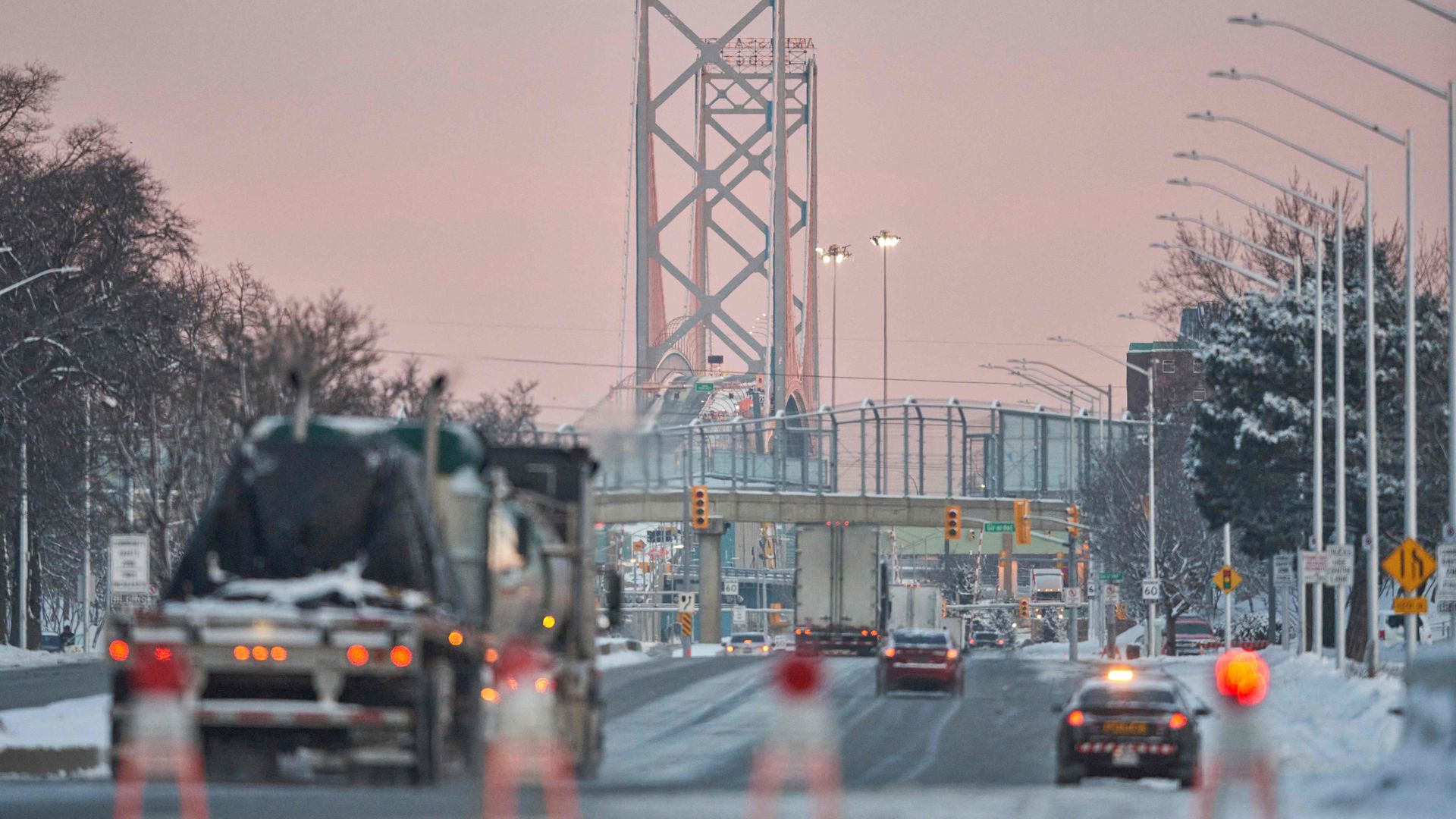
The auto industry started to return to business as usual on Monday after the reopening of a major U.S.-Canada border crossing that had been shutdown by people protesting vaccine mandates and other restrictions.
Why it matters: The blockade of Ambassador Bridge, which connects Windsor, Ontario, to Detroit, Michigan, and is one of the busiest crossings between Canada and the U.S., compounded pre-existing supply chain problems and negatively affected the auto industry.
Crypto startup BlockFi agreed to pay $100 million to settle allegations from the SEC and state regulators that it illegally offered a product violating securities law.
Why it matters: This is the largest-ever penalty against a cryptocurrency firm and the first in which a crypto company was charged with violating the registration provisions of the Investment Company Act of 1940.
The U.S. IPO market is in hibernation, thanks to a combination of macro volatility and nearly a year of poor performance.
Why it matters: This is particularly true of large offerings. Just five U.S. IPOs in 2022 have raised at least $100 million, of which only one scored $1 billion. The forward-looking calendar is vacant. But there is big-money IPO activity elsewhere.
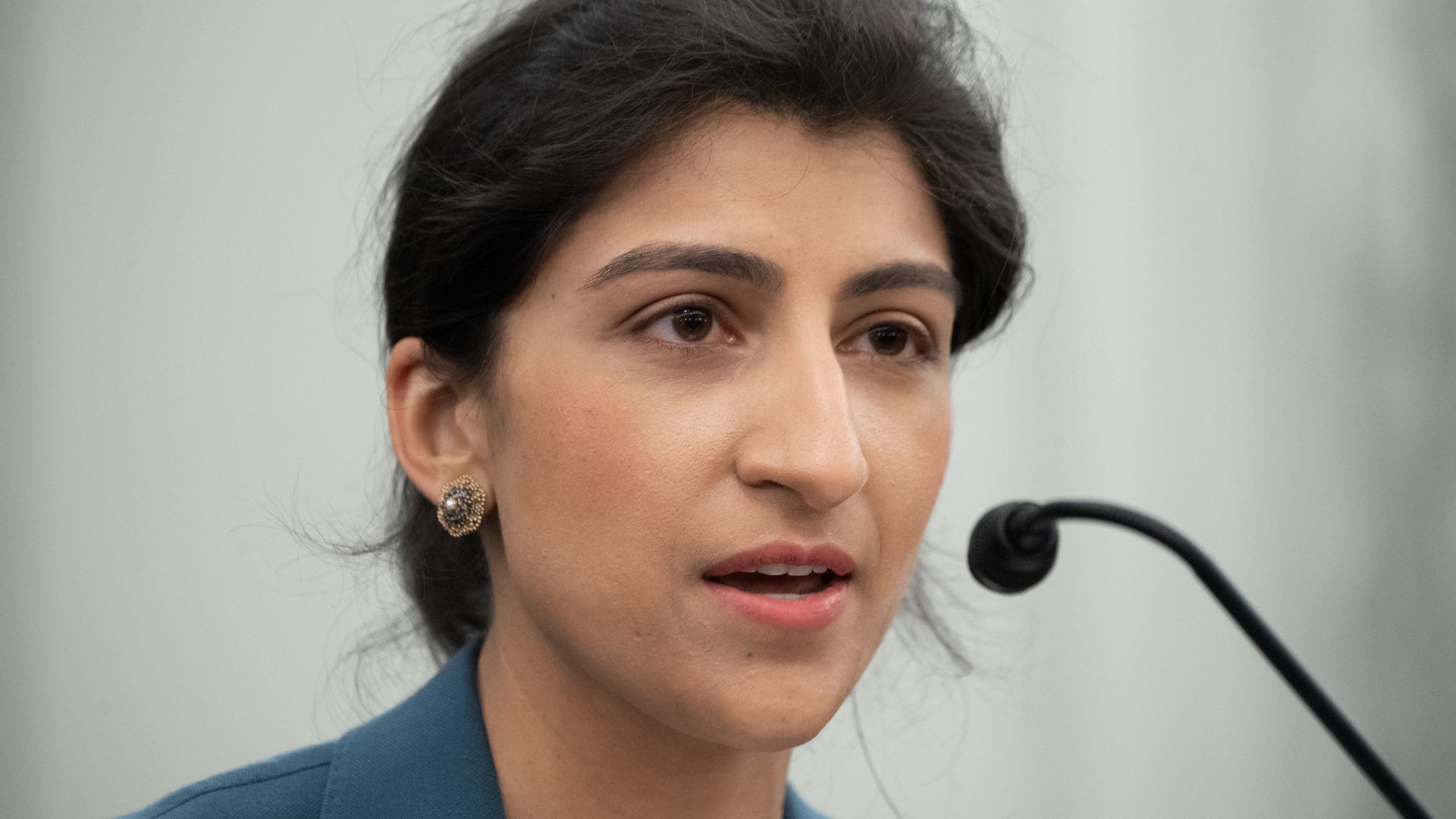
Lockheed Martin (NYSE: LMT) terminated its $4.4 billion agreement to buy Aerojet Rocketdyne (NYSE: AJRD), following opposition from the U.S. Federal Trade Commission.
Why it matters: FTC chair Lina Khan is now two-for-two in merger block attempts, following Nvidia bailing on Arm, without having to make her case in court. It's also a win for commercial space upstarts like SpaceX, as the deal was designed to help thwart upstart defense contracting competition.
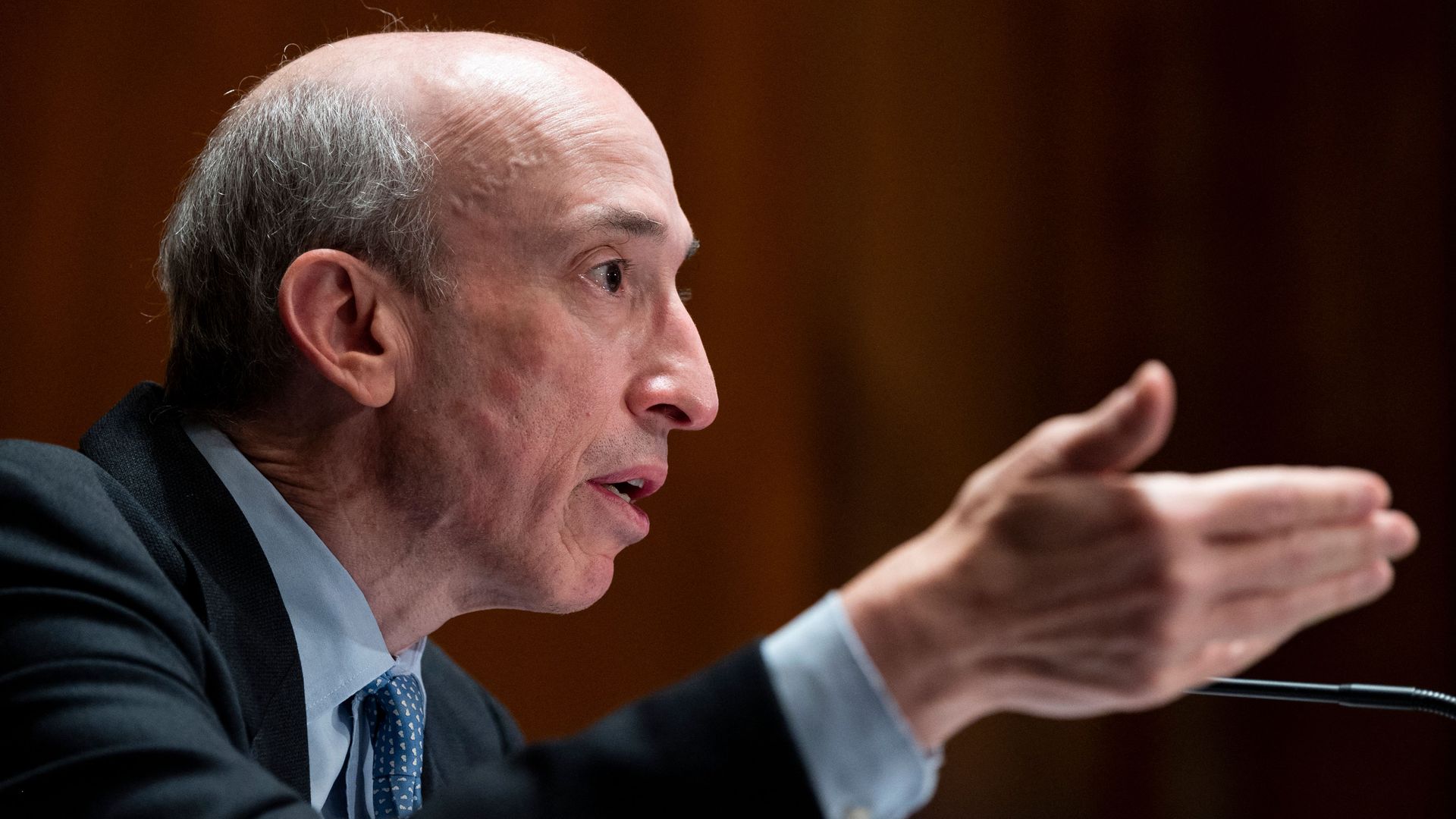
Securities and Exchange Commission chairman Gary Gensler said he's working with other commissioners on details of a draft climate risk disclosure mandate — and he's dropping fresh hints about its direction.
Why it matters: The rule is part of a wider push by Biden-appointed financial regulators to expand analysis and disclosure of risks to various kinds of companies.
Trevor Noah, host of “The Daily Show” on Comedy Central, has been named this year's entertainer for the White House Correspondents' Association dinner on April 30.
The big picture: It will be the first WHCA dinner since 2019 and will "offer the first opportunity since 2016 for the press and the president to share a few laughs for a good cause," the association said.
Data: John Burns Real Estate Consulting; RealPage, Inc.; Chart: Axios Visuals
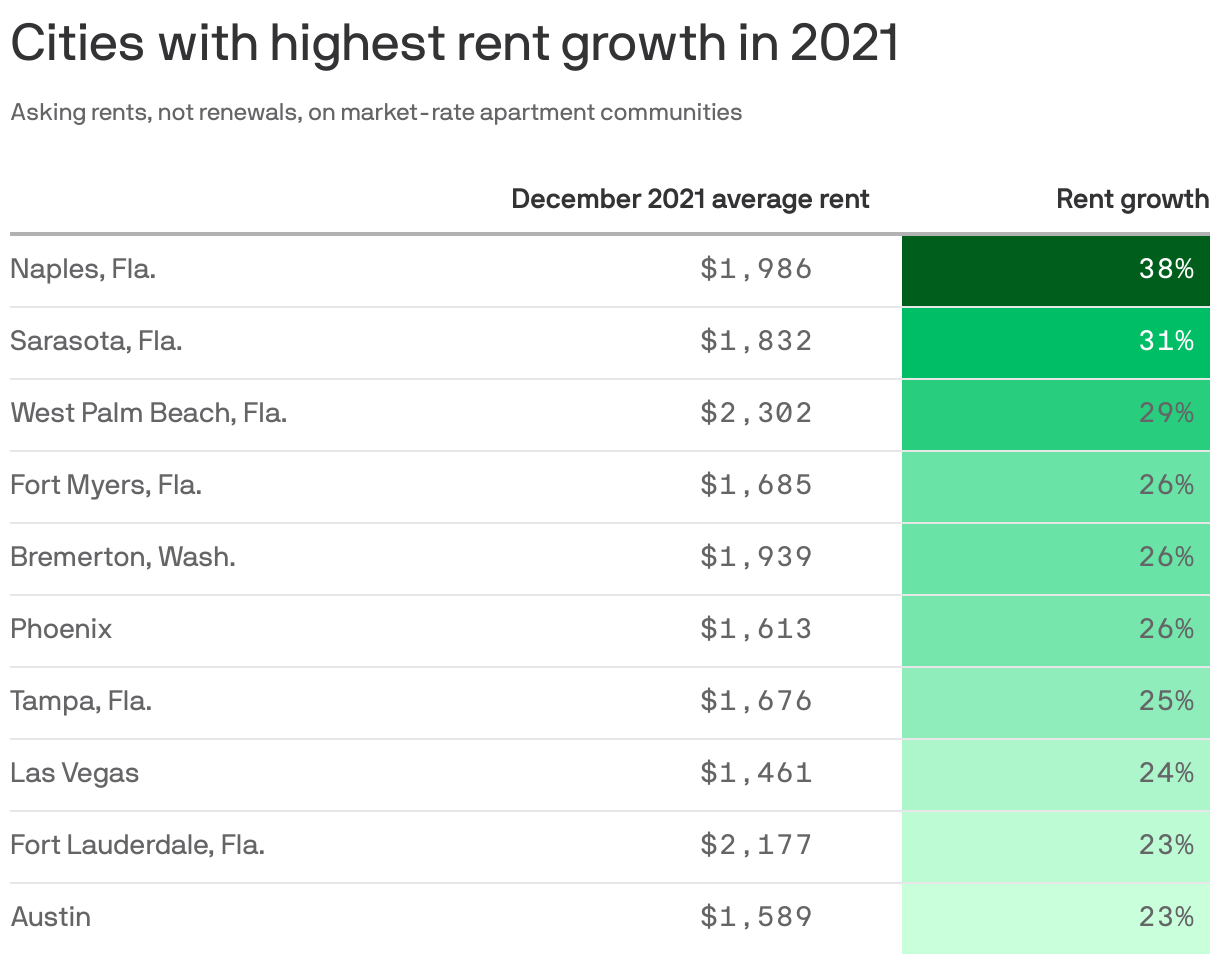
"Oh my yes!" That's what real estate consultant John Affleck told Axios when asked if rent increases like the ones in the chart above were unusual.
State of play: From 2015–2019, the average annual rent growth across major markets was 3.5% — but in 2021 it was 13%, said Affleck, senior vice president of research at John Burns Real Estate Consulting.
We produce and we consume. That is the central fact of what an economy is. Both are essential to well-being — having a job with good pay in return for producing, and having access to the things we wish to buy at reasonable prices. Right now, though, it is Americans' identity as consumers, not as producers, that is driving their unhappiness with economic conditions.
Why it matters: Policymakers have taken for granted that if they can get the job market roaring, people will feel good about the economy. But now, discomfort over inflation and product shortages is overwhelming good job vibes.
After hitting record highs last year, U.S. steel prices are now rolling over fast, a possible sign of light at the end of the inflation tunnel.
Why it matters: Prices for commodities — which are key contributors to the current inflationary surge — typically filter into consumer prices over time.
The pandemic didn't kill rush hour in America — it just spread traffic throughout the day.
What's happening: The rise of home offices and flexible work hours means there were fewer cars on the road last year during traditional peak times — particularly the morning commute, according to TomTom Traffic Index 2021.
An American Airlines flight from Los Angeles to Washington, D.C., made an emergency landing in Kansas City, Missouri, on Sunday due to an "unruly passenger displaying erratic behavior," the company confirmed.
Driving the news: The American Airlines Flight 1775 passenger tried to enter the cockpit before attempting to open an exit door, per multiple reports. The FBI said in an emailed statement that the flight was diverted as the passenger was "interfering with the flight crew."