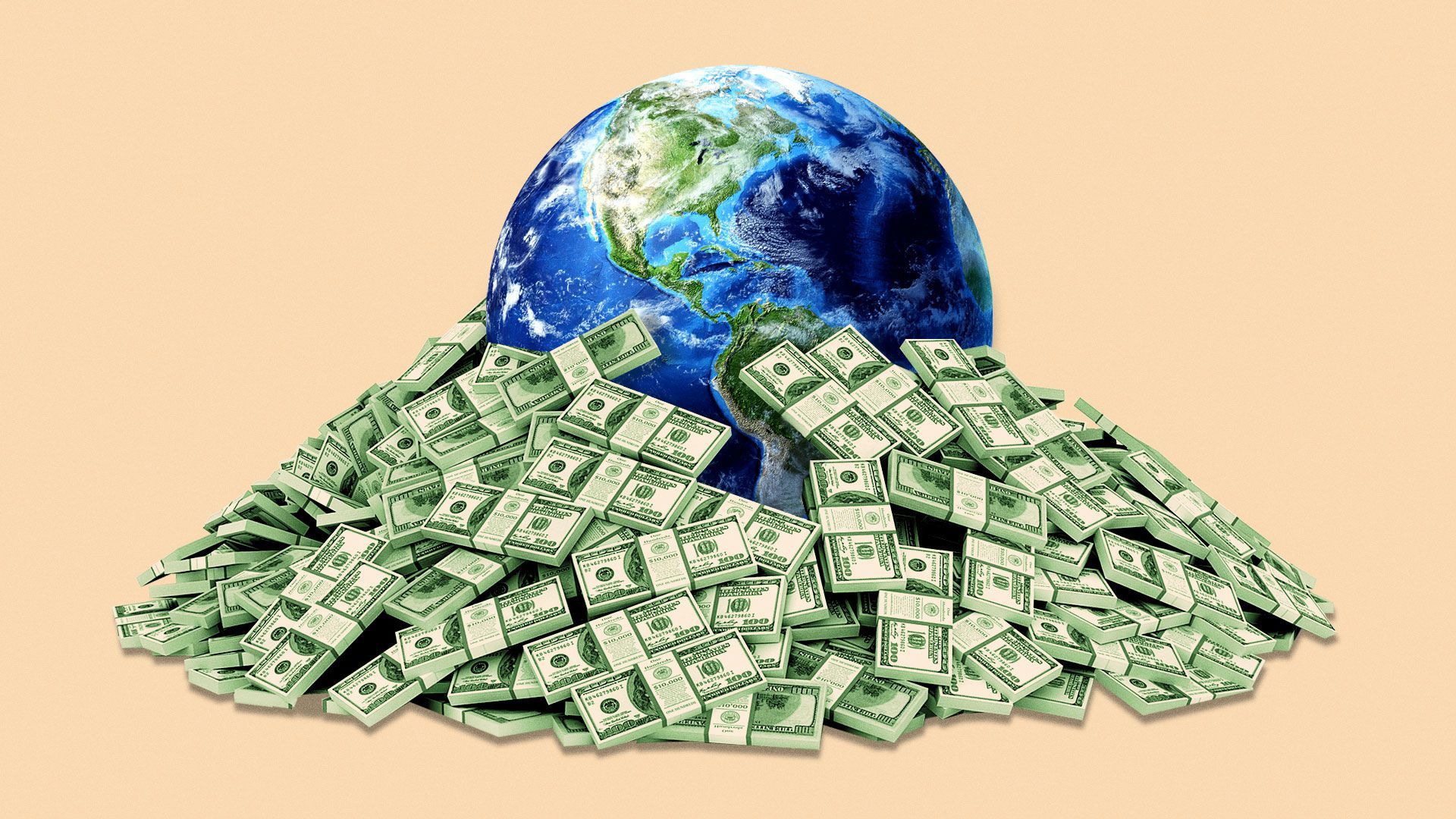
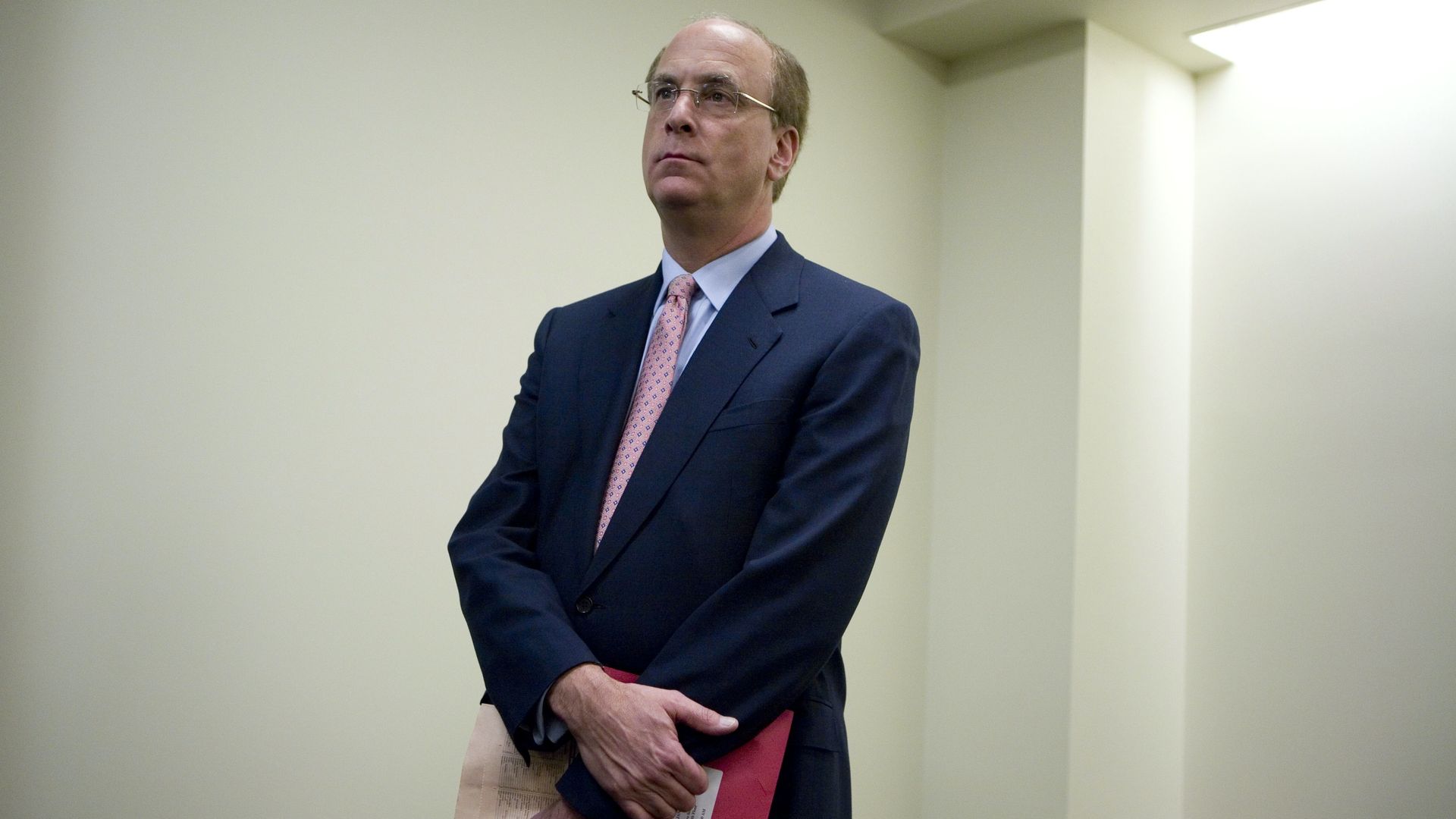
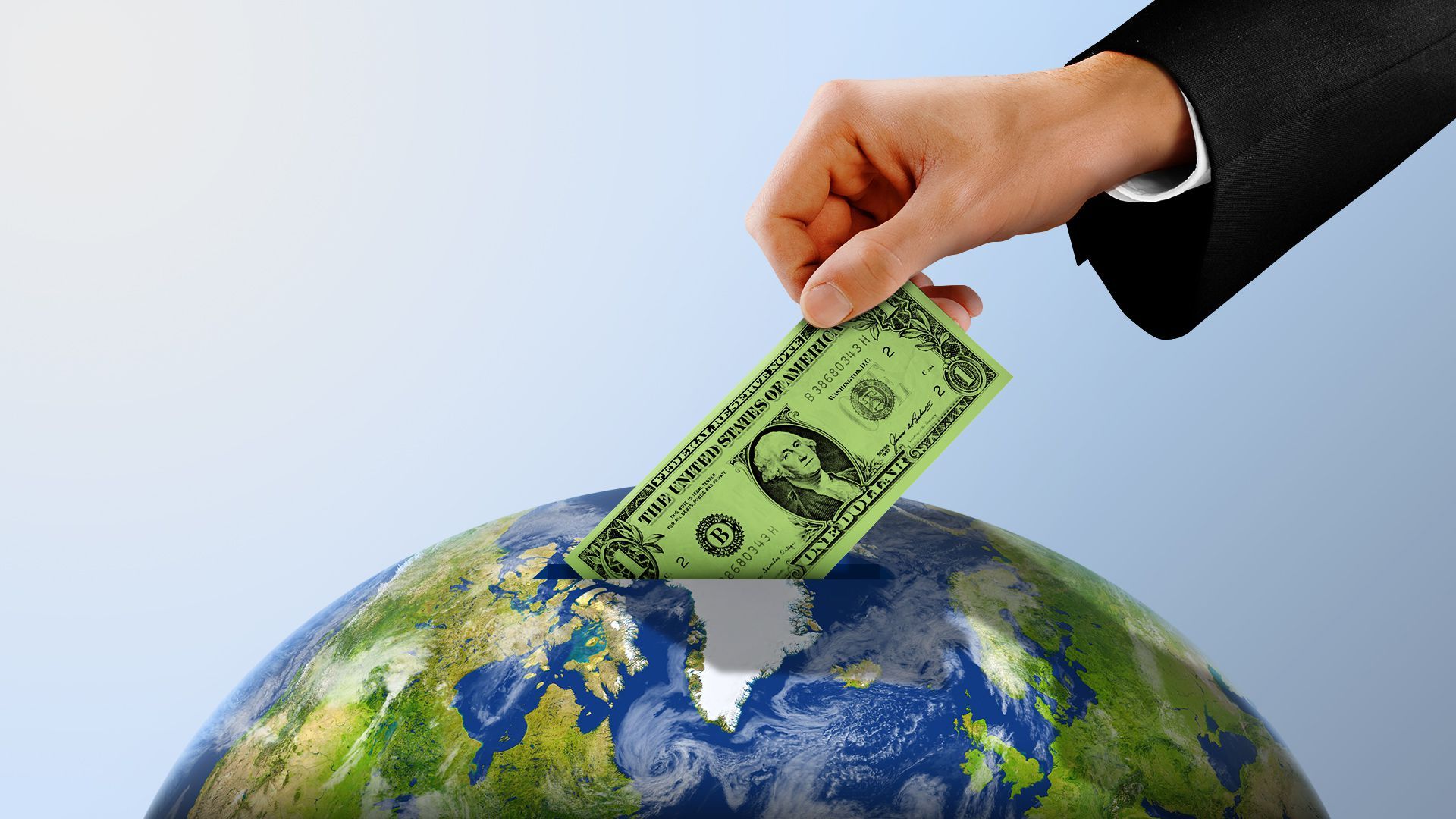
The biggest investor in the world has an unambiguous message for the CEOs of the companies he invests in: climate risk is investment risk.
Why it matters: Pressure from BlackRock CEO Larry Fink, who controls $9 trillion, will encourage companies to report not only what their greenhouse gas emissions are today, but also what they're doing to ensure that their future emissions are in line with Paris Agreement targets that end at zero in 2050.
Wall Street is locked in a battle of will between professional investors who live in Greenwich and amateur investors who congregate on Reddit. So far, the amateurs are winning, judging by increases in their chosen stocks, like GameStop and Bed, Bath & Beyond.
Axios Re:Cap goes deeper into what's really happening, the mechanics of stock "shorting" and what it means for the markets' future, with Axios chief financial correspondent Felix Salmon.
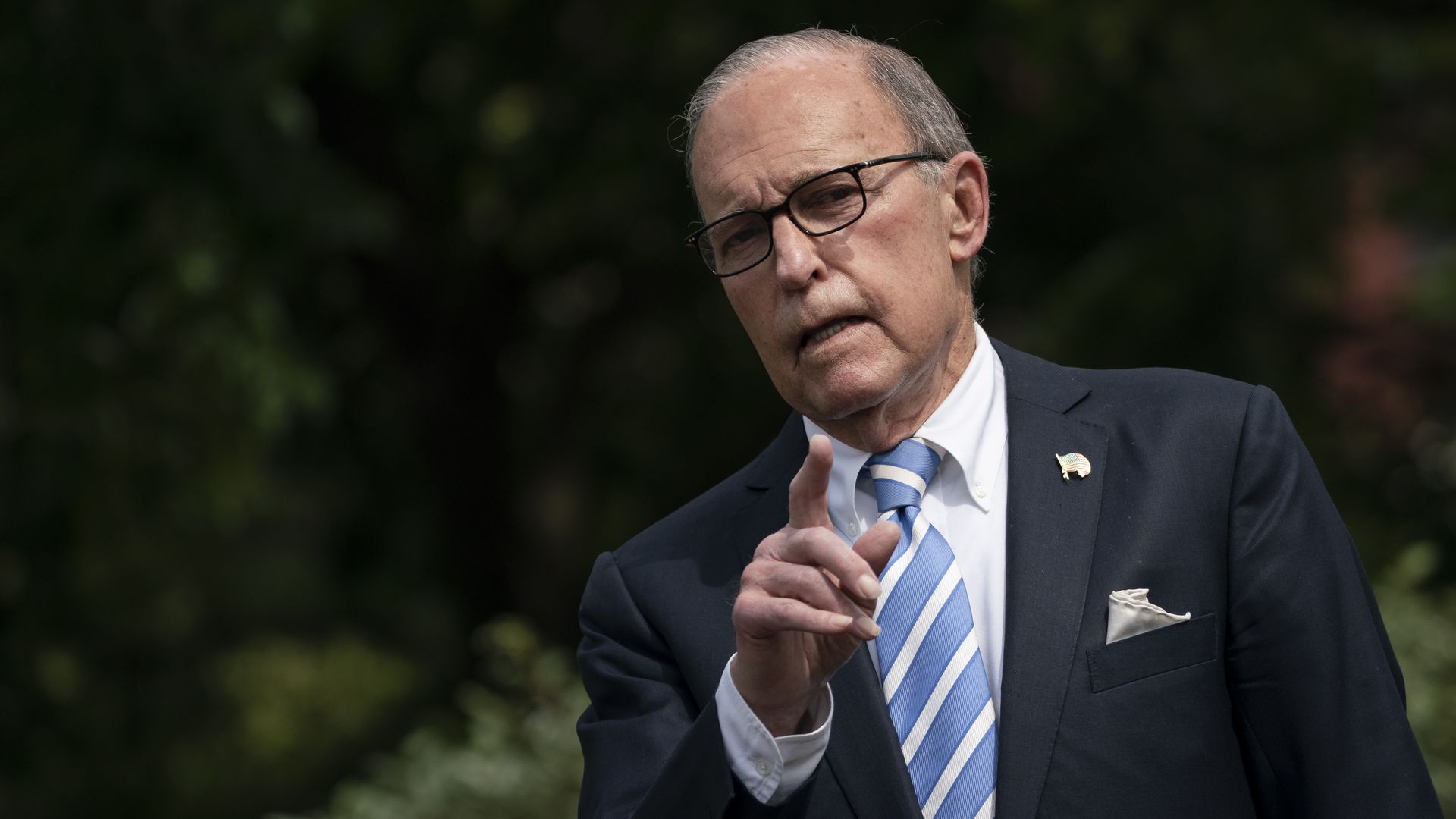
Former National Economic Council director Larry Kudlow will be joining Fox Business as a contributor and new weekday program host beginning on Feb. 8, Fox News Media announced in a press release.
Why it matters: Kudlow was the top economic adviser to former President Trump and gained a reputation for his overly optimistic assessments about the state of the economy during the coronavirus pandemic.
Investment in the space industry continued to grow in the last quarter of 2020, despite the coronavirus pandemic, according to a new report from Space Capital.
Why it matters: The space industry turned out to be far more robust in the face of the pandemic than many experts were initially expecting.
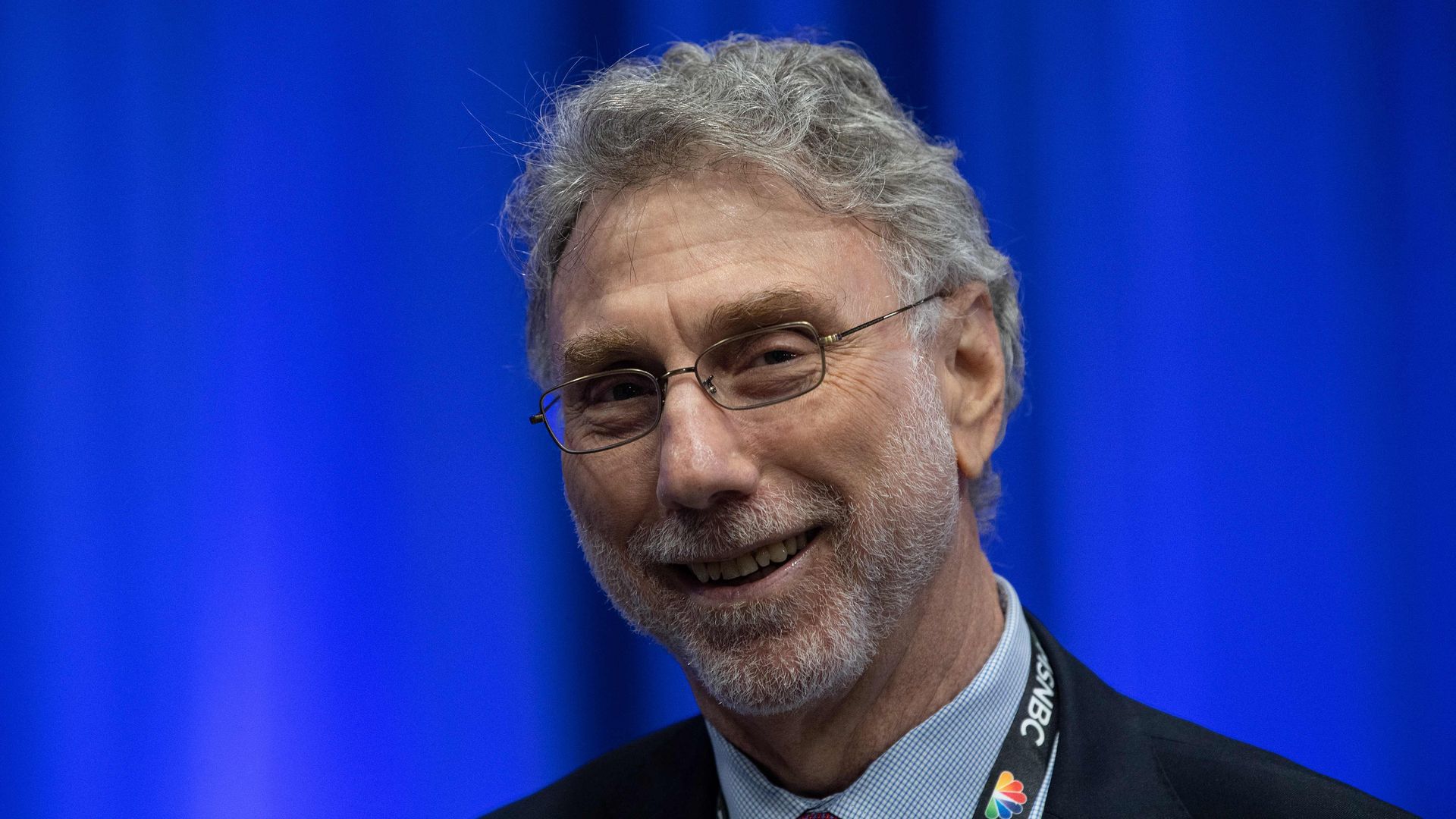
Martin Baron, executive editor of the Washington Post and recipient of multiple Pulitzer Prizes over the course of his career, announced his retirement on Tuesday.
Why it matters, via Axios' Sara Fischer:Baron spearheaded Spotlight, the Boston Globe's investigation into attempts by the Catholic Church to cover-up sexual abuse, and oversaw the Post's editorial transformation under Amazon founder Jeff Bezos — turning it from a regional paper into a national brand.
Leon Black is "retiring" as CEO of Apollo Global Management, the alternative investment giant he has led since co-founding it in 1990. But he is not making a full break, as Black will remain chair of Apollo's board of directors.
Why it matters: This is the culmination of 18 months of head-in-the-sand obfuscation of Black's dealings with Jeffrey Epstein.
The Washington Post will expand its performance software on Tuesday to add video to Zeus, its suite of ad placement and optimization tools.
Why it matters: The update brings the Post a step closer to an end-to-end platform for publishers and advertisers on the open web to compete for ad dollars with big tech firms like Google and Facebook.
Climate change is rising higher on the radar for central banks on both sides of the Atlantic.
Driving the news: The Federal Reserve formed a panel aimed at boosting the central bank's understanding of climate's implications for "financial institutions, infrastructure, and markets," officials said Monday.
Companies worldwide are buying more renewable power than ever, and now some of the biggest U.S. corporations say the Biden administration can help decarbonize the nation's power more quickly.
Why it matters: Corporate procurement of renewables — especially wind and solar — is becoming an important deployment driver as companies take advantage of lower prices and look to meet sustainability pledges.
BlackRock is calling on companies to "disclose a plan for how their business model will be compatible with a net-zero economy," per the New York Times' coverage of CEO Larry Fink's annual letter this morning.
Why it matters: BlackRock is the world's largest asset manager. And per the NYT story, they're vowing to back up their call by throwing more weight around with companies in their actively managed portfolio.
North Equity, a venture equity firm that acquires and invests in media brands, is acquiring Domino Media Group, the home magazine and digital company launched by Condé Nast in 2005. The deal is expected to close this week.
Why it matters: It's the latest example of a niche media brand being gobbled up and consolidated by a private equity firm. Private equity firms are typically less interested in editorial, and more interested in ways to better monetize a brand's value.
Bankruptcy filings hit a decade-high last year — though, by one measure, they eclipsed the financial crisis high.
The big picture: 7% of companies that filed for bankruptcy had over $1 billion in liabilities, the highest share in at least 10 years, according to S&P Global Market Intelligence.
After 10 months as a collection of newsletters created via Substack, the team behind the Everything Bundle is breaking out on its own with $600,000 in seed funding, its own content and newsletter software built in-house, and a refreshed brand as Every.
Why it matters: While services like Substack have made it easier than ever to start a personal newsletter and even generate income from paying subscribers, some authors are figuring out they need more than an internet connection and writing ideas to build out their business.
55 of the world's largest companies are allowing themselves to be compared on key environmental, social, and governance standards. The long-awaited announcement standardizes reporting on everything from anti-corruption protocols to pay equality and greenhouse gas emissions.
Why it matters: The standardized metrics are global, and — crucially — have been signed onto by all four of the big accountancy companies. Deloitte, EY, KPMG and PwC will ensure that all companies calculate the metrics the same way, making it possible for the first time to accurately measure companies against each other.
The pandemic has taken a huge toll on the Pay-TV industry, and with the near-term future of live sports in question, there are no signs of it getting better in 2021.
Why it matters: The fraught Pay-TV landscape is forcing some smaller, niche cable channels out of business altogether.
Vimeo, the 16-year-old video service that started as a platform for indie filmmakers, has raised $300 million in equity from T Rowe Price and Oberndorf Enterprises at a valuation of over $5 billion, the company said Monday.
Why it matters: Vimeo has witnessed incredible success since starting to lean more heavily into software sales a few years ago. The company has nearly doubled its enterprise value in less than three months.