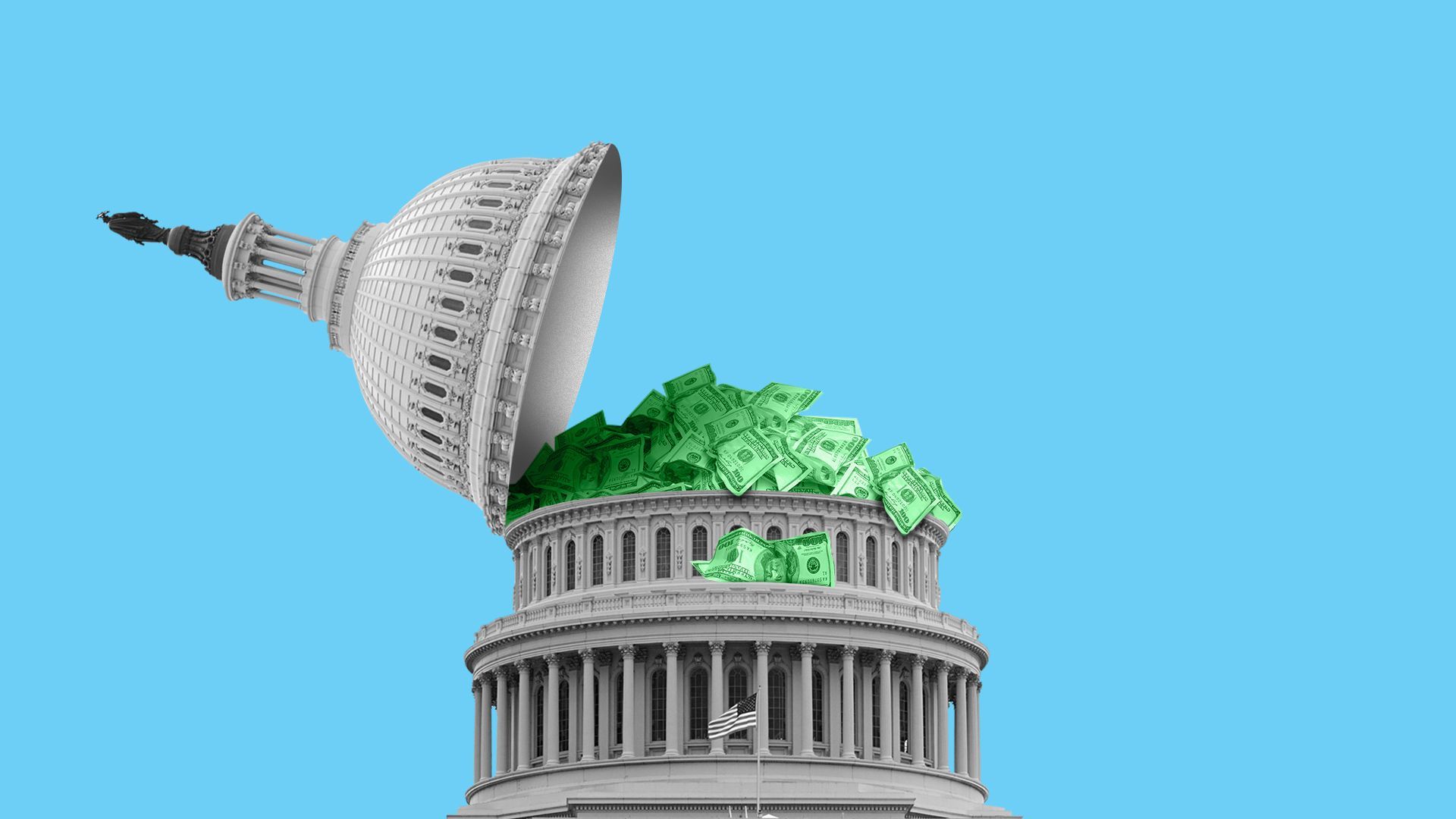
The U.S. budget deficit reached $864 billion in June as Congress allocated trillions to help cushion the damage from the coronavirus recession and massive job losses reduced tax revenues, the Treasury Department said in its latest monthly report.
The big picture: It took 10 months last year for the country's budget deficit to reach roughly the same amount, at $866.8 billion. June's new high is the "biggest monthly budget deficit in history," per AP.
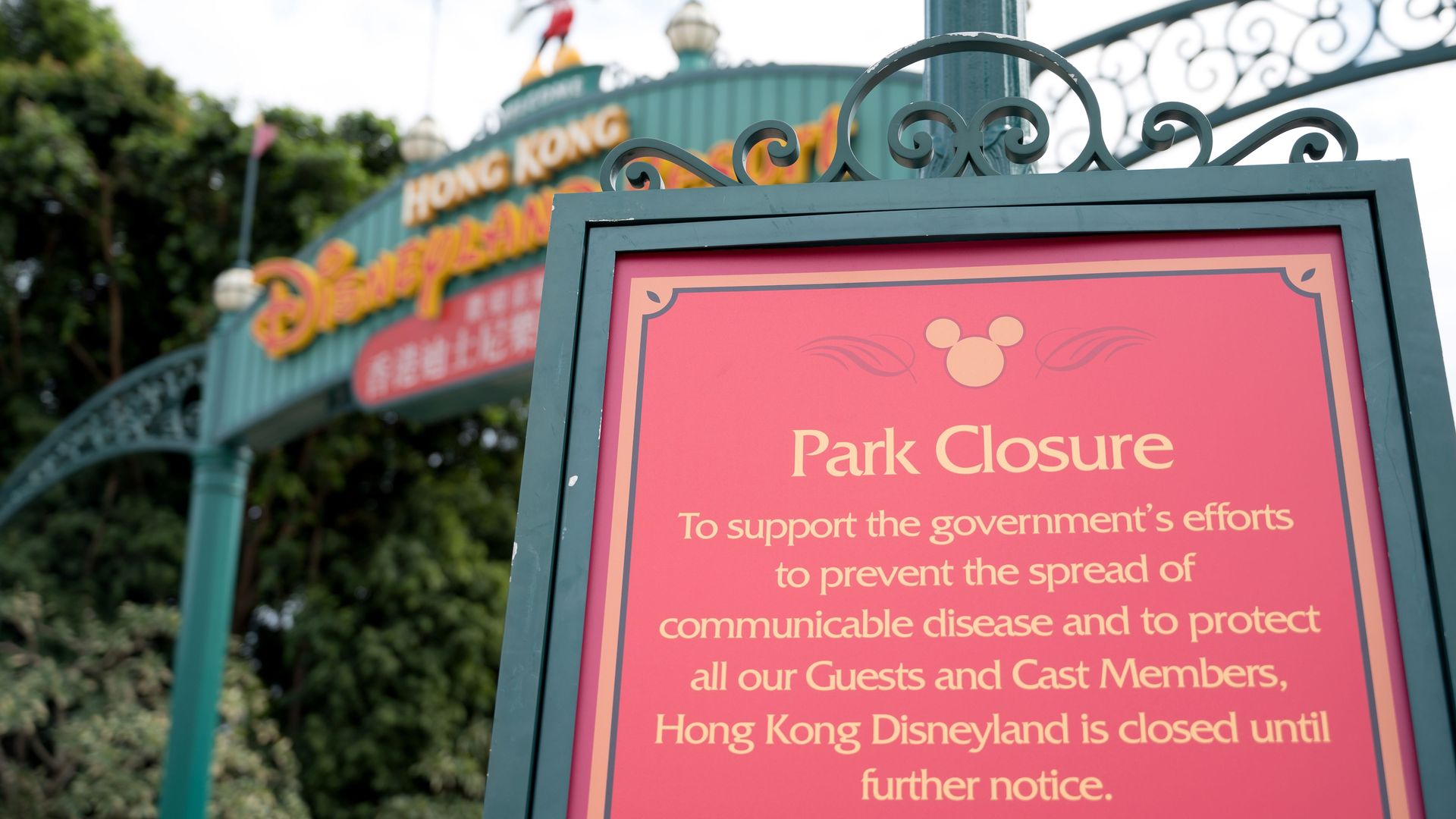
Hong Kong Disneyland on Monday announced that it would close again on July 15, after reopening last month from a coronavirus-driven shutdown that began in January.
The state of play: Hong Kong authorities ordered it to close after the city reported 38 new infections on Friday. Comparatively, Orlando's Walt Disney World reopened Saturday even as the state reported over 15,000 new cases in a single day over the weekend.
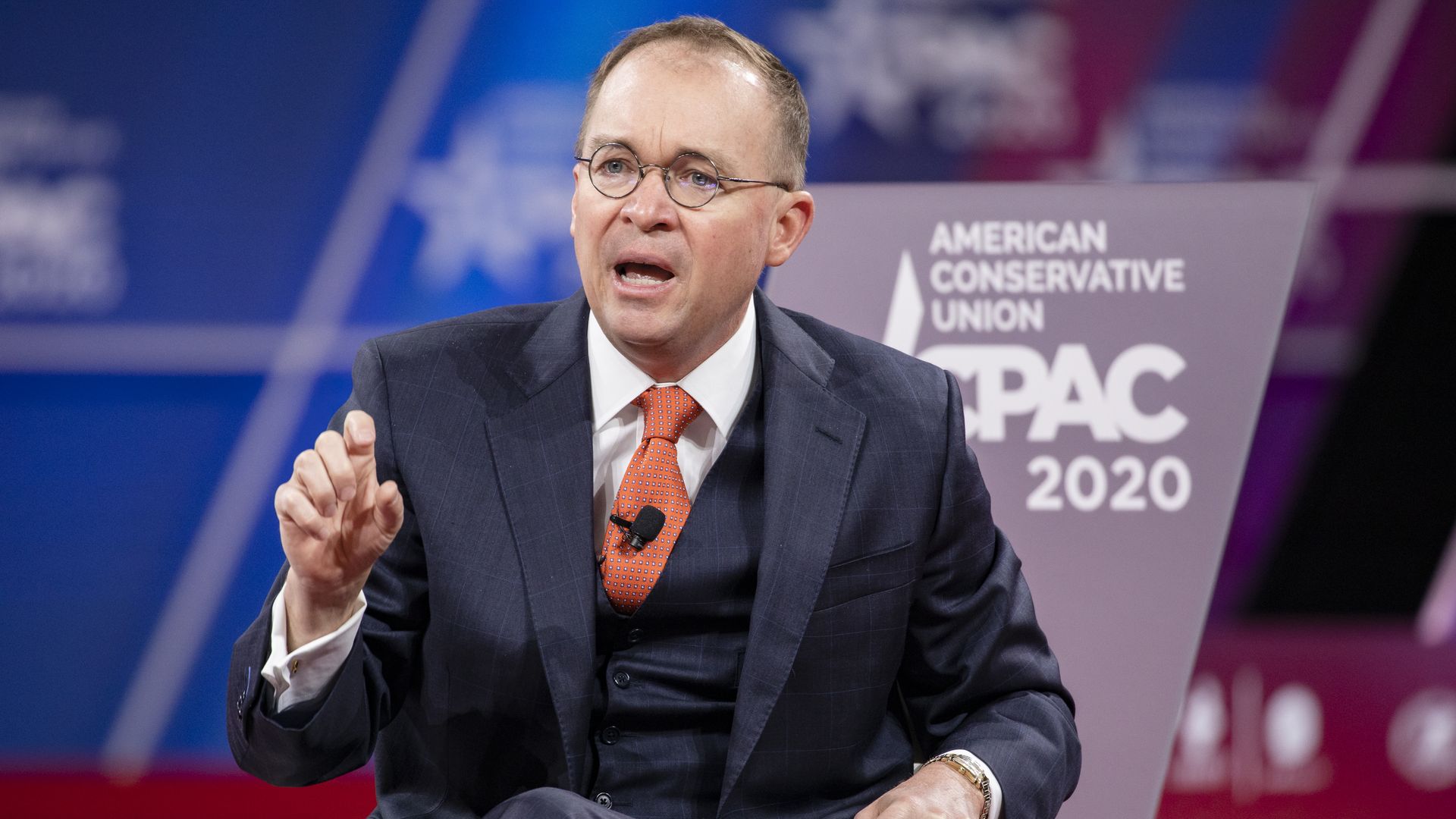
Former White House chief of staff Mick Mulvaney wrote in a CNBC op-ed published Monday that if Congress seeks to pass another relief package, it should treat the economic crisis as "public-health driven" and avoid traditional fiscal measures like providing stimulus checks.
The big picture: Striking a vastly different tone from that of President Trump, who has boasted about the U.S.' testing capabilities and downplayed the severity of the health crisis, Mulvaney called for any stimulus package to "be directed at the root cause of our recession: dealing with Covid."
Churchill Capital Corp. III has agreed to acquire health-cost management services provider MultiPlan at an initial enterprise value of $11 billion, as such deals continue to proliferate as alternatives to IPOs.
Why it matters: This is the largest special purpose acquisition company (SPAC) merger, and it also includes the largest private investment in public equity (PIPE) associated with a SPAC. Existing MultiPlan owners like Hellman & Friedman and General Atlantic will roll over more than 75% of their collective stake and own over 60% of the public company.
Analog Devices agreed to buy Maxim Integrated Products in an all-stock deal valued at $20.9 billion.
Why it matters: This would be the year's largest tech merger so far. Analog will pay the equivalent of $78.43 per Maxim share, which represents a 22% premium to Friday's closing price. Following the deal, Analog shareholders would hold around 69% of the combined company.
Apple announced Monday that it is allocating $400 million toward affordable housing and homeowner assistance programs in California this year, as part of the $2.5 billion commitment announced in November.
Why it matters: The housing crisis has worsened in the wake of the coronavirus pandemic, forcing states and cities to pause spending on affordable housing projects.
Reliance Jio continues to rack up investment from a who's who of U.S. tech giants, with Qualcomm Ventures becoming the latest to take a stake in the Indian telecom firm. Qualcomm is investing around $97 million for a 0.15% stake in Jio Platforms, according to a press release.
Oil patch bankruptcies are piling up and prices are still in the financial danger zone for a significant amount of producers despite some recovery, per a Kansas City Fed survey.
Why it matters: The finding from the bank — whose region includes the producing states of Oklahoma, Wyoming and Colorado — underscores the sector's peril.
The increasing number of Black millionaires and billionaires and the success of people like former President Obama have led many to speculate that the racial wealth gap in the U.S. is closing, but in fact the opposite is happening.
The big picture: Data shows that over the last 30 years, even as individual Black Americans have seen increased success, the overall wealth gap has widened.
An index measuring optimism in the Nasdaq 100 rose on Friday to its highest level since just before the dot-com bubble burst.
What's happening: The three-month average of SentimenTrader's Nasdaq Optimism Index is at the highest level since 2000 and its 30-day average is at one of the highest levels ever.
Asset managers at major U.S. investment firms are starting to get bullish with their clients, encouraging stock buying and trying not to get left behind right as the metrics on tech stocks rise back to highs not seen since the dot-com crash of 2000.
What's happening: Appetite for stocks is starting to return, but slowly as institutional money managers were overwhelmingly sitting on the sidelines in cash during April and May.
McClatchy, America's second-largest newspaper chain, announced Sunday that Chatham Asset Management, a New Jersey-based hedge fund, will take over the company's assets as a result of its bankruptcy auction.
Why it matters: It's the latest step in the gradual dismantling of an industry that used to be controlled by local families with civic roots and has now largely passed into the hands of bottom-line-focused private equity managers.
Health care workers faced severe shortages of face masks, gowns and other protective equipment at the beginning of the coronavirus pandemic, and they're afraid it's happening again now.
Why it matters: Hospitals, nursing homes and physician clinics need this equipment to protect themselves and to avoid spreading infection. Supplies are already stretched thin, and will likely get thinner as the coronavirus and flu season converge in the fall.