Wells Fargo swung to its first loss since the financial crisis — while JPMorgan Chase and Citigroup reported significantly lower profits from a year earlier — as the banks set aside billions of dollars more in the second quarterfor loans that may go bad.
Why it matters: The cumulative $28 billion in loan loss provisions that banks have so far announced they’re reserving serves as a signal they’re preparing for a colossal wave of loan defaults as the economy slogs through a coronavirus-driven downturn.
Healthy volunteers who took Moderna's coronavirus vaccine candidate appeared to generate an immune system response to the virus, and there were "no trial-limiting safety concerns," according to a new study published in the New England Journal of Medicine.
Why it matters: The phase one trial is still small and does not definitively determine how effective the vaccine is. But Anthony Fauci of the National Institutes of Health, which is running the trial, told the Wall Street Journal that these data make it "pretty clear that this vaccine is capable of inducing quite good [levels] of neutralizing antibodies."
Coronavirus lockdowns and the grand work-from-home experiment killed the business travel industry — and, just like everything else, it's not going back to normal anytime soon, if at all.
Why it matters: Traveling for work is a $1.5 trillion industry that encompasses transportation, hospitality and much more, and this moratorium is threatening countless firms and jobs.
Gun sales in America have surged since the coronavirus pandemic began, with 7.8 million background checks run for firearm purchases between March and June.
Axios Re:Cap digs into what's driving the sales, around 40% of which are by first-time buyers, with Wall Street Journal reporter Zusha Elinson.
Patients who used telehealth during the pandemic contributed to a decrease in emergency room visits by 40% nationwide, and by 80% among those 14 years old and younger, Mario Schlosser, co-founder and CEO of Oscar Health, said Tuesday at an Axios virtual event.
Why it matters: The decrease in ER visits showed many patients were regularly using telehealth services for non-emergencies. Virtual health care visits could become a default for check-ups, prescription refills and behavioral health even after the pandemic subsides, Schlosser added.
TikTok has helped China's ByteDance become the world's most valuable "unicorn" company, but its shiny horn is beginning to get some serious scuff marks.
Driving the news: Wells Fargo yesterday told employees to delete TikTok from company devices. This is similar to what Amazon did last Friday, except Wells Fargo didn't then backtrack and claim to have made "a mistake."
An international coalition of news and tech companies, including the AP, The Washington Post, Facebook and others, is partnering with a different coalition led by the BBC, CBC/Radio-Canada, Microsoft and The New York Times called Project Origin to fight fake news during the U.S. election.
How it works: The project aims to place digital watermarks on media originating from authentic content creators. The watermark will degrade when content has been manipulated. The verification system will be deployed in the month leading up to the U.S. election.
Growing security and privacy concerns over Chinese-owned short-video app TikTok have given a lift to alternatives like Byte and Dubsmash, which have seen spikes in downloads from smartphone users recently, according to data from SensorTower.
Why it matters: If TikTok's meteoric rise in popularity among U.S. youth gets slowed by rising tensions with China, or ended by a threatened ban by the Trump administration, American teens will still have to get their hits of meme-laden video somewhere.
YouTube Live and Facebook Live are being increasingly challenged by upstarts, including Twitch, Twitter and Snapchat.
Why it matters: Three years ago, a survey from TV analysis company Magid found that consumers cited YouTube Live and Facebook Live most often as the platforms they use to stream live video.
Anew pactto speed deployment of zero-emission trucks, vans, buses and other big vehicles that move lots of people and objects around was unveiled by 15 states plus D.C. this morning.
Why it matters: The new "memorandum of understanding" is non-binding, but it sets aggressive targets, and provides a template for working together on emissions from industries that often operate across state lines.
One of the country's oldest and most established media companies is starting to look more like a Hollywood studio than a traditional newspaper.
Driving the news: The New York Times has 10 scripted TV show projects in development, as well as 3 feature documentaries coming out this year and several other documentary projects in development and production, executives tell Axios.
Global entertainment giant IMG Media is partnering up to give social media sports video company Wave.tv broad access to its sports licensing rights, executives tell Axios.
Why it matters: The deal speaks to a new generation of sports programming for younger people on social media who are avid sports fans but don't like sitting through long games on traditional TV.
These are heady days for electric vehicle companies, with a lack of actual car production becoming a popular norm.
Why it matters: The capital infusion is the latest in a busy stretch of deals and market moves that suggest private investors and equity markets see big potential in technologies that now represent a tiny slice of the global vehicle fleet.
Three years ago, a survey from TV analysis company Magid found that consumers cited YouTube Live and Facebook Live most often as theplatforms they use to stream live video, Today, that live video duopoly is being challenged by upstarts, including Twitter, Snapchat and Twitch.
The New York and Atlanta Fed's GDP forecasts for the second quarter have diverged wildly since late May.
The state of play: The spread has come largely since late May as the Atlanta Fed's indicator pushed expectations for the quarter to below -40% after bad retail sales, industrial production and manufacturing data. The N.Y. Fed's metric remained elevated. Similarly, late May readings of personal income and outlays and a series of advanced economic indicators sent the Atlanta Fed's GDP forecast below -50%, while the N.Y. Fed's forecast fell only as low as -35.5%.
In proposing fixes for the racial wealth gap in the U.S., public figures can conflate the effects of inequality with causes, researchers say.
What's happening: Often the increased rate of Black single motherhood or "Black family disorganization" is referenced as a reason for the gap in wealth accumulation.
The number of Americans who say they have a great deal or fair amount of trust in the Federal Reserve fell to 41% in the latest Axios-Ipsos Coronavirus Index.
Why it matters: The results show that as the stock market rose to new highs and credit markets have shown significantly improved functioning over the past two months, Americans' trust in the Fed declined.
The Paycheck Protection Program (PPP) has left much to be desired for needy small businesses around the U.S., and the overwhelming majority of recipients are about to exhaust their funding and may start laying off employees.
Why it matters: The PPP has been derided by some economists and researchers as inefficient and ineffective, but a new Goldman Sachs survey shows that even for the businesses and employees it helped, it has not been enough.
Testing buildings — not just people — could be an important way to stop the spread of the coronavirus.
Why it matters: People won't feel safe returning to schools, offices, bars and restaurants unless they can be assured they won't be infected by coronavirus particles lingering in the air — or being pumped through the buildings' air ducts. One day, even office furniture lined with plants could be used to clean air in cubicles.
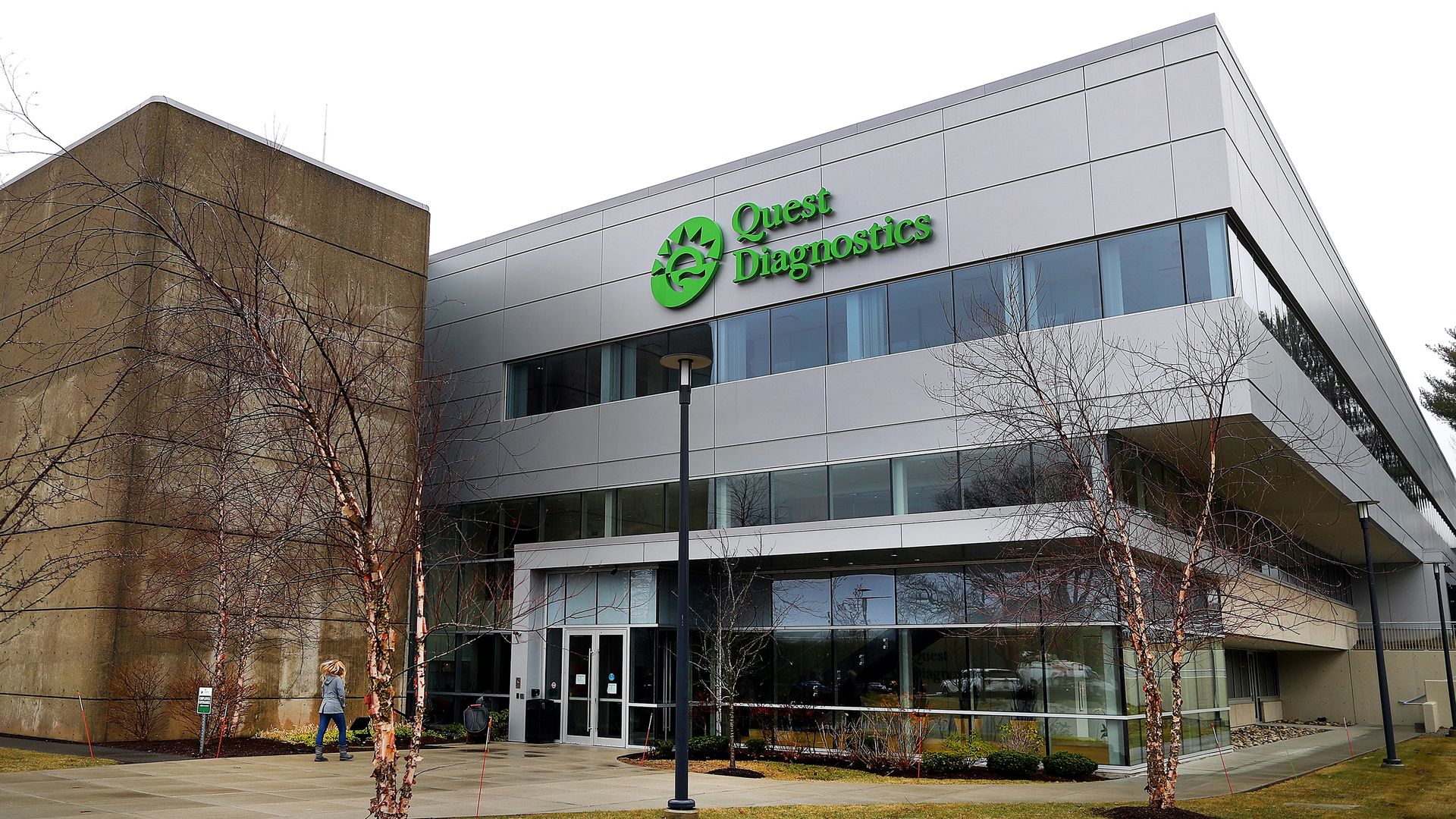
Quest Diagnostics said its average turnaround time for a COVID-19 test is now at "seven or more days," up from four to five days at the end of June. Its testing backlog is getting worse because of the high demand in parts of the country where infection is spreading.
Why it matters: Long backlogs make testing less useful — public health officials need to know what their local situation is like now, not what it was like a week ago. Delays are especially problematic if people who are infected continue to go about their lives while they wait for their results.









/2020/07/14/1594735762309.gif?w=3840)






/2020/07/14/1594725537847.gif?w=3840)

/2020/07/14/1594732493082.gif?w=3840)