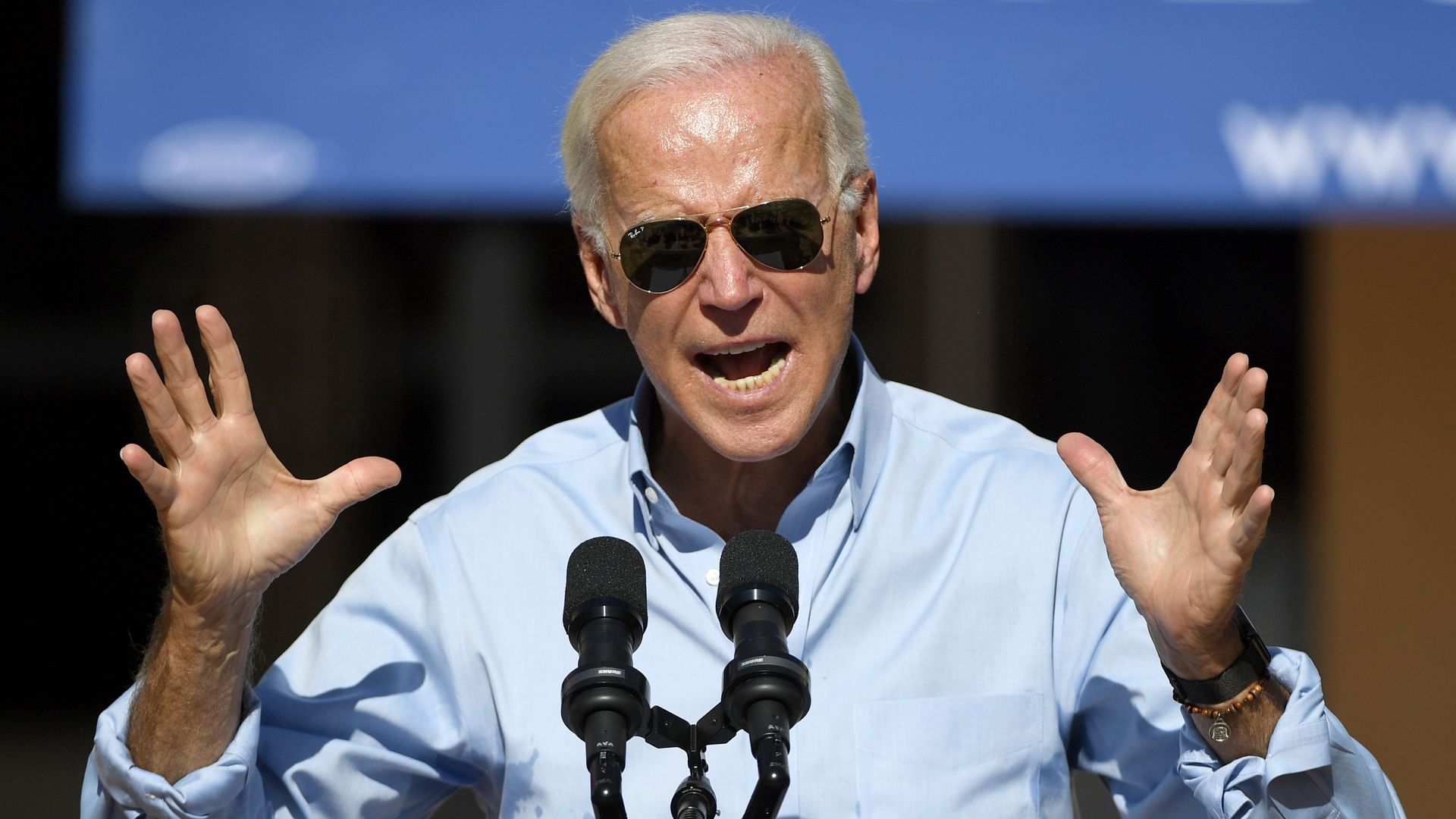
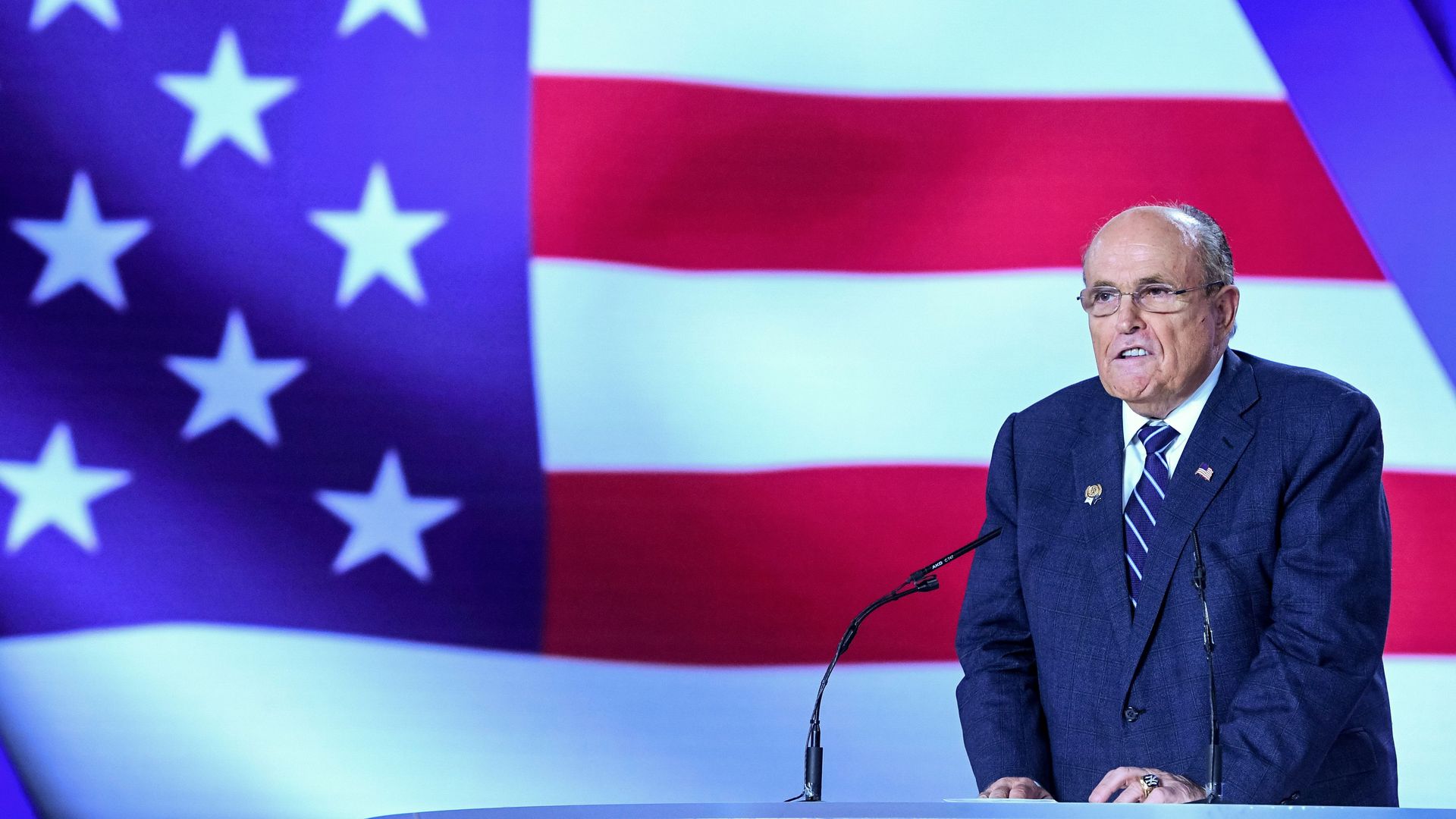
Former Vice President Joe Biden's 2020 campaign demanded in a letter first reported by The Daily Beast that television networks stop booking Rudy Giuliani, arguing that he will "knowingly and willingly lie in order to advance his own narrative."
The big picture: Giuliani, President Trump's personal attorney and a frequent guest on cable news, has adamantly defended his and Trump's efforts to push Ukrainian officials to investigate Biden and his son over unsubstantiated corruption allegations. Several of Giuliani's recent appearances have gone viral due to their combative nature — most notably one with CNN's Chris Cuomo last weekend in which Giuliani was forced to walk back his claims that he never asked Ukraine to investigate Biden in the first place.
President Trump's lawyer Rudy Giuliani told Fox News Saturday he feels "very sorry" for former U.S. envoy to Ukraine Kurt Volker, as he appeared to criticize the FBI and the Department of Justice over Ukraine.
Jobless African-Americans are taking full-time work at a faster rate than unemployed whites, amid a more favorable economy for a population whose prospects have historically been dimmer than for other races.
Why it matters: A strong economy does not undo racism, and the same hurdles that make it difficult to find work have not disappeared. But a tighter labor market forces employers to look outside their usual pool of candidates to find workers.
April 2020 will be a decisive moment for the future of television. Jeffrey Katzenberg's short-form video app Quibi, NBC's streaming service Peacock, and AT&T's streaming service HBO Maxare all slated to launch within weeks of one another that month.
Why it matters: The threat of competition from these services is already starting to shake investor confidence in Netflix, which has been the dominant player in the streaming field for years. The company's stock hit its lowest point this year on Tuesday.
A proposed U.S. crackdown on sharing technology with China could threaten the development of self-driving vehicles, the Wall Street Journal reports.
Why it matters: Many companies developing autonomous driving systems split their work between the U.S. and China, with offices, investors, engineers and customers in both countries. Unscrambling that egg could be difficult.