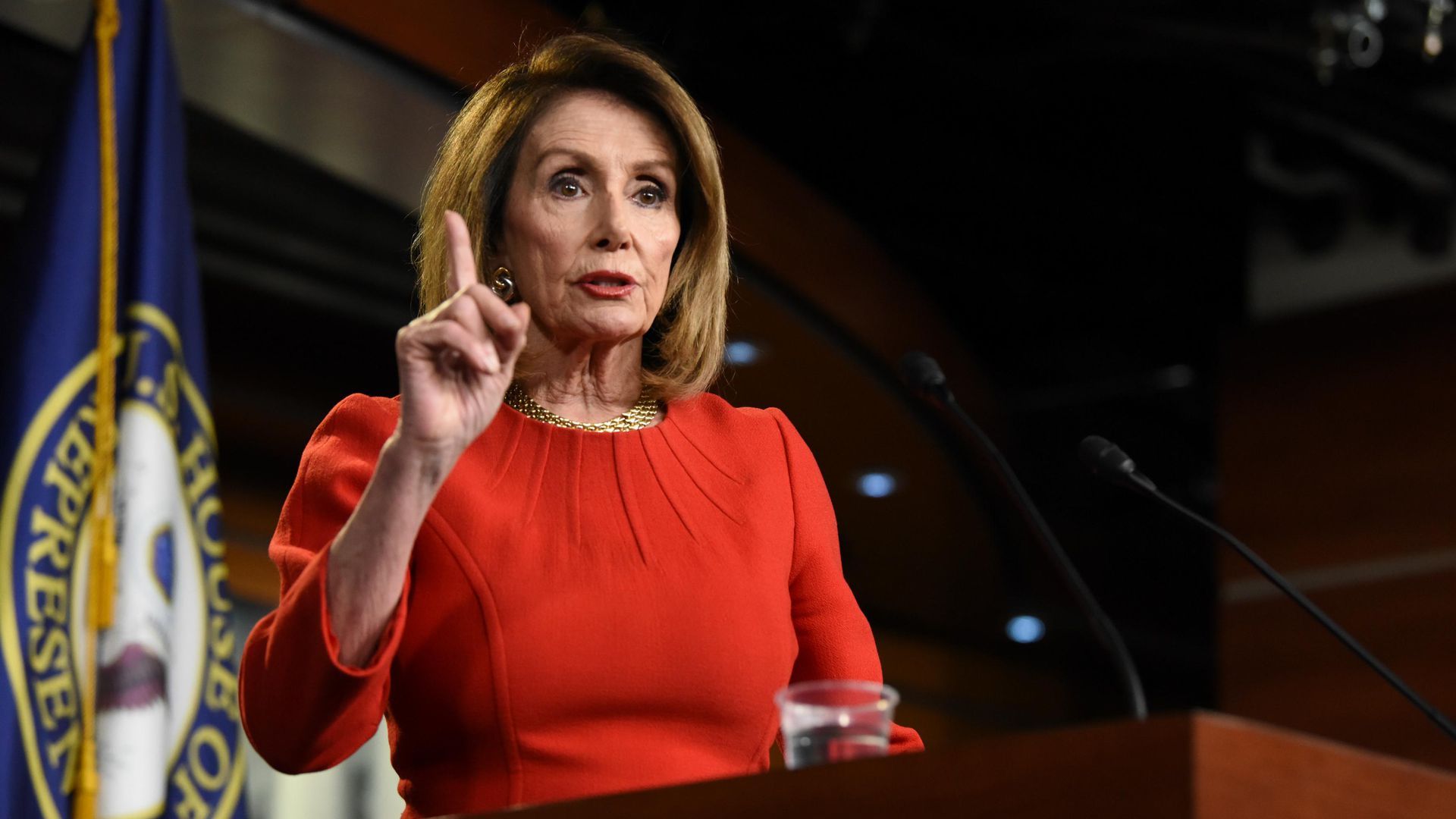
Nancy Pelosi has more power than anybody to decide whether Trump gets Congress' approval to replace the North American Free Trade Agreement with his renegotiated United States-Mexico-Canada Agreement. And the signs Republicans are seeing from the speaker are not filling them with hope.
Driving the news: Last week, Pelosi told Politico's Jake Sherman and Anna Palmer that Mexico needed to pass labor law reforms before the House could even consider Trump's replacement to NAFTA. And now, per a source who shared the invitation with me, Pelosi has invited AFL-CIO President Richard Trumka to her speaker's meeting on Wednesday to present on the USMCA.
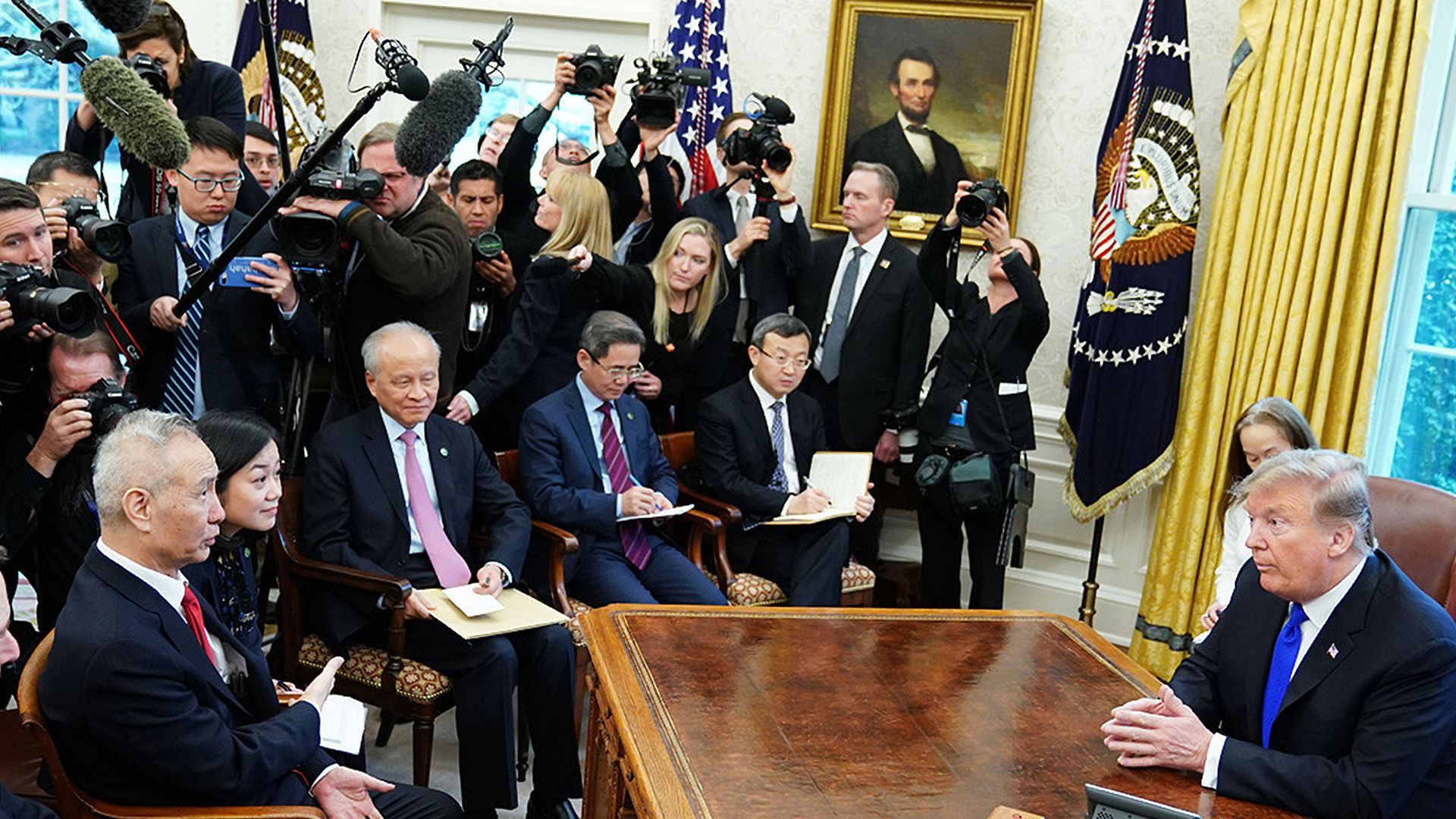
The U.S. and China "smoothly concluded" the latest round of trade talks and would work through remaining issues "through various effective means," the Chinese state-run Xinhua news agency reported Saturday.
What they're saying: "The two sides discussed the agreement text on technology transfer, protection of intellectual property rights, non-tariff measures, services industry, agriculture, trade balance and enforcement mechanism, and achieved new progress," Xinhua said.
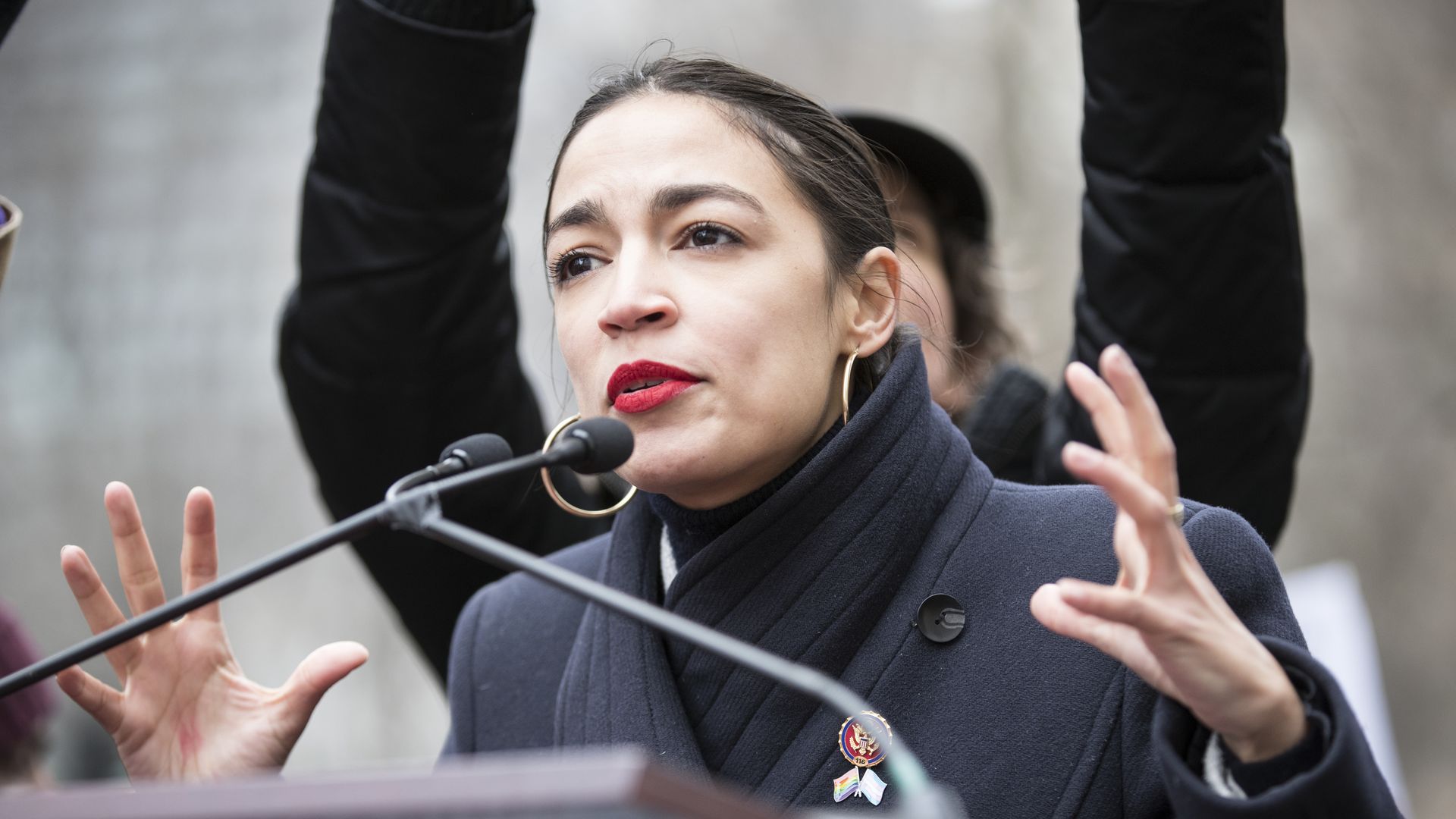
What she's saying: "Understand when Jeanine Pirro goes on Fox + rallies people to think hijabs are threatening, it leads to this," Ocasio-Cortez tweeted, referring to Pirro suggesting that Omar's use of a hijab means she follows sharia law. "Folks who imply we’re 'bad' for politics, the party, the country, etc. have no idea the threats we deal w/ because of that kind of language. Talk policy, not personal."
Millennials are significantly more diverse than previous generations, but even in their generation, minorities and women still earn less than whites and men, according to Bureau of Labor Statistics data.
Technology is giving riseto a new crop of middle-skill jobs for the millennial generation — but these are without the stability, pay or career ladders of the past.
The big picture: The first wave of automation-fueled job losses hollowed out middle-skill work — manufacturing positions that required some education, but not a college degree, and led to lucrative, lifelong careers. That left behind jobs mostly at the high- and low-skill extremes.