There's a reckoning coming over fakeness online, as people increasingly realize the dangers of an online ecosystem where everything is definitely not all right.
The big picture: "Everything that once seemed definitively and unquestionably real now seems slightly fake; everything that once seemed slightly fake now has the power and presence of the real," Max Read writes for New York Magazine.
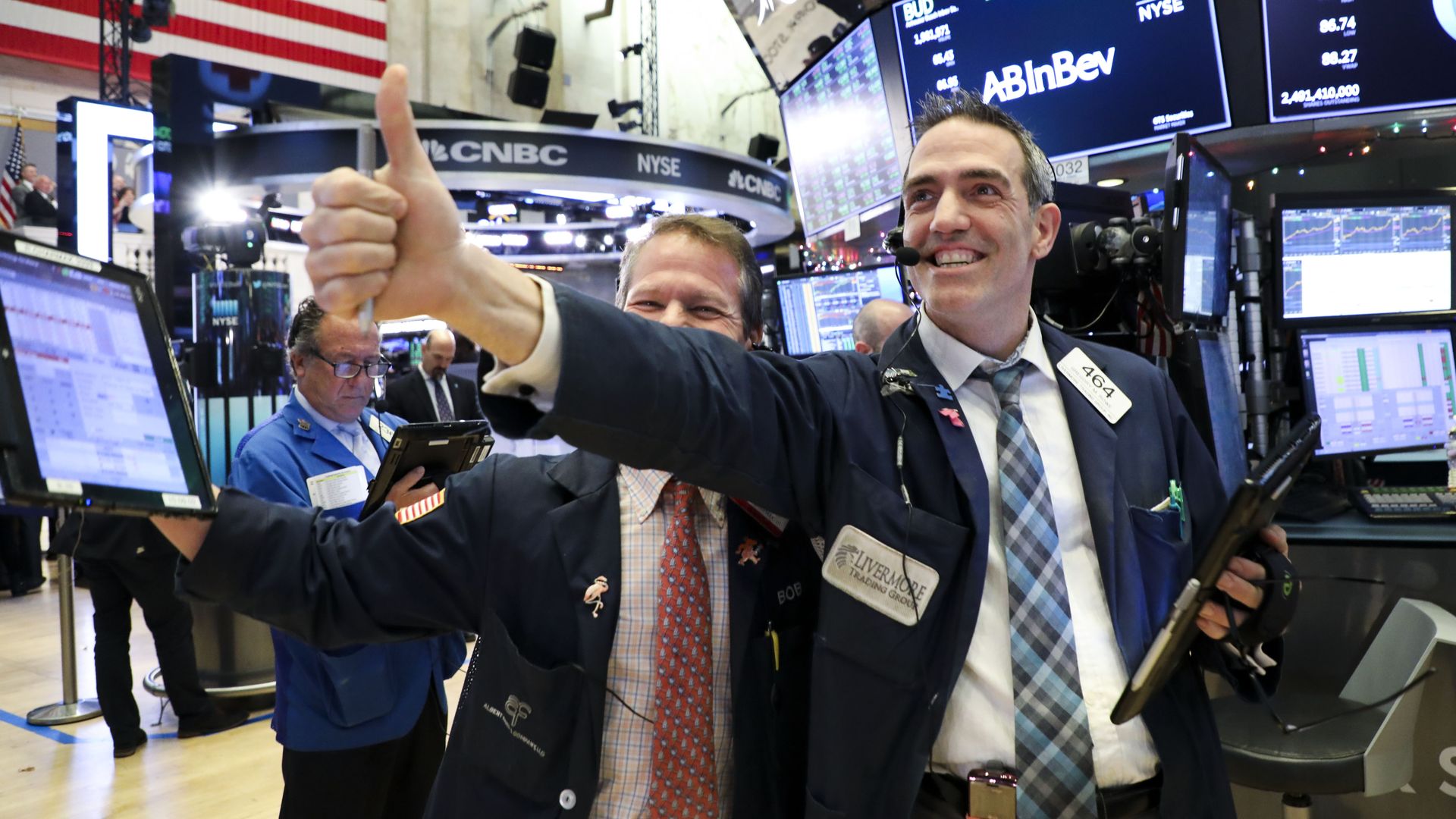
The Dow Jones Industrial Average rebounded over 800 points from its low earlier in the day to close up 260 points Thursday, while the Nasdaq and S&P rose less than 1%.
Why it matters: Volatility is back,as we've seen over the past few months and every trading session this holiday week.
Consumer confidence in the United States has fallen amid public concern that economic growth will slow down next year and benefits from last year's tax cuts will fade, the Associated Press reports.
By the numbers: The index measures consumers' assessment of the economy and their outlook for the next six months. The Conference Board, a business research group, said its consumer confidence index fell to 128.1 in December, reaching its lowest mark since July. In November, consumer confidence was at 136.4.
MSNBC topped Fox News in total viewers during the week of Dec. 17 for the first time since 2000 as its flagship "The Rachel Maddow Show" ended the week as cable news' most-watched program. (Update: Fox News notes that Sean Hannity, who is opposite Maddow at 9 p.m. ET, has been out for the holidays since Dec. 14.)
The big picture: MSNBC's rise comes as the AP reports that Fox News' fortunes may be tied to the state of news from the Trump administration. Sean Hannity, the network's preeminent host and "Maddow" competitor, is set to earn the title of most popular cable news personality this year, but his ratings have fallen 19% in the month following the midterm elections as the rest of Fox News' prime time slate have also fallen 20% in the same time period.
Disclosure: NBC is an investor in Axios and NBC News Chairman Andy Lack is on our board of directors.
The Dow Jones Industrial Average closed 1,086 points up — a nearly 5% gain — on Wednesday, the index's largest single-day point gain in history. The Nasdaq finished up 5.84% and the S&P 500 up 4.96%.
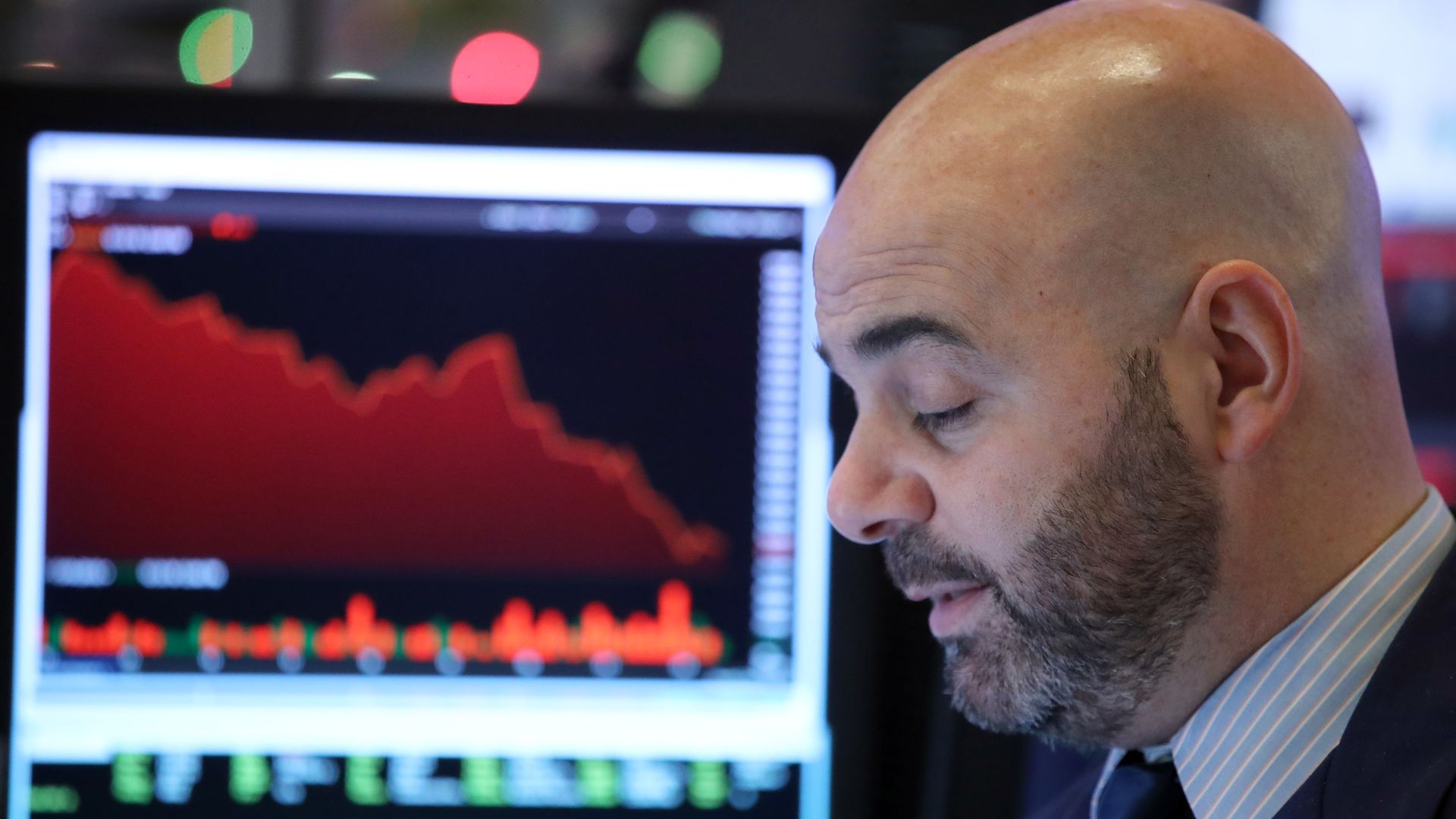
Why it matters, per Axios' Felix Salmon: Stock market volatility is the new normal. All three of the United States' major stock indices easily erased their losses from Monday, which was their worst Christmas Eve on record.
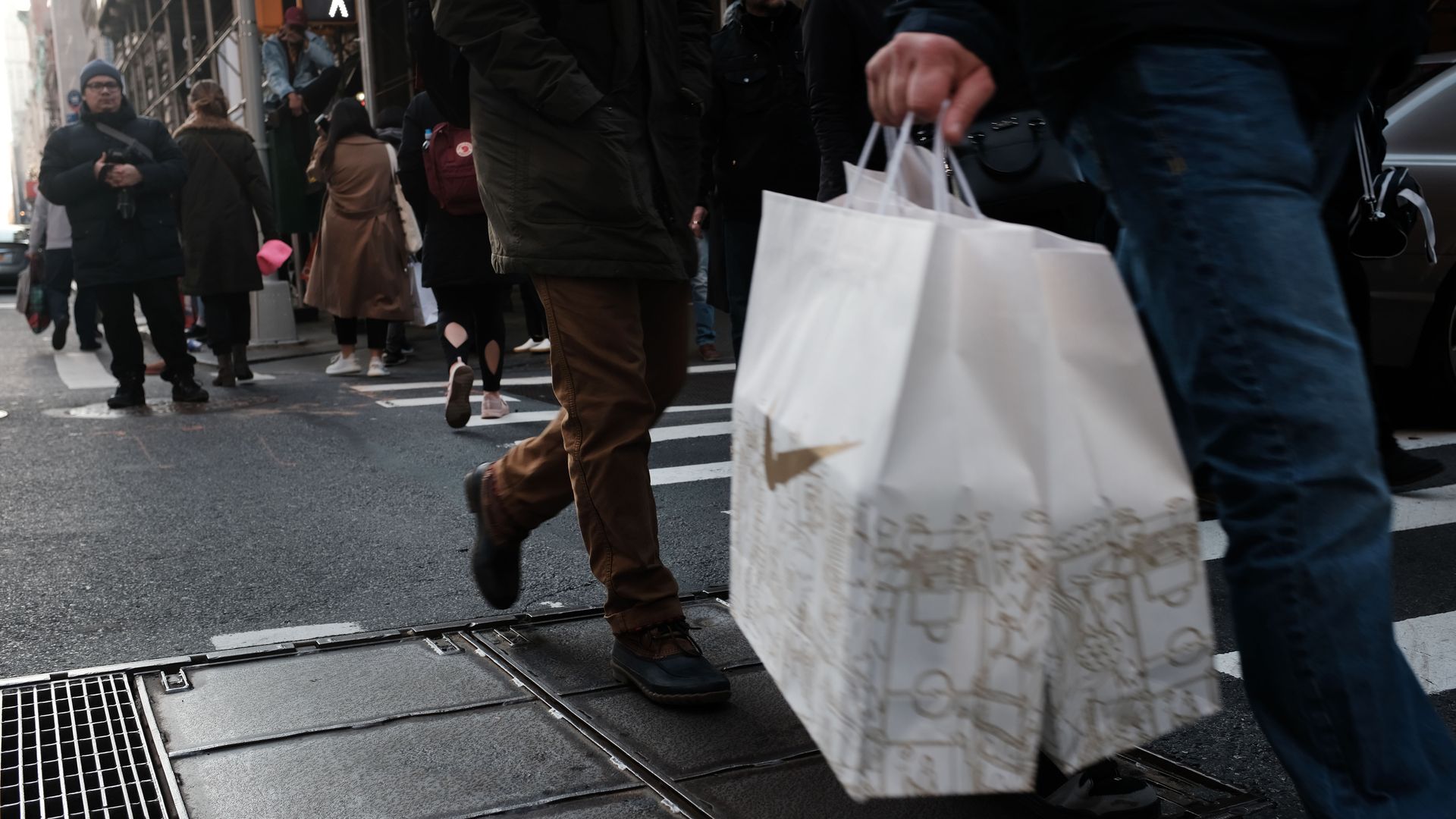
Holiday sales in the United States hit their highest mark in six years at more than $850 billion, Reuters reports.
By the numbers: The $850 billion mark is a 5.1% increase in year-over-year sales with retail giants like Amazon having record breaking years. The National Retail Federation originally forecast retail sales to rise between 4.3% and 4.8% in November and December, but consumer confidence and low unemployment numbers triggered a rise.
Box office hits including Marvel Studios’ “Black Panther,” Universal Pictures’ “Jurassic World: Fallen Kingdom” and 20th Century Fox's "Deadpool 2" drove ticket sales up 6% in the U.S. and Canada to a record-breaking $11.8 billion in 2018, according to preliminary data from Comscore, the L.A. Times' Ryan Faughnder reports.
Why it matters: The projections align with the success the box office has seen all year, disproving a continuing theme that the movie theater industry in Hollywood is being killed by streaming giants like Netflix.
About 85% of all stock trading has become automatic through machines, models or algorithms, "creating an unprecedented trading herd that moves in unison and is blazingly fast," The Wall Street Journal reports.
Why it matters: Computerized trading grew up "during the long bull run, and hasn’t until now been seriously tested by a prolonged downturn." Monday was the worst Christmas Eve for the Dow Jones Industrial Average in its history.
Raise a glass of Christmas cheer: We’re now, officially, in the best possible kind of bear market.
The big picture: For a few years now, the U.S. economy has been at full employment, which means that most people looking for a job can find one. (There is, of course, some skill mismatching. And some jobs are under-employing.) The next step of the American Dream, after you get a job, is accumulating wealth, often by investing in stocks. Now, for the first time in a decade, stocks are on sale: They can be bought at a 20% discount to where they were trading just a few months ago.

/2018/12/27/1545946554411.gif?w=3840)