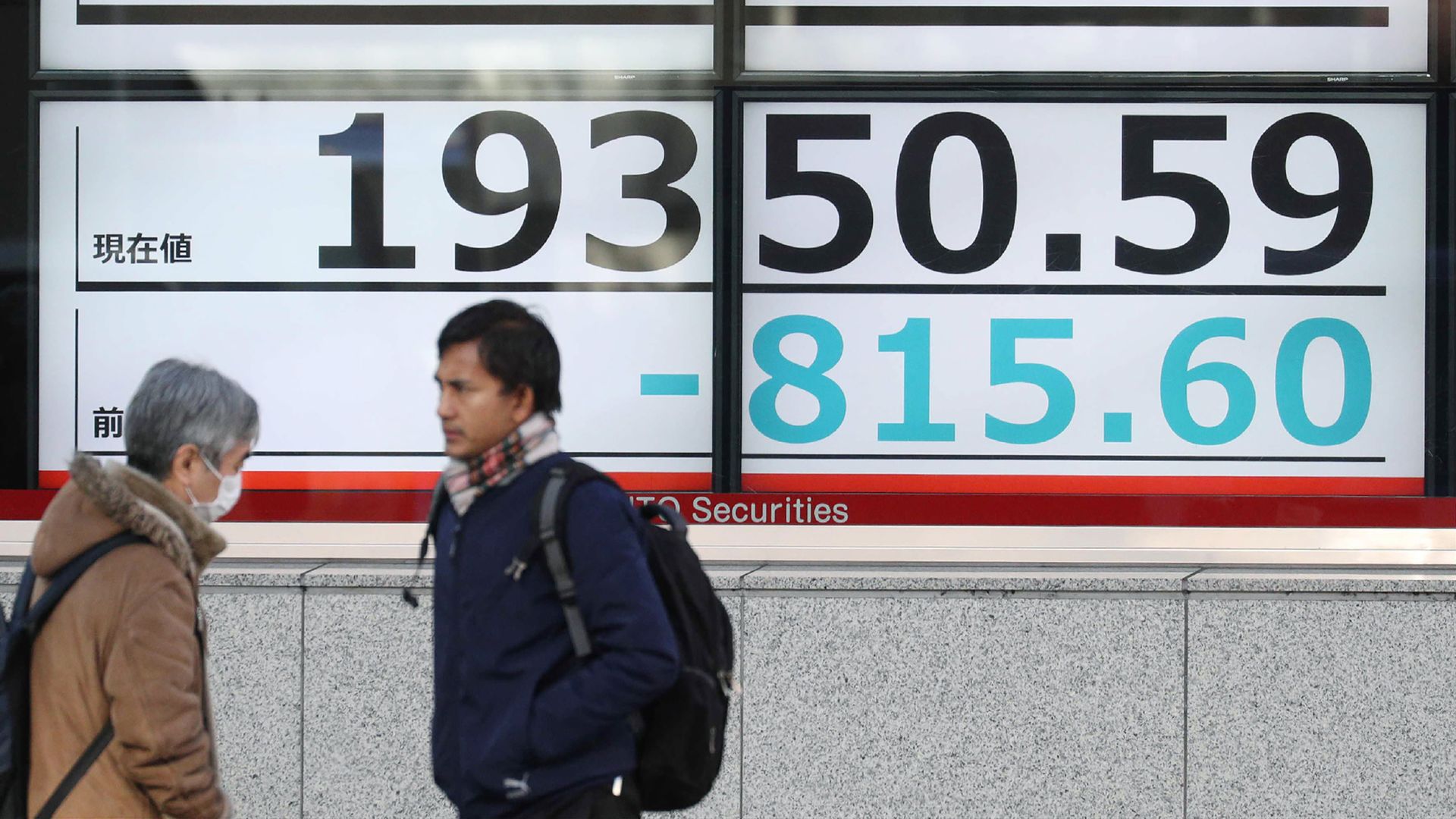
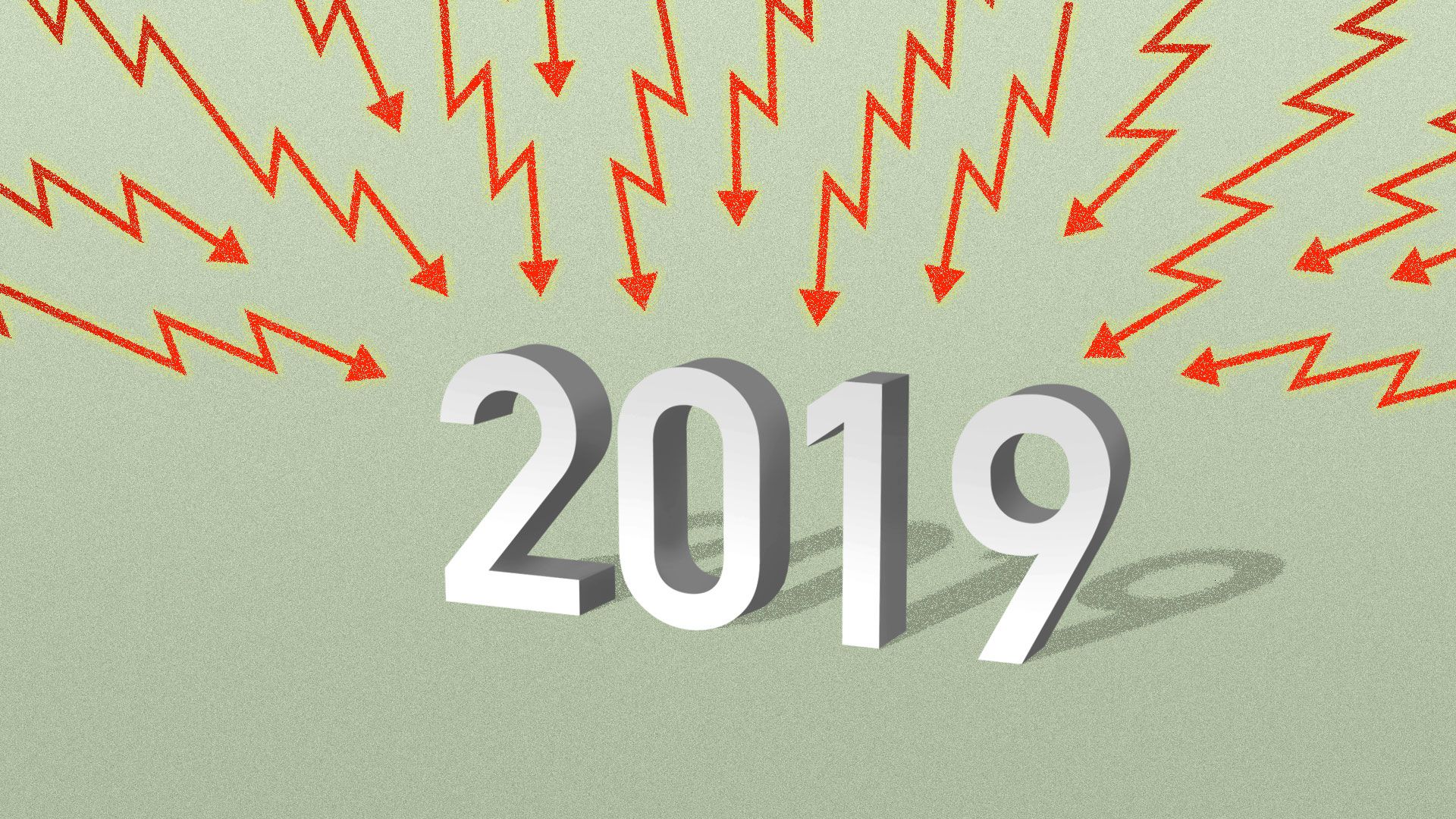
Japanese stocks took a dive on Tuesday, a day after the Dow had its worst Christmas Eve ever, and benchmarks in Thailand and Taiwan were down as well, AP reports.
Why it matters: This is not just a problem for U.S. markets, and it doesn't bode well for when they reopen — or for other world markets. (Markets in Europe, Australia, Hong Kong and South Korea were also closed for Christmas, per AP.)
"It's a Wonderful Life" is the most popular Christmas movie in America, but that's mainly because the over-35 crowd likes it, according to an Axios/SurveyMonkey poll. "Home Alone" is way more popular with teens and young adults.
Between the lines: "How the Grinch Stole Christmas" and "Elf" are more popular among the younger set. "National Lampoon's Christmas Vacation" has one specific audience: boomers and Gen-Xers who know who Chevy Chase is. And the big lesson: not enough people have seen "Die Hard."
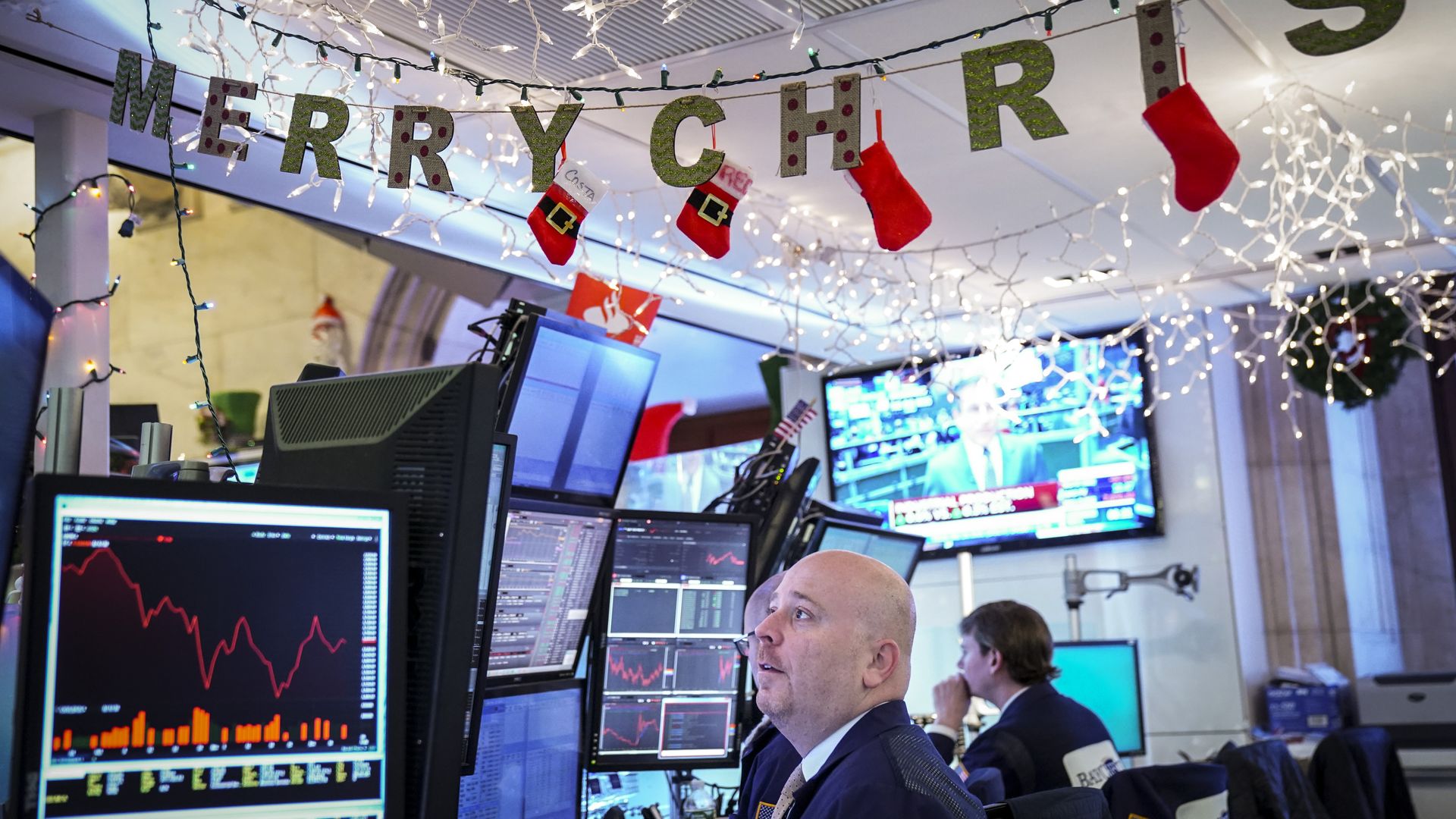
The Dow had its worst Christmas Eve ever, dropping 653 points to close at 21,792 — and all 11 of the S&P 500 sectors are now in negative territory in 2018, Bloomberg reports.
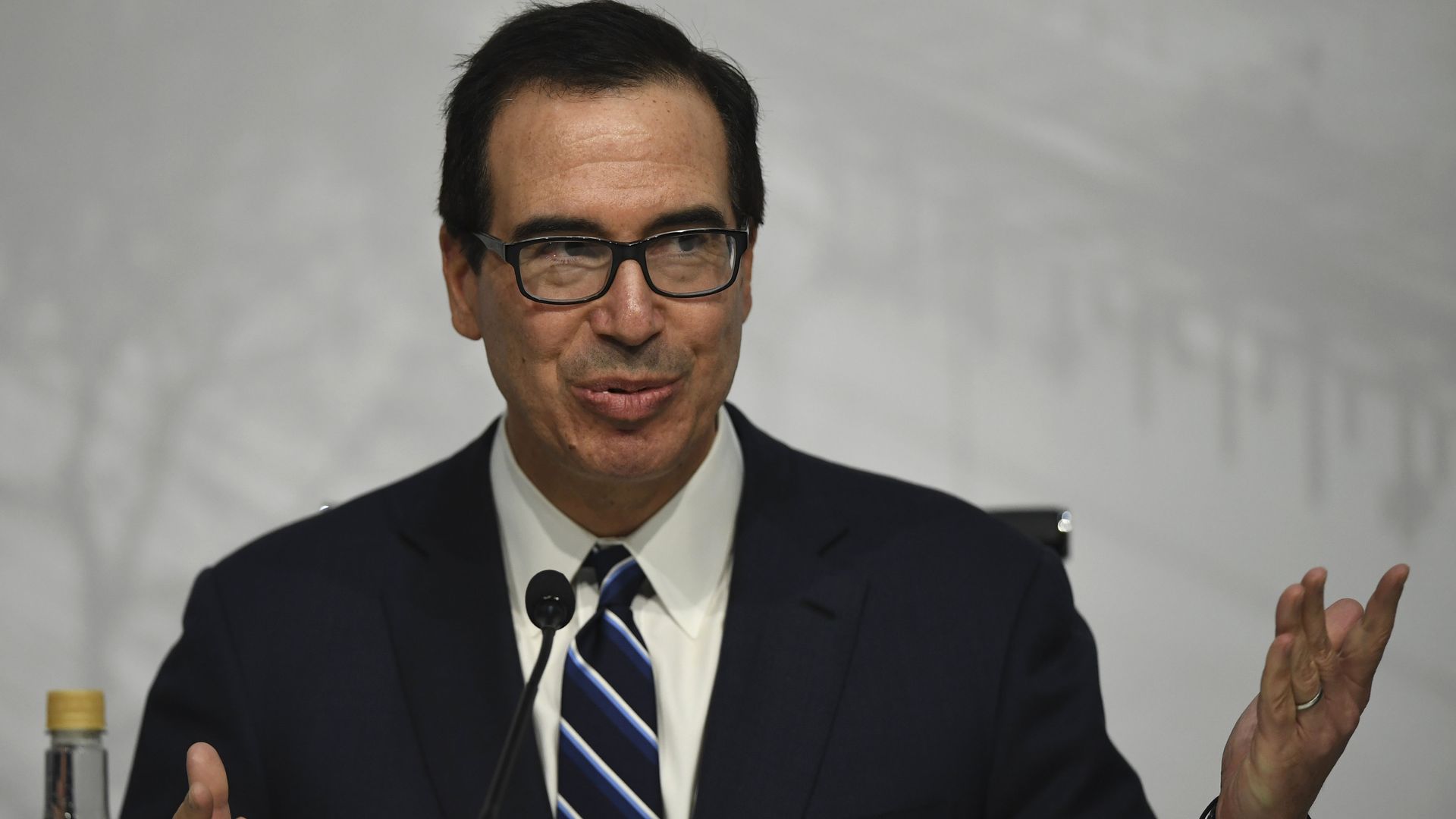
Why it matters: Treasury Secretary Steven Mnuchin's unsettling weekend statement that the big banks have enough liquidity clearly didn't calm anyone down.
Stocks sold off again on Monday with the Dow Jones Industrial Average closing down 653 points and the S&P 500 entering into a bear market with its 2.6% percent drop — the worst Christmas Eve for those indices ever.
Driving the declines: Steven Mnuchin’s call with the big bank CEOs didn’t inspire confidence. The market also didn’t buy assurances from a senior Treasury official to CNBC that the call was just a check-in and that the Treasury had no concerns about liquidity. Adding to concerns was a tweet from President Trump that said the economy’s “only problem” was the Fed.
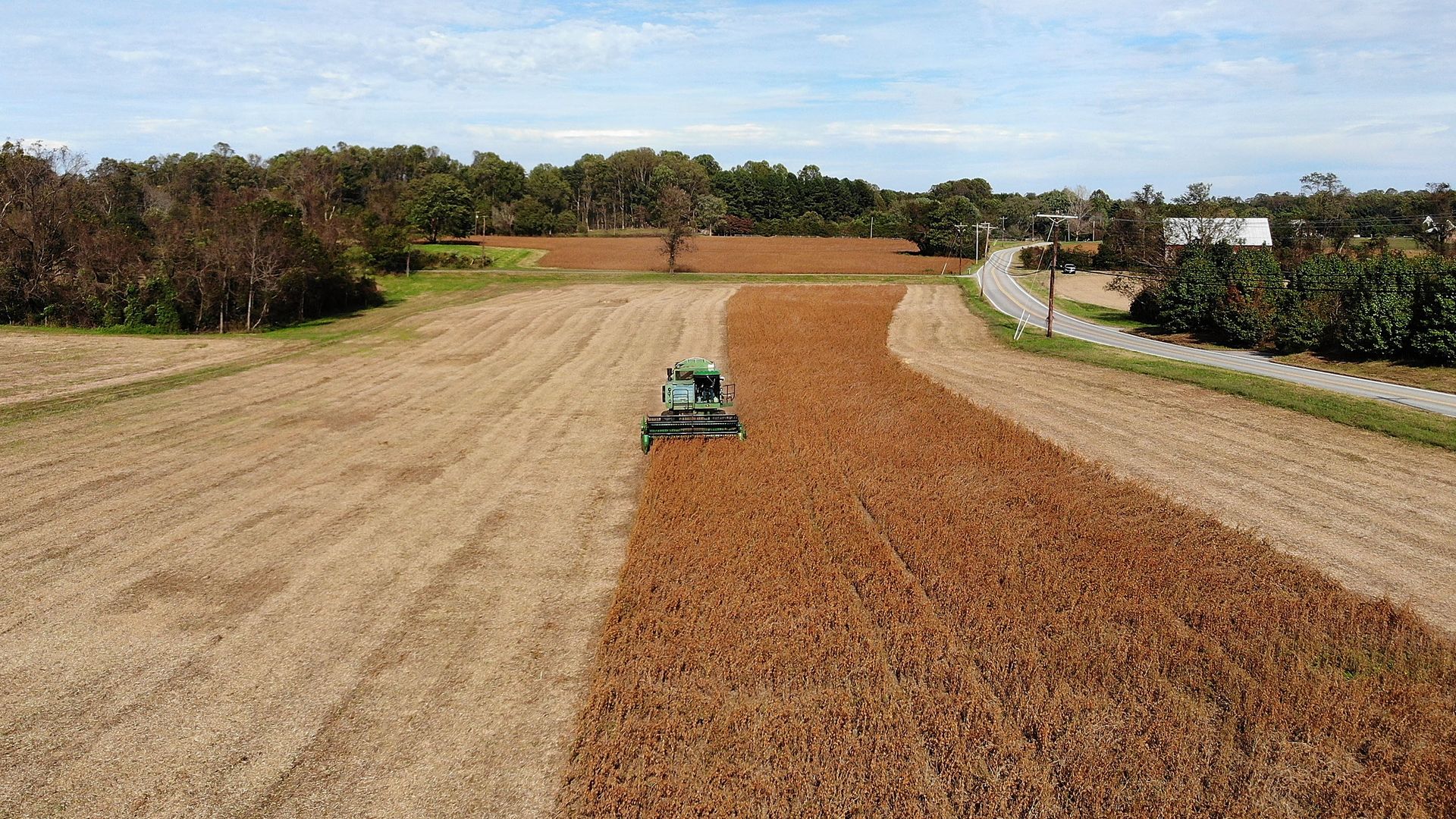
For the first time since President Trump initiated his trade war, China imported zero U.S. soybeans in the month of November, after purchasing 4.7 million tons in November 2017, Reuters reports.
The big picture: Once the largest market for one of America's largest exports, China's decision to slap retaliatory tariffs of 25% on U.S. soybeans in July has hit American farmers especially hard. As part of Trump and President Xi's temporary trade war truce, however, China is reportedly preparing to resume buying soybeans and other American products in the new year.
A wide swath of market-watchers expect the U.S. economy in 2019 to be the worst since the depths of the 2008 financial crisis, potentially putting President Trump in a hole as he heads into his re-election race.
Flashback: A year ago, we wrote about a rare and enviable trend: synchronized global recovery. Now, we havesynchronized global retreat.