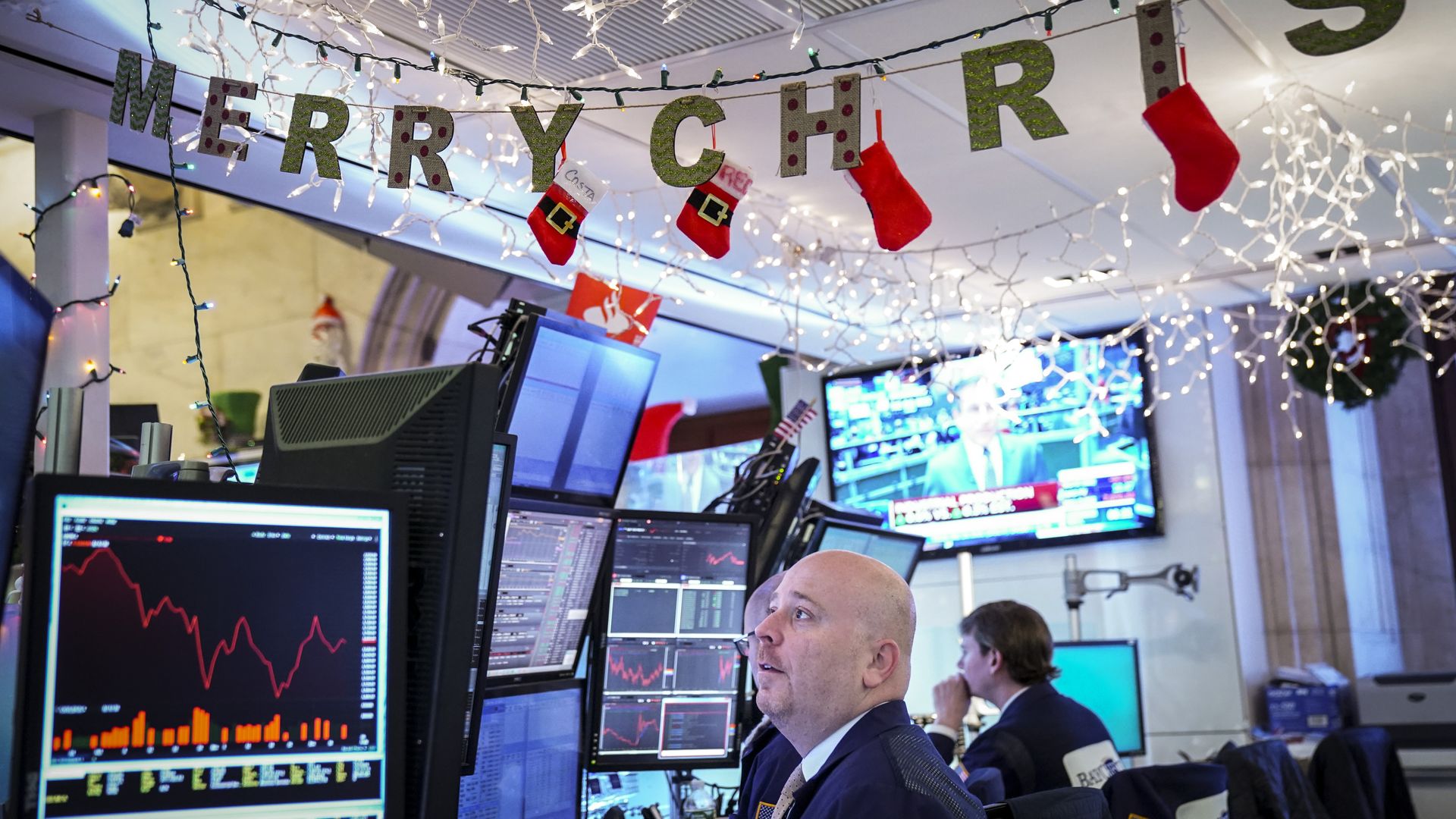
The Dow had its worst Christmas Eve ever, dropping 653 points to close at 21,792 — and all 11 of the S&P 500 sectors are now in negative territory in 2018, Bloomberg reports.
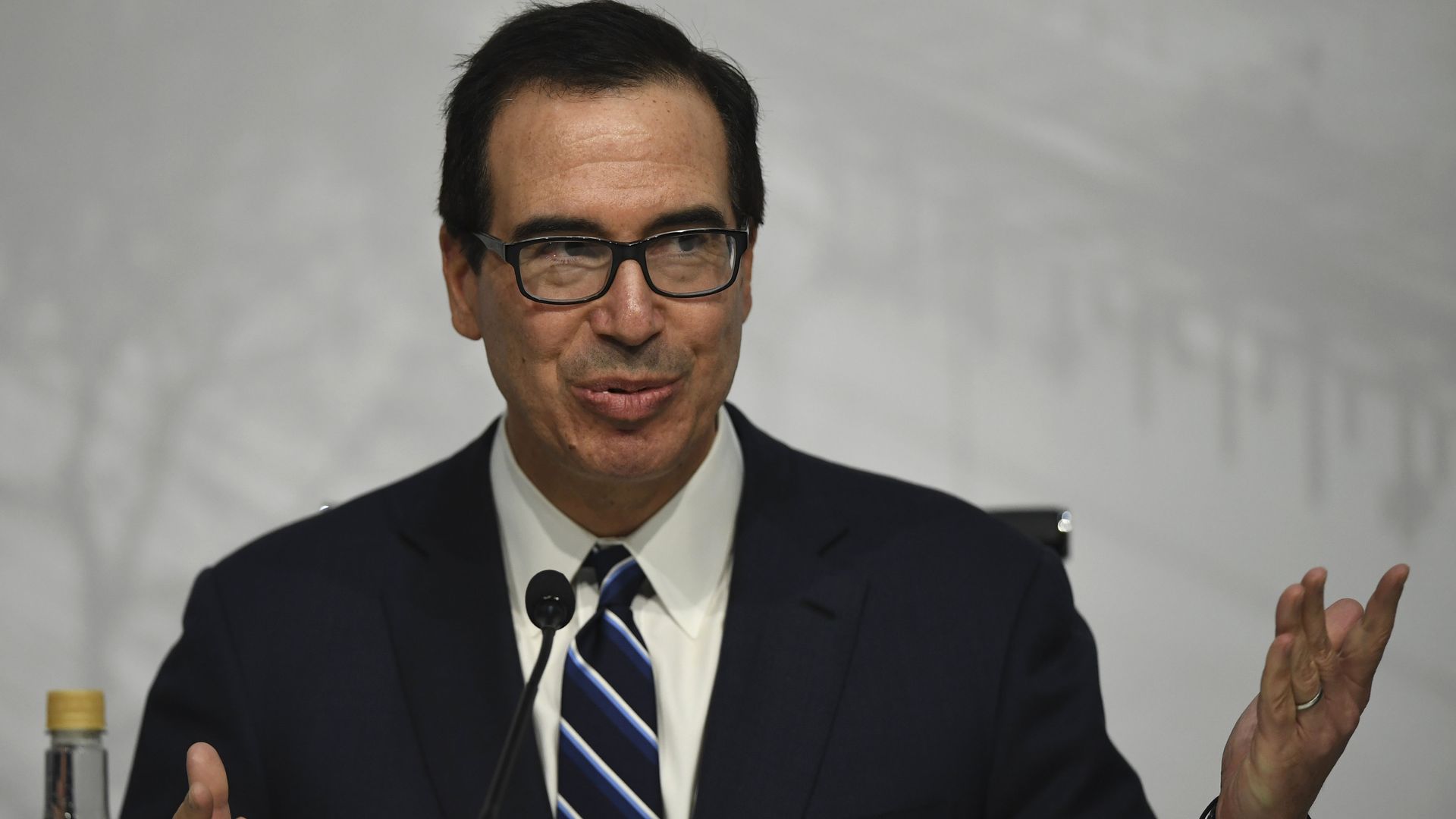
Why it matters: Treasury Secretary Steven Mnuchin's unsettling weekend statement that the big banks have enough liquidity clearly didn't calm anyone down.
Stocks sold off again on Monday with the Dow Jones Industrial Average closing down 653 points and the S&P 500 entering into a bear market with its 2.6% percent drop — the worst Christmas Eve for those indices ever.
Driving the declines: Steven Mnuchin’s call with the big bank CEOs didn’t inspire confidence. The market also didn’t buy assurances from a senior Treasury official to CNBC that the call was just a check-in and that the Treasury had no concerns about liquidity. Adding to concerns was a tweet from President Trump that said the economy’s “only problem” was the Fed.
For the first time since President Trump initiated his trade war, China imported zero U.S. soybeans in the month of November, after purchasing 4.7 million tons in November 2017, Reuters reports.
The big picture: Once the largest market for one of America's largest exports, China's decision to slap retaliatory tariffs of 25% on U.S. soybeans in July has hit American farmers especially hard. As part of Trump and President Xi's temporary trade war truce, however, China is reportedly preparing to resume buying soybeans and other American products in the new year.
A wide swath of market-watchers expect the U.S. economy in 2019 to be the worst since the depths of the 2008 financial crisis, potentially putting President Trump in a hole as he heads into his re-election race.
Flashback: A year ago, we wrote about a rare and enviable trend: synchronized global recovery. Now, we havesynchronized global retreat.
The market is betting that the Federal Reserve won't be able to raise rates at all next year, while the Fed's projections show policymakers think they'll raise rates twice by next December.
The bottom line: Investors who play in the futures contracts market are putting their money where their mouths are in expectation that central bankers are either bluffing or deluding themselves.
German magazine Der Spiegel said it is filing a criminal complaint against former writer Claas Relotius, who admitted to falsifying reports, over his requests for donations to Syrian children, The Wall Street Journal reports.
The big picture: Der Spiegel was already facing blowback after the award-winning journalist fabricated details about Minnesota residents, painting them as bigoted and racist. The magazine launched an investigation one it found out that Relotius asked readers through email to donate money to a fake charity for children he described in his fake reports.
One oddness about the current market is that the meltdown in secondary markets seems to have had very little adverse effect on primary markets.
My thought bubble: Normally a market swoon of this magnitude would slam the window shut on primary deals. But all those buybacks and dividends need to get reinvested somewhere, ideally in an asset class that isn't plunging in value on a daily basis.
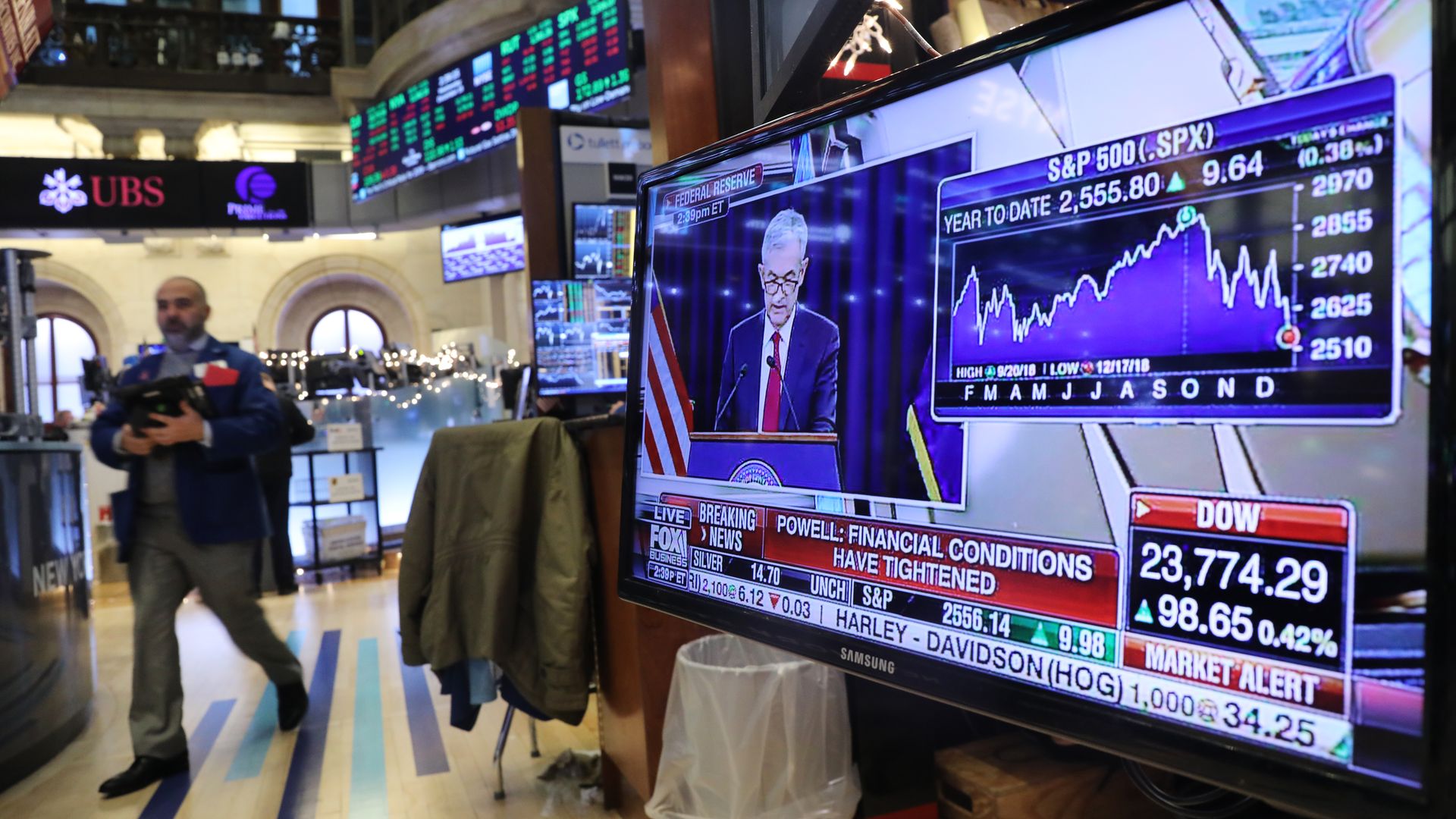
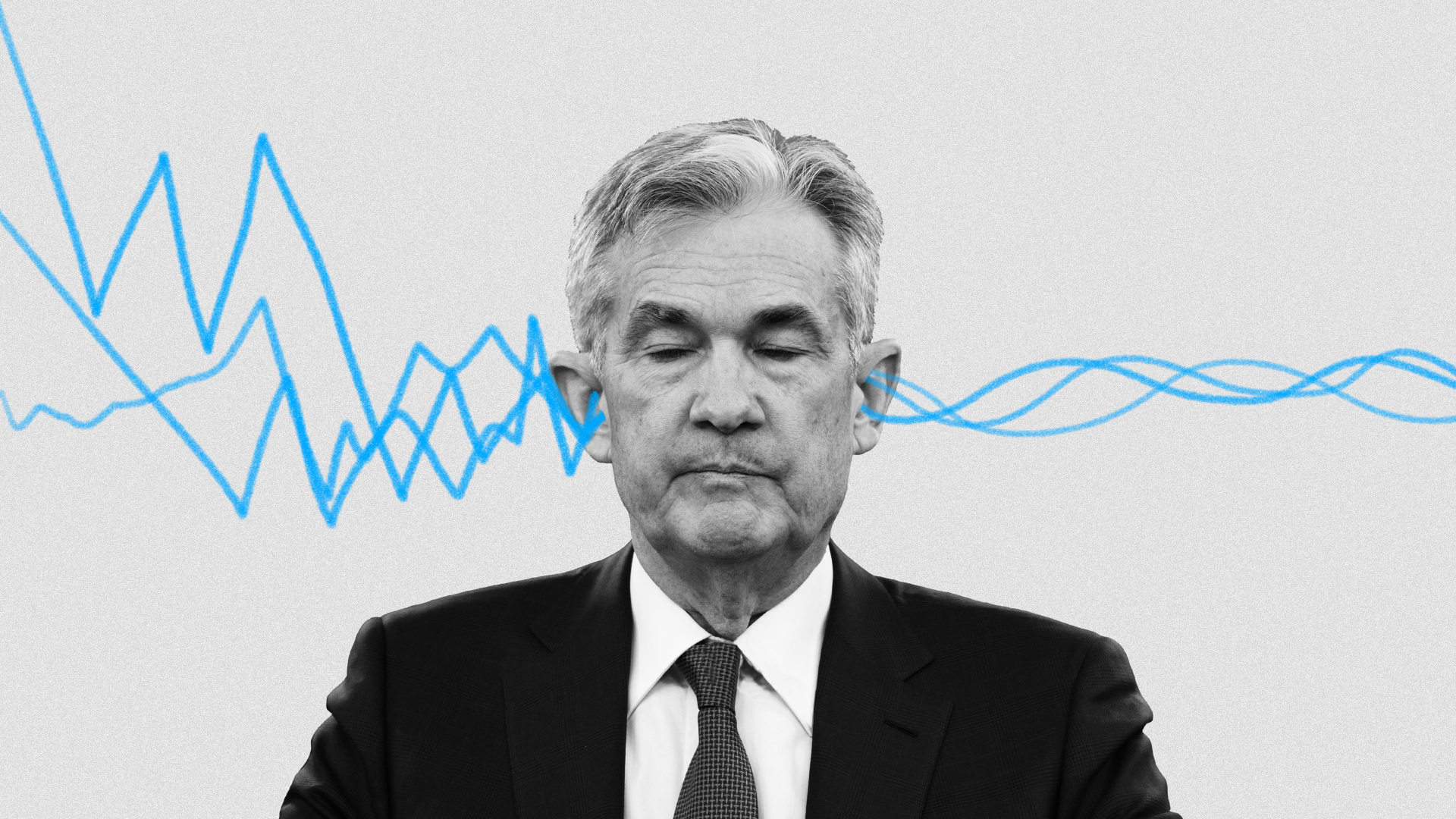
We seem to have come to the endof one of the most astonishing bull runs in stock-market history, and there's very little indication that Fed chair Jay Powell particularly cares.
The bottom line: Powell will continue to make pro-forma noises about paying attention to financial markets. But he's not going to let Dow vigilantes dictate U.S. monetary policy.