Take-Two Interactive said Grand Theft Auto VI generated $3.79 billion in preorder and Day 1 sales, marking not just the most lucrative video game debut ever, but likely the biggest launch of any creative work in the history of entertainment.
Why it matters: The blockbuster opening shows how valuable video gaming franchises can be to business, culture and Hollywood.
Nvidia shares plunged 14% and Anthropic shares surrendered most of their IPO gains Friday amid a brutal tech stock rout as the AI boom veered closer to bust.
Why it matters: Anthropic's record IPO has failed to save the flagging AI trade from the weight of declining confidence, tightening credit and a scandal at the world's most important chipmaker.
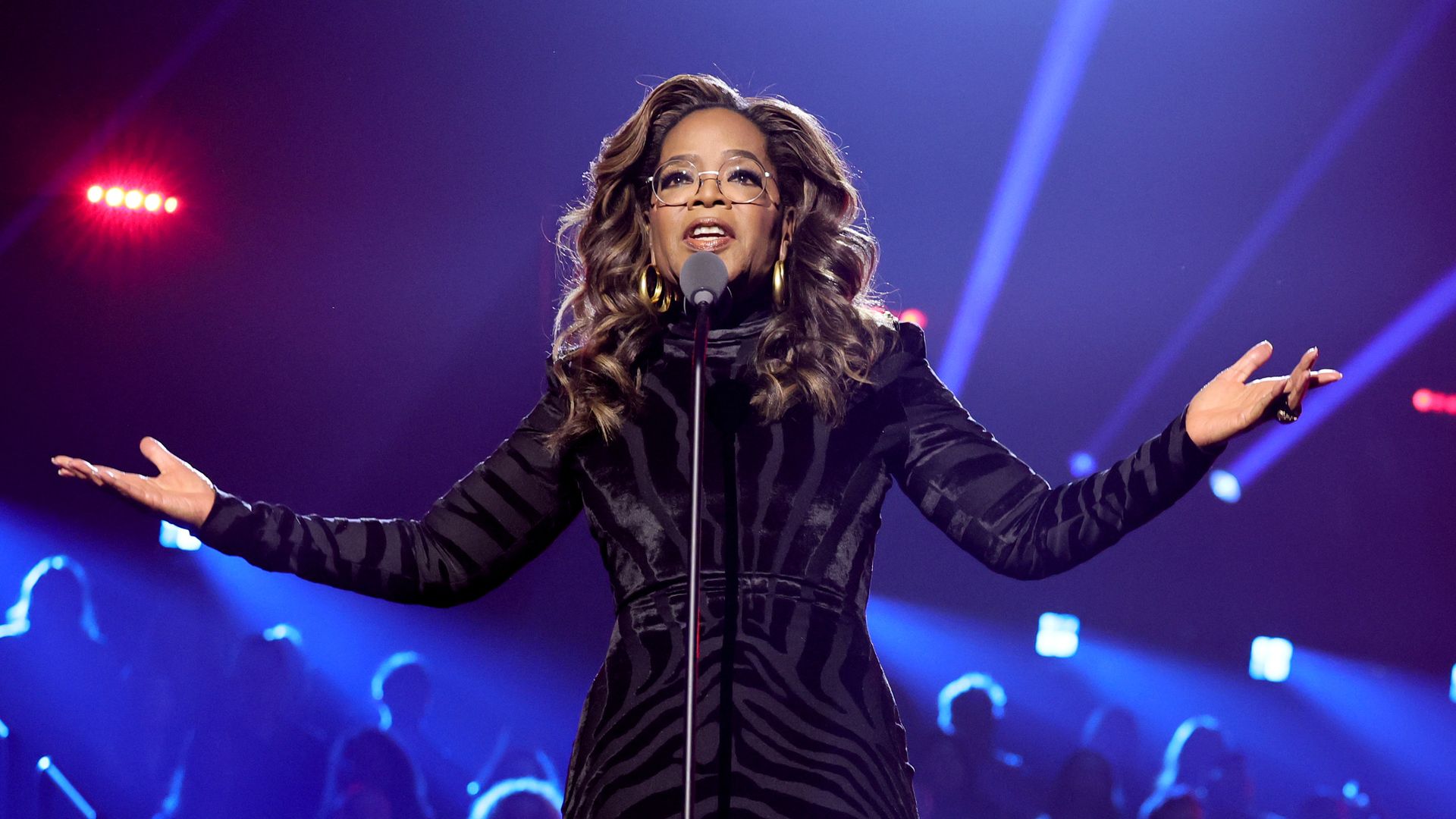
Oprah Winfrey is giving $20,000 to more than two dozen employees impacted by the closure of her daily lifestyle magazine Oprah Daily, two sources familiar with the effort told Axios.
Why it matters: It's a notable gesture in an industry where cuts are frequent and often impersonal. But Winfrey, unlike most magazine publishers, has her personal brand equity tied to the outlet.
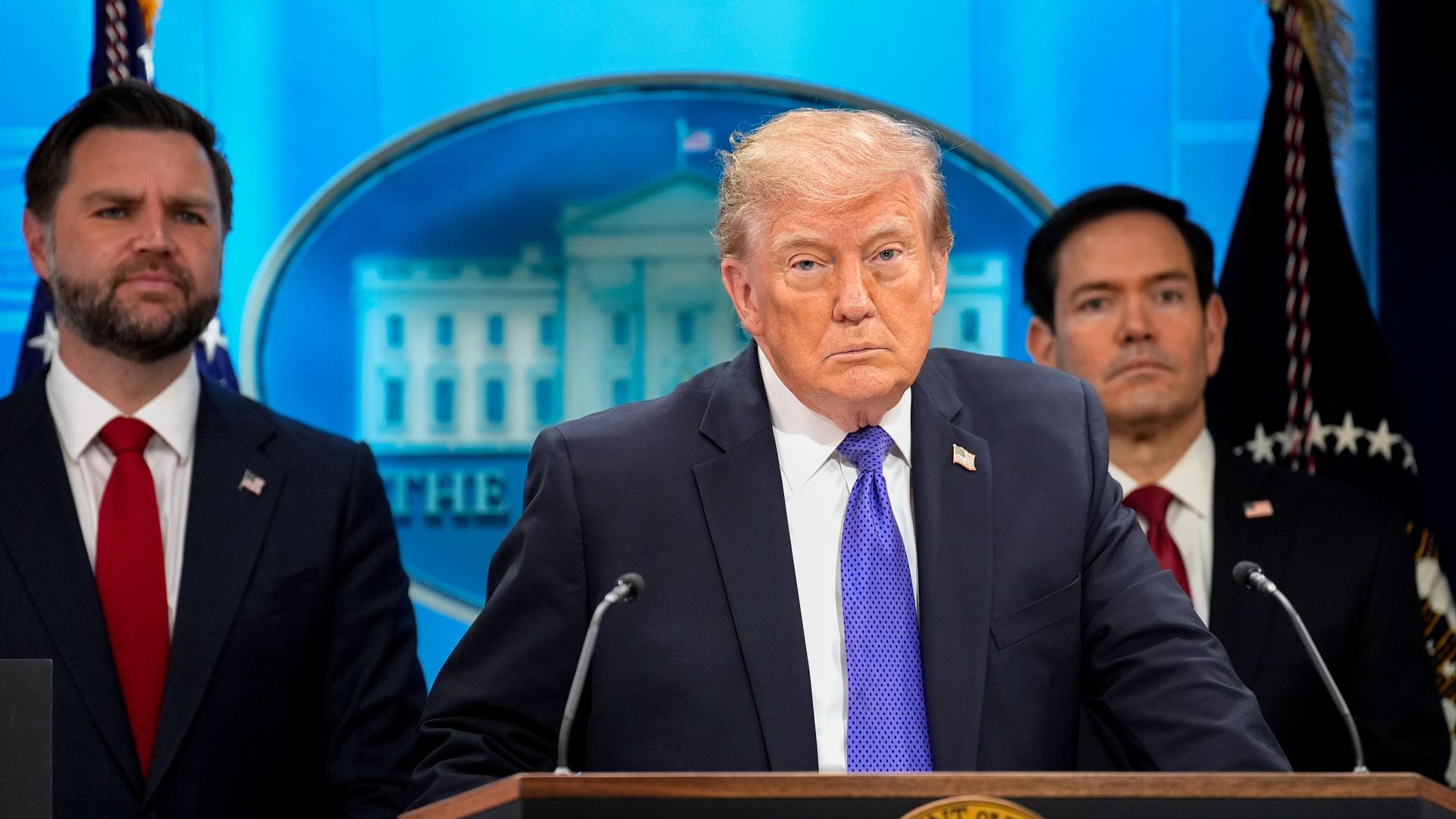
President Trump on Friday said he would block U.S. companies from building data centers overseas or impose a "tremendous tax" on them if they do.
Why it matters: Trump's push to keep AI infrastructure in the country comes just weeks after data center expansion became a midterm-election flashpoint, as voters raised concerns about the environmental and financial impacts they pose.
Why it matters: Anthropic (Nasdaq: ANT) was seen as a catalyst that could prop up the AI economy, but its IPO arrived at the same time as investors were losing faith.
The AI boom is generating enormous fortunes, from stock-market gains (that are now under pressure) to the paper wealth being amassed as AI firms go public.
Why it matters: Changes in household wealth can ripple through the economy, influencing everything from housing prices in tech hubs to consumer spending nationally, even before much of that wealth is converted into cash.
But the stock market's recent sell-off underscores how the wealth effect cuts both ways — supporting spending as asset prices rise and weighing on it if the AI boom dramatically reverses.
Anthropic officially surpassed SpaceX to pull off the largest IPO in history after underwriters exercised the greenshoe option to purchase more shares, but the stock tumbled in the early hours on Friday amid a broader rout of tech stocks.
Why it matters: Anthropic may not be fully immune to Wall Street's broader tech uncertainty.
With its IPO done and dusted, Anthropic's shareholders will be watching its progress toward becoming a business that doesn't need constant capital infusions from investors and vendors.
Why it matters: Anthropic — along with OpenAI — is at the heart of the industry that's dominated the equity and debt markets for the last four years.
Much of the AI infrastructure boom is ultimately aimed at supplying computing power to these two companies.
Yes, but: The bill for that data center investment will start to come due over the next few years.
And Anthropic and OpenAI are going to have to pay for quite a bit of it.
How it works: Anthropic has covered much of its computing costs thus far by selling parts of itself off to compute vendors like Amazon and Alphabet, and by raising more cash from other investors.
But eventually the company's core business will have to generate enough money to cover those costs on its own.
Case in point: Anthropic's filings say it is on the hook for roughly $900 billion in spending commitments — mostly for data centers and computing power — with about half of that due before the end of 2030.
After the IPO, Anthropic is expected to have roughly $200 billion in cash and short-term investments in the bank, which should buy it some time.
But its sales will have to be a lot higher to just cover computing obligations, let alone the profits ANT's new shareholders are expecting.
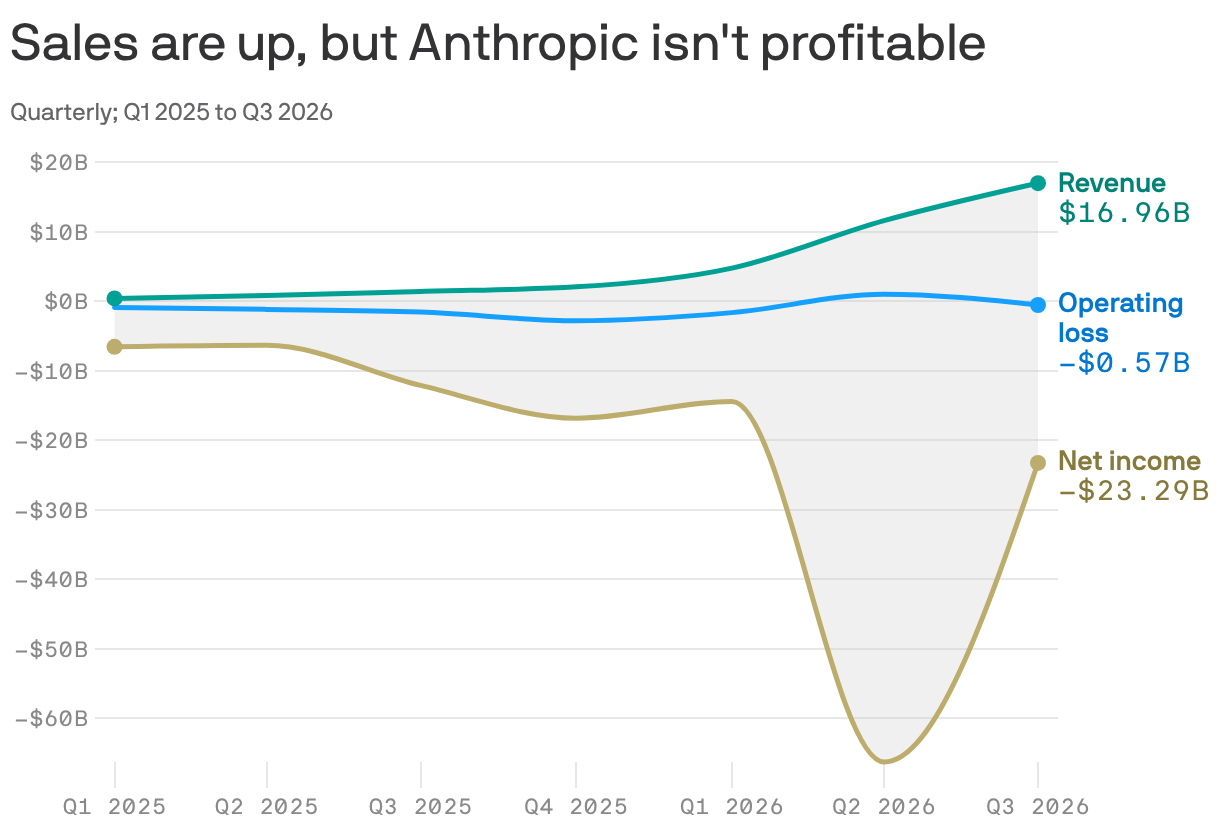
By the numbers: As the chart above shows, Anthropic posted a loss of roughly $23 billion on revenue of nearly $17 billion in the third quarter.
It's true that much of that loss stems from a non-cash accounting charge of almost $22 billion.
But even the more favorable metric of operating income — which strips out the paper losses and gains that can obscure the company's core earnings power — still shows an operating loss of more than half a billion dollars in the third quarter.
The bottom line: Anthropic still has a long way to go before it is going to be standing on its own feet, financially speaking.
The internet's warring tribes converged Thursday for the loud, lawless debut of "Grand Theft Auto VI," as 13 years of anticipation culminated in one of the great viral spectacles of all time.
Why it matters: In a media landscape splintered into dozens of distinct realities, the GTA launch gave Americans a rare common obsession — refracted through vastly different platforms, personalities and worldviews.
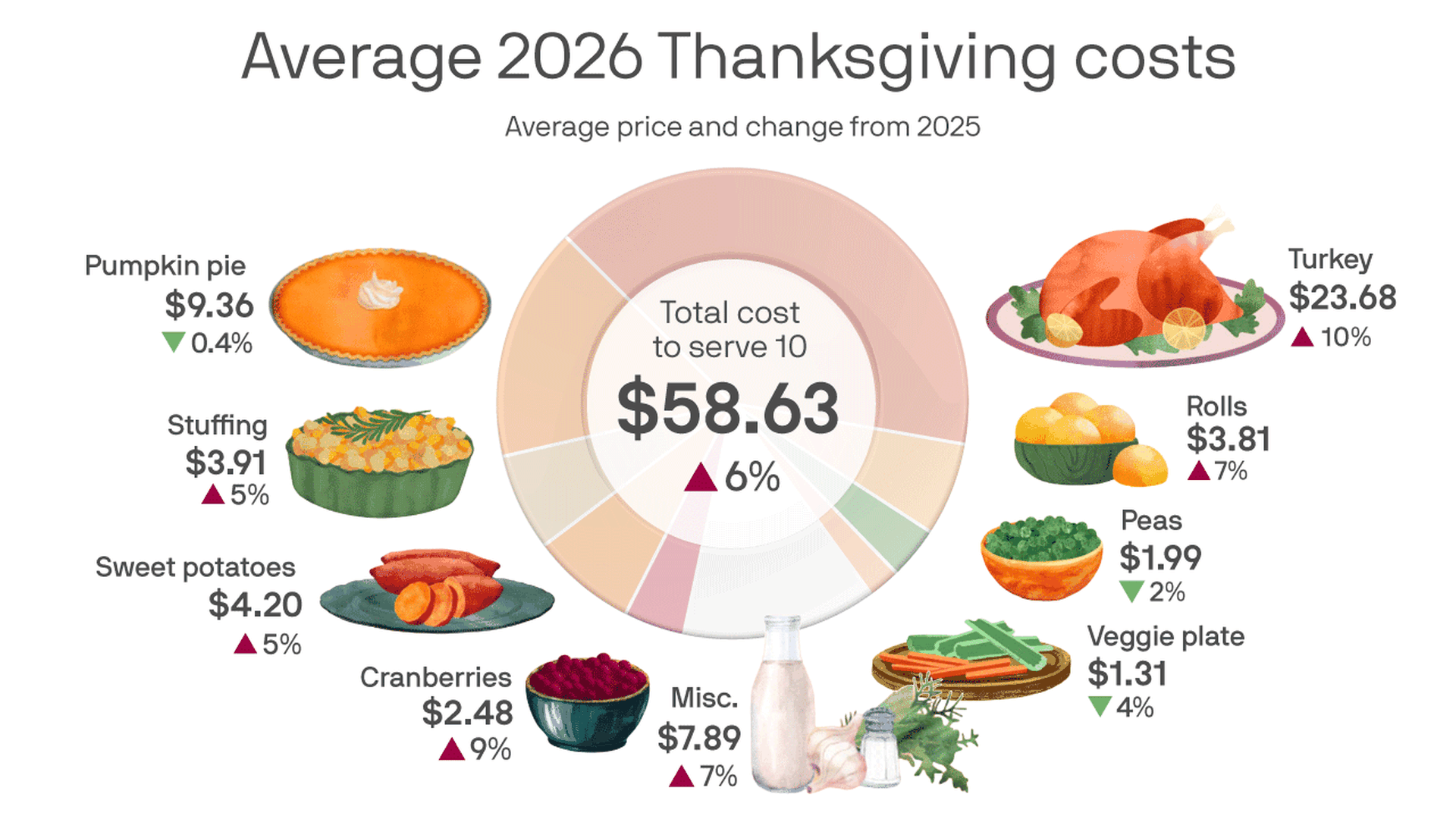
The average Thanksgiving dinner is up 6%, ending three straight years of price declines, according to the American Farm Bureau Federation.
By the numbers: The traditional dinner for 10 now costs $58.63, or $5.86 per person, up from $55.18 last year, per the AFBF's latest annual survey.
Turkey drives much of the increase. A 16-pound frozen bird costs an average of $23.68, up 10% from 2025.
Cranberries are up 9%, while dinner rolls and sweet potatoes are up 7% and 5%, respectively.
Pumpkin pie ingredients and vegetable trays are among the few items that have gotten cheaper.
The big picture: The American dinner price is still 8% less than the 2022 peak of $64.05, but well above the last pre-pandemic cost of $48.91 in 2019.
The Farm Bureau attributes this year's higher prices in part to strong turkey demand, tight supplies and rising costs for fuel, labor and other agricultural expenses.
Zoom in: The same meal for 10 people can vary regionally. AFBF says it averages:
$61.57 in the Northeast.
$58.74 in the West.
$56.89 in the Midwest.
$54.33 in the South.
Between the lines: The survey's price checks were done earlier in November, possibly before deeper discounts or promotions. Shoppers willing to hunt for deals might spend considerably less.
Axios' Monica Eng put Aldi's $39 offer to the test, preparing a full holiday meal for 10 for $37.38 in Chicago — with leftovers, though a few traditional extras were missing.
Walmart touts a Thanksgiving meal basket for 10 people for about $35.
A separate report from The Wells Fargo Agri-Food Institute found that Thanksgiving foods cost 0.4% less than a year ago.
The studies use different menus and pricing methods. Wells Fargo analyzed retail data for the 52 weeks ending in September, while Farm Bureau volunteers checked prices during the first week of November.
The bottom line: Thanksgiving is getting pricier overall, but what you actually spend depends on where and when you shop, and what's on your menu.
The Senate passed a sweeping, bipartisan billThursday night that'sdesigned to cut permitting timelines for energy and infrastructure projects.
Why it matters: The eyes of the entire energy industry are on this bill. If it becomes law, it could transform how America builds energy infrastructure, with major implications for everything from electricity costs to data centers.