Democratic governance is sliding backward in the U.S. and much of the world, according to a series of recent reports.
Why it matters: The future will be shaped by the push and pull of democratic and autocratic forces within countries and beyond their borders. If supporters of democracies can't halt democracy's retreat, freedom and civil liberties could follow.
The parents of Trevor Reed, a former Marine wrongfully detained in Russia since 2019, met on Tuesday with White House national security adviser Jake Sullivan to discuss their son's case, Axios has learned.
Why it matters: It's at least the third meeting Sullivan has had with the relatives of a U.S. hostage or wrongful detainee this month, after families confronted him about meeting requests that had gone unanswered.
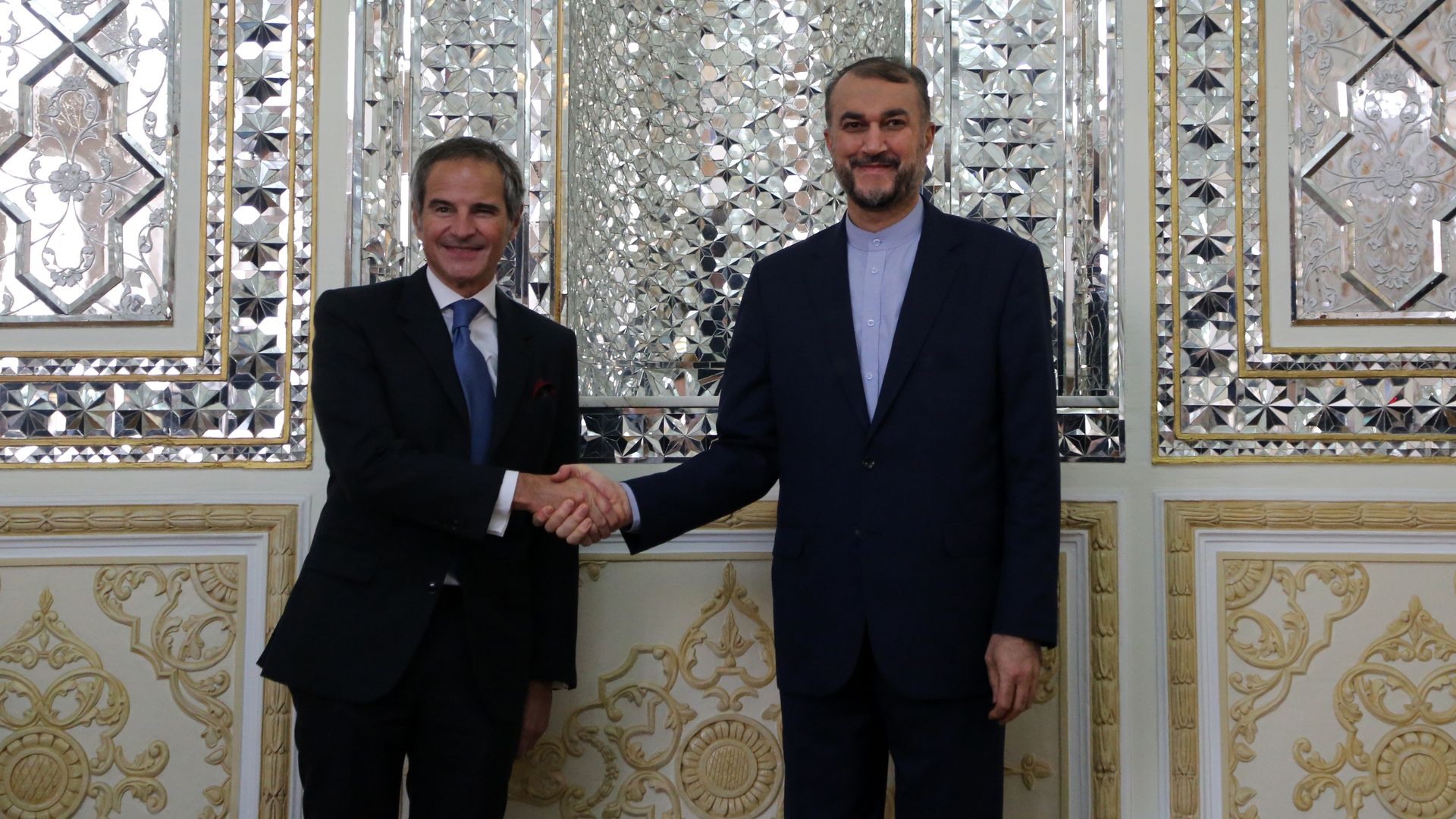
Iran has agreed to allow UN inspectors to reinstall cameras at the Karaj centrifuge facility amid the ongoing impasse at the nuclear talks in Vienna.
Why it matters: The Iranian decision came after long and difficult negotiations with the International Atomic Energy Agency (IAEA) and threats by the U.S. and the E3 — France, Germany and the U.K. — to censure Iran at an IAEA board meeting later this month for interfering with inspections.
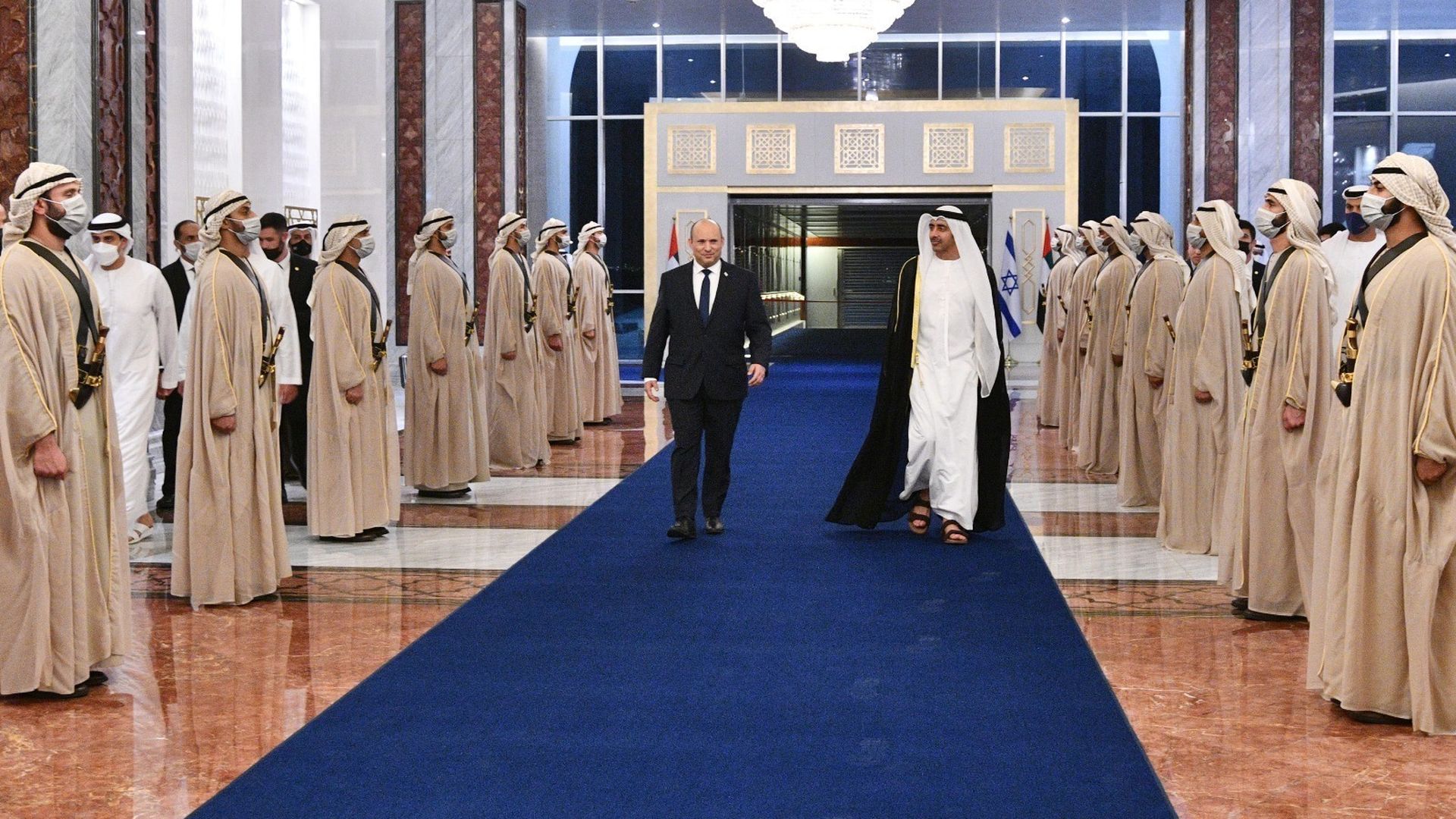
Prime Minister Naftali Bennett’s visit to Abu Dhabi this week was a signal from both sides that the relationship is continuing to develop one year after the Abraham Accords, regardless of the change in government in Israel.
Why it matters: It was the first public visit by an Israeli prime minister to the United Arab Emirates. Both sides wanted to stress the personal connection between Bennett and Crown Prince Mohammed bin Zayed (MBZ), who met for five hours, mostly one-on-one, at MBZ's palace.
Former Israeli Prime Minister Benjamin Netanyahu hasn’t tried reaching out to Donald Trump in the aftermath of the interview in which Trump said of Netanyahu, "f**k him," Netanyahu’s aides tell Axios.
Why it matters: Trump's remarks, which came during my face-to-face interview with him in April and were published by Axios on Friday, quickly turned into a political and media firestorm in Israel that is only just subsiding. Many in Israel saw them as damaging to Netanyahu because it broke the myth that he and Trump were close allies.
The following story is adapted from "Trump’s Peace: The Abraham Accords and the Reshaping of the Middle East."
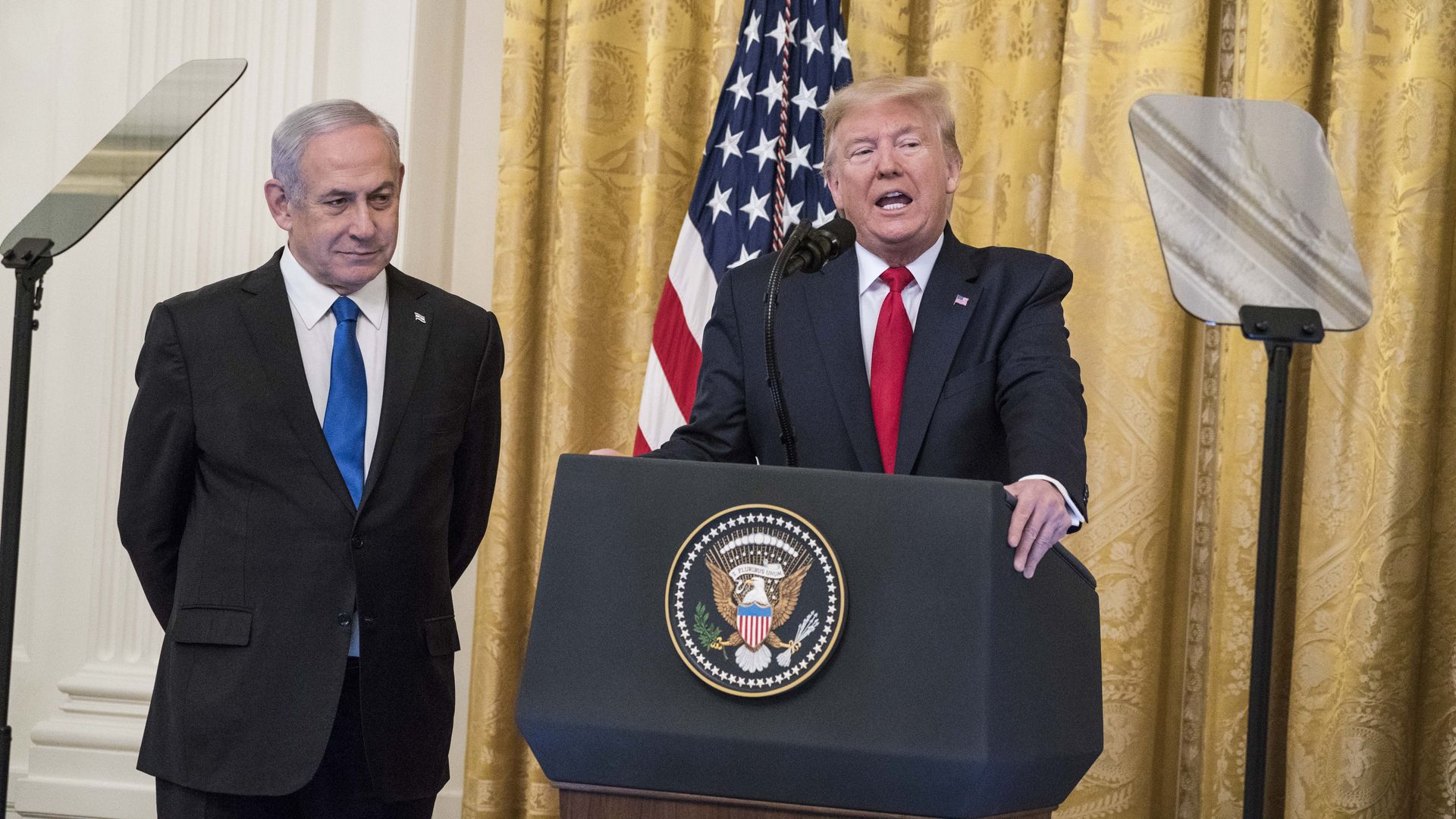
The unveiling of Trump's Middle East peace plan — and former Israeli Prime Minister Benjamin Netanyahu's efforts to parlay the plan into unilateral annexations in the occupied West Bank — sparked weeks of tensions between the U.S. and Israeli governments.
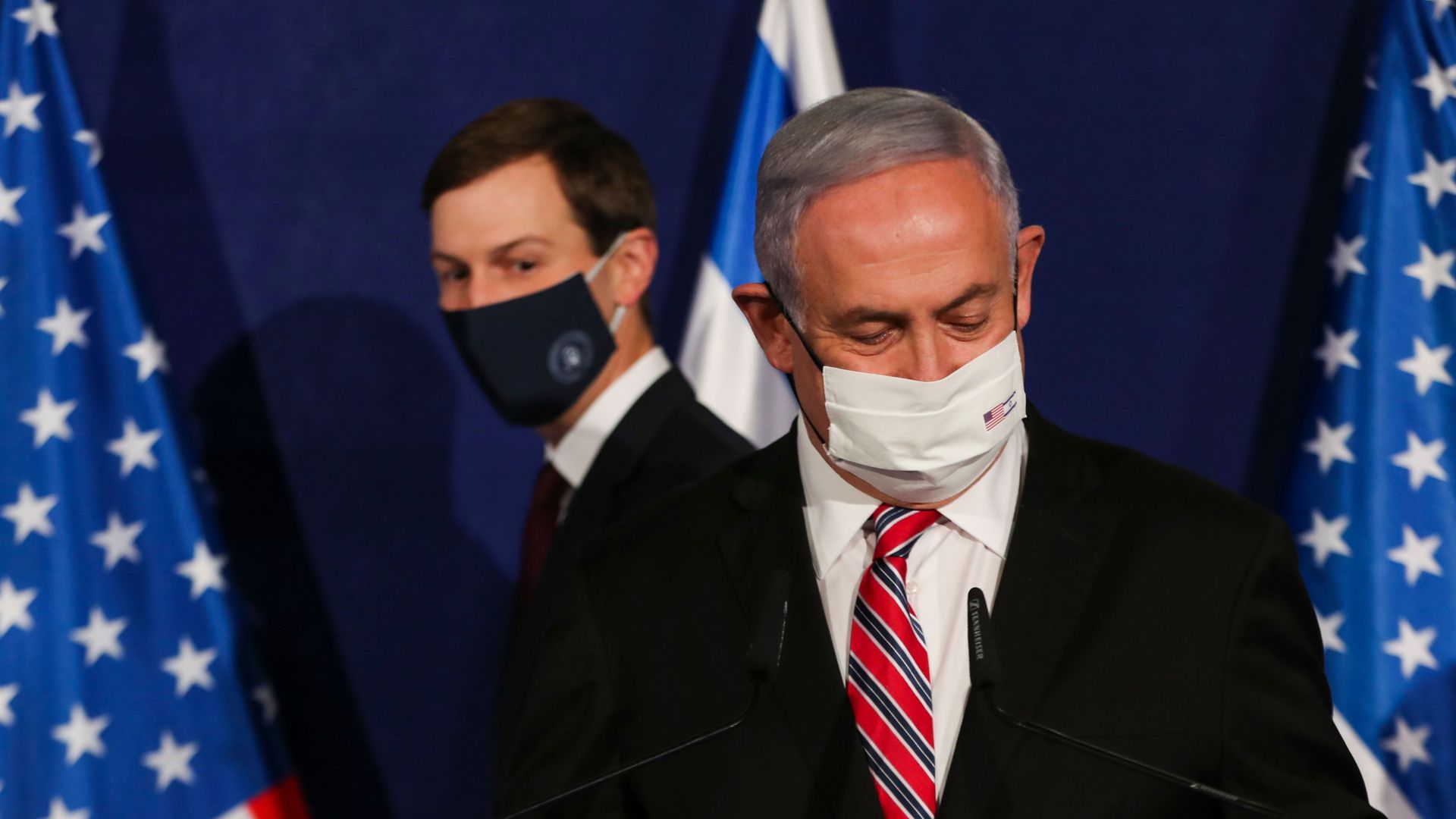
Flashback: They culminated in a heated meeting that February in which Jared Kushner ejected Israel's ambassador to Washington from his office, according to two former senior White House officials.
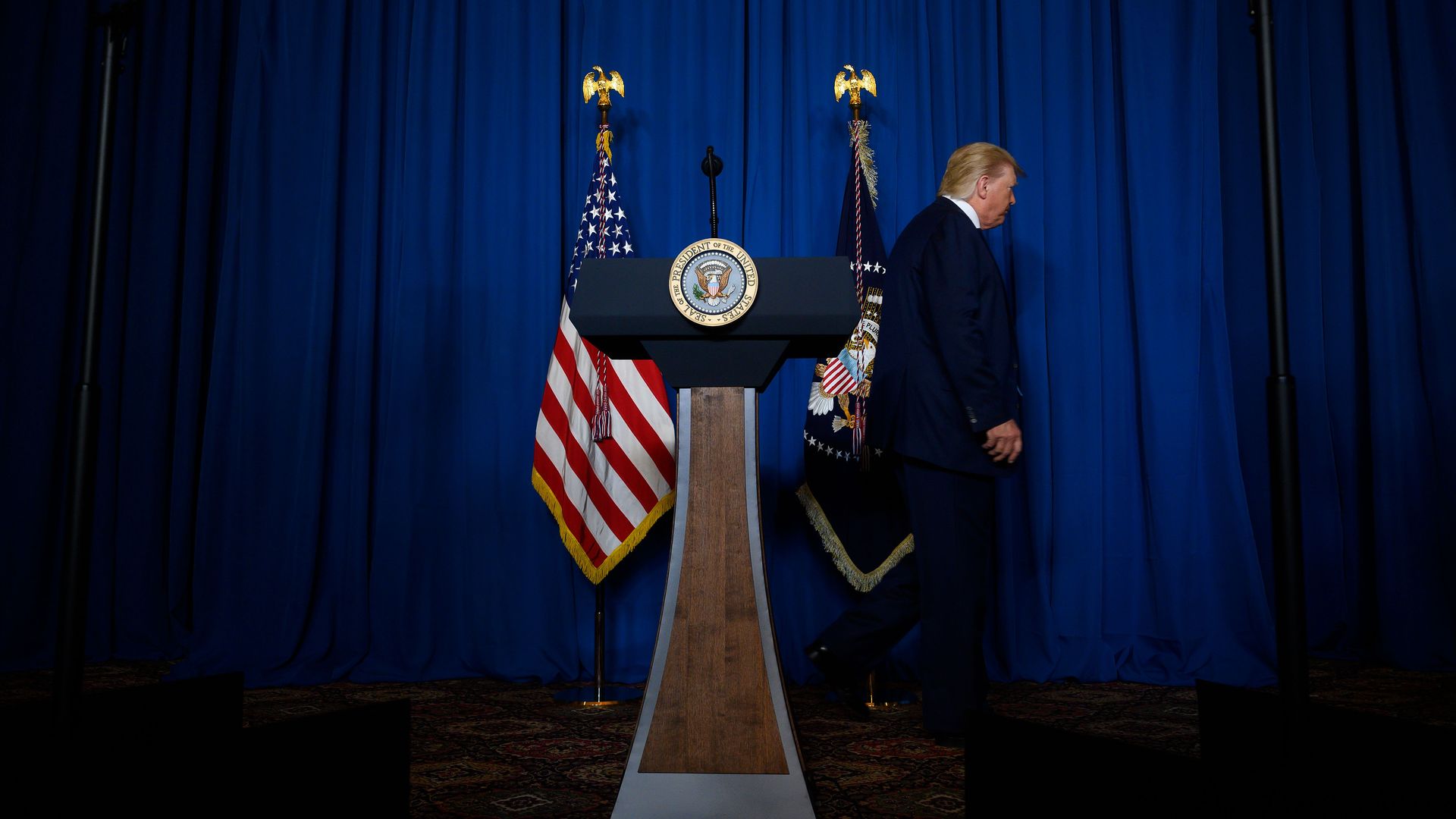
The assassination of Iranian commander Qasem Soleimani in January 2020 seemed like the height of U.S.-Israel cooperation, but it actually became a major point of tension between the allies.
Behind the scenes: Donald Trump expected Israel to play a more active role in the attack, and he griped that then-Prime Minister Benjamin Netanyahu was "willing to fight Iran to the last American soldier,” according to a former senior Trump administration official. Trump himself told me, “Israel did not do the right thing."
The Senate voted 88-11 on Wednesday to approve the National Defense Authorization Act (NDAA), sending the $770 billion, must-pass legislation to President Biden's desk after weeks of delay.
The original tally was 89-10 but Sen. Cory Booker (D-N.J.) later went to the floor and changed his vote from a "yes" to a "no."
Why it matters: The annual bill provides funding and sets policy for the Pentagon. It's been passed by Congress on a bipartisan basis every year for the past six decades.
The House on Tuesday evening unanimously voted to pass a bill that would ban all imports from the Chinese region of Xinjiang unless the U.S. government determines that the products were not made with forced labor.
Driving the news: Sen. Marco Rubio (R-Fla.) and Rep. Jim McGovern (D-Mass.) reached a compromise agreement earlier on Tuesday on the final legislative text of the Uyghur Forced Labor Prevention Act.
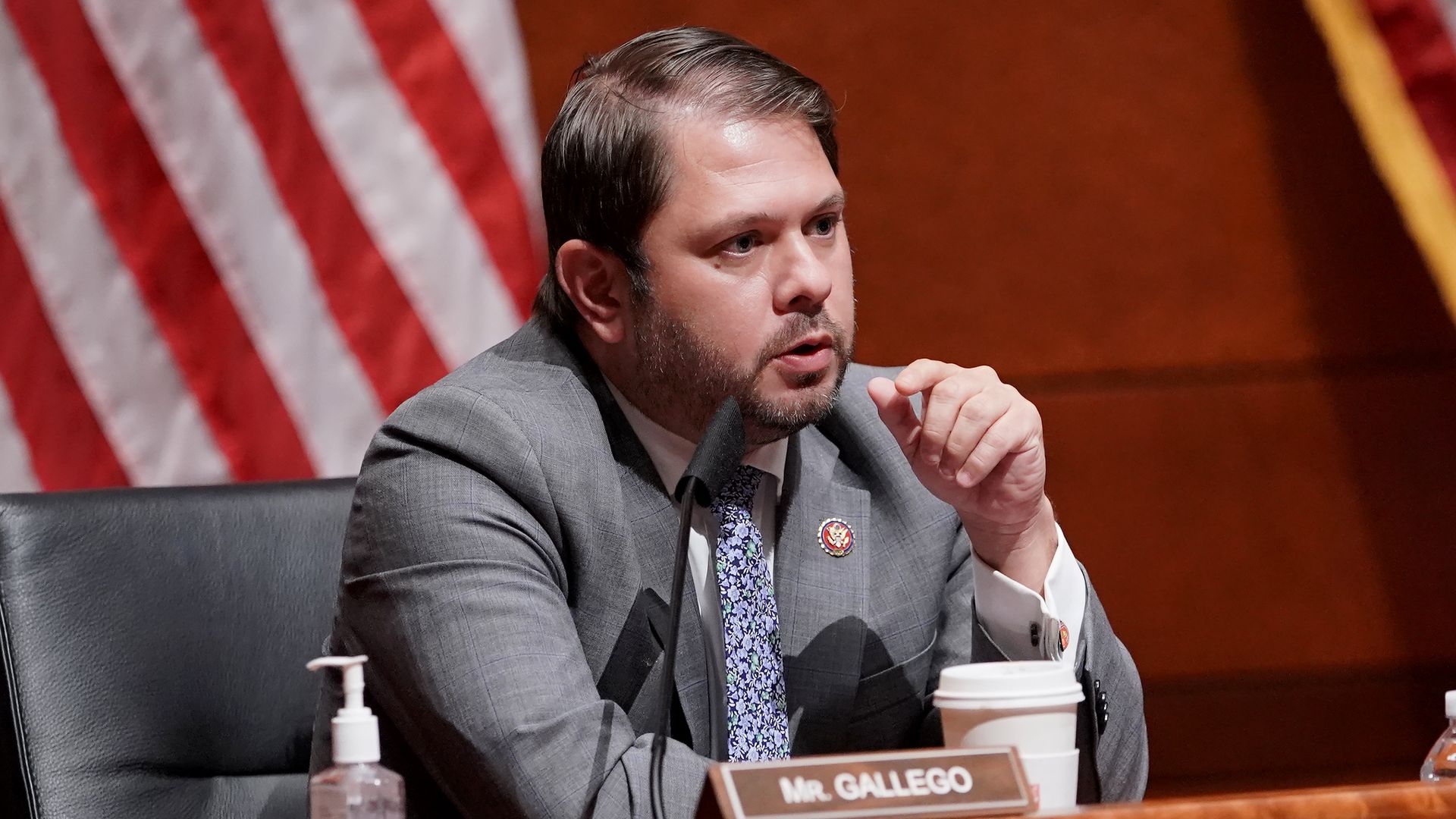
Rep. Ruben Gallego of Arizona, a Democrat who led a congressional delegation to Ukraine this weekend, tells Axios that President Biden is wrong to allow the Nord Stream 2 pipeline to move forward while Russia is threatening to invade Ukraine.
Why it matters: Gallego views Nord Stream 2 as "interlinked" with the security situation in Ukraine. The Putin-backed pipeline would bypass Ukrainian gas infrastructure and deliver Russian energy directly to Germany, eliminating one of Kyiv's last deterrents against an invasion.