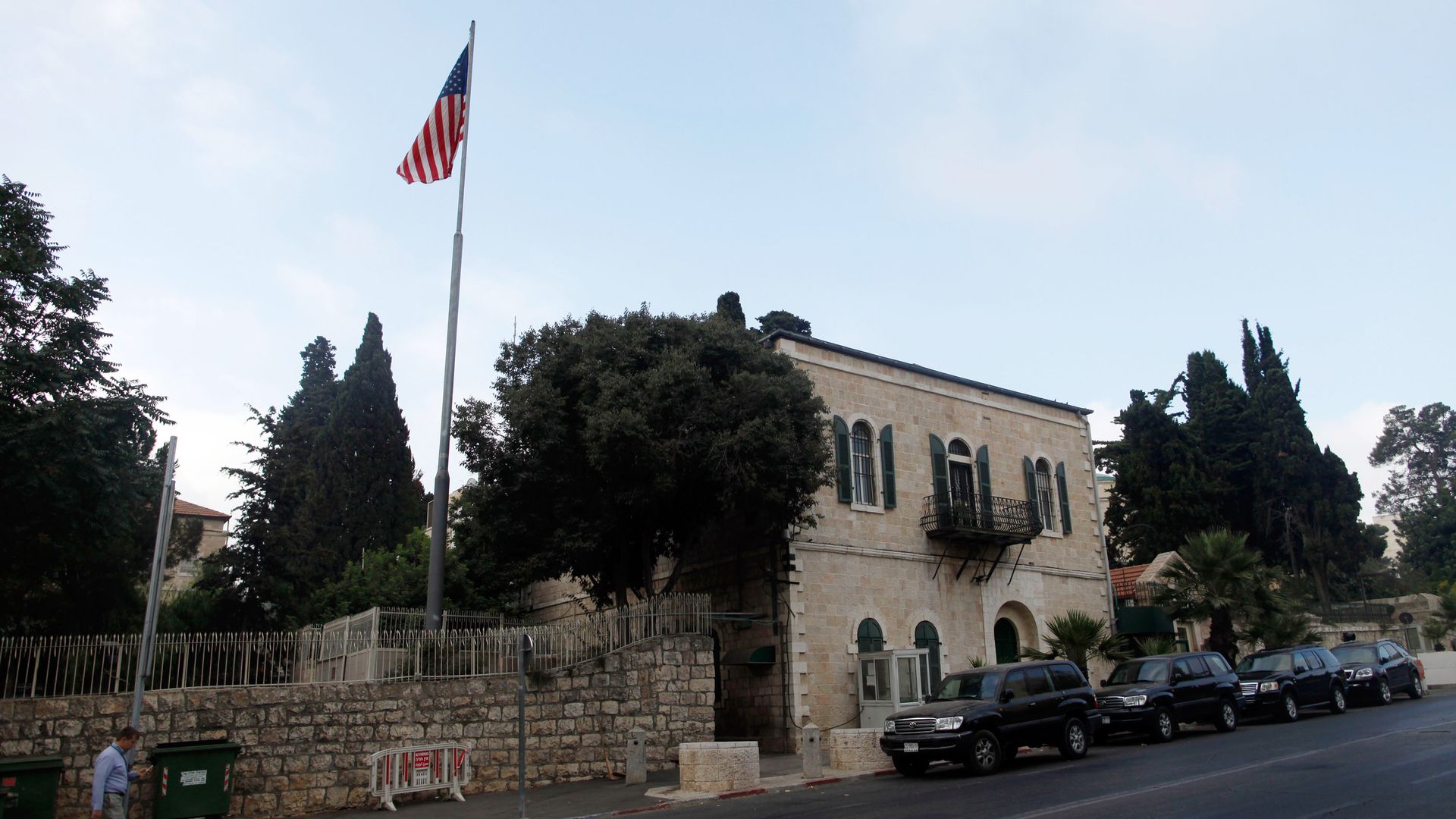
Outgoing U.S. ambassador to Israel David Friedman made the case against reopening the U.S. consulate general in Jerusalem on Monday in a hearing of the foreign relations and security committee in the Israeli parliament.
Why it matters: During the election campaign, Biden said his administration would reopen the consulate, which had served as the U.S. diplomatic mission to the Palestinians until it was shut down by the Trump administration and merged into the new U.S. embassy in Jerusalem.
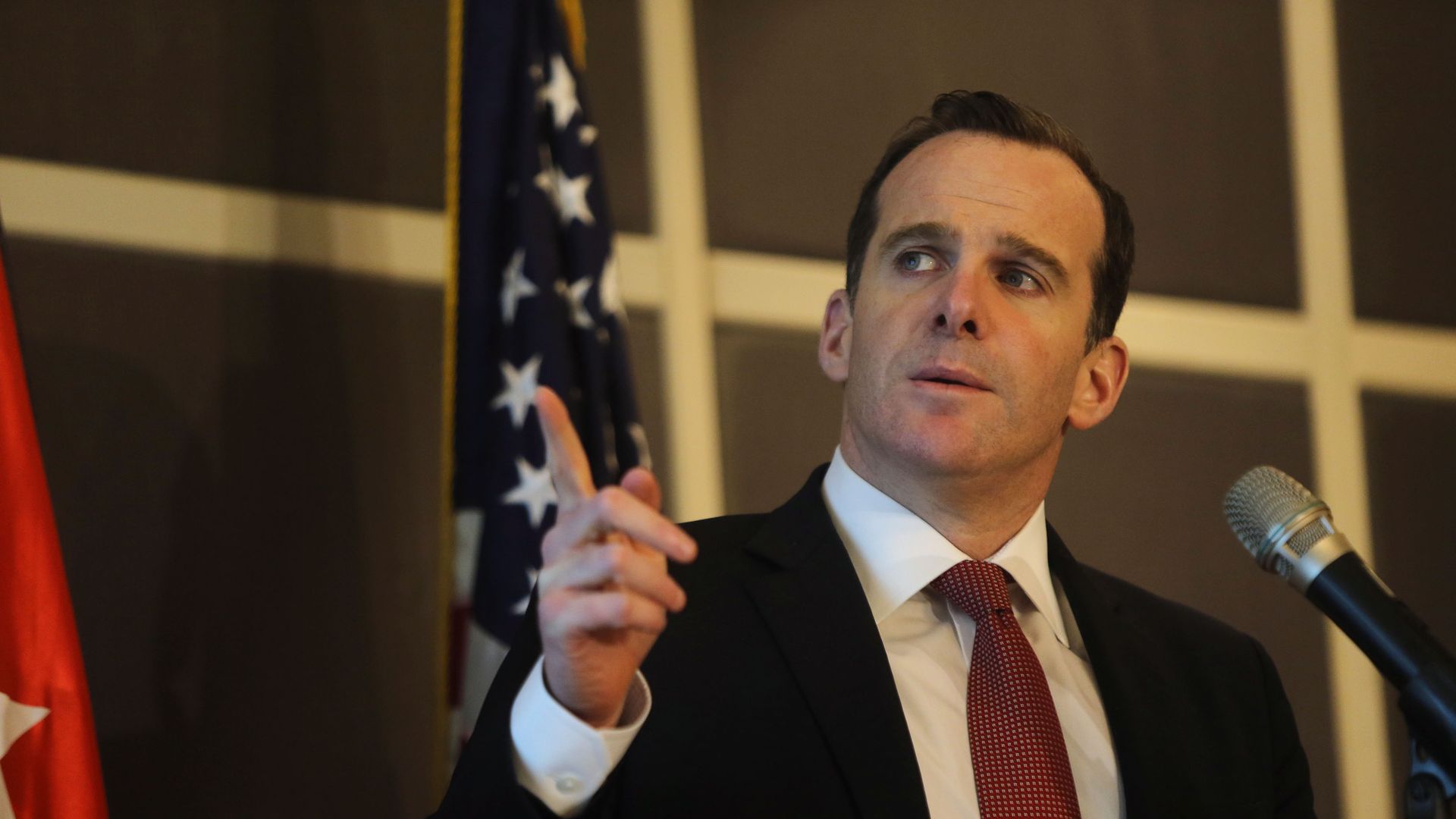
Ankara — The appointment of Brett McGurk as Middle East coordinator on President-elect Biden's National Security Council has already set alarm bells ringing in Turkey.
Why it matters: McGurk, who served as counter-ISIS envoy under both Barack Obama and Donald Trump, is considered a staunch critic of the Turkish government’s policies in the Middle East and an outspoken advocate of America's partnership with the Kurdish-led Syrian Democratic Forces (SDF) to defeat ISIS.
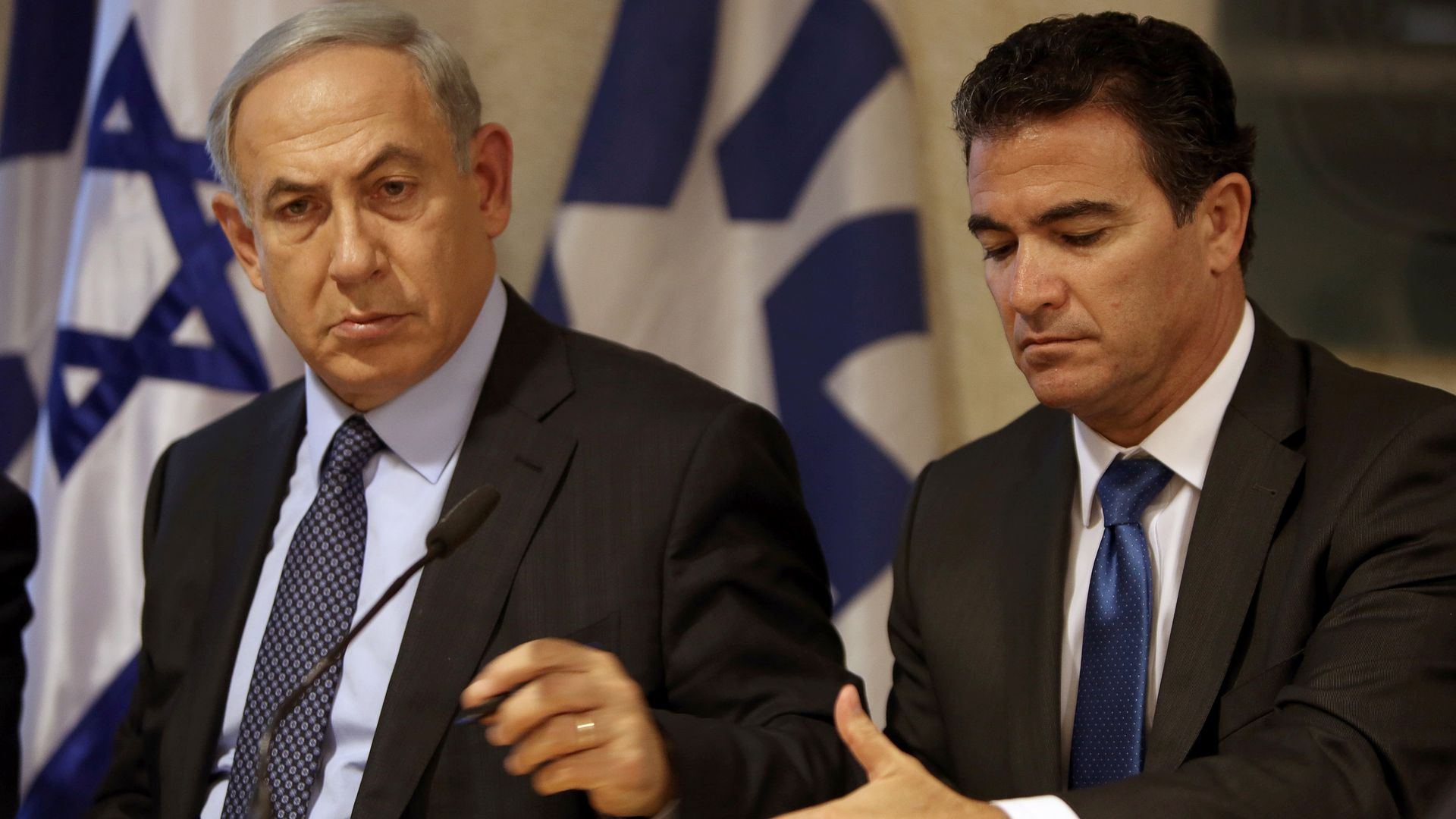
Israeli Prime Minister Netanyahu is forming an interagency team to prepare a strategy for engaging the Biden administration on the Iran nuclear file, officials in the Prime Minister’s office tell me.
He's also considering appointing a special envoy for talks with Biden over the Iran nuclear deal.
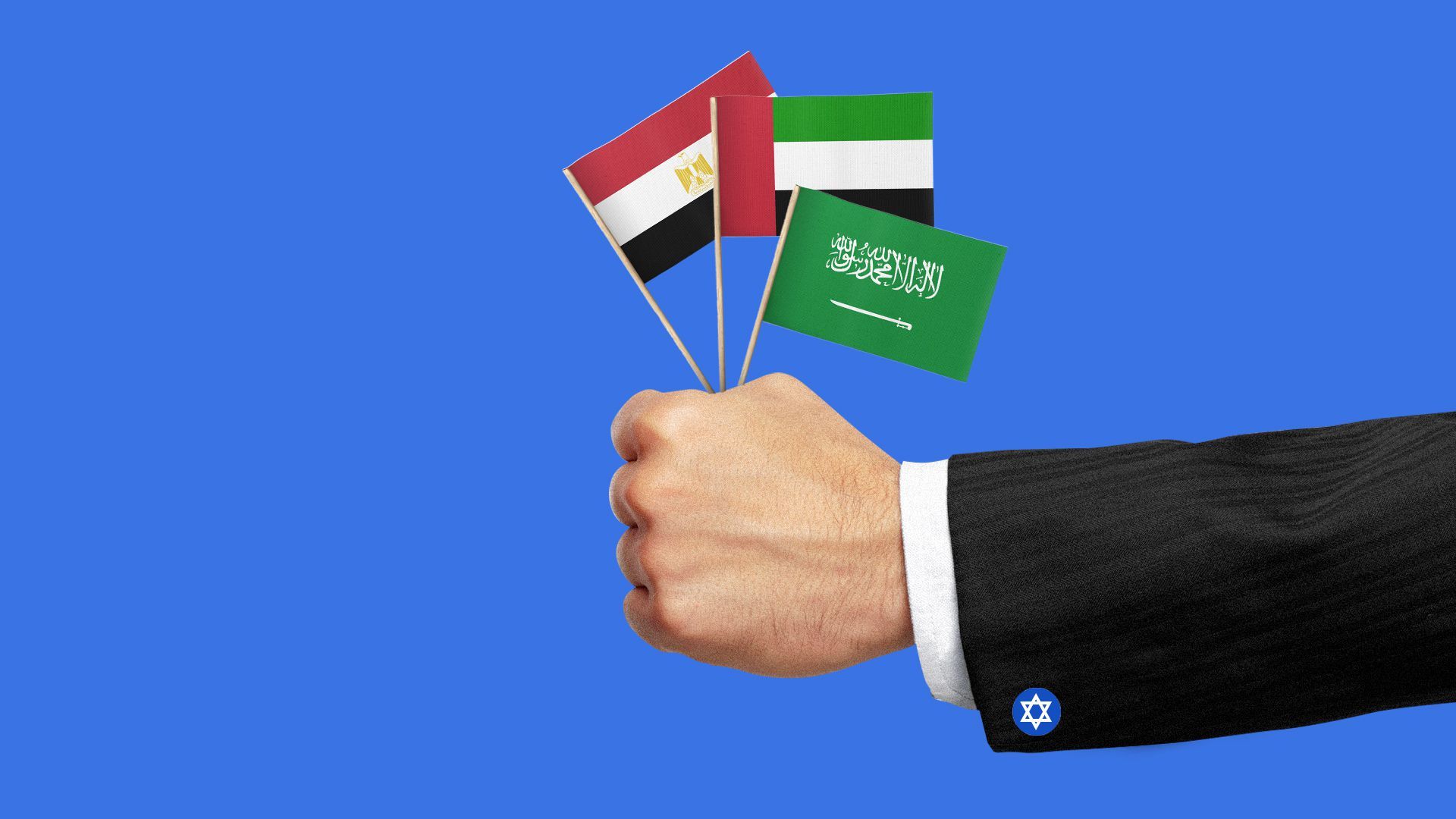
Israel plans to lobby the incoming Biden administration to avoid confrontations over human rights and other contentious issues with Saudi Arabia, the UAE and Egypt, senior Israeli defense officials tell me.
Why it matters: President-elect Biden has promised to put human rights and democracy at the forefront of U.S. foreign policy, and he skipped over all three when placing phone calls to the leaders of 17 countries after his election victory. He was particularly critical of Saudi Arabia during the campaign over the war in Yemen and human rights issues.
The Trump administration has declassified a report which lays out its Indo-Pacific strategy, including “accelerating India’s rise,” blocking China from establishing “illiberal spheres of influence,” and maintaining “U.S. strategic primacy” in the region, according to a copy viewed by Axios.
Why it matters: The strategy laid out in the ten-page report, written in early 2018, has guided the U.S. approach to China, India, North Korea and other nations in the Indo-Pacific region for the past three years. Its release sheds light on the geopolitical and security challenges soon to be inherited by the Biden administration.
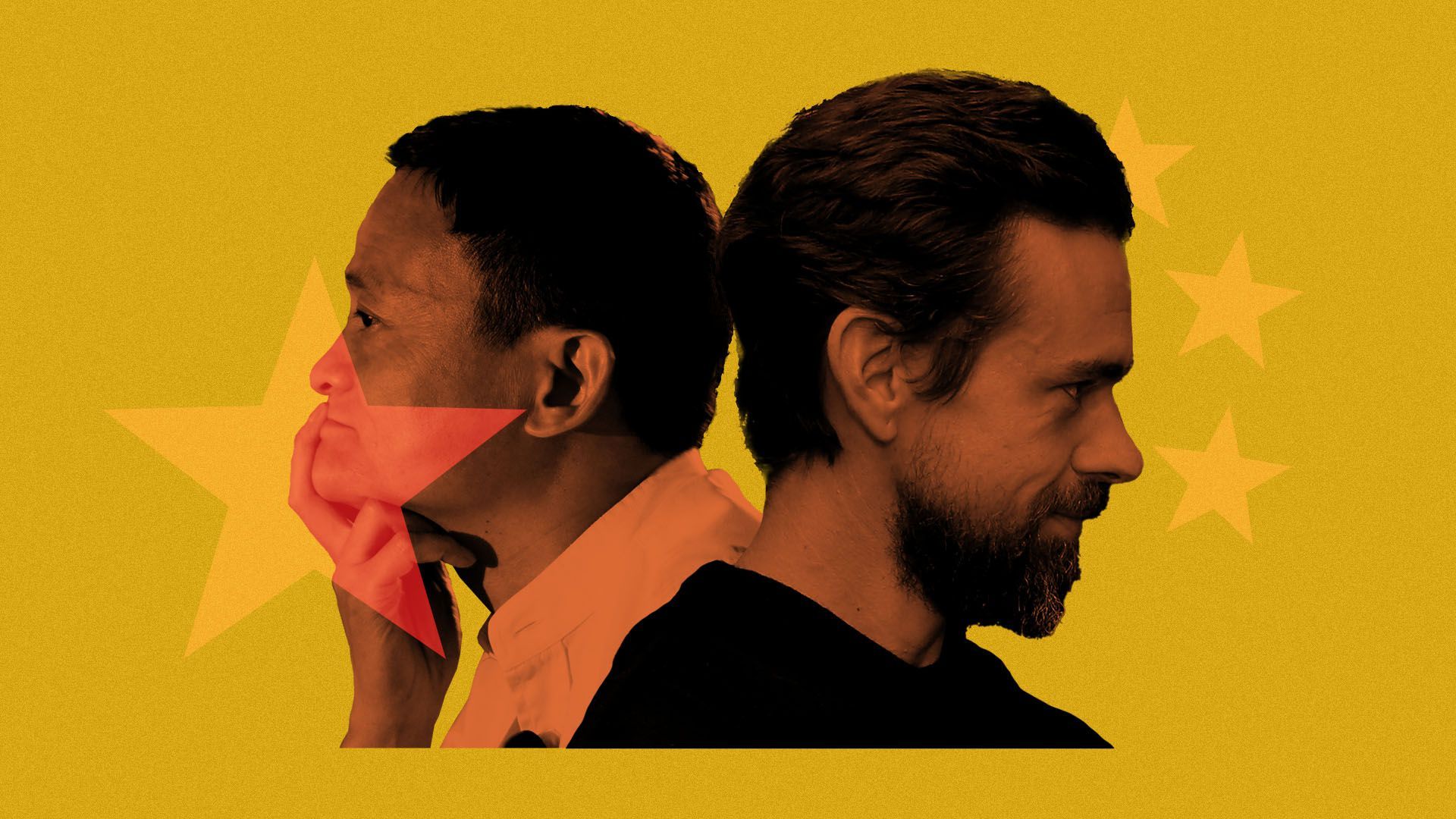
In China, President Xi Jinping has silenced Alibaba founder Jack Ma and launched an antitrust investigation into his company after the e-commerce tycoon publicly criticized state regulators. In the U.S., Twitter CEO Jack Dorsey has suspended President Donald Trump's accounts after the president used the platform to incite violence.
The big picture: The juxtaposition of two almost perfectly inverse situations reveals how differently China and the U.S. have approached the management of tech giants and digital information.
In the weeks leading up to the November presidential election, Chinese dissidents across the U.S. and at least five other countries found their homes blockaded by dozens of angry and sometimes violent protesters accusing them, without evidence, of being spies for China.
Why it matters: The protesters were mobilized through a disinformation ecosystem that overlaps with the one that led to violence in the U.S. Capitol last week. The harassment targeting the global Chinese diaspora was an early warning sign.
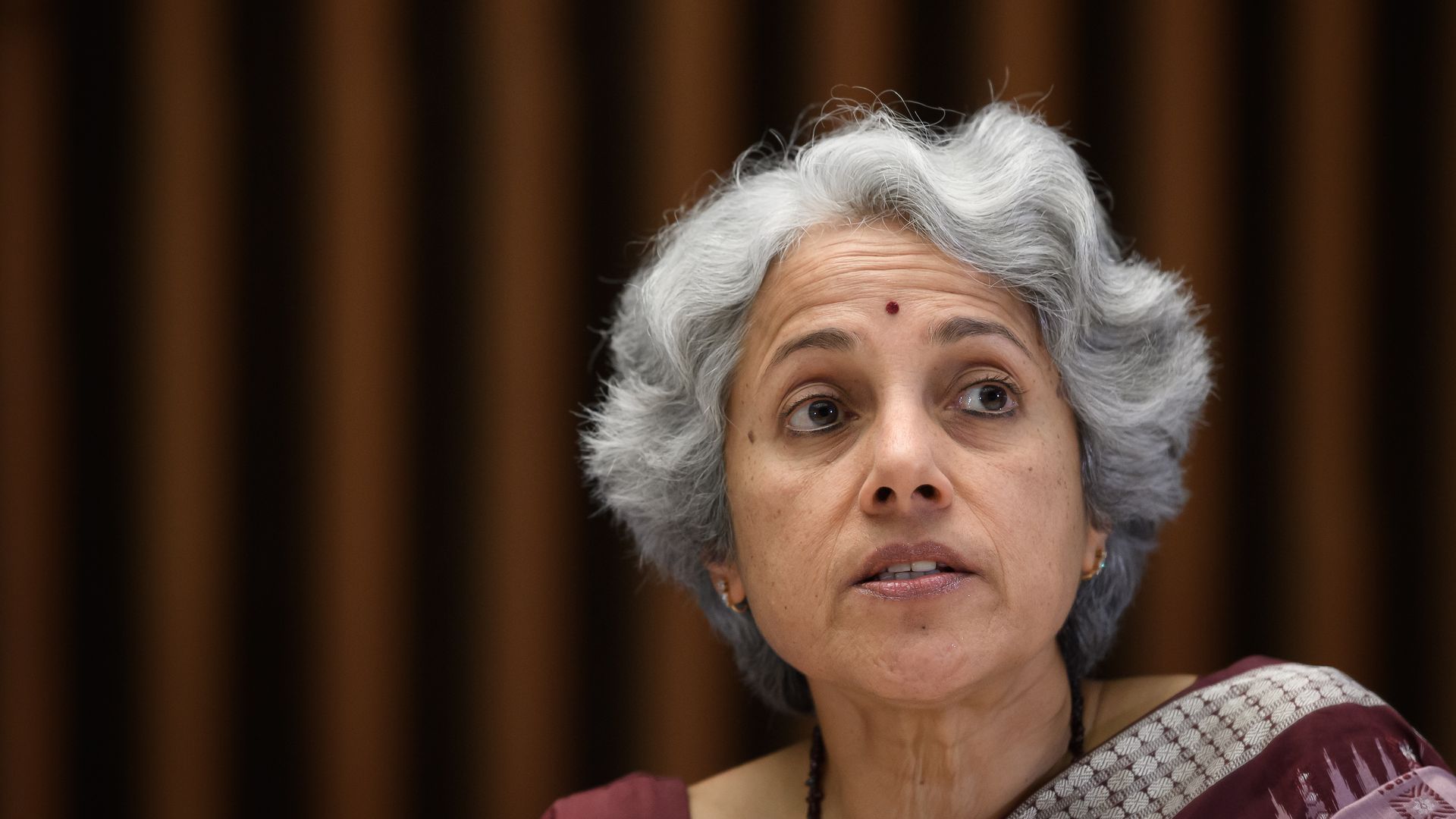
World Health Organization chief scientist Soumya Swaminathan warned Monday herd immunity is unlikely to be achieved this year despite COVID-19 vaccines being rolled out.
The big picture: Mass coronavirus vaccinations are under way in the U.S. and across the world. Moderna said Monday its vaccine would provide immunity against the virus for at least a year. But Swaminathan told a briefing even if immunity "happens in a couple of pockets, in a few countries, it’s not going to protect people across the world" in 2021. "It takes time to scale the production of doses," she said.
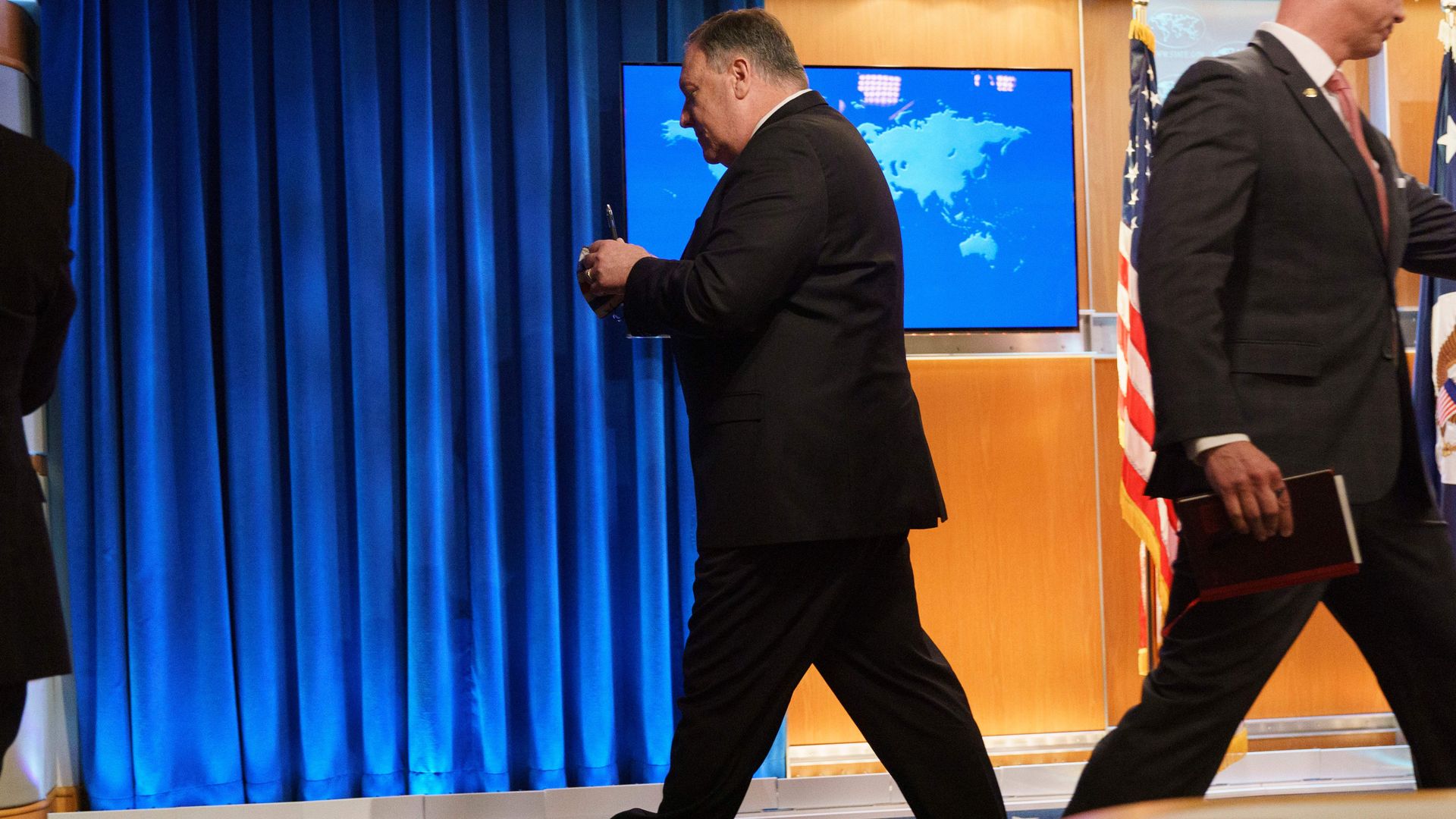
Secretary of State Mike Pompeo declared Yemen's Houthi rebels a terror group, labeled Cuba a state sponsor of terrorism and risked provoking China by lifting restrictions on interactions between U.S. and Taiwanese officials — all within 48 hours, and with less than two weeks left in President Trump's term.
Why it matters: The administration, and in particular Pompeo, has made little secret of the fact that it's trying to tie President-elect Biden's hands, in particular when it comes to Trump's hardline policies on Iran and China.