The world has rarely been more ripe for power grabs, and Hungary's Viktor Orbán is not the only leader taking advantage.
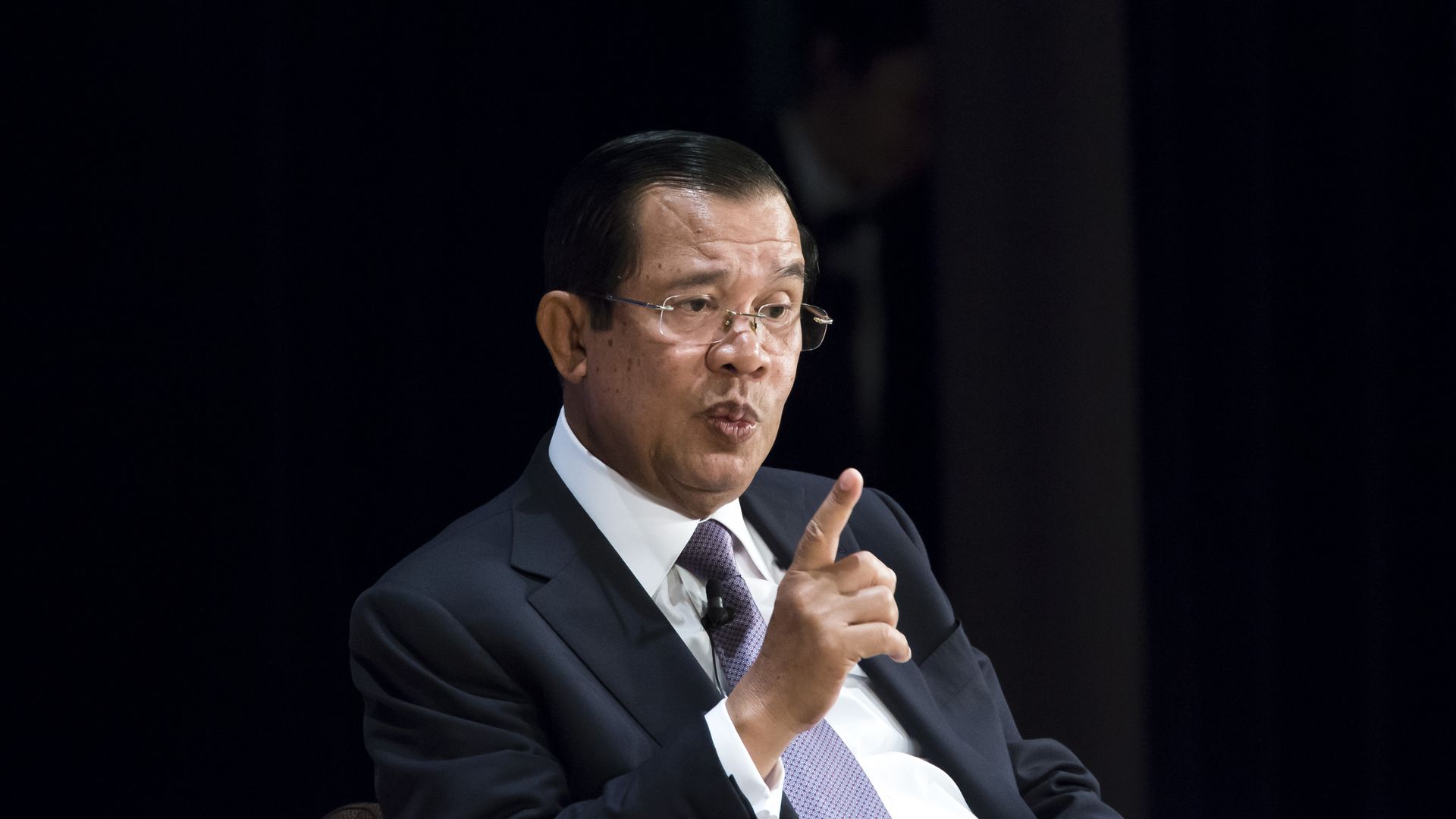
The big picture: Emergency laws in Serbia and Cambodia also provide leaders near-total power, while governments elsewhere are using the virus as cover to crack down on the media, opposition or minorities, the Economist reports.
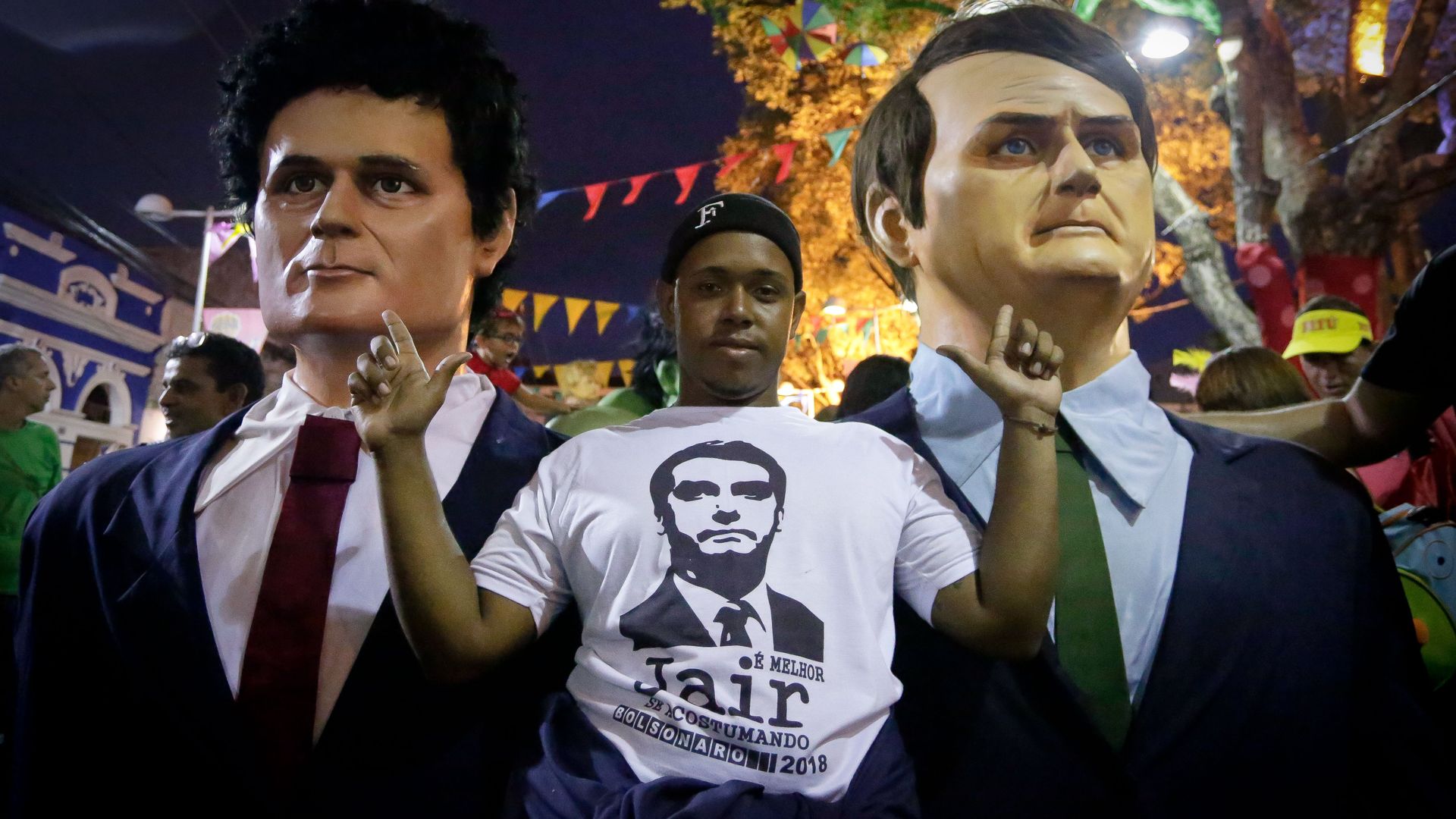
Brazilian President Jair Bolsonaro may dismiss the coronavirus crisis, but he's taking the crisis within his administration head-on.
Driving the news: Bolsonaro’s most valuable ally resigned on national television on Friday, accusing the president of firing the head of Brazil’s federal police in order to hamper ongoing investigations.
Global military spending climbed in 2019 for the fifth consecutive year to a new high of $1.9 trillion, or 2.2% of global GDP, according to the Stockholm International Peace Research Institute.
Breaking it down: The U.S. spent nearly three times as much as China and 10 times as much as any other country on Earth.
Controversy over revisions made to a public report from the European Union under pressure from China is pitting EU staff against each other and against media outlets that have covered the issue.
Why it matters: The furor over the report, which called out China for its coronavirus disinformation campaign, demonstrates how behind-the-scenes pressure from an authoritarian government can sow division within democratic societies.
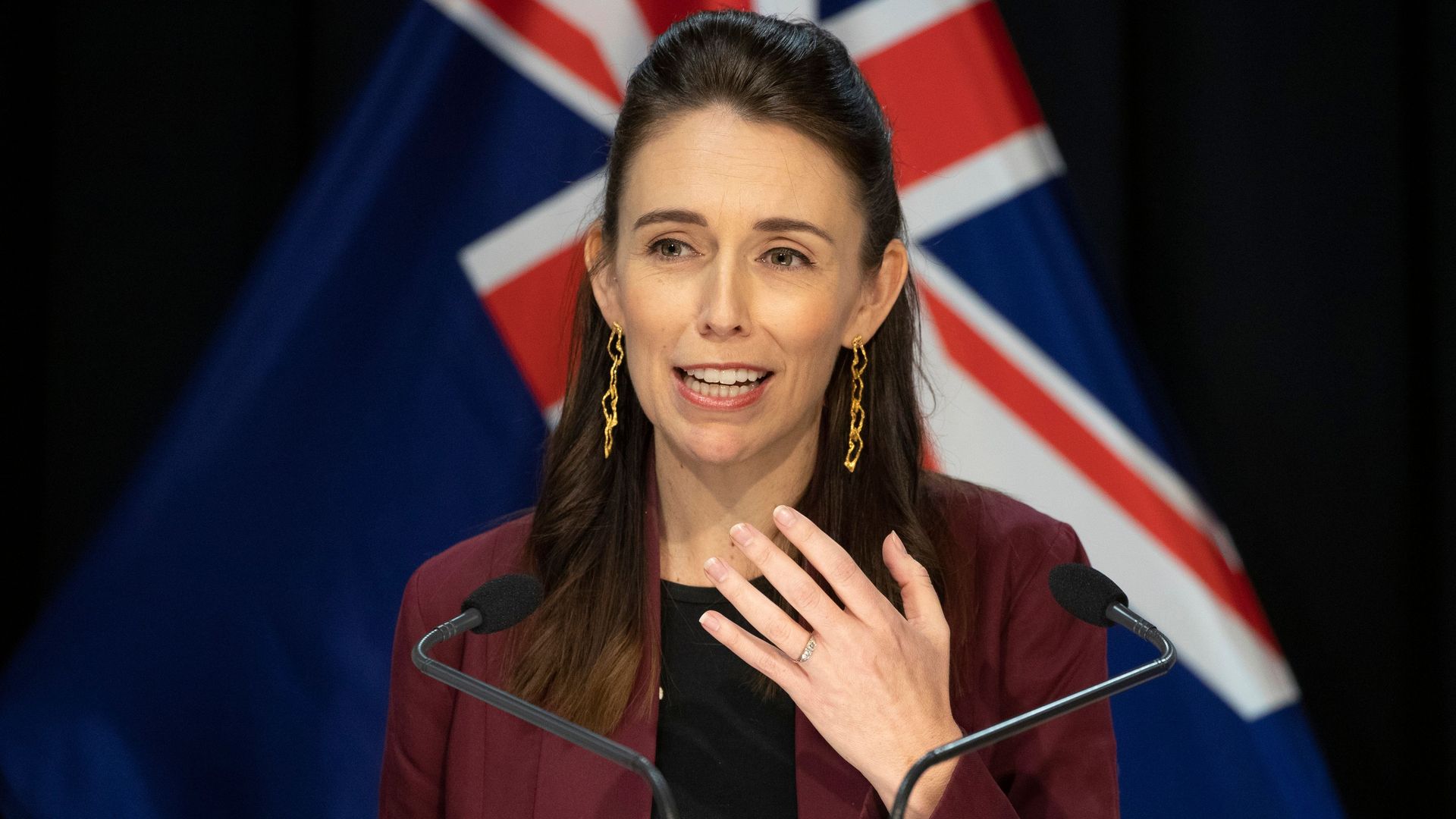
New Zealand's top health official Ashley Bloomfield told a briefing Monday he's confident "we have achieved our goal of elimination" of the novel coronavirus following days of reporting single-digit cases.
The big picture: New Zealand was to move from alert level 4 at 11:59pm local time Monday, enabling New Zealanders to travel around their regions, not just their neighborhoods, and for some non-essential businesses and schools to reopen.
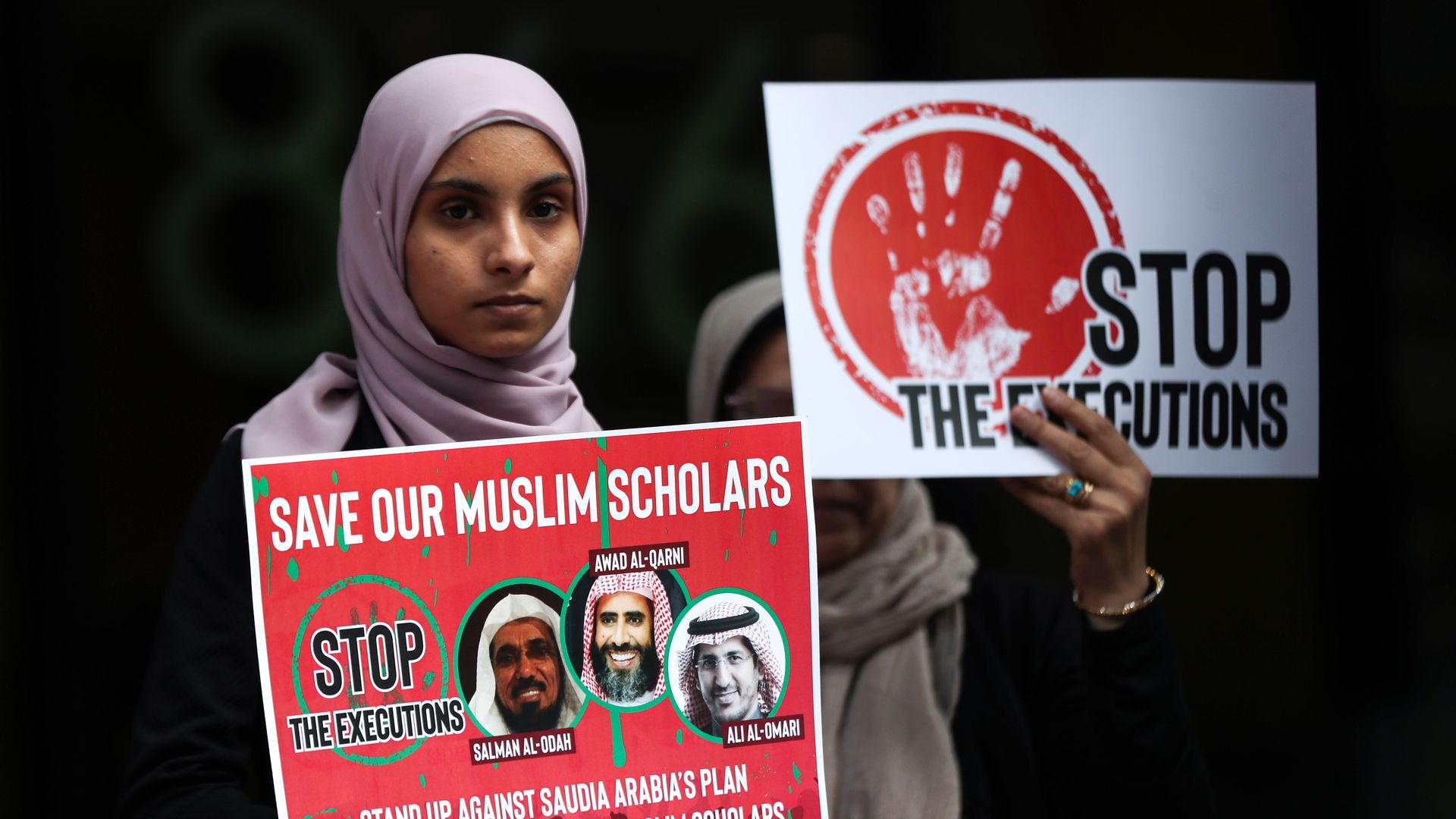
Saudi Arabia announced in a statement Sunday it has ended the death penalty for crimes committed by minors after "effectively" abolishing floggings. Minors convicted would instead "receive a prison sentence of no longer than 10 years in a juvenile detention facility," the statement said.
The big picture: The kingdom is trying to recast itself in a tourism push to the West as a more liberal destination as part of Crown Prince Mohammed bin Salman's Saudi Vision 2030 plan to reduce its economic dependence on oil. But it has been widely criticized for having one of the world's worst human rights records. Saudi Arabia executed a record 184 people last year, per rights group Amnesty International. The UN said it received reports that three children were executed in May 2019.
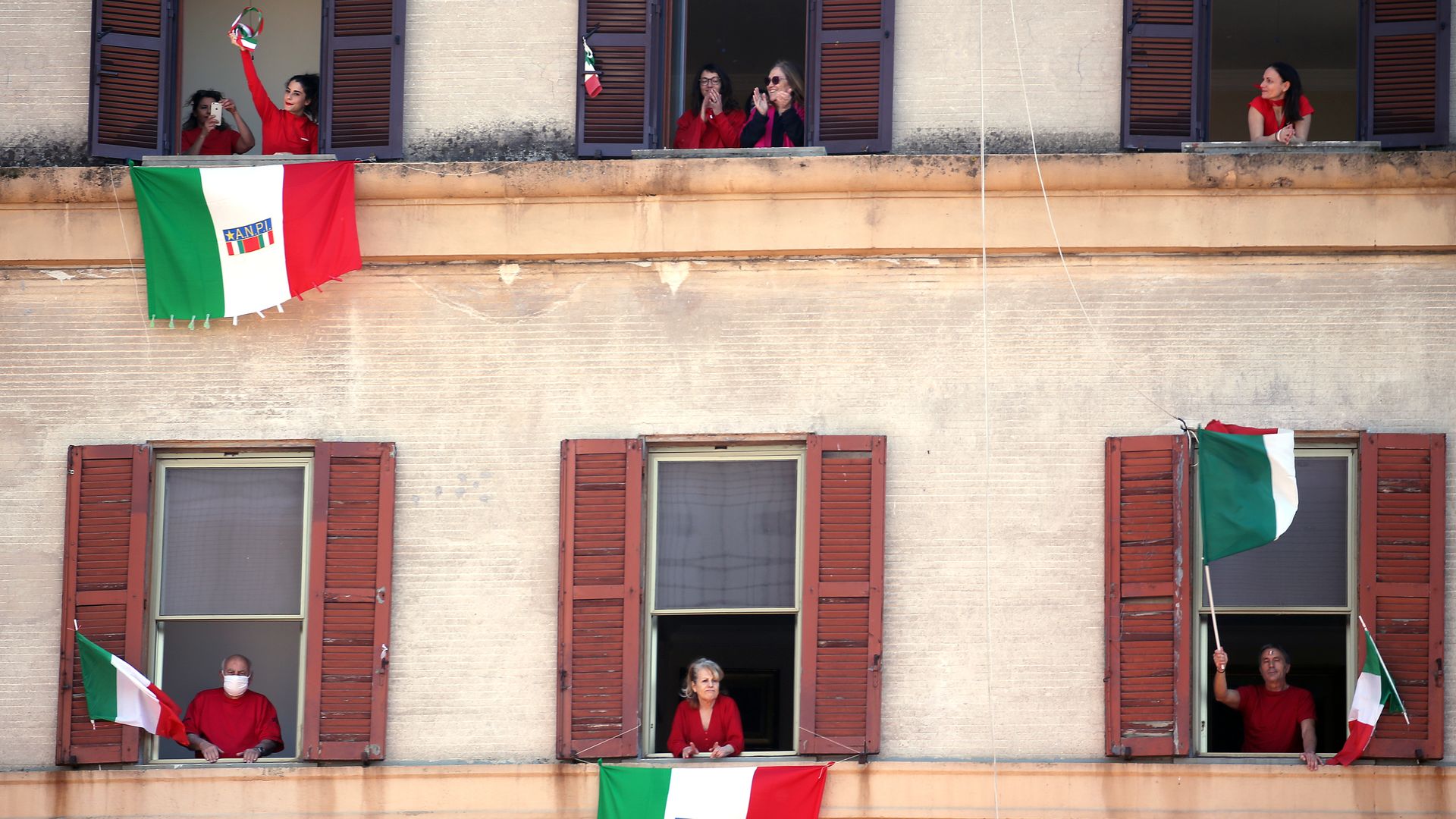
Italy reported 260 deaths caused by the novel coronavirus on Sunday, marking the country's lowest confirmed single-day death toll since the week of March 12, per Johns Hopkins data.
The big picture: Prime Minister Giuseppe Conte outlined plans on Sunday to cautiously reopen parts of Italy, with manufacturing and construction set to start back on May 4, followed by shops on May 14. Bars, restaurants, cafes and other nonessential businesses will not open until at least June 1, and broad social distancing measures will remain in place for the foreseeable future.
Several hundred Hong Kong protestors held an anti-government demonstration at a mall on Sunday in one of the city's largest protests since early March.
Why it matters: The pro-democracy demonstrations in Hong Kong dominated headlines for months until the coronavirus crisis forced the government to implement strict social distancing measures.
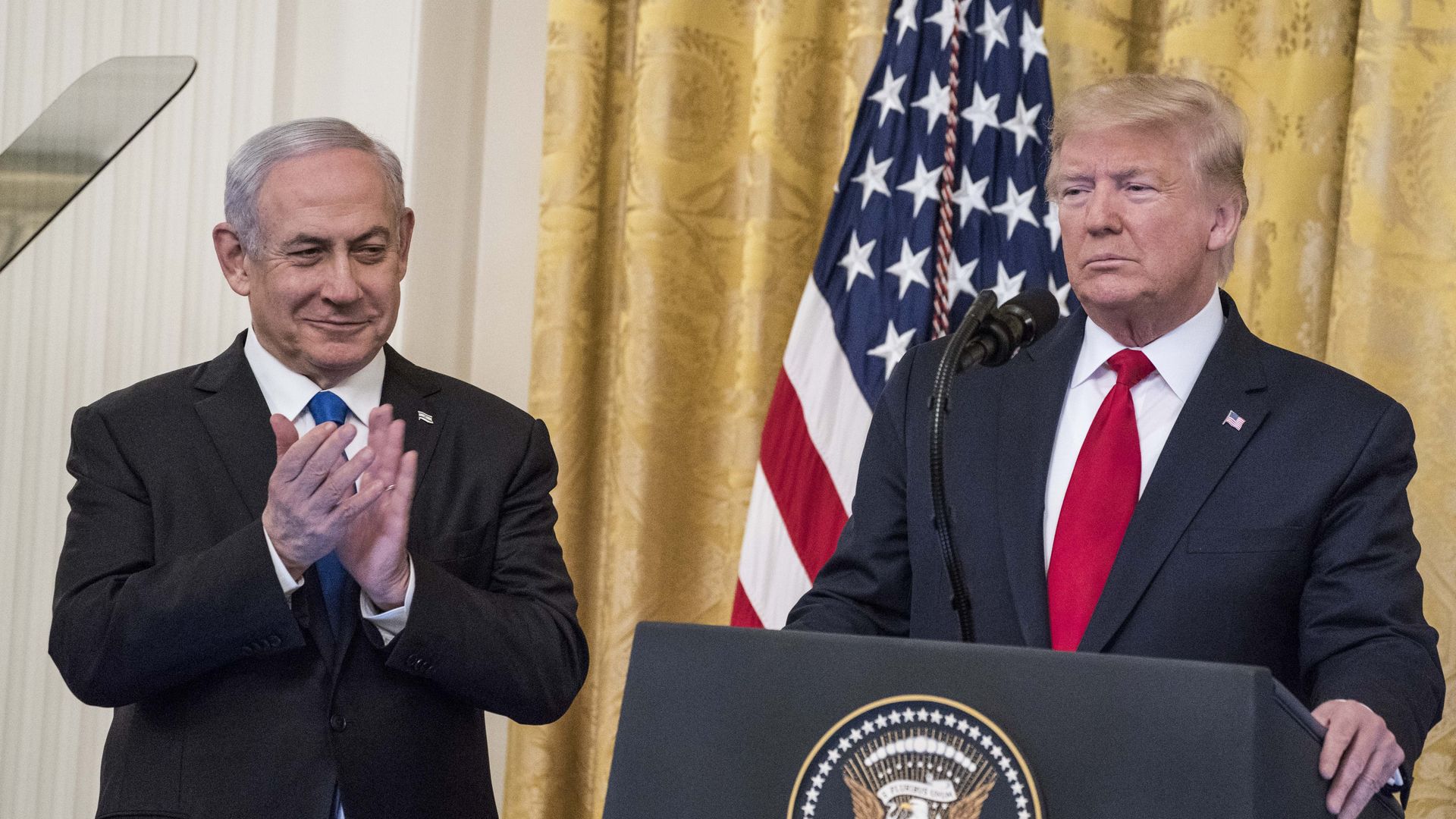
Israeli Prime Minister Benjamin Netanyahu said in a prerecorded speech for an event organized by an evangelical organization that he is “confident” that President Trump will honor his pledge to recognize Israel’s sovereignty over the Jewish settlements in the West Bank and the Jordan Valley "a couple of months from now."
Why it matters: According to the recent coalition deal between Netanyahu and the leader of the Blue and White party Benny Gantz, Netanyahu can bring "the understandings with the Trump administration" on annexing parts of the West Bank to a discussion in the Cabinet and to a vote either in the Cabinet or in the Knesset starting July 1.