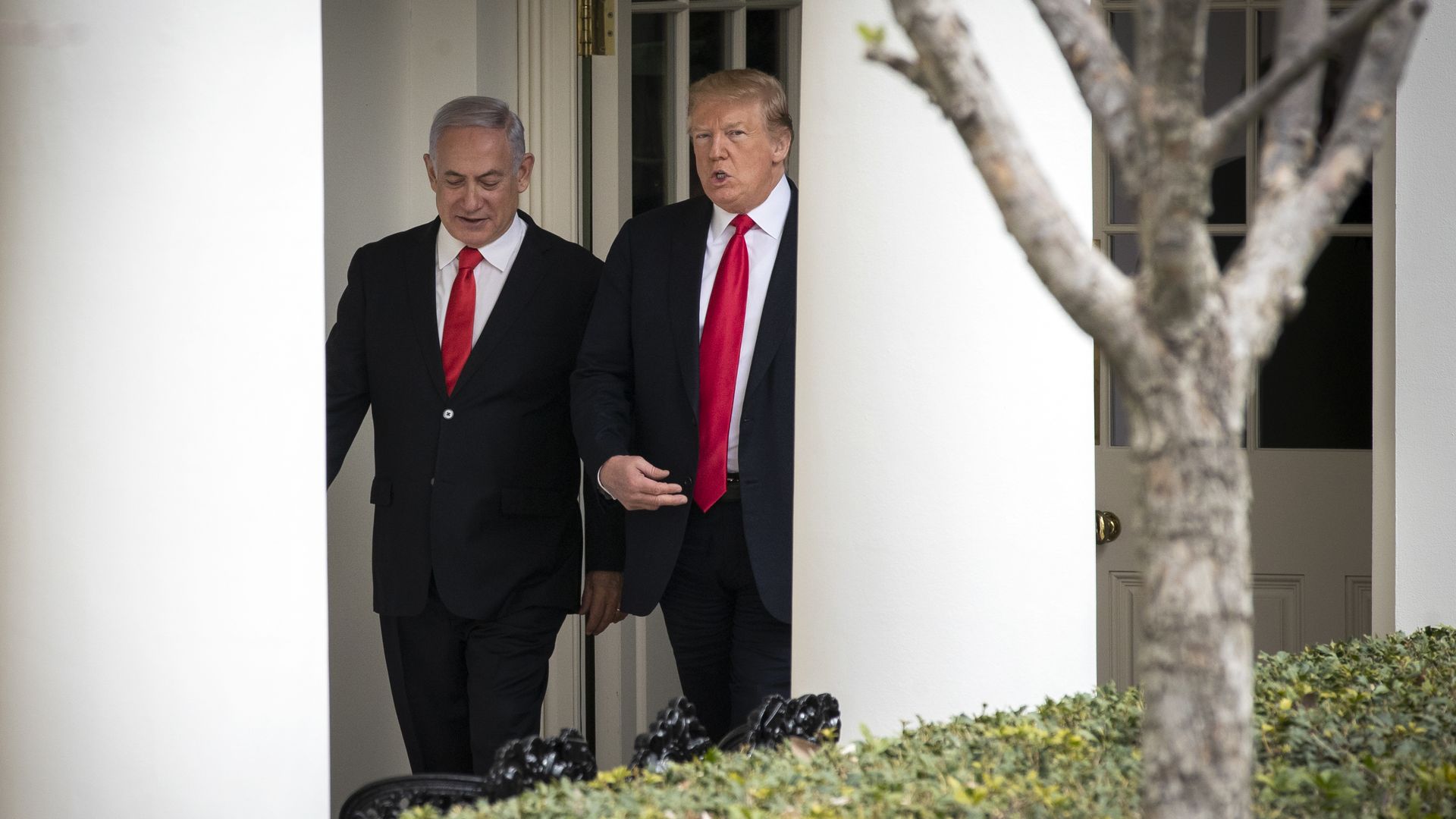
Israeli Prime Minister Benjamin Netanyahu denied Thursday a Politico report that said the FBI and other U.S. intelligence agencies believe Israel was behind the planting of devices that intercept cellphone communications near the White House and around Washington, D.C.
Why it matters: The report highlights a rift between the two allies, as Israeli officials strenuously deny that such spying took place while Politico reports that "former [U.S.] officials with deep experience dealing with intelligence matters scoff at the Israeli claim."
Chinese megacities like Beijing, Shanghai and Shenzhen are capturing the world's attention with their glittering skylines, Fortune 500 firms and outsized wealth, but the country also has hundreds of shrinking, forgotten cities that are beginning to resemble America's Rust Belt.
Why it matters: The slowdown in these once-booming industrial towns is chipping away at China's economic might.
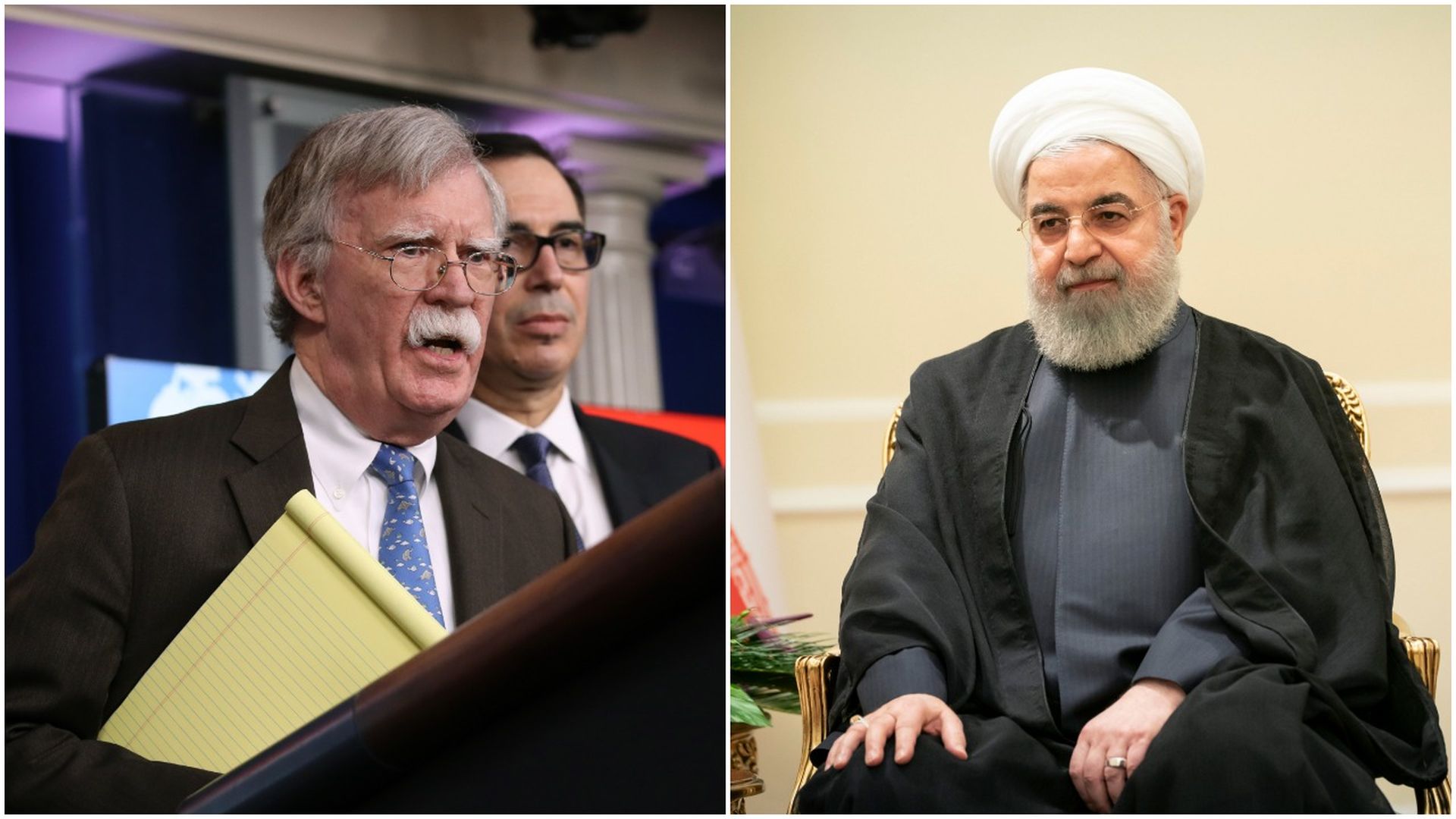
John Bolton’s departure from the White House has been seen in Israel as a sign of Prime Minister Benjamin Netanyahu's weakened standing with President Trump, and it will exacerbate Netanyahu's anxiety over Trump’s push for direct talks with Iran.
Why it matters: Bolton's ouster is a big blow for Netanyahu both in substance and in timing. Bolton was Netanyahu’s most important ally in the White House on Iran and other foreign policy issues, and he was forced out a week before Israel's elections.
Iranian President Hassan Rouhani said the U.S. should "put warmongers aside " following President Trump's sudden dismissal of John Bolton as a national security adviser, the AP reports.
Why it matters: Bolton's departure removes one of the strongest opponents of detente with Tehran. Rouhani "signaled approval" of Trump's decision, the AP notes. But he also reiterated that Iran is only interested in talks with the U.S. if suffocating economic sanctions are lifted, per Iran's semi-official Tasnim News Agency.
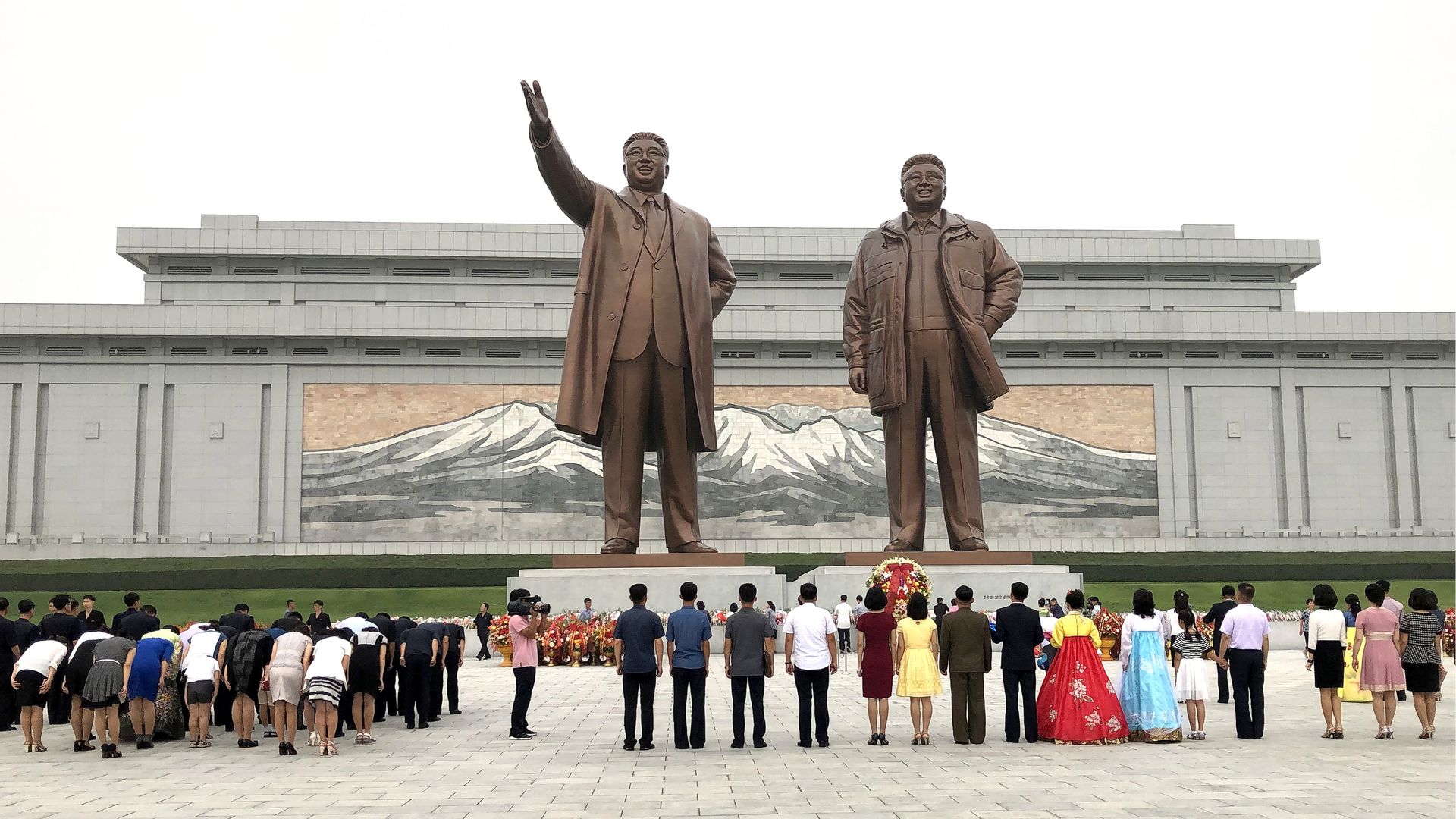
North Korea-linked hackers have expanded their campaign to spy on experts researching nuclear deterrence, North Korea’s nuclear submarine program and North Korean economic sanctions, according to research from Prevailion.
The big picture: Countries often use espionage to prepare for upcoming actions like new sanctions, improve their bargaining position by better understanding their adversary's goals, or to see what other people know. This could be an example of any of those.
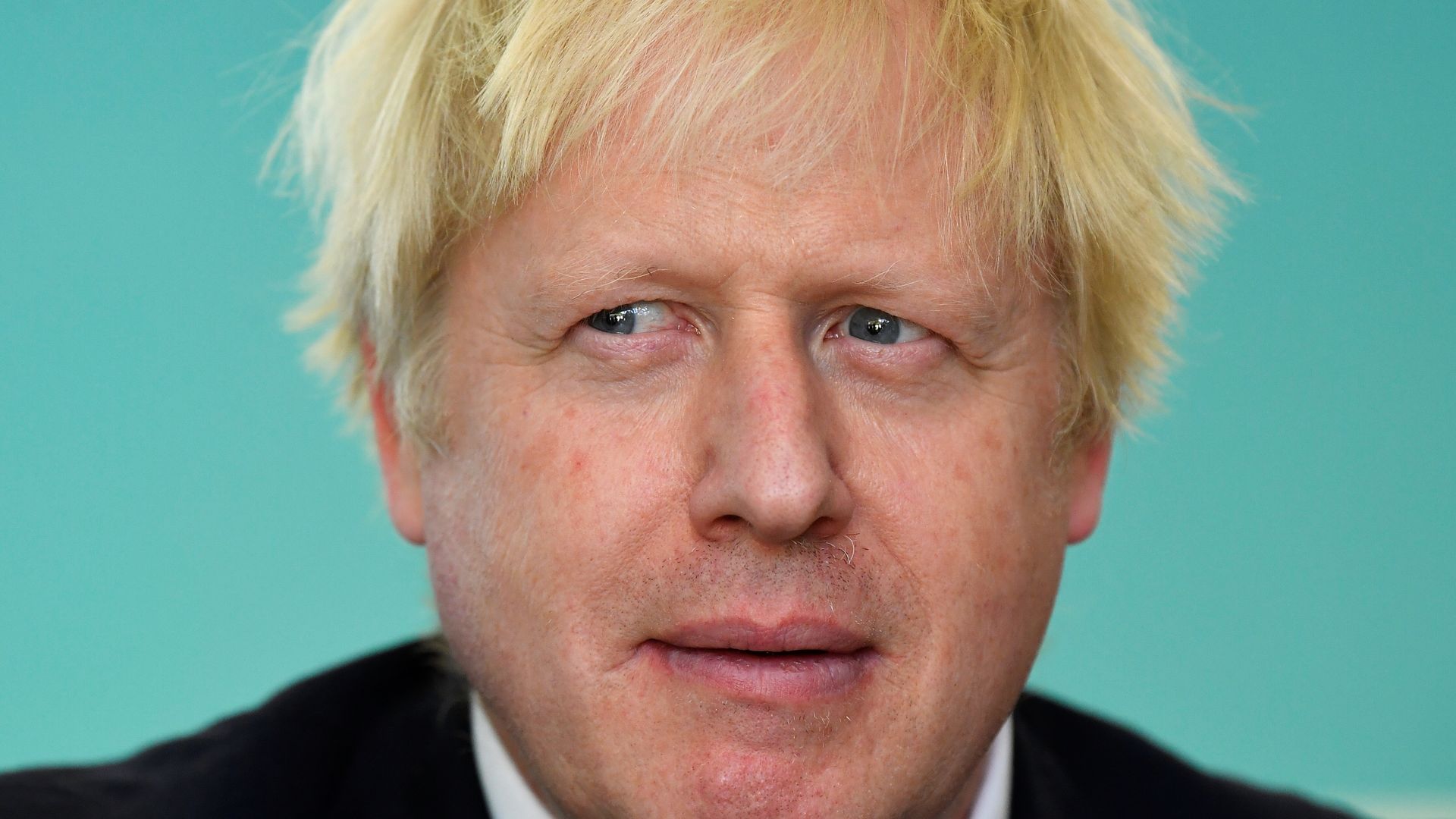
Scotland's Court of Session, its highest civil court, ruled Wednesday that the ongoing suspension — or "prorogation" — of the U.K. Parliament by Prime Minister Boris Johnson's government is unlawful, per the BBC.
What's next: The court's ruling did not include an order to cancel the prorogation, so Parliament will remain out of session. The case now heads to the U.K.'s Supreme Court next week.