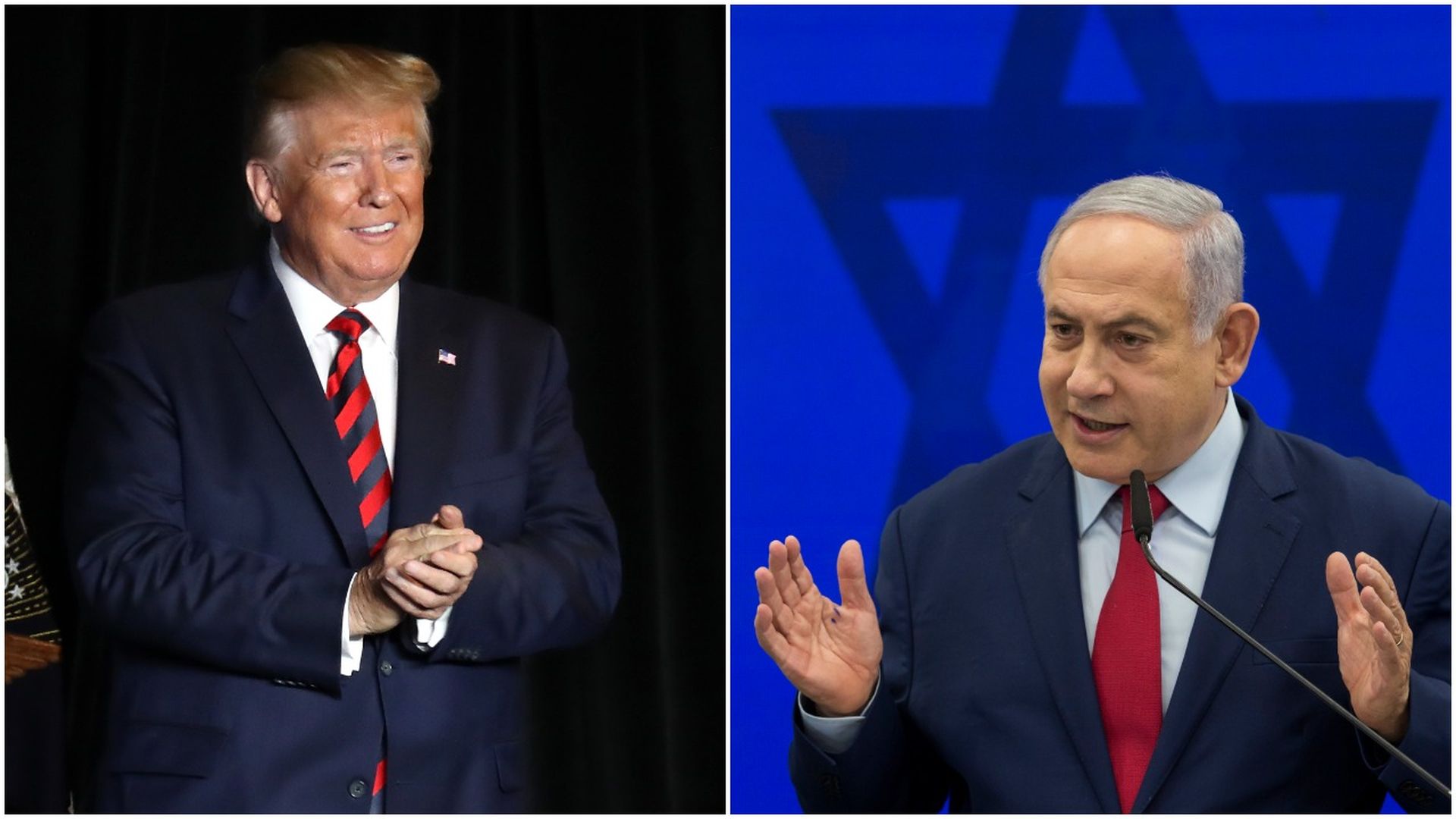
Three days before the Israeli elections, President Trump tweeted on Saturday that he spoke on the phone with Israeli Prime Minister Benjamin Netanyahu and agreed to work on a U.S.-Israel defense treaty after the election is over.
Why it matters: By making this statement, Trump directly intervened in the Israeli elections and sided with Netanyahu. Netanyahu has long sought a gesture from Trump that would help him win his reelection campaign. Trump's announcement was exactly the kind of support Netanyahu was looking for.
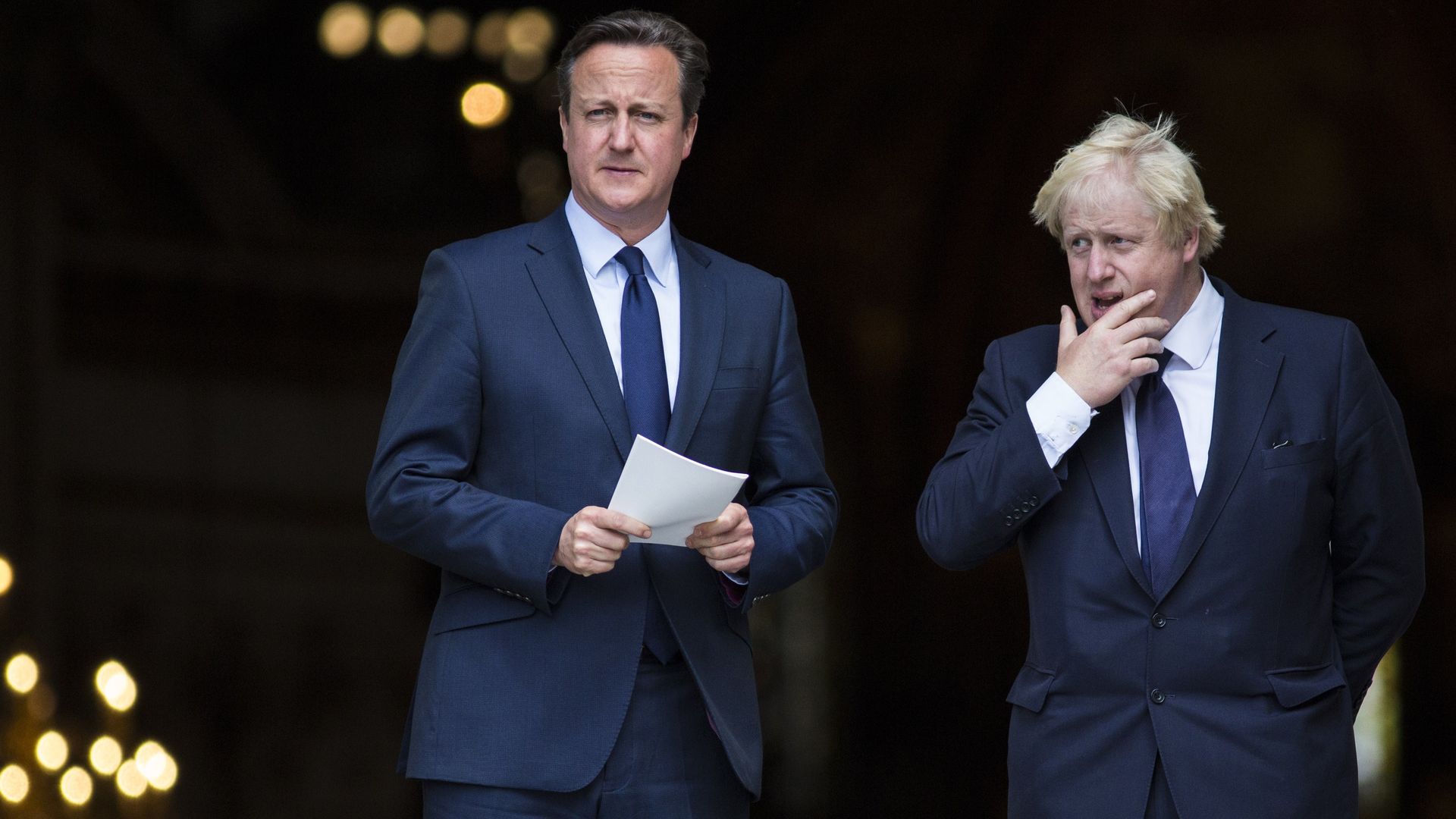
Three years after his career-defining, and ending, defeat in the 2016 referendum on the U.K.'s membership in European Union, Cameron sat down with Andrew Billen of the Times of London ahead of the release of his memoir next week.
Why it matters: Cameron's successor, Theresa May, was swallowed up by Brexit chaos and replaced last month by Boris Johnson — Cameron's rival in the referendum campaign. In the interview, Cameron claims Johnson supported the "Leave" side out of personal ambition, left "the truth at home" during the campaign and never expected to win. He also says a second referendum may be needed to resolve the Brexit question.
The Treasury Department added the Lazarus Group — a prolific hacking organization believed by intelligence agencies and researchers to be sponsored and directed by the North Korean government — to its sanctions list on Friday.
The big picture: Lazarus is the group widely believed to have hacked Sony Pictures in response to the movie "The Interview." The group is also tied to other destructive attacks, including the WannaCry ransomware, and to digital bank heists including an $81 million theft from the central bank of Bangladesh.
The London Stock Exchange this morning rejected a proposed $39 billion takeover by Hong Kong Exchanges and Clearing, saying that it instead plans to proceed with its own $27 billion acquisition of financial data firm Refnitiv.
Why it matters: We suggested this one could face political headwinds, and it appears that LSE's board felt the same, per the mention in its rejection letter of how HKEX's government relationships could "complicate matters." LSE also told HKEX not to bother with a follow-up offer, writing: "The board unanimously rejects the conditional proposal and, given its fundamental flaws, sees no merit in further engagement."