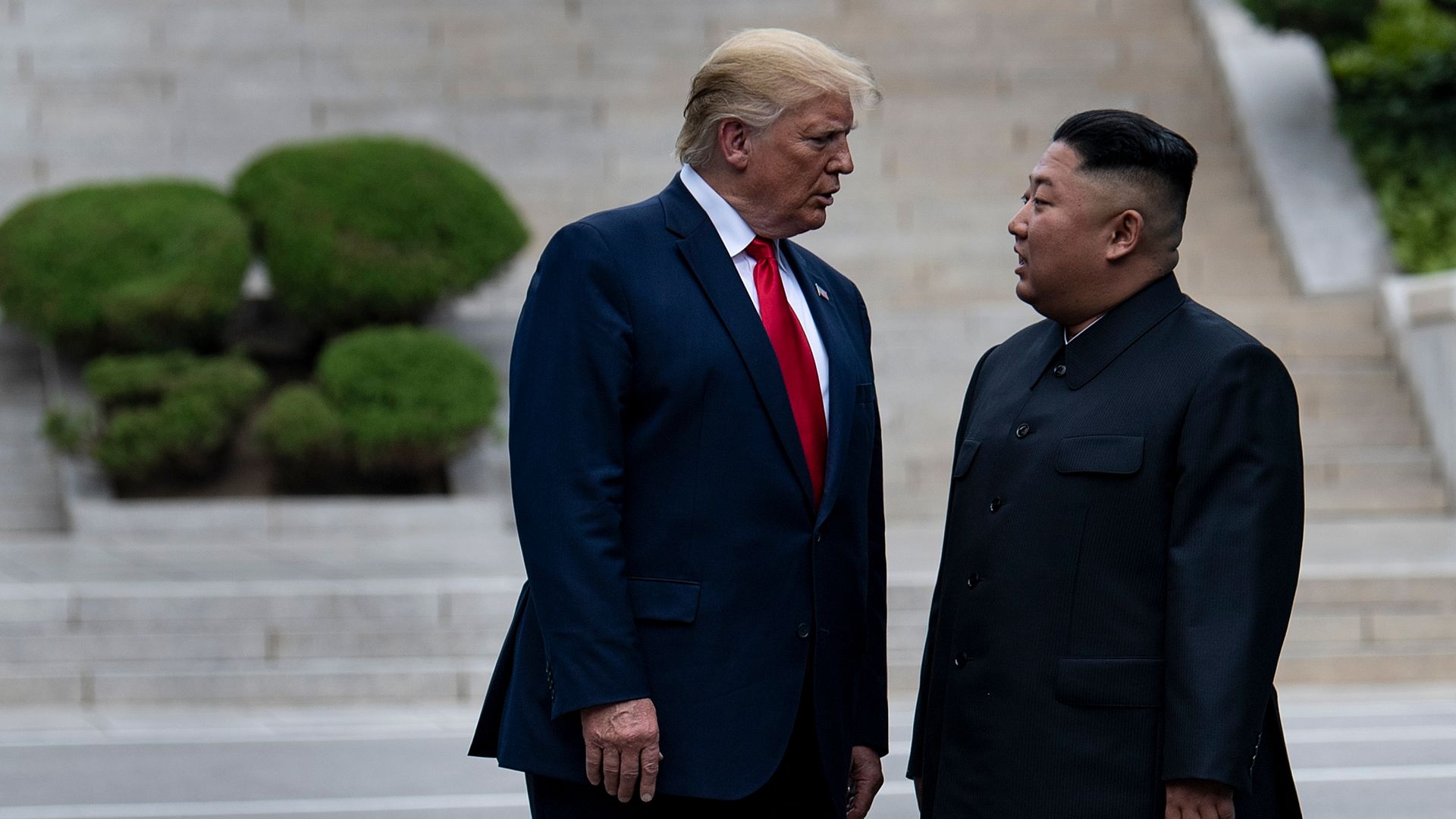
North Korea's mission to the United Nations said in a statement on Wednesday the U.S. is "obsessed with sanctions" and "more and more hell-bent on hostile acts."
The big picture: Pyongyang's delegation to the U.N. made the comments despite Sunday's meeting between President Trump and North Korean leader Kim Jong-un at which they agreed to resume stalled nuclear talks and a top U.S negotiator signaling flexibility in negotiations.
President Trump's senior adviser Jared Kushner said today that the U.S. will announce new steps next week on the Israeli-Palestinian peace plan as a follow-up to the Bahrain conference.
Why it matters: The White House presented the economic part of the peace plan in Bahrain, but most of the international community is anxiously waiting for the political plan. The White House has hinted it will release the peace plan in November after a new government is formed in Israel.
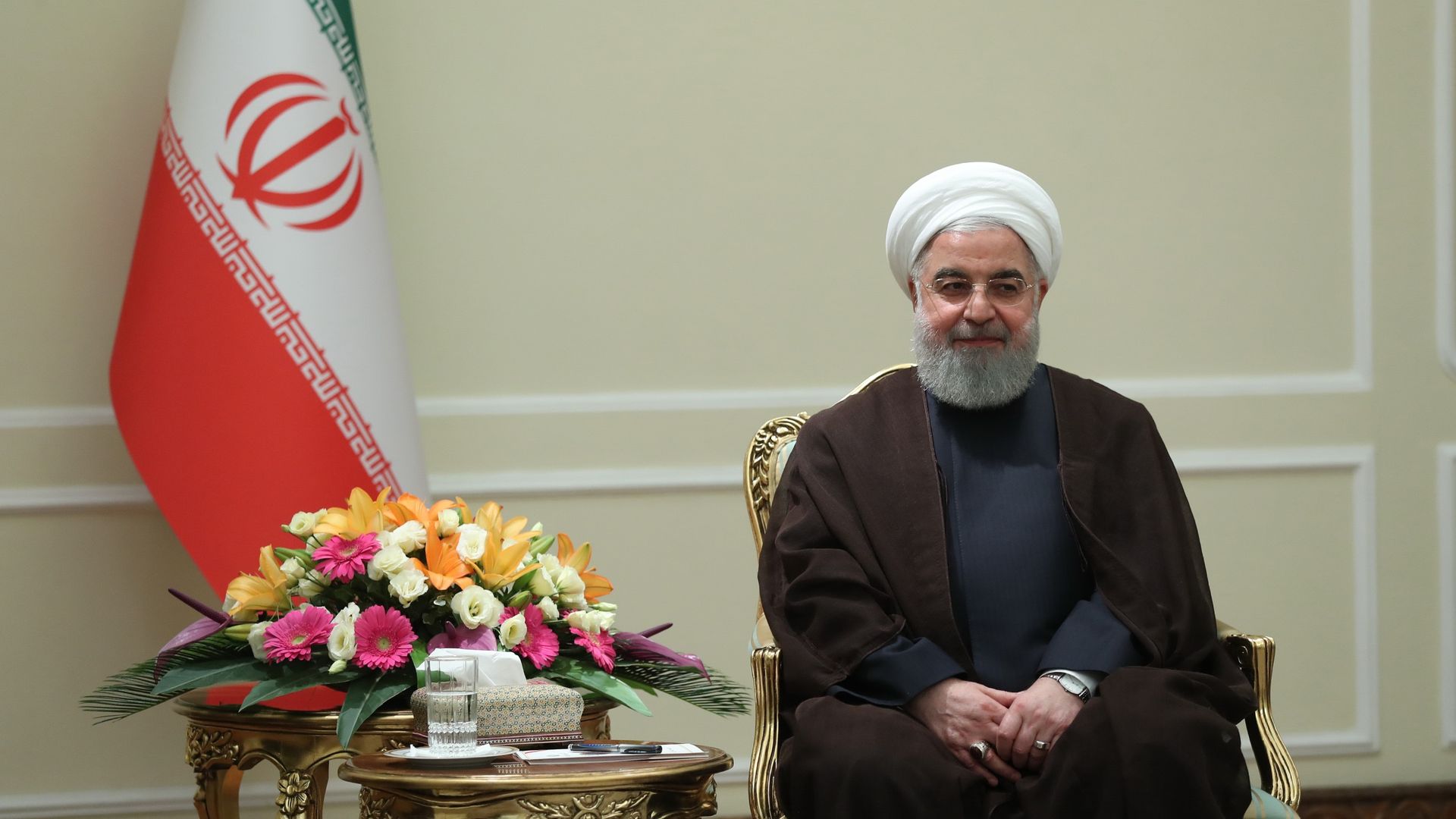
Iranian President Hassan Rouhani said his country will start enriching uranium to "any amount we want" on July 7, reports AP.
"Our advice to Europe and the United States is to go back to logic and to the negotiating table. Go back to understanding, to respecting the laws and resolutions of the U.N. Security Council. Under those conditions, all of us can abide by the nuclear deal."
The big picture: Iran is trying to pressure European countries to find a way around the economic sanctions imposed by the U.S.
While embroiled in the most vivid display of great power rivalry since the Cold War, the U.S. and China are both also battling a largely invisible force — relentlessly unfavorable demographics that are sapping their long-term economic vitality.
Driving the news: As we have reported, the global population as a whole is aging and shrinking, but the trend is striking China especially hard just as it challenges the U.S. for long-term global primacy, according to experts and a number of recent reports.