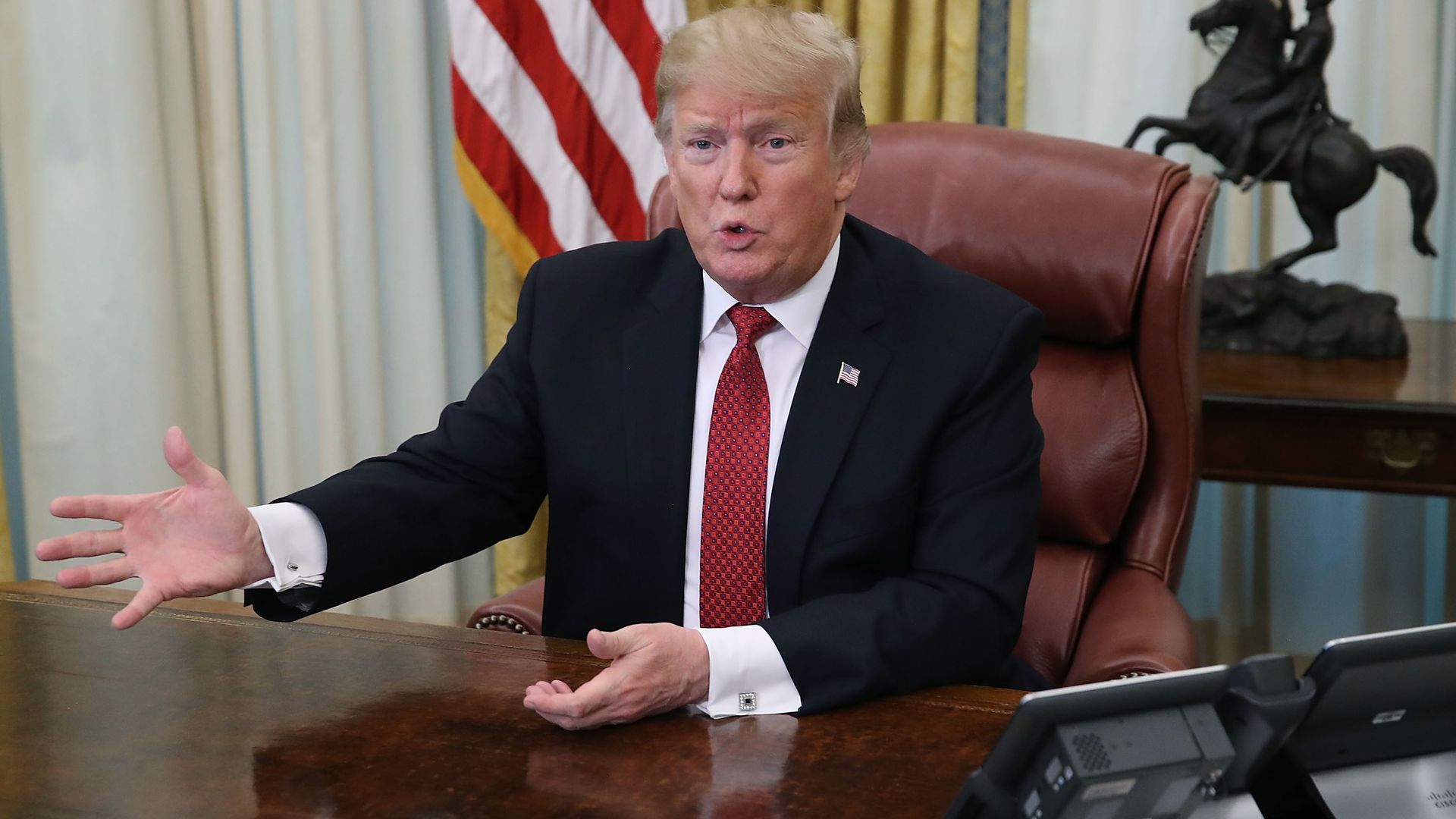
A second meeting between President Trump and North Korean leader Kim Jong-un has been tentatively set for later in February. But recent assessments suggest North Korea remains “unlikely to completely give up its nuclear weapons and production capabilities,” as director of National Intelligence Dan Coats told senators last week.
International investors poured more money into Chinese stocks last month than in any month on record, representatives from the Institute of International Finance tell Axios.
Why it matters: The portfolio flows show investors outside of China have shaken off data reports showing the country's growth grinding to its slowest pace since 1990 and are swooping in as stock prices and valuations have tumbled.
In the face of clear incompetence on the part of the leadership of both major parties in Britain, Remainers were hopeful that Parliament would assert its sovereignty this week and seize control of the Brexit process. Those hopes were dashed as two key amendments — Cooper and Grieve, for anybody following along at home — failed to pass.
The big picture: We're now back to the status quo ante, with clear majorities against all three of the possible outcomes (no Brexit, no deal, May's deal). There also seems to be neither time nor stomach for a second referendum. Of the three, the most catastrophic outcome, no deal, is also the only outcome that can take place without commanding a majority in Parliament.
President Trump told CBS' "Face the Nation" in an interview released Sunday that he wants to keep an unspecified number of U.S. troops in Iraq to "watch Iran," calling it "a vicious country that kills many people."
Backdrop: The nation's top intelligence chiefs released an assessment last week stating that Iran had remained compliant with its nuclear deal and was not currently working to develop nuclear capabilities. Trump, who also advocated against "endless wars" in the "Face the Nation" interview, fired back on Twitter, calling his intelligence heads "extremely passive and naive when it comes to the dangers of Iran" and urging them to "go back to school!"
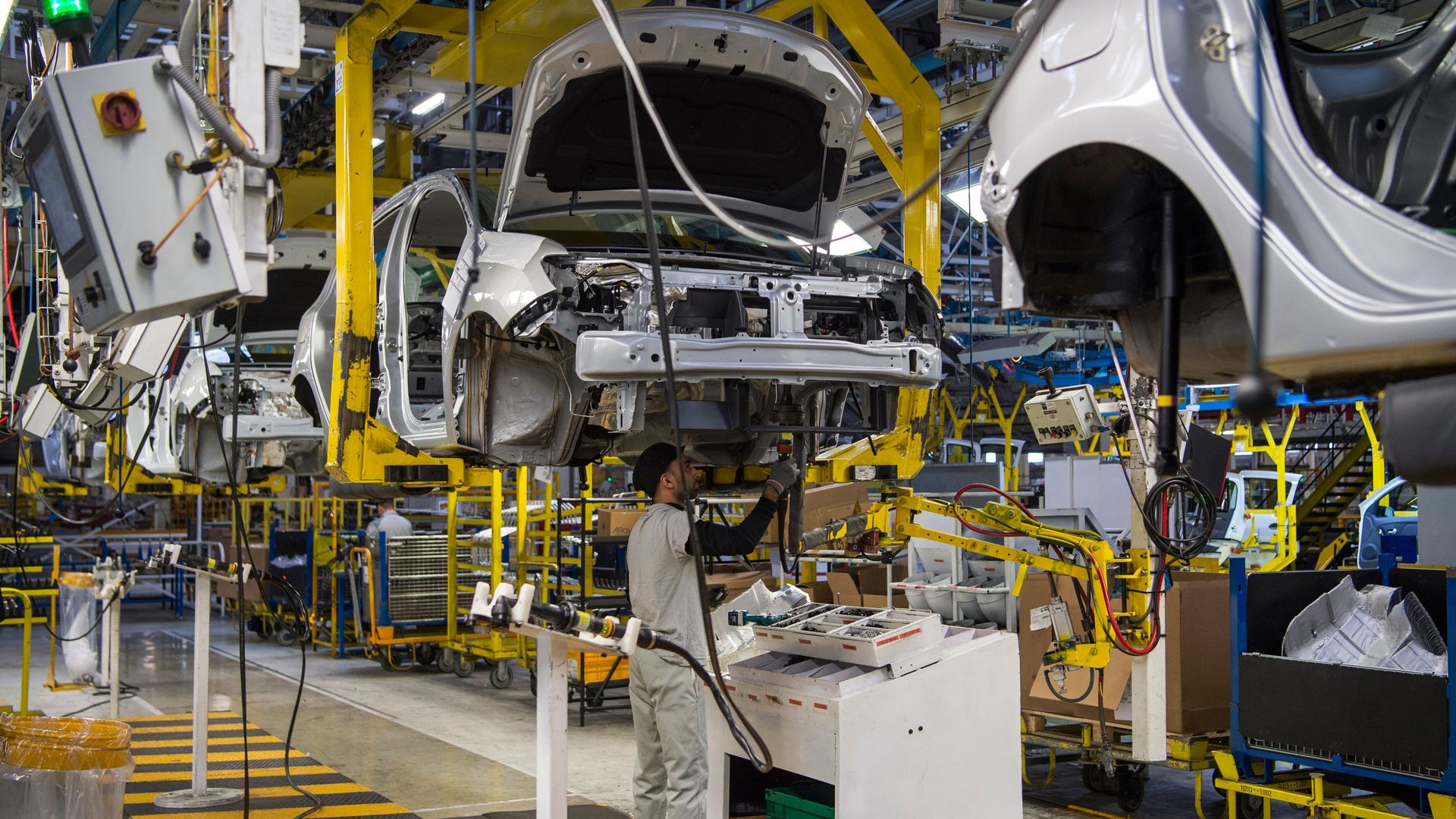
Nissan confirmed Sunday that a new SUV model that was originally planned to be built in a factory in northern England will instead be built in Japan, blaming uncertainty due to Brexit, per the BBC.
Why it matters: The decision means that hundreds of jobs planned for the Sunderland plant — an area of England that voted heavily to leave the European Union in 2016 — won't come to fruition. And it reflects a wider trend across the business world as corporations seek to move away from areas of global chaos, highlighted by Dyson's recent decision to move its global headquarters from the U.K. to Singapore.



/2019/02/03/1549212962019.gif?w=3840)