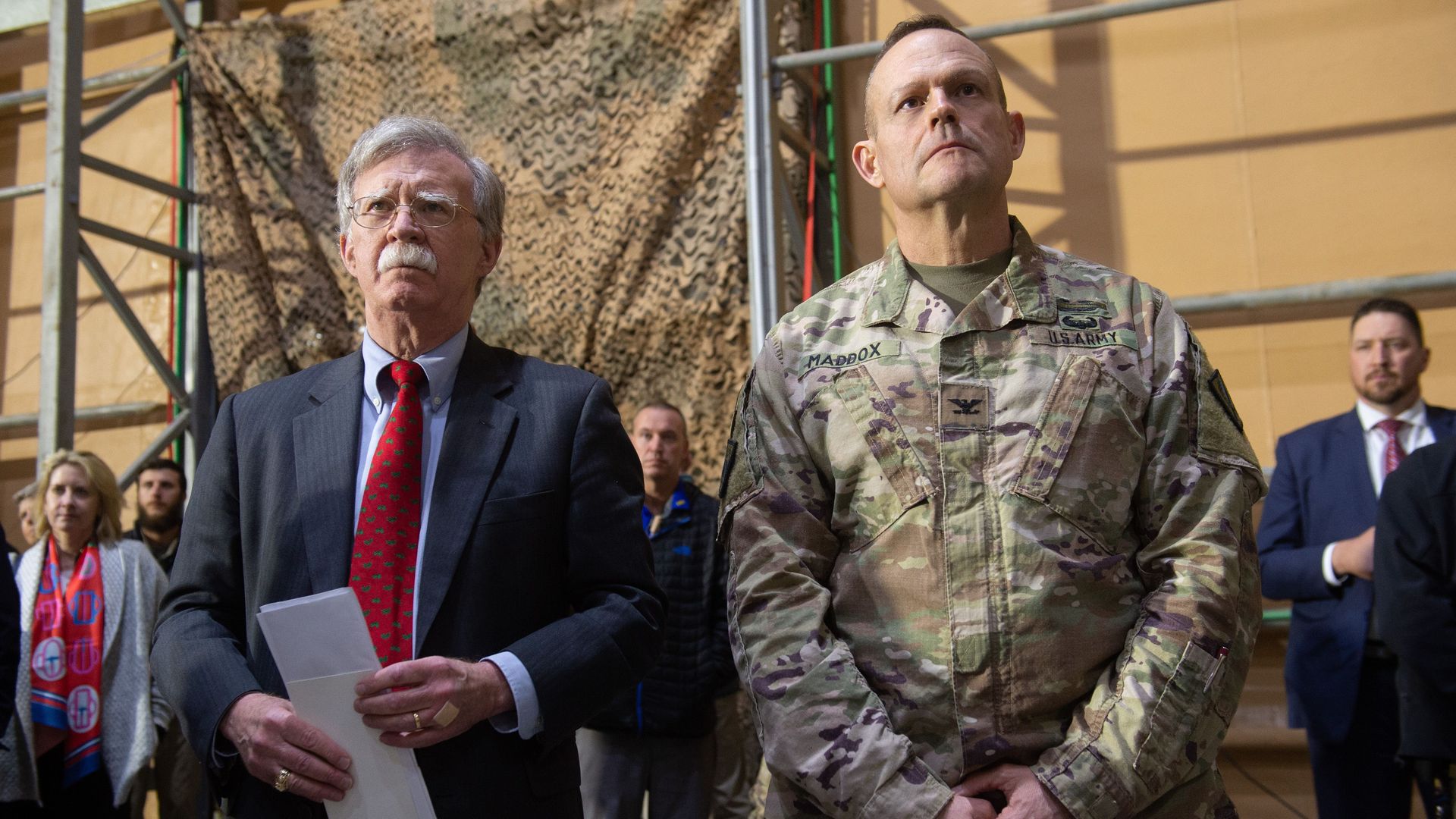
National security adviser John Bolton is in the Middle East this week attempting to sell President Trump's Syria withdrawal policy, which Bolton opposed only several weeks ago. And it appears that he still opposes it, based on reports that he told Israeli and Turkish officials that the U.S. won't be leaving Syria until the Islamic State is defeated.
Why it matters: It would be tough enough for Bolton to convince Israel to support Trump's proposal to leave Iran to“do what they want” in Syria; the Kurds that they are safe, despite public concern that the Turks will slaughter them; and Jordan and Iraq that ISIS is defeated, as the president claims, despite theirbattling ISIS nearly every day. The discrepancies are amounting to incoherent policy.
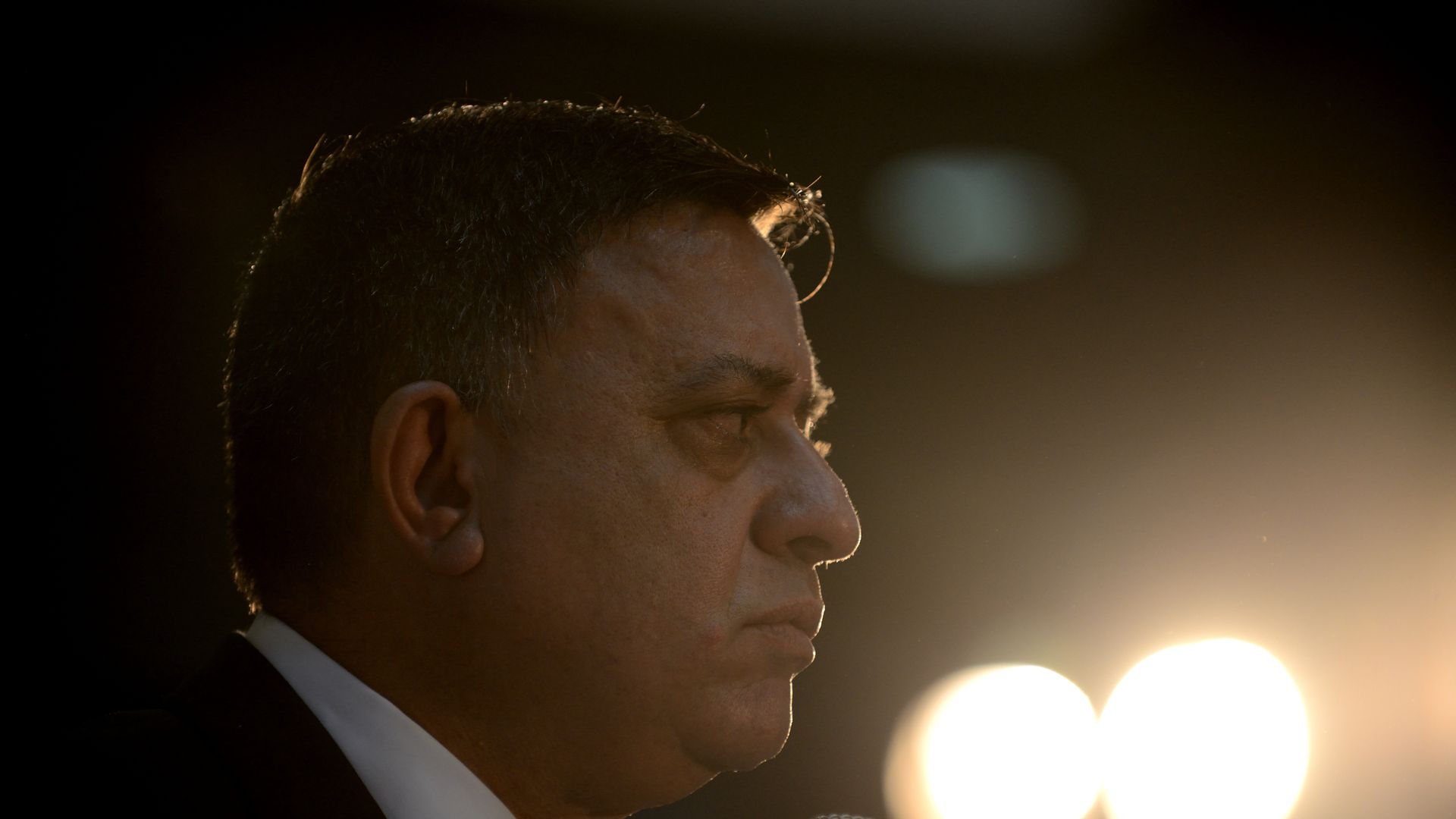
Avi Gabay, the leader of the Israeli Labor Party, went on a secret visit to Abu Dhabi in early December and met with senior UAE officials, Israeli officials tell me.
Why it matters: This is a rare visit by a senior Israeli politician to the UAE, which has no formal diplomatic relations with Israel. Gabbay, who is struggling in the polls ahead of April's elections, has been criticized for his lack of experience in foreign policy. A visit to the UAE — an influential Gulf state — is a way to boost his foreign policy credentials.
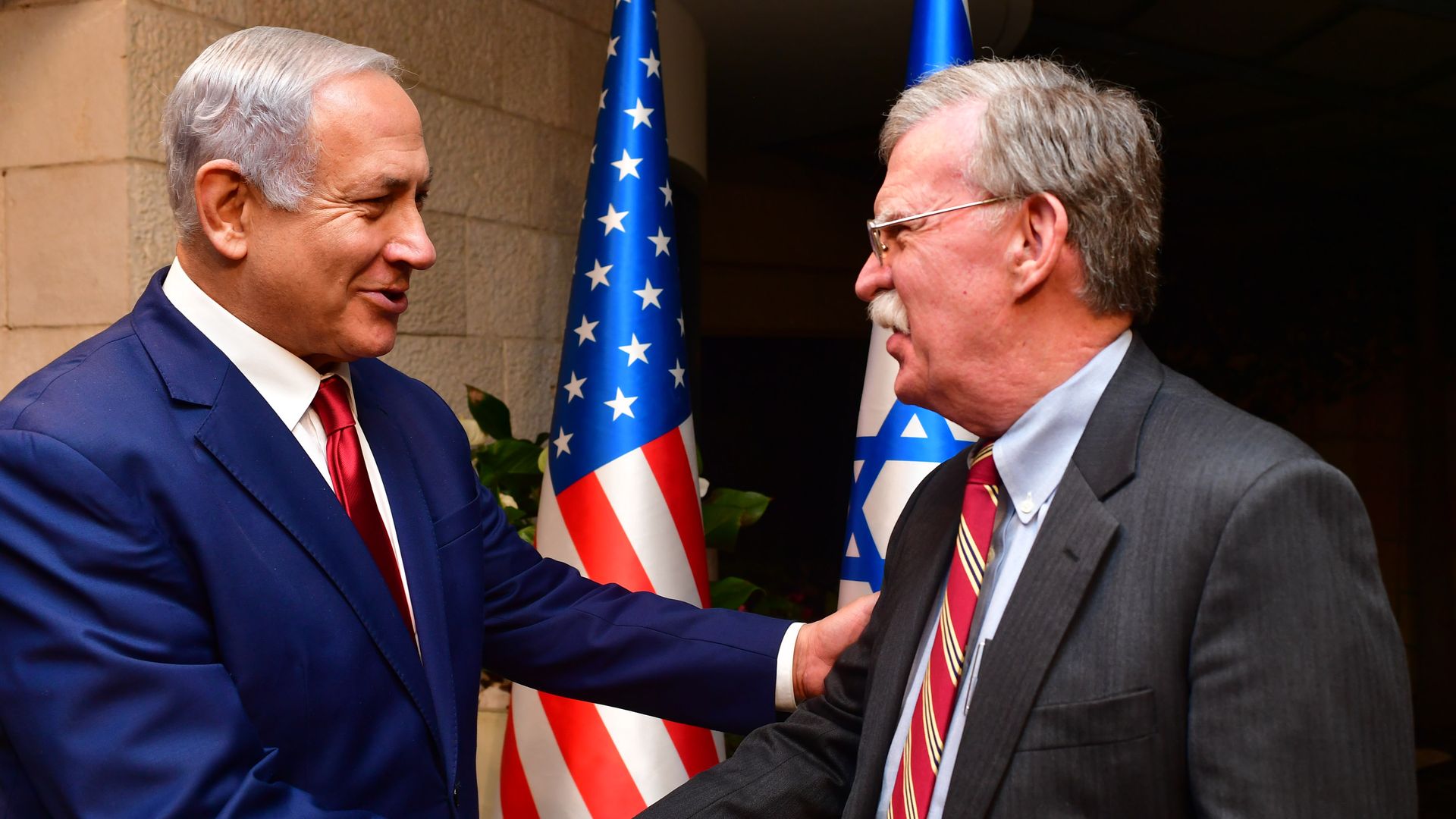
Israeli Prime Minister Benjamin Netanyahu asked the Trump administration to recognize Israeli sovereignty in the occupied Golan Heights, which the international community regards as Syrian territory that has been under Israel's control since 1967's Six-Day War, after the U.S. military's pullout from Syria, an Israeli official tells me.
The backdrop: Netanyahu already raised the issue several months ago in a meeting with President Trump and with other senior U.S. officials. At the time, the Trump administration was cool on the idea and didn't signal to Israel that it was seriously considering such a move as it was concerned by a possible harsh reaction from Russia, the main international player in Syria and a staunch ally of the Assad regime, which claims Israel must withdraw from the Golan Heights.
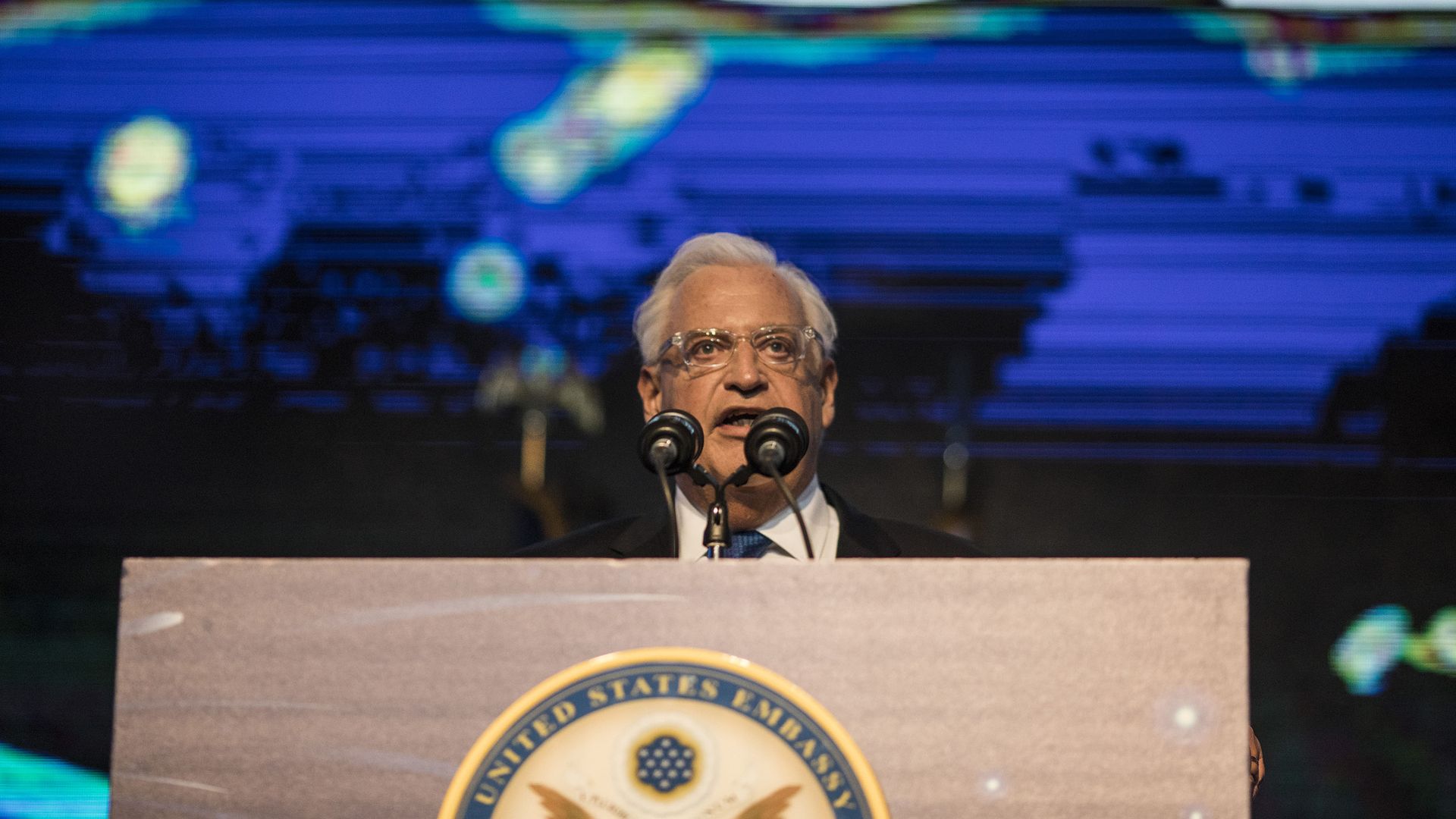
U.S. Ambassador to Israel David Friedman said that the Trump administration's long-awaited Middle East peace plan would be delayed "for several months" on Sunday, per the Jerusalem Post.
Background: Friedman's comments confirm Israeli Prime Minister Benjamin Netanyahu's statement last week that the U.S. had decided to delay the peace plan's release until after Israel's early elections on April 9. The Trump administration has long been coy on when the plan — which President Trump previously said he wanted published by February — will finally be released publicly with Friedman stating in November that it would come at the "appropriate time."